Departamento de Farmacología y Terapéutica, Facultad de Medicina, Universidad Autónoma de Madrid, Madrid, Spain.
Department of Biology, University of Utah, Salt Lake City, Utah, United States of America.
PLoS One. 2014 Apr 11;9(4):e94142. doi: 10.1371/journal.pone.0094142. eCollection 2014.
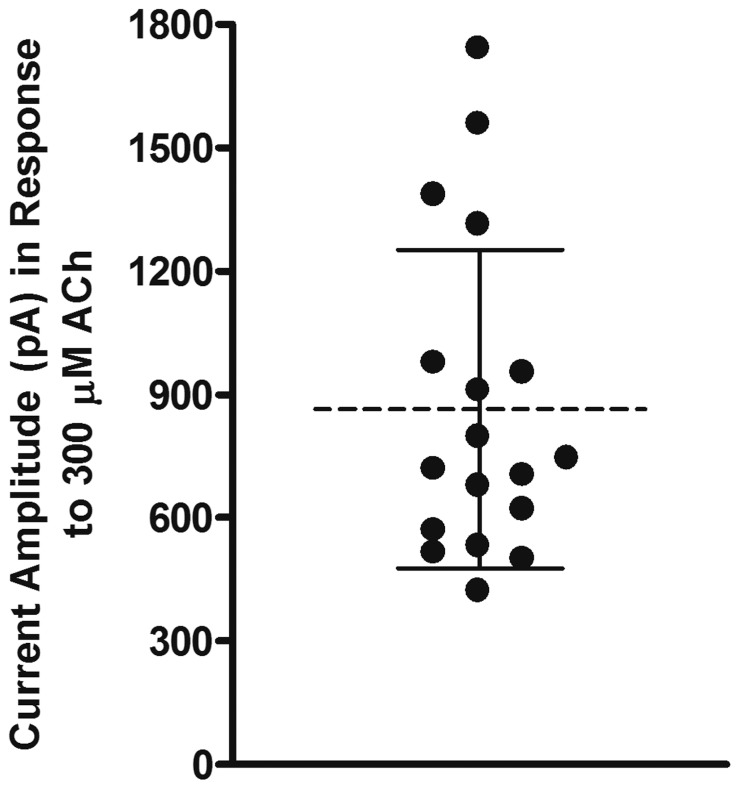
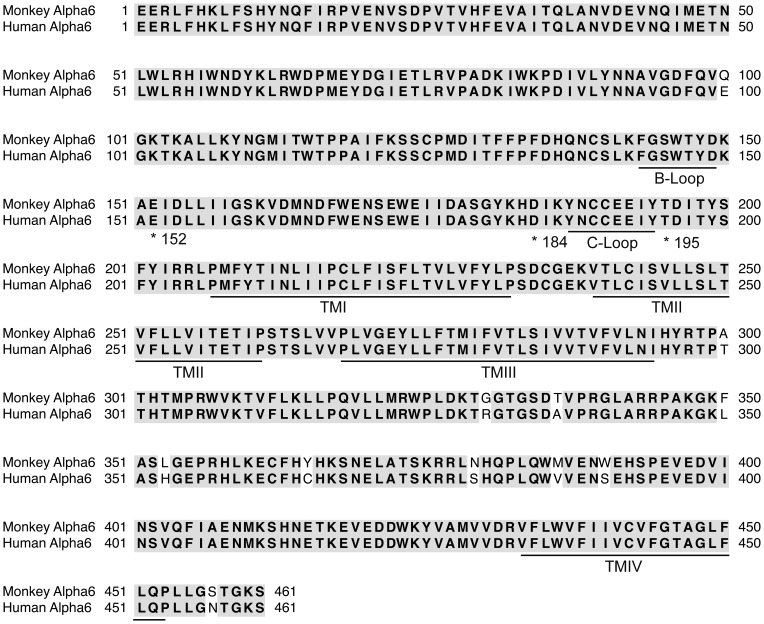
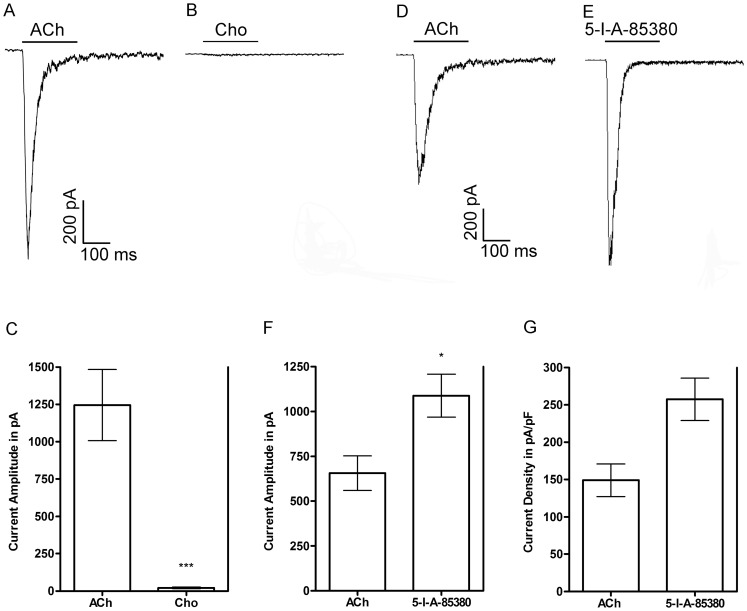
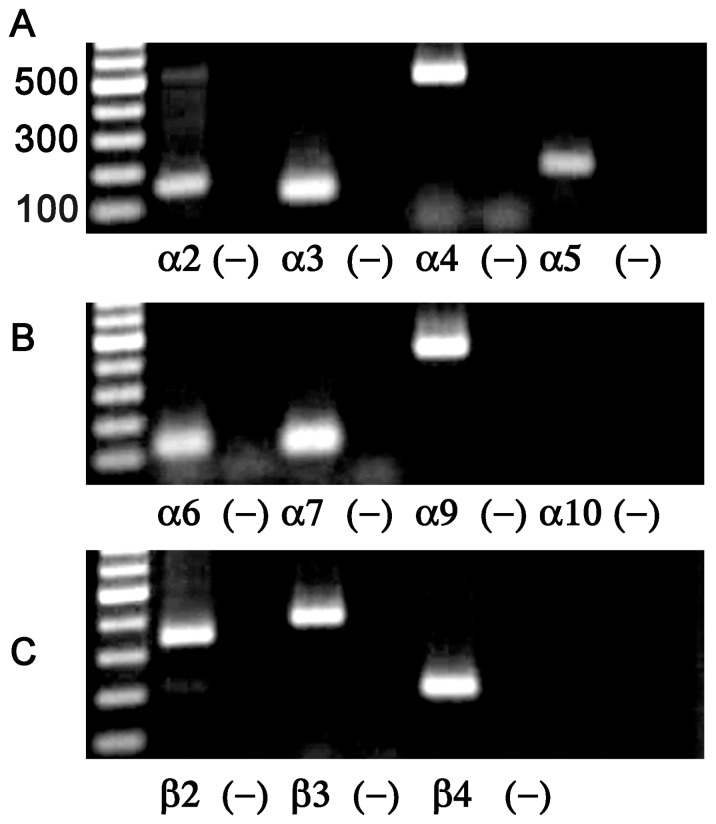
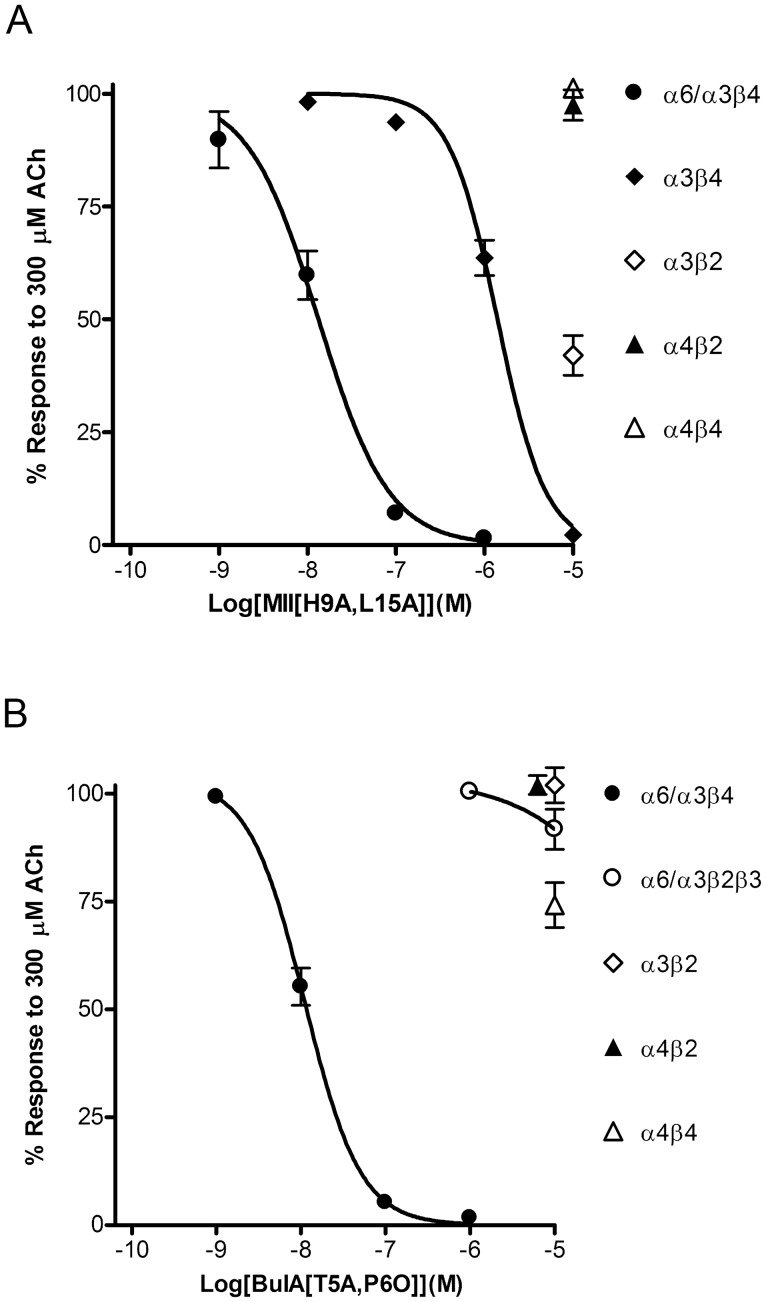
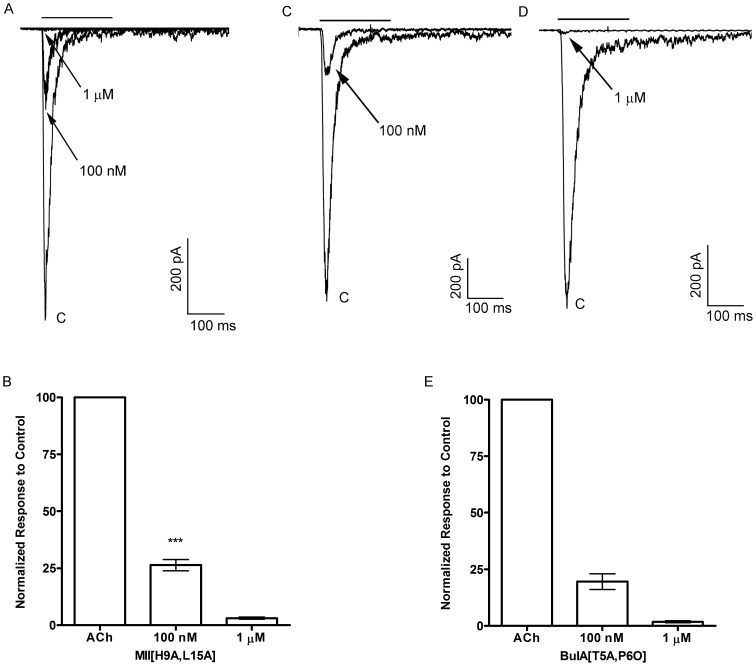
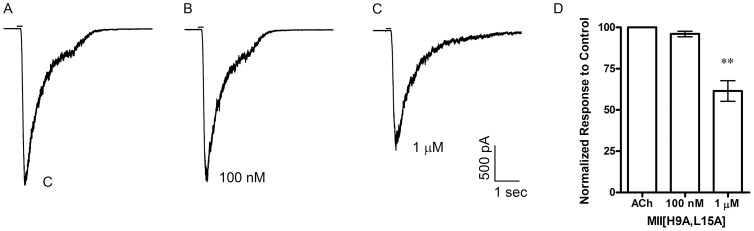
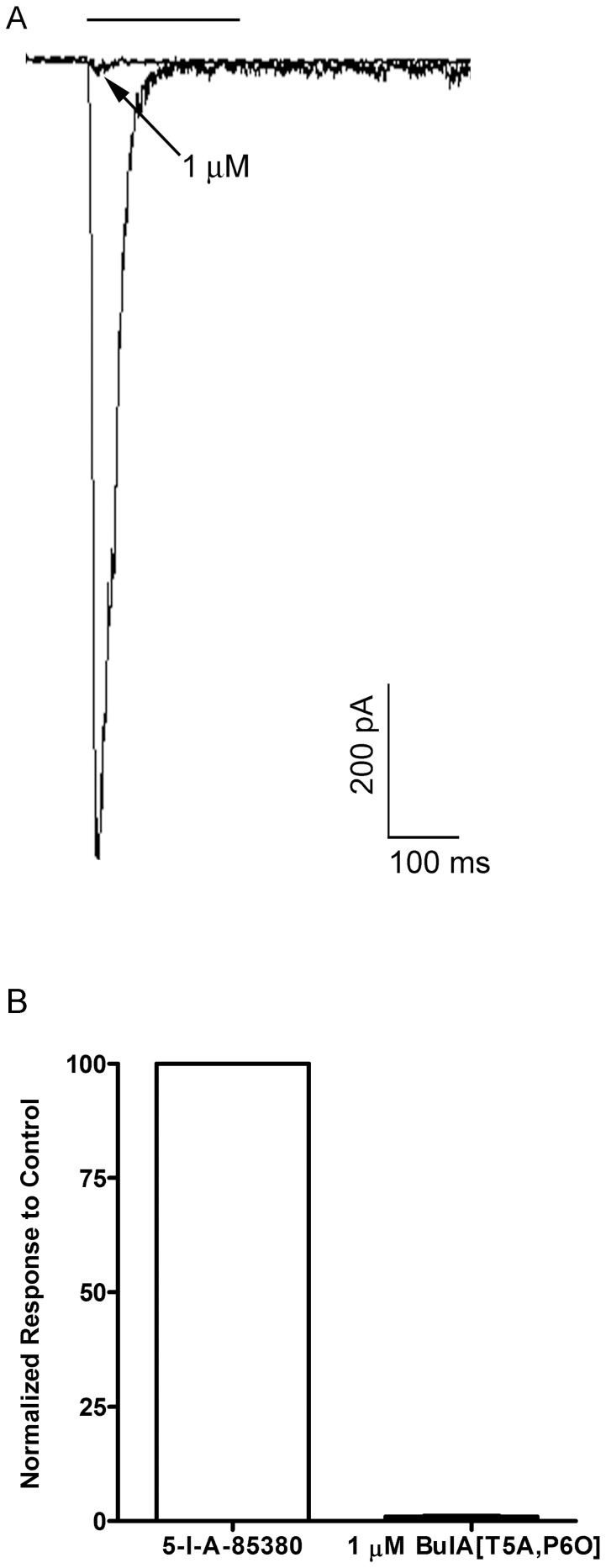
Nicotinic acetylcholine receptors (nAChRs) that contain α6 and β4 subunits have been demonstrated functionally in human adrenal chromaffin cells, rat dorsal root ganglion neurons, and on noradrenergic terminals in the hippocampus of adolescent mice. In human adrenal chromaffin cells, α6β4* nAChRs (the asterisk denotes the possible presence of additional subunits) are the predominant subtype whereas in rodents, the predominant nAChR is the α3β4* subtype. Here we present molecular and pharmacological evidence that chromaffin cells from monkey (Macaca mulatta) also express α6β4* receptors. PCR was used to show the presence of transcripts for α6 and β4 subunits and pharmacological characterization was performed using patch-clamp electrophysiology in combination with α-conotoxins that target the α6β4* subtype. Acetylcholine-evoked currents were sensitive to inhibition by BuIA[T5A,P6O] and MII[H9A,L15A]; α-conotoxins that inhibit α6-containing nAChRs. Two additional agonists were used to probe for the expression of α7 and β2-containing nAChRs. Cells with currents evoked by acetylcholine were relatively unresponsive to the α7-selctive agonist choline but responded to the agonist 5-I-A-85380. These studies provide further insights into the properties of natively expressed α6β4* nAChRs.
烟碱型乙酰胆碱受体(nAChRs)包含α6 和β4 亚基,在人类肾上腺嗜铬细胞、大鼠背根神经节神经元以及青春期小鼠海马体的去甲肾上腺素能末梢中具有功能。在人类肾上腺嗜铬细胞中,α6β4nAChRs(星号表示可能存在其他亚基)是主要亚型,而在啮齿动物中,主要的 nAChR 是α3β4亚型。在这里,我们提供了分子和药理学证据,表明来自猴子(Macaca mulatta)的嗜铬细胞也表达α6β4受体。PCR 用于显示α6 和β4 亚基的转录本的存在,并用针对α6β4亚型的α- 芋螺毒素进行膜片钳电生理学药理学特征分析。乙酰胆碱诱导的电流对 BuIA[T5A,P6O]和 MII[H9A,L15A]的抑制敏感;α- 芋螺毒素抑制包含α6 的 nAChRs。另外使用两种激动剂来探测α7 和β2 包含的 nAChRs 的表达。由乙酰胆碱引起电流的细胞对α7 选择性激动剂胆碱相对不敏感,但对激动剂 5-I-A-85380 有反应。这些研究为天然表达的α6β4*nAChRs 的特性提供了进一步的见解。