Department of Biology, Section of Ecology, University of Turku, Turku, Finland.
Institute of Integrative Biology, ETH-Zürich, Zürich, Switzerland.
PLoS One. 2014 Apr 11;9(4):e94105. doi: 10.1371/journal.pone.0094105. eCollection 2014.
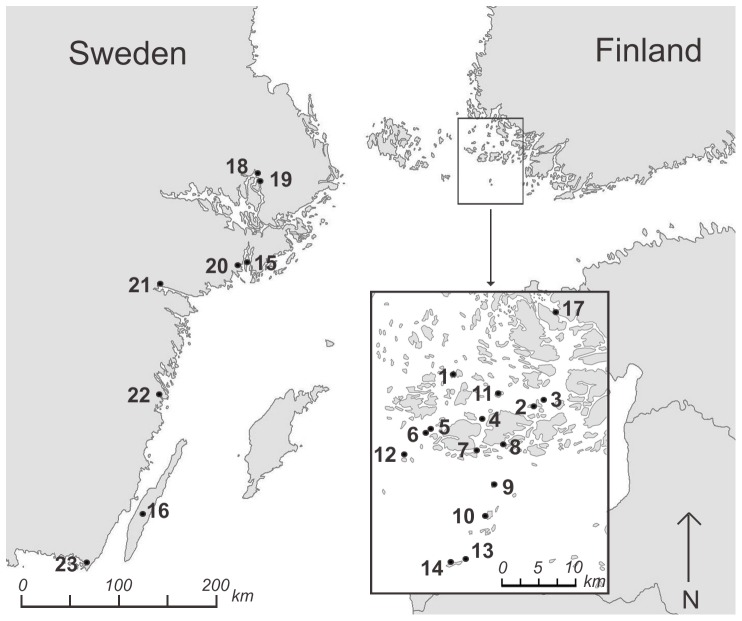
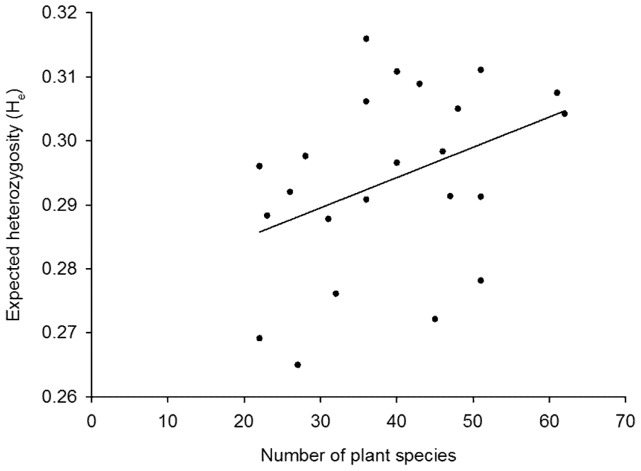
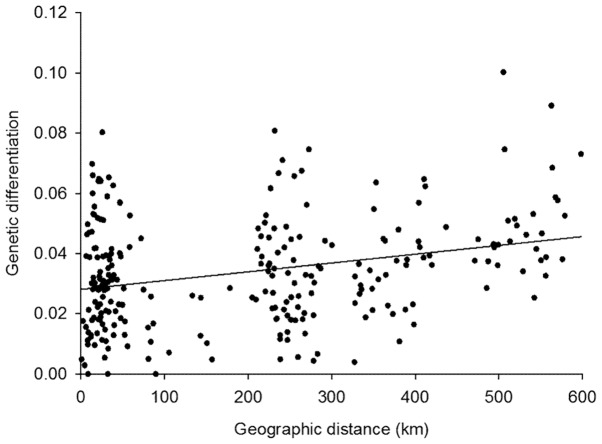
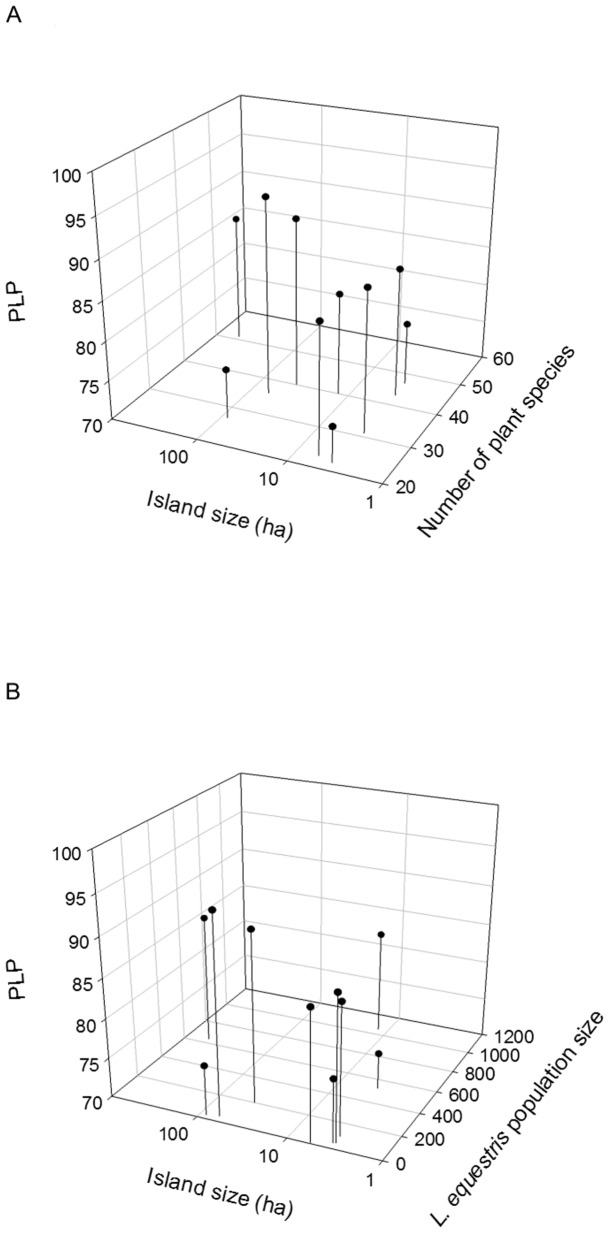
Several characteristics of habitats of herbivores and their food-plant communities, such as plant-species composition and plant quality, influence population genetics of both herbivores and their host plants. We investigated how different ecological and geographic factors affect genetic variation in and differentiation of 23 populations of the oligophagous seed predator Lygaeus equestris (Heteroptera) in southwestern Finland and in eastern Sweden. We tested whether genetic differentiation of the L. equestris populations was related to the similarity of vegetation, and whether there was more within-population genetic variation in habitats with a high number of plant species or in those with a large population of the primary food plant, Vincetoxicum hirundinaria. We also tested whether genetic differentiation of the populations was related to the geographic distance, and whether location of the populations on islands or on mainland, island size, or population size affected within-population genetic variation. Pairwise FST ranged from 0 to 0.1 indicating low to moderate genetic differentiation of populations. Differentiation increased with geographic distance between the populations, but was not related to the similarity of vegetation between the habitats. Genetic variation within the L. equestris populations did not increase with the population size of the primary food plant. However, the more diverse the plant community the higher was the level of genetic variation within the L. equestris population. Furthermore, the level of genetic variation did not vary significantly between island and mainland populations. The effect of the population size on within-population genetic variation was related to island size. Usually small populations are susceptible to loss of genetic variation, but small L. equestris populations on large islands seemed to maintain a relatively high level of within-population genetic variation. Our findings suggest that, in addition to geographic and species-specific ecological factors, the plant community affects population genetic structure of oligophagous herbivores.
几种食草动物及其食物植物群落的栖息地特征,如植物物种组成和植物质量,影响食草动物及其宿主植物的种群遗传学。我们研究了不同的生态和地理因素如何影响 23 个种群的寡食性种子捕食者 Lygaeus equestris(半翅目)在芬兰西南部和瑞典东部的遗传变异和分化。我们测试了 L. equestris 种群的遗传分化是否与植被的相似性有关,以及在植物物种数量多的栖息地或主要食物植物 Vincetoxicum hirundinaria 种群数量大的栖息地中,是否存在更多的种群内遗传变异。我们还测试了种群的遗传分化是否与地理距离有关,以及种群是否位于岛屿或大陆上、岛屿大小或种群大小是否影响种群内的遗传变异。成对的 FST 范围从 0 到 0.1,表明种群之间的遗传分化程度较低。分化程度随种群之间的地理距离增加而增加,但与栖息地之间的植被相似性无关。L. equestris 种群内的遗传变异没有随主要食物植物种群的大小而增加。然而,植物群落的多样性越高,L. equestris 种群内的遗传变异水平越高。此外,岛屿和大陆种群之间的遗传变异水平没有显著差异。种群大小对种群内遗传变异的影响与岛屿大小有关。通常,小种群容易失去遗传变异,但大型岛屿上的小 L. equestris 种群似乎保持着相对较高的种群内遗传变异水平。我们的研究结果表明,除了地理和物种特异性的生态因素外,植物群落还影响寡食性食草动物的种群遗传结构。