Department of Molecular and Cellular Neuroscience, The Scripps Research Institute, 10550 North Torrey Pines Road, La Jolla, CA, 92037, USA,
Curr Top Microbiol Immunol. 2014;378:55-83. doi: 10.1007/978-3-319-05879-5_3.
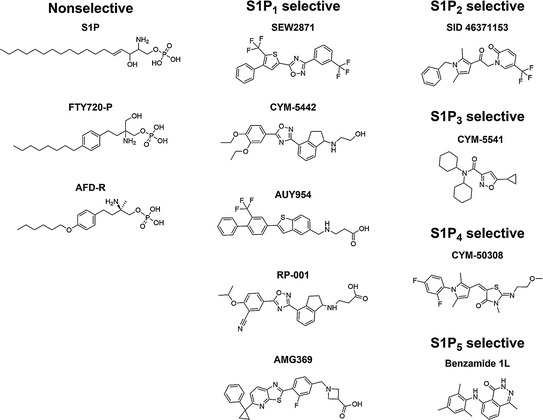
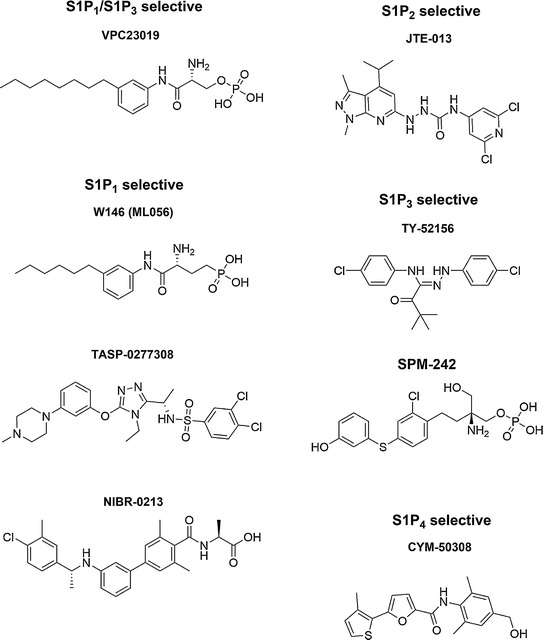
The zwitterionic lysophospholipid Sphingosine 1-Phosphate (S1P) is a pleiotropic mediator of physiology and pathology. The synthesis, transport, and degradation of S1P are tightly regulated to ensure that S1P is present in the proper concentrations in the proper location. The binding of S1P to five G protein-coupled S1P receptors regulates many physiological systems, particularly the immune and vascular systems. Our understanding of the functions of S1P has been aided by the tractability of the system to both chemical and genetic manipulation. Chemical modulators have been generated to affect most of the known components of S1P biology, including agonists of S1P receptors and inhibitors of enzymes regulating S1P production and degradation. Genetic knockouts and manipulations have been similarly engineered to disrupt the functions of individual S1P receptors or enzymes involved in S1P metabolism. This chapter will focus on the development and utilization of these chemical and genetic tools to explore the complex biology surrounding S1P and its receptors, with particular attention paid to the in vivo findings that these tools have allowed for.
带电荷的溶血磷脂酰丝氨酸(S1P)是生理和病理的多效介质。S1P 的合成、转运和降解受到严格调控,以确保 S1P 在适当的浓度存在于适当的位置。S1P 与五个 G 蛋白偶联的 S1P 受体结合,调节许多生理系统,特别是免疫系统和血管系统。我们对 S1P 功能的理解得益于该系统对化学和遗传操作的易处理性。已经生成了化学调节剂来影响 S1P 生物学的大多数已知成分,包括 S1P 受体的激动剂和调节 S1P 产生和降解的酶的抑制剂。遗传敲除和操作也被设计用来破坏参与 S1P 代谢的单个 S1P 受体或酶的功能。本章将重点介绍这些化学和遗传工具的开发和利用,以探索围绕 S1P 及其受体的复杂生物学,特别关注这些工具所允许的体内发现。