Medici Valentina, Schroeder Diane I, Woods Rima, LaSalle Janine M, Geng Yongzhi, Shibata Noreene M, Peerson Janet, Hodzic Emir, Dayal Sanjana, Tsukamoto Hidekazu, Kharbanda Kusum K, Tillman Brittany, French Samuel W, Halsted Charles H
Department of Internal Medicine, University of California Davis, Sacramento, California.
Alcohol Clin Exp Res. 2014 Jun;38(6):1540-9. doi: 10.1111/acer.12405. Epub 2014 Apr 14.
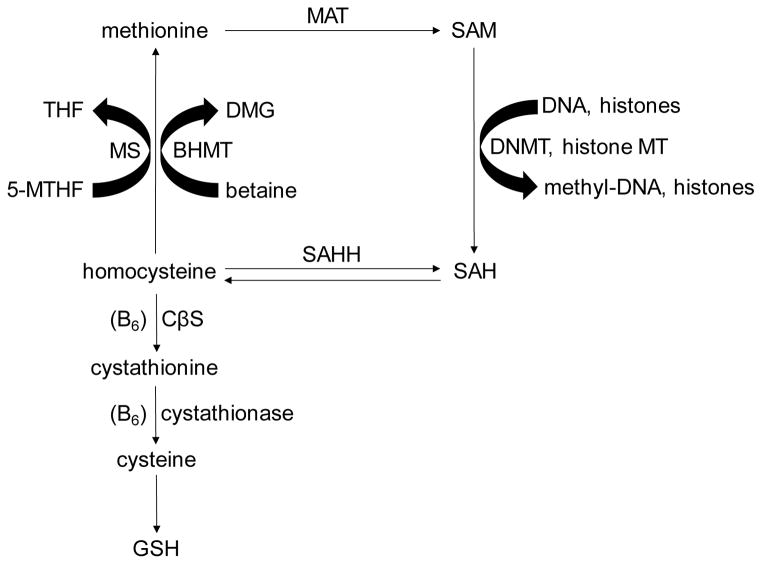
Alcoholic steatohepatitis (ASH) is caused in part by the effects of ethanol (EtOH) on hepatic methionine metabolism.
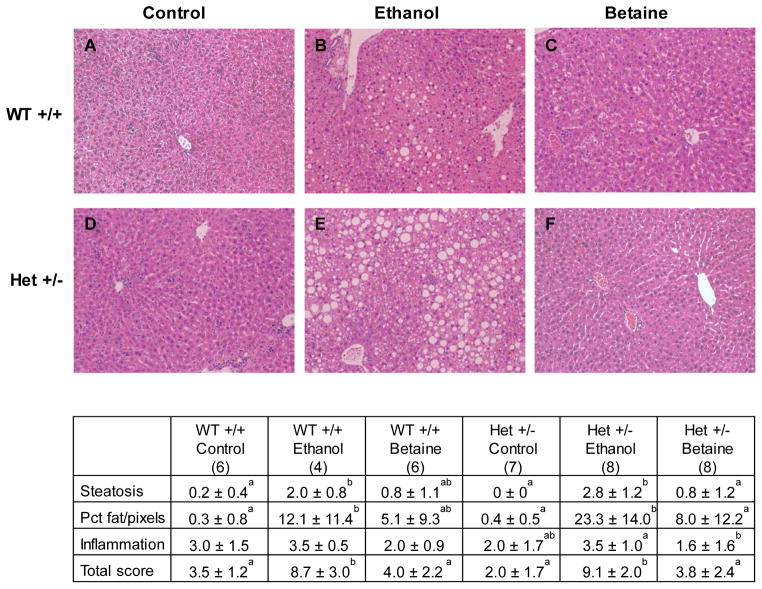
To investigate the phenotypic and epigenetic consequences of altered methionine metabolism in this disease, we studied the effects of 4-week intragastric EtOH feeding with and without the methyl donor betaine in cystathionine beta synthase (CβS) heterozygous C57BL/6J mice.
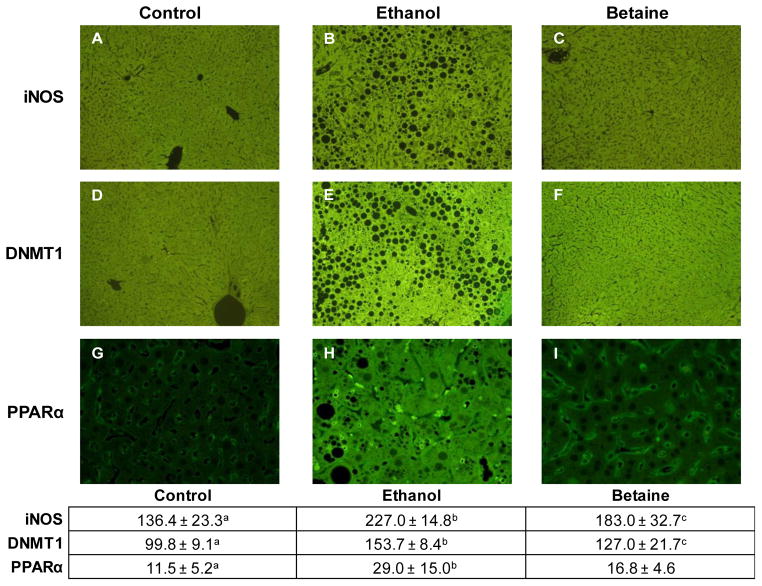
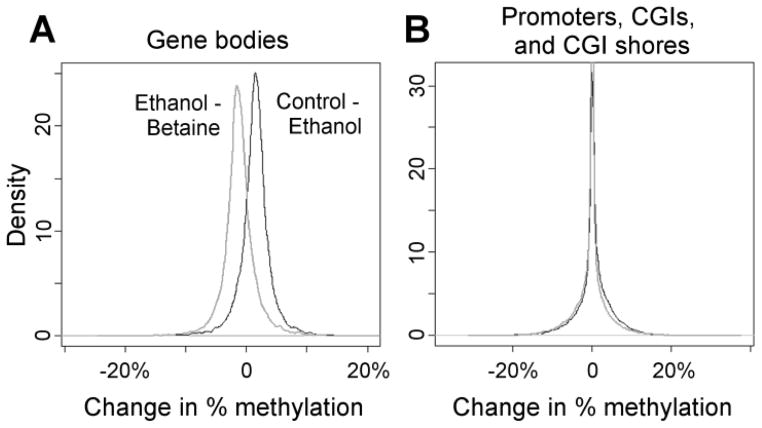
The histopathology of early ASH was induced by EtOH feeding and prevented by betaine supplementation, while EtOH feeding reduced and betaine supplementation maintained the hepatic methylation ratio of the universal methyl donor S-adenosylmethionine (SAM) to the methyltransferase inhibitor S-adenosylhomocysteine (SAH). MethylC-seq genomic sequencing of heterozygous liver samples from each diet group found 2 to 4% reduced methylation in gene bodies, but not promoter regions of all autosomes of EtOH-fed mice, each of which were normalized in samples from mice fed the betaine-supplemented diet. The transcript levels of nitric oxide synthase (Nos2) and DNA methyltransferase 1 (Dnmt1) were increased, while those of peroxisome proliferator receptor-α (Pparα) were reduced in EtOH-fed mice, and each was normalized in mice fed the betaine-supplemented diet. DNA pyrosequencing of CβS heterozygous samples found reduced methylation in a gene body of Nos2 by EtOH feeding that was restored by betaine supplementation and was correlated inversely with its expression and positively with SAM/SAH ratios.
The present study has demonstrated relationships among EtOH induction of ASH with aberrant methionine metabolism that was associated with gene body DNA hypomethylation in all autosomes and was prevented by betaine supplementation. The data imply that EtOH-induced changes in selected gene transcript levels and hypomethylation in gene bodies during the induction of ASH are a result of altered methionine metabolism that can be reversed through dietary supplementation of methyl donors.
酒精性脂肪性肝炎(ASH)部分是由乙醇(EtOH)对肝脏蛋氨酸代谢的影响所致。
为了研究这种疾病中蛋氨酸代谢改变的表型和表观遗传后果,我们在胱硫醚β合酶(CβS)杂合的C57BL/6J小鼠中,研究了4周胃内给予乙醇(无论有无甲基供体甜菜碱)的影响。
早期ASH的组织病理学表现由乙醇喂养诱导,而甜菜碱补充可预防;乙醇喂养降低了,而甜菜碱补充维持了通用甲基供体S-腺苷甲硫氨酸(SAM)与甲基转移酶抑制剂S-腺苷同型半胱氨酸(SAH)的肝脏甲基化比率。对每个饮食组杂合肝脏样本进行的甲基化C测序基因组测序发现,乙醇喂养小鼠所有常染色体的基因体甲基化降低了2%至4%,但启动子区域未降低,而在补充甜菜碱饮食的小鼠样本中,这些甲基化均恢复正常。乙醇喂养小鼠中一氧化氮合酶(Nos2)和DNA甲基转移酶1(Dnmt1)的转录水平升高,而过氧化物酶体增殖物激活受体α(Pparα)的转录水平降低,在补充甜菜碱饮食的小鼠中,这些均恢复正常。对CβS杂合样本进行的DNA焦磷酸测序发现,乙醇喂养使Nos2基因体甲基化降低,甜菜碱补充可使其恢复,且与Nos2表达呈负相关,与SAM/SAH比率呈正相关。
本研究证明了乙醇诱导ASH与异常蛋氨酸代谢之间的关系,这种异常代谢与所有常染色体的基因体DNA低甲基化有关,而甜菜碱补充可预防。数据表明,乙醇诱导ASH过程中所选基因转录水平的变化和基因体低甲基化是蛋氨酸代谢改变的结果,可通过饮食补充甲基供体来逆转。