Suraneni Mahipal V, Moore John R, Zhang Dingxiao, Badeaux Mark, Macaluso Marc D, DiGiovanni John, Kusewitt Donna, Tang Dean G
Department of Molecular Carcinogenesis; The University of Texas MD Anderson Cancer Center; Smithville, TX USA.
Division of Pharmacology and Toxicology; College of Pharmacy; The University of Texas at Austin; Austin, TX USA.
Cell Cycle. 2014;13(11):1798-810. doi: 10.4161/cc.28757. Epub 2014 Apr 14.
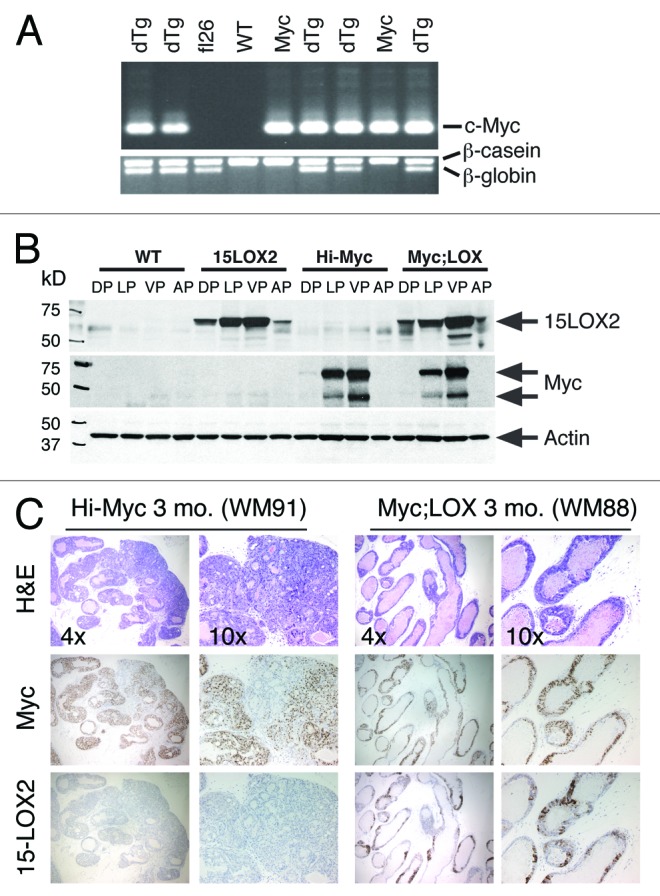
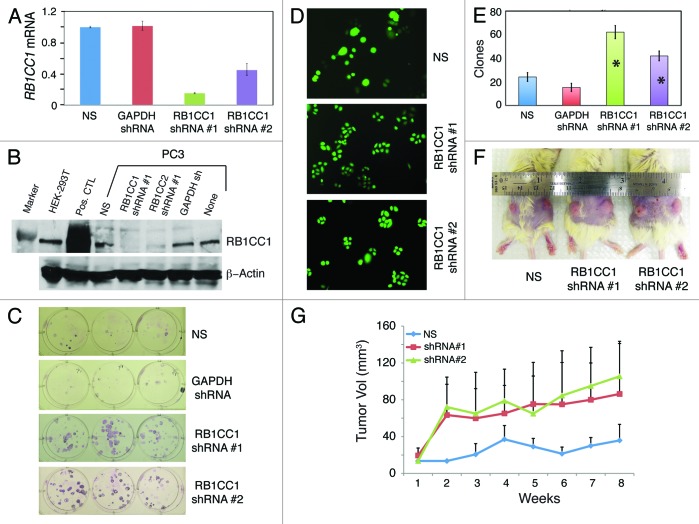
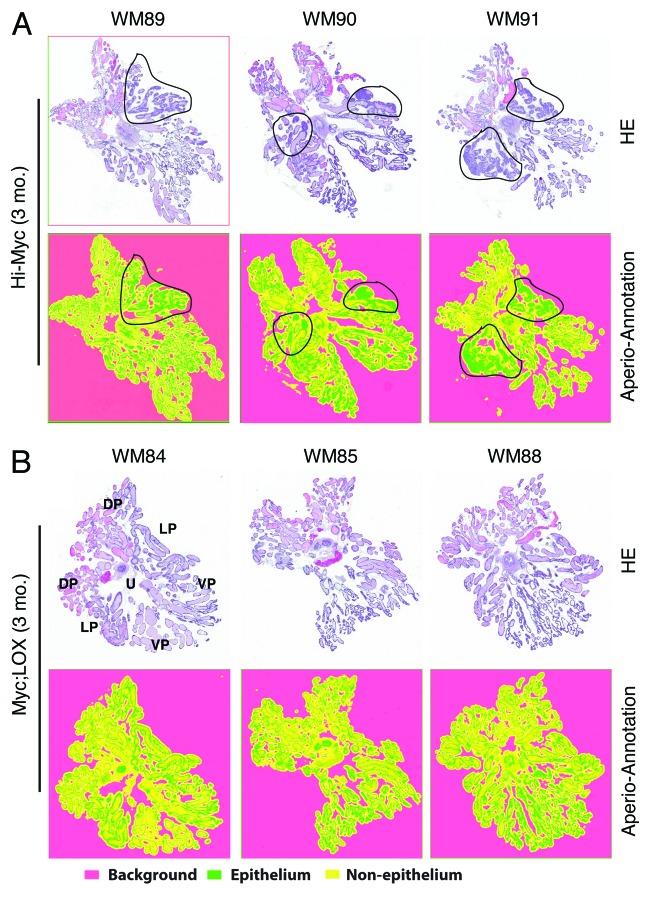
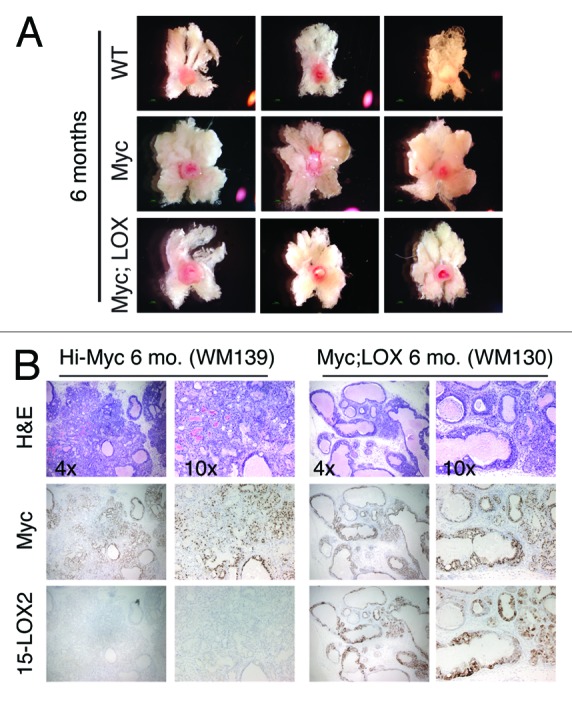
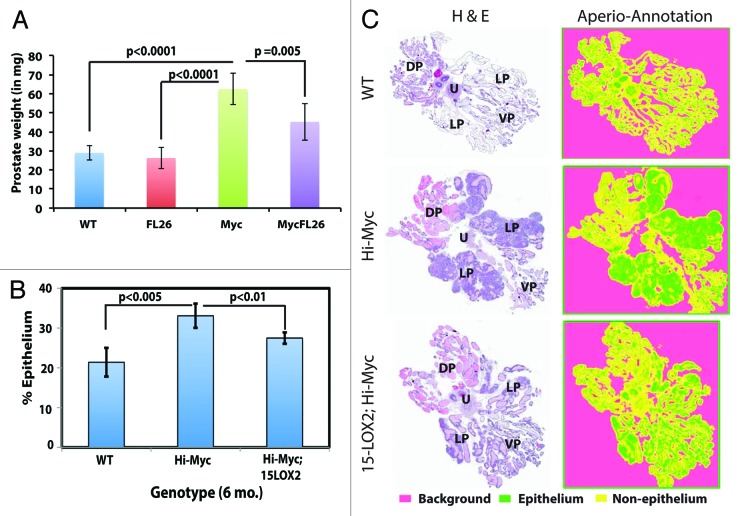
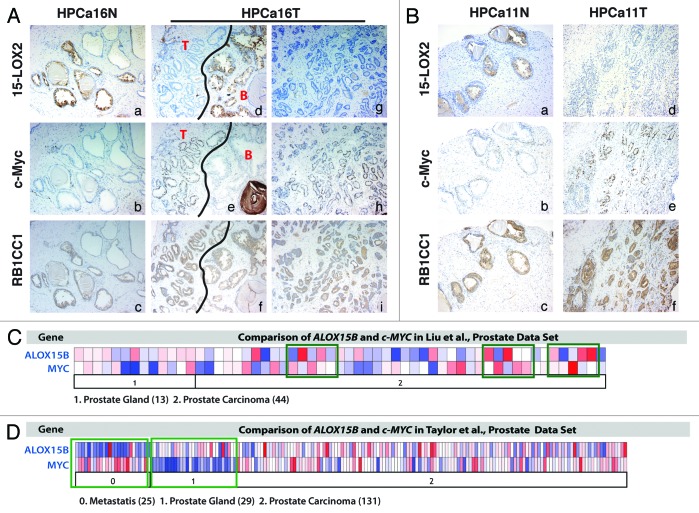
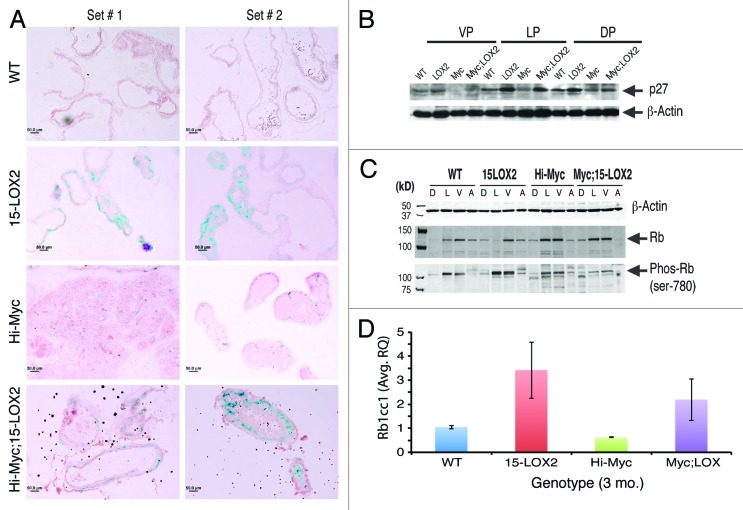
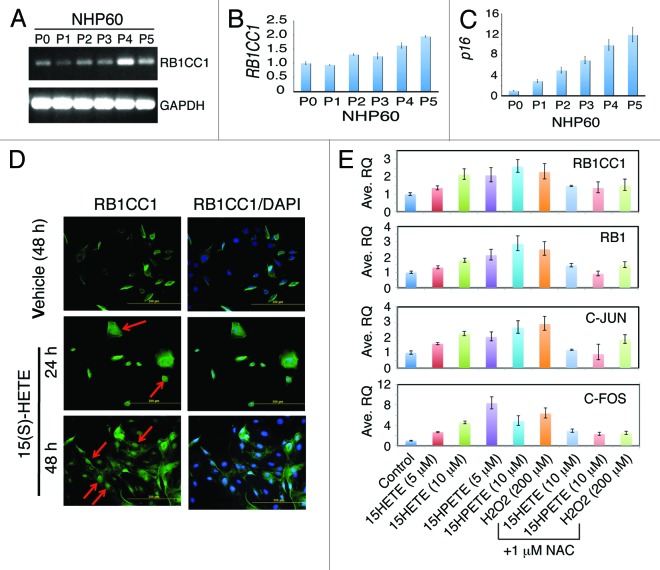
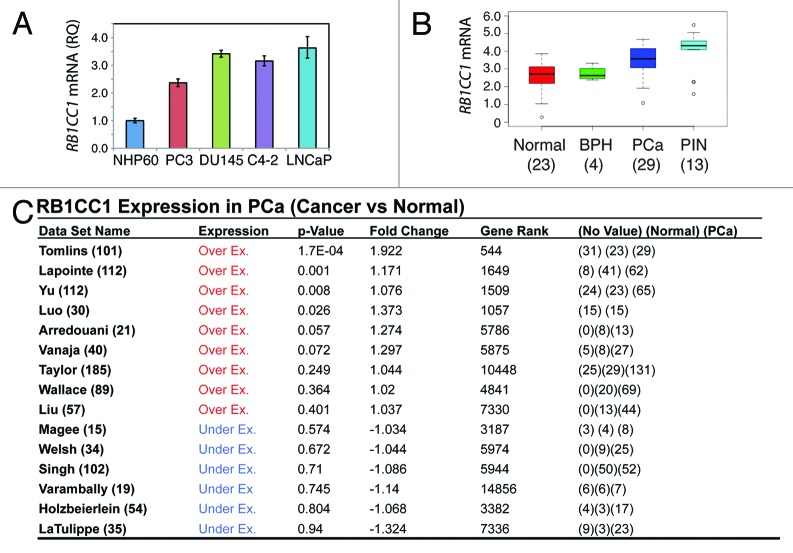
15-Lipoxygenase-2 (15-LOX2) is a human-specific lipid-peroxidizing enzyme most prominently expressed in epithelial cells of normal human prostate but downregulated or completely lost in>70% of prostate cancer (PCa) cases. Transgenic expression of 15-LOX2 in the mouse prostate surprisingly causes hyperplasia. Here we first provide evidence that 15-LOX2-induced prostatic hyperplasia does not progress to PCa even in p53(+/-) or p53(-/-) background. More important, by generating 15-LOX2; Hi-Myc double transgenic (dTg) mice, we show that 15-LOX2 expression inhibits Myc-induced PCa development, such that in the 3-month- and 6-month-old dTg mice, there is a significant reduction in prostate intraneoplasia (PIN) and PCa prevalent in age-matched Hi-Myc prostates. The dTg prostates show increased cell senescence and expression of several senescence-associated molecules, including p27, phosphorylated Rb, and Rb1cc1. We further show that in HPCa, 15-LOX2 and c-Myc manifest reciprocal protein expression patterns. Moreover, RB1CC1 accumulates in senescing normal human prostate (NHP) cells, and in both NHP and RWPE-1 cells, the 15-LOX2 metabolic products 15(S)-HPETE and 15(S)-HETE induce RB1CC1. We finally show that unlike 15-LOX2, RB1CC1 is not lost but rather frequently overexpressed in PCa samples. RB1CC1 knockdown in PC3 cells enhances clonal growth in vitro and tumor growth in vivo. Together, our present studies provide evidence for tumor-suppressive functions for both 15-LOX2 and RB1CC1.
15-脂氧合酶-2(15-LOX2)是一种人类特有的脂质过氧化酶,在正常人类前列腺上皮细胞中表达最为显著,但在70%以上的前列腺癌(PCa)病例中表达下调或完全缺失。令人惊讶的是,15-LOX2在小鼠前列腺中的转基因表达会导致增生。在这里,我们首先提供证据表明,即使在p53(+/-)或p53(-/-)背景下,15-LOX2诱导的前列腺增生也不会发展为PCa。更重要的是,通过构建15-LOX2; Hi-Myc双转基因(dTg)小鼠,我们发现15-LOX2的表达抑制了Myc诱导的PCa发展,在3个月和6个月大的dTg小鼠中,年龄匹配的Hi-Myc前列腺中前列腺上皮内瘤变(PIN)和PCa的发生率显著降低。dTg前列腺显示细胞衰老增加以及几种衰老相关分子的表达增加,包括p27、磷酸化的Rb和Rb1cc1。我们进一步表明,在HPCa中,15-LOX2和c-Myc呈现相互的蛋白表达模式。此外,RB1CC1在衰老的正常人类前列腺(NHP)细胞中积累,并且在NHP和RWPE-1细胞中,15-LOX2的代谢产物15(S)-HPETE和15(S)-HETE诱导RB1CC1。我们最终表明,与15-LOX2不同,RB1CC1在PCa样本中没有缺失,而是经常过度表达。在PC3细胞中敲低RB1CC1可增强体外克隆生长和体内肿瘤生长。总之,我们目前的研究为15-LOX2和RB1CC1的肿瘤抑制功能提供了证据。