Ohno Mizuki, Sakumi Kunihiko, Fukumura Ryutaro, Furuichi Masato, Iwasaki Yuki, Hokama Masaaki, Ikemura Toshimichi, Tsuzuki Teruhisa, Gondo Yoichi, Nakabeppu Yusaku
Department of Medical Biophysics and Radiation Biology, Faculty of Medical Sciences, Kyushu University, Fukuoka 812-8582, Japan.
1] Division of Neurofunctional Genomics, Department of Immunobiology and Neuroscience, Medical Institute of Bioregulation, Kyushu University, Fukuoka 812-8582, Japan [2] Research Center for Nucleotide Pool, Kyushu University, Fukuoka 812-8582, Japan.
Sci Rep. 2014 Apr 15;4:4689. doi: 10.1038/srep04689.
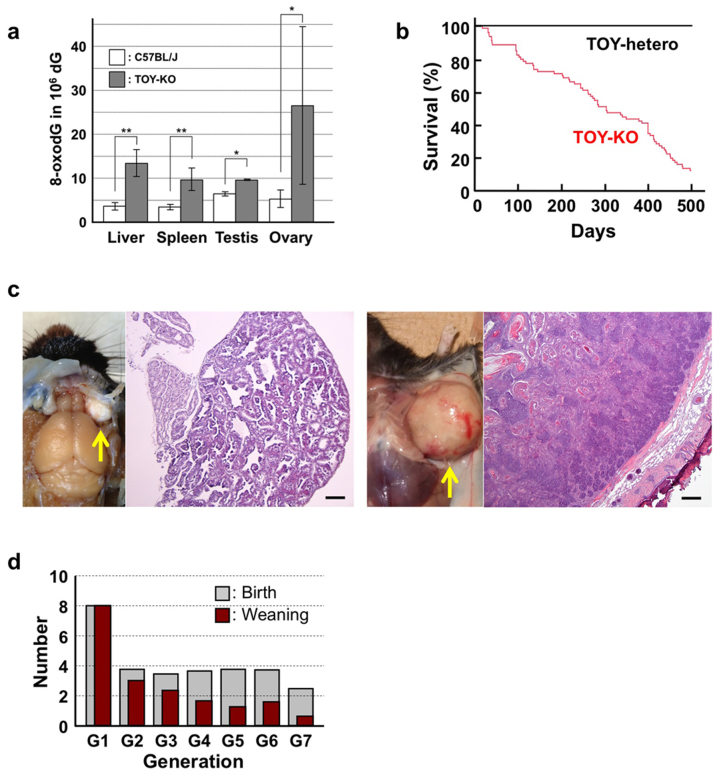
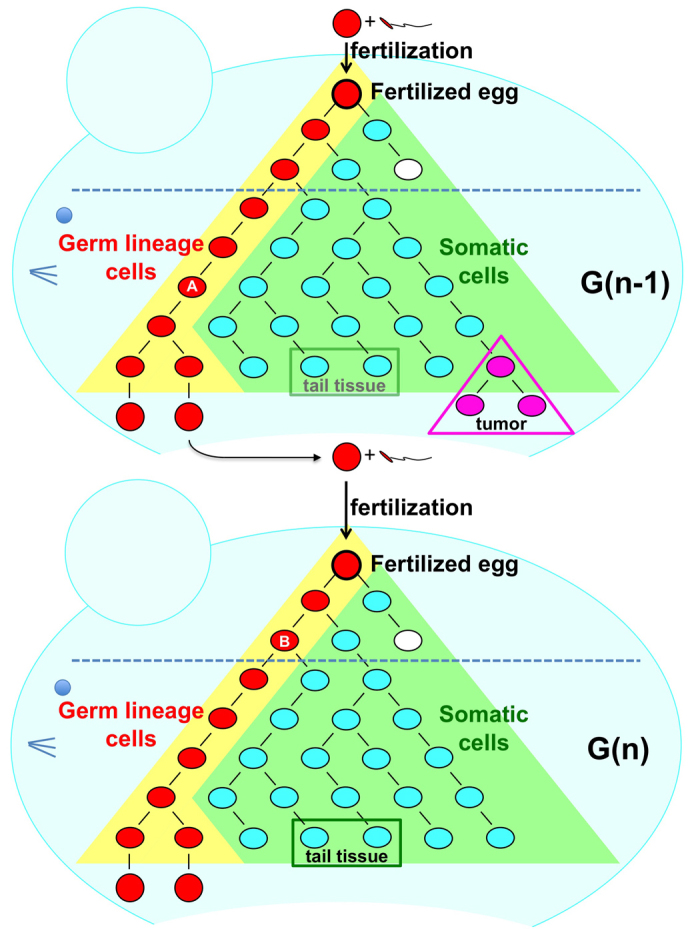
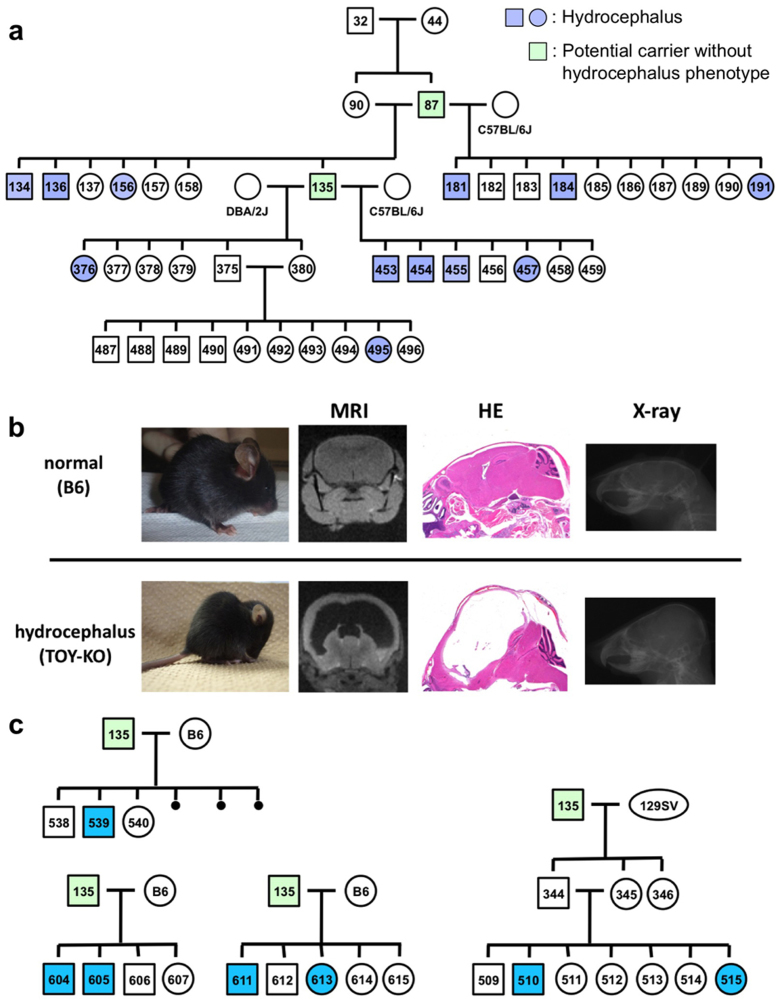
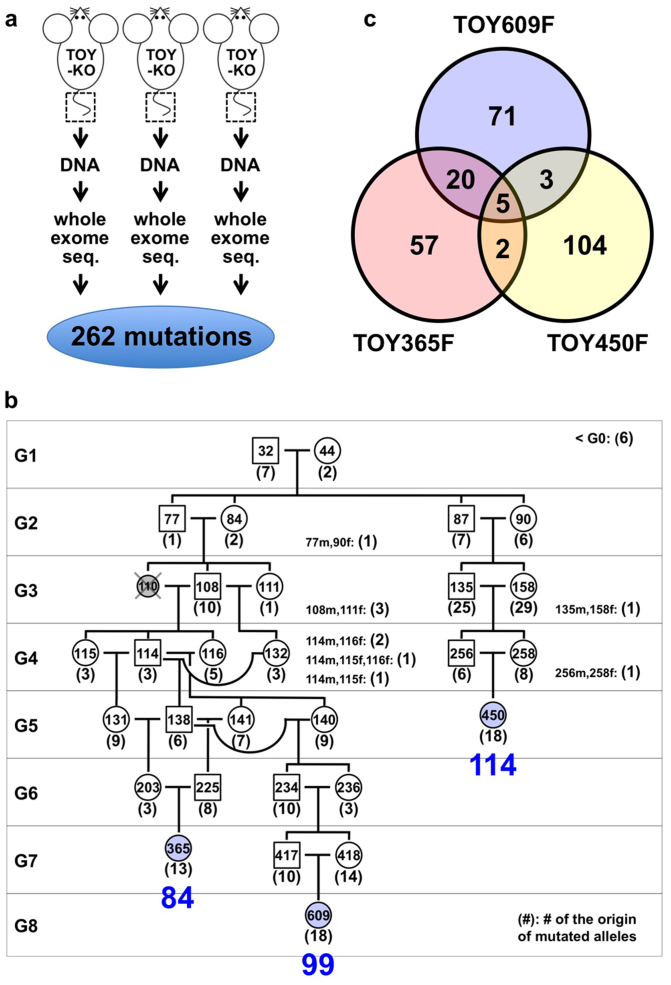
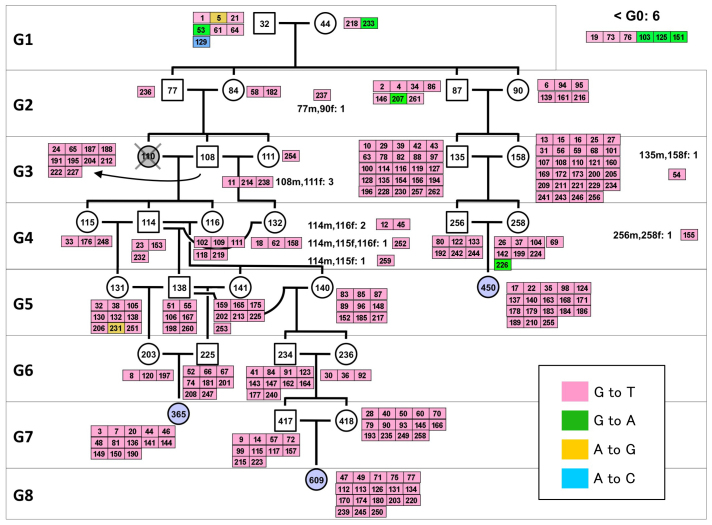
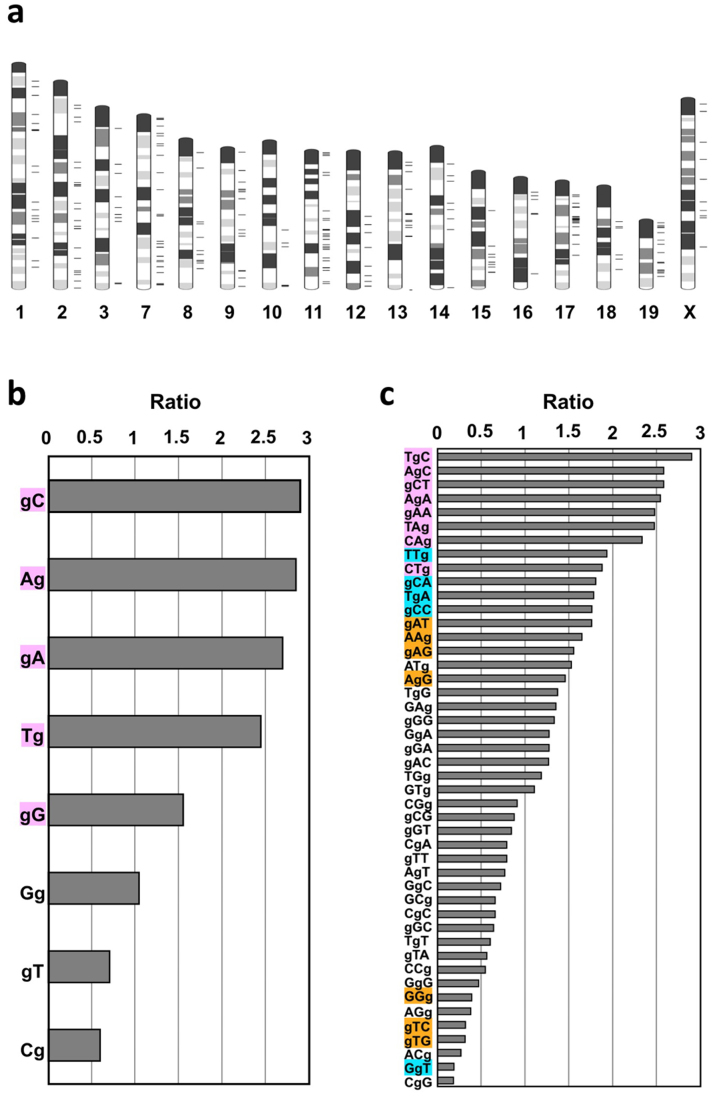
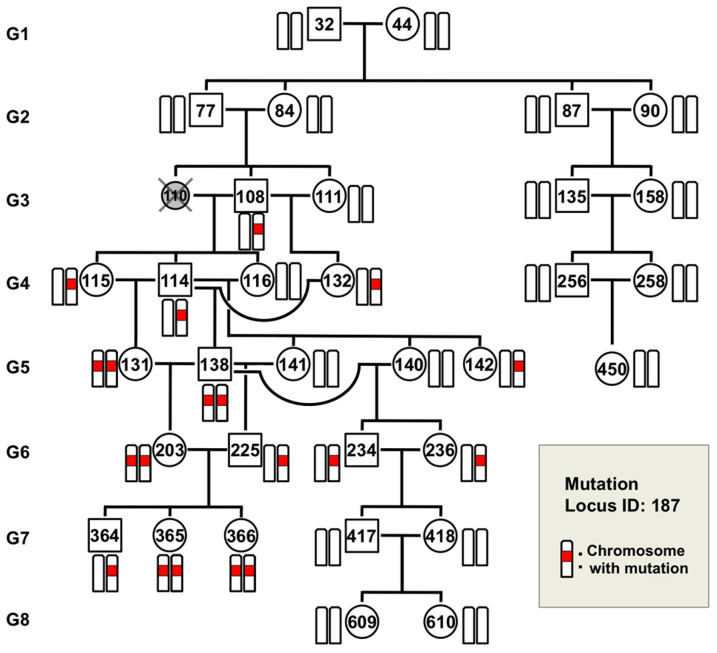
Spontaneous germline mutations generate genetic diversity in populations of sexually reproductive organisms, and are thus regarded as a driving force of evolution. However, the cause and mechanism remain unclear. 8-oxoguanine (8-oxoG) is a candidate molecule that causes germline mutations, because it makes DNA more prone to mutation and is constantly generated by reactive oxygen species in vivo. We show here that endogenous 8-oxoG caused de novo spontaneous and heritable G to T mutations in mice, which occurred at different stages in the germ cell lineage and were distributed throughout the chromosomes. Using exome analyses covering 40.9 Mb of mouse transcribed regions, we found increased frequencies of G to T mutations at a rate of 2 × 10(-7) mutations/base/generation in offspring of Mth1/Ogg1/Mutyh triple knockout (TOY-KO) mice, which accumulate 8-oxoG in the nuclear DNA of gonadal cells. The roles of MTH1, OGG1, and MUTYH are specific for the prevention of 8-oxoG-induced mutation, and 99% of the mutations observed in TOY-KO mice were G to T transversions caused by 8-oxoG; therefore, we concluded that 8-oxoG is a causative molecule for spontaneous and inheritable mutations of the germ lineage cells.
自发种系突变在有性生殖生物种群中产生遗传多样性,因此被视为进化的驱动力。然而,其原因和机制仍不清楚。8-氧代鸟嘌呤(8-oxoG)是一种导致种系突变的候选分子,因为它使DNA更容易发生突变,并且在体内由活性氧不断产生。我们在此表明,内源性8-oxoG在小鼠中引起了从头自发且可遗传的G到T突变,这些突变发生在生殖细胞谱系的不同阶段,并分布于整个染色体。通过对覆盖40.9兆碱基的小鼠转录区域进行外显子组分析,我们发现在性腺细胞的核DNA中积累8-oxoG的Mth1/Ogg1/Mutyh三敲除(TOY-KO)小鼠的后代中,G到T突变的频率以2×10⁻⁷突变/碱基/代的速率增加。MTH1、OGG1和MUTYH的作用在预防8-oxoG诱导的突变方面具有特异性,并且在TOY-KO小鼠中观察到的99%的突变是由8-oxoG引起的G到T颠换;因此,我们得出结论,8-oxoG是生殖系细胞自发和可遗传突变的致病分子。