Ahn D S, Parker D, Planet P J, Nieto P A, Bueno S M, Prince A
Departments of Pediatrics, Columbia University College of Physicians and Surgeons, New York, New York, USA.
1] Millennium Institute on Immunology and Immunotherapy, Santiago, Chile [2] Departamento de Genética Molecular y Microbiología, Facultad de Ciencias Biológicas, Pontificia Universidad Católica de Chile, Santiago, Chile.
Mucosal Immunol. 2014 Nov;7(6):1366-74. doi: 10.1038/mi.2014.24. Epub 2014 Apr 16.
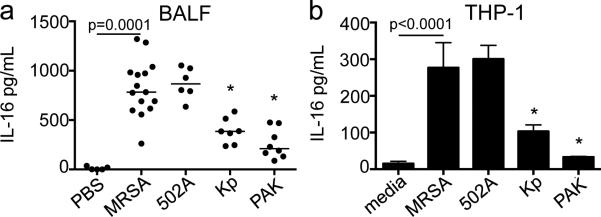
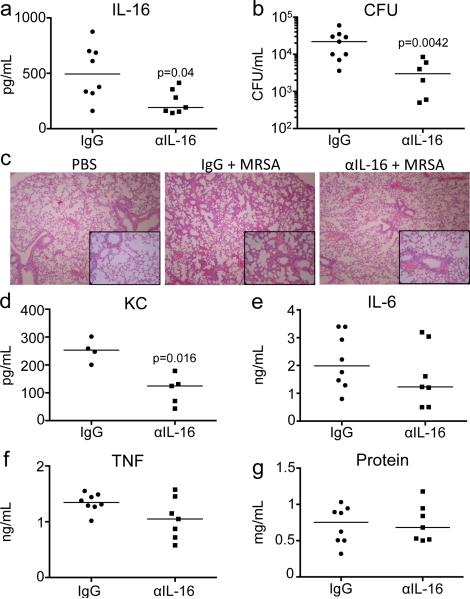
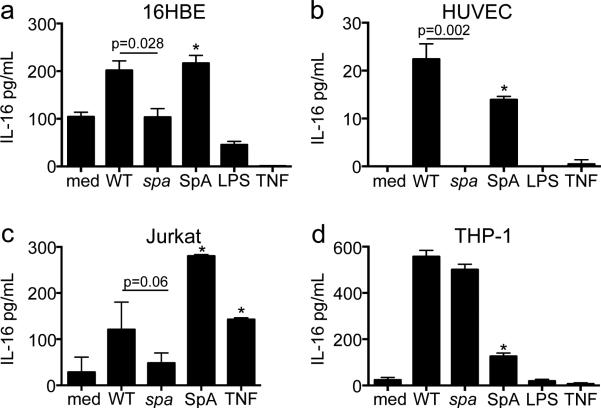
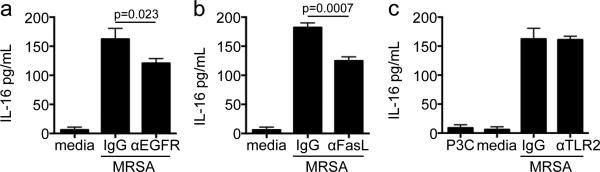
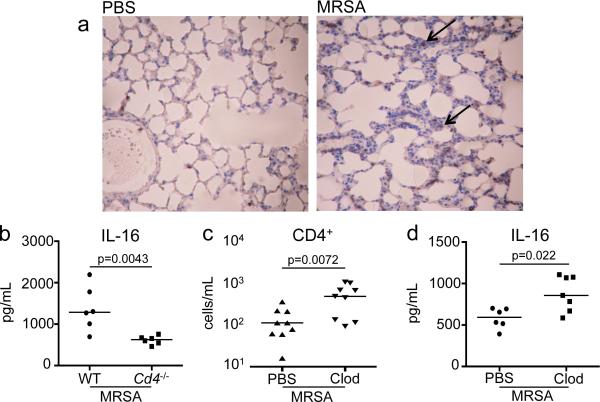
Staphylococcus aureus is a major cause of severe pneumonia. Multiple mechanisms of proinflammatory signaling are activated to recruit immune cells into the airway in response to S. aureus. We found that interleukin-16 (IL-16), a T cell cytokine that binds CD4, is potently activated by S. aureus, specifically by protein A (SpA), and to a much greater extent than by Gram-negative pathogens or lipopolysaccharide. IL-16 production involved multiple signals including ligation of tumor necrosis factor receptor (TNFR) family members or epidermal growth factor receptor, both receptors for SpA and generation of Ca(2+) fluxes to activate calpains and caspase-3. Although human airway epithelial cells, vascular endothelial cells, THP-1 and Jurkat T cells released IL-16 in response to S. aureus in vitro, in a murine model of pneumonia, CD4(+) cells were the major source of IL-16 suggesting the involvement of an autocrine signaling pathway. The production of IL-16 contributed to lung damage as neutralization of IL-16 enhanced S. aureus clearance and resulted in diminished lung pathology in S. aureus pneumonia. Our results suggest that the ability of S. aureus to activate TNFR1 and Ca(2+)/calpain signaling contribute to T cell activation and excessive inflammation in the setting of acute pneumonia.
金黄色葡萄球菌是严重肺炎的主要病因。为应对金黄色葡萄球菌,多种促炎信号传导机制被激活,以将免疫细胞招募到气道中。我们发现,白细胞介素-16(IL-16),一种结合CD4的T细胞细胞因子,被金黄色葡萄球菌强烈激活,特别是被蛋白A(SpA)激活,其激活程度远高于革兰氏阴性病原体或脂多糖。IL-16的产生涉及多种信号,包括肿瘤坏死因子受体(TNFR)家族成员或表皮生长因子受体的连接,这两种受体都是SpA的受体,以及Ca(2+)通量的产生以激活钙蛋白酶和半胱天冬酶-3。虽然人气道上皮细胞、血管内皮细胞、THP-1和Jurkat T细胞在体外对金黄色葡萄球菌产生反应时会释放IL-16,但在肺炎小鼠模型中,CD4(+)细胞是IL-16的主要来源,这表明存在自分泌信号通路。IL-16的产生导致肺损伤,因为中和IL-16可增强金黄色葡萄球菌的清除,并减轻金黄色葡萄球菌肺炎中的肺部病理变化。我们的结果表明,金黄色葡萄球菌激活TNFR1和Ca(2+)/钙蛋白酶信号的能力有助于急性肺炎情况下的T细胞活化和过度炎症反应。