Venkataraman Lavanya, Sivaraman Balakrishnan, Vaidya Pratik, Ramamurthi Anand
Department of Biomedical Engineering, Cleveland Clinic, Cleveland, OH, USA.
Department of Bioengineering, Clemson University, Clemson, SC, USA.
J Tissue Eng Regen Med. 2016 Dec;10(12):1041-1056. doi: 10.1002/term.1889. Epub 2014 Apr 16.
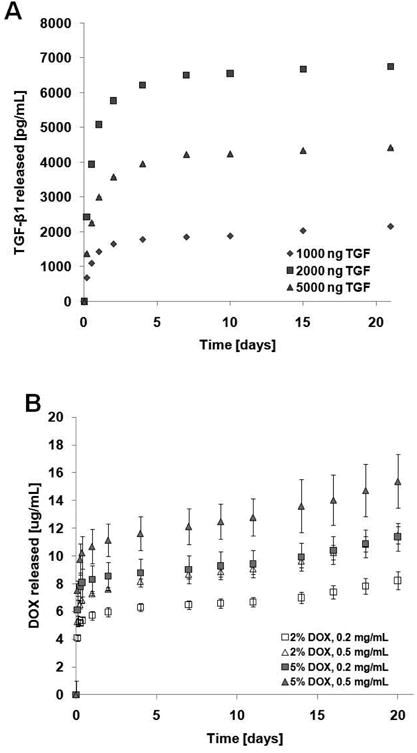
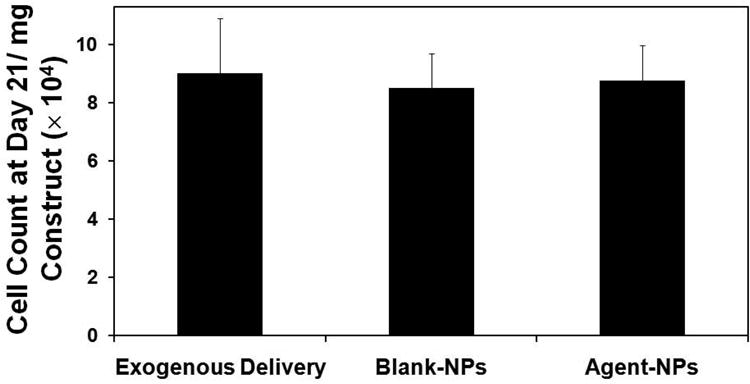
The degradation of elastic matrix in the infrarenal aortic wall is a critical parameter underlying the formation and progression of abdominal aortic aneurysms. It is mediated by the chronic overexpression of matrix metalloprotease (MMP)-2 and MMP-9, leading to a progressive loss of elasticity and weakening of the aortic wall. Delivery of therapeutic agents to inhibit MMPs, while concurrently coaxing cell-based regenerative repair of the elastic matrix represents a potential strategy for slowing or arresting abdominal aortic aneurysm growth. Previous studies have demonstrated elastogenic induction of healthy and aneurysmal aortic smooth muscle cells and inhibition of MMPs, following exogenous delivery of elastogenic factors such as transforming growth factor (TGF)-β1, as well as MMP-inhibitors such as doxycycline (DOX) in two-dimensional culture. Based on these findings, and others that demonstrated elastogenic benefits of nanoparticulate delivery of these agents in two-dimensional culture, poly(lactide-co-glycolide) nanoparticles were developed for localized, controlled and sustained delivery of DOX and TGF-β1 to human aortic smooth muscle cells within a three-dimensional gels of type I collagen, which closely simulate the arterial tissue microenvironment. DOX and TGF-β1 released from these nanoparticles influenced elastogenic outcomes positively within the collagen constructs over 21 days of culture, which were comparable to that induced by exogenous supplementation of DOX and TGF-β1 within the culture medium. However, this was accomplished at doses ~20-fold lower than the exogenous dosages of the agents, illustrating that their localized, controlled and sustained delivery from nanoparticles embedded within a three-dimensional scaffold is an efficient strategy for directed elastogenesis. Copyright © 2014 John Wiley & Sons, Ltd.
肾下腹主动脉壁弹性基质的降解是腹主动脉瘤形成和进展的关键参数。它由基质金属蛋白酶(MMP)-2和MMP-9的慢性过度表达介导,导致弹性逐渐丧失和主动脉壁变弱。递送治疗剂以抑制MMPs,同时诱导基于细胞的弹性基质再生修复,是减缓或阻止腹主动脉瘤生长的潜在策略。先前的研究表明,在二维培养中,外源性递送诸如转化生长因子(TGF)-β1等弹性生成因子以及诸如强力霉素(DOX)等MMP抑制剂后,健康和动脉瘤性主动脉平滑肌细胞可发生弹性生成诱导并抑制MMPs。基于这些发现以及其他表明这些药物在二维培养中通过纳米颗粒递送具有弹性生成益处的研究,开发了聚(丙交酯-共-乙交酯)纳米颗粒,用于在I型胶原三维凝胶中将DOX和TGF-β1局部、可控且持续地递送至人主动脉平滑肌细胞,该凝胶紧密模拟动脉组织微环境。在21天的培养过程中,从这些纳米颗粒释放的DOX和TGF-β1在胶原构建体中对弹性生成结果产生了积极影响,这与在培养基中外源性补充DOX和TGF-β1所诱导的结果相当。然而,这是在比药物外源性剂量低约20倍的剂量下实现的,说明从嵌入三维支架内的纳米颗粒进行局部、可控且持续的递送是一种有效的定向弹性生成策略。版权所有© 2014约翰威立父子有限公司。