1] Division of Biology and Biological Engineering 156-29, California Institute of Technology, Pasadena, California 91125, USA [2] Howard Hughes Medical Institute, Pasadena, California 91125, USA.
Computation and Neural Systems, California Institute of Technology, Pasadena, California 91125, USA.
Nature. 2014 May 29;509(7502):627-32. doi: 10.1038/nature13169. Epub 2014 Apr 16.
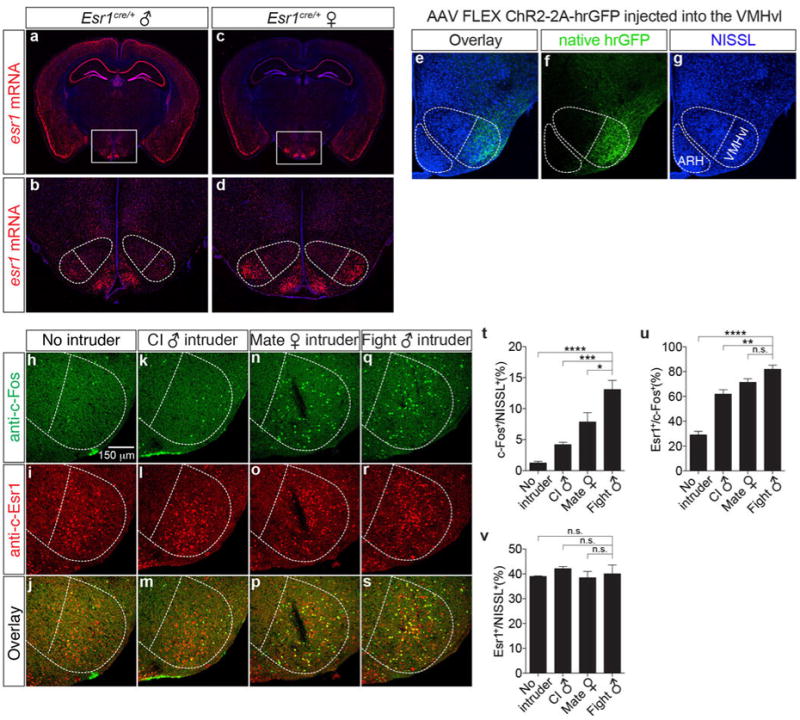
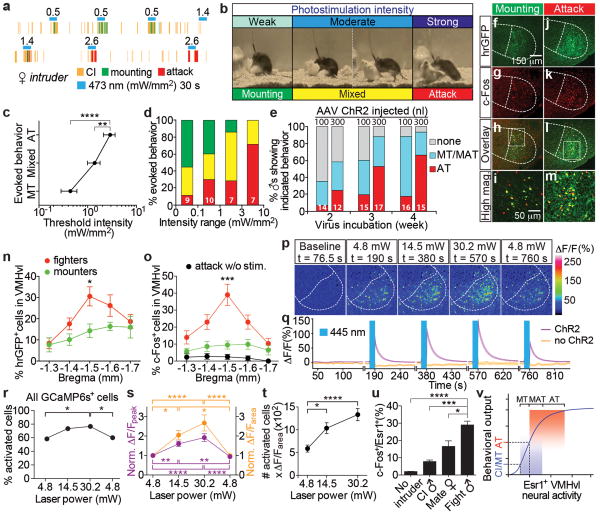
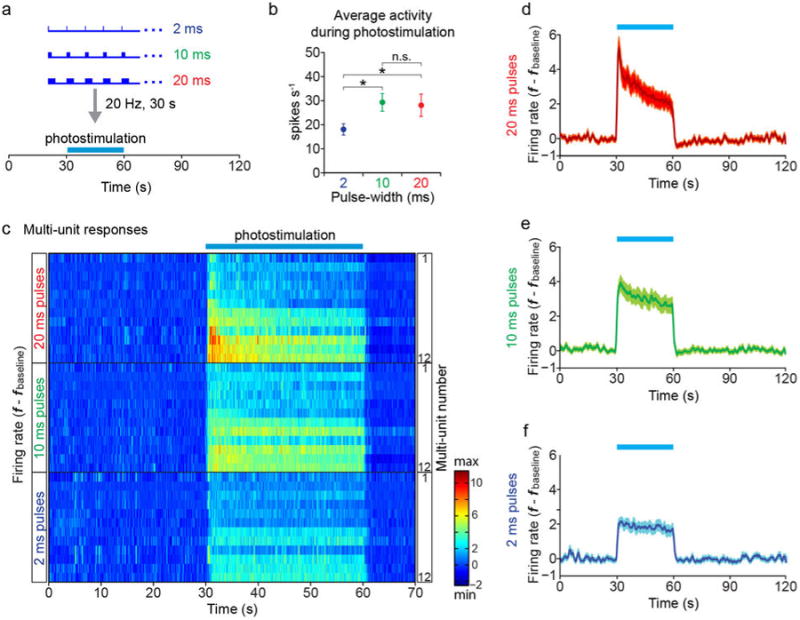
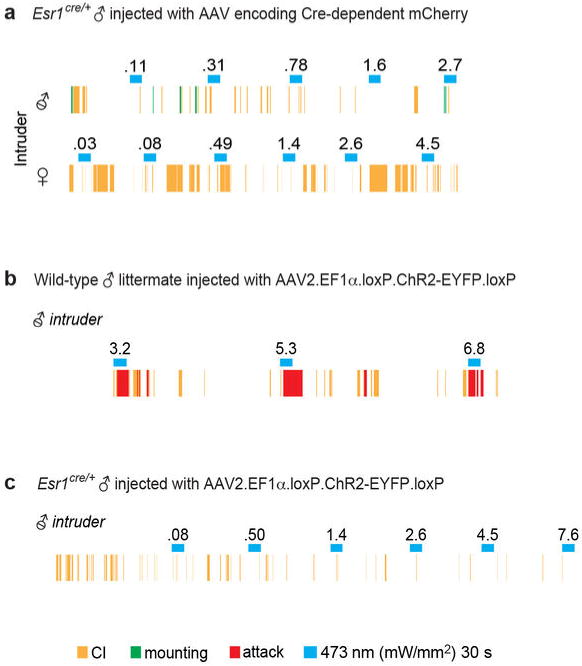
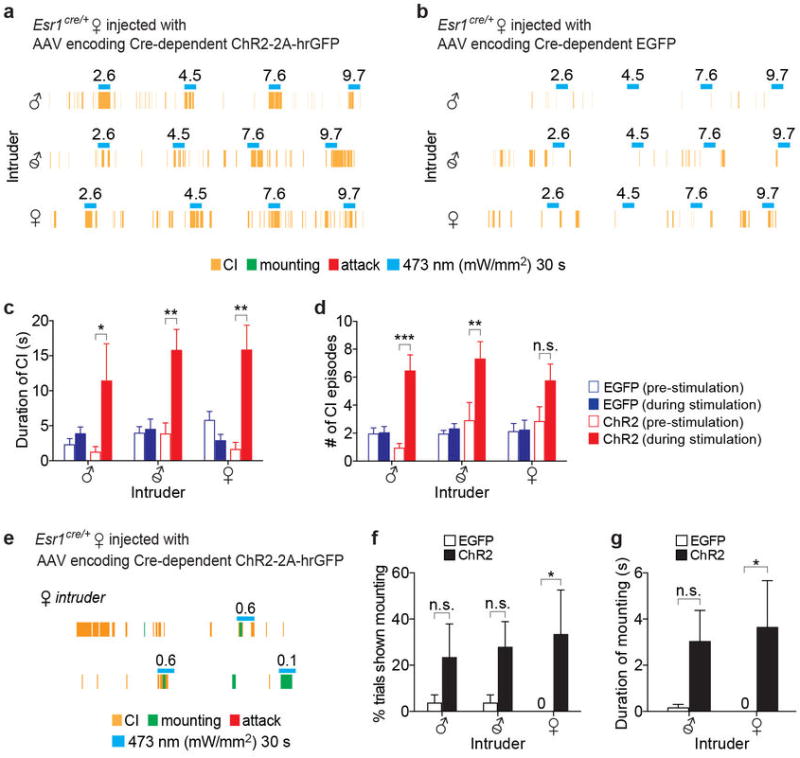
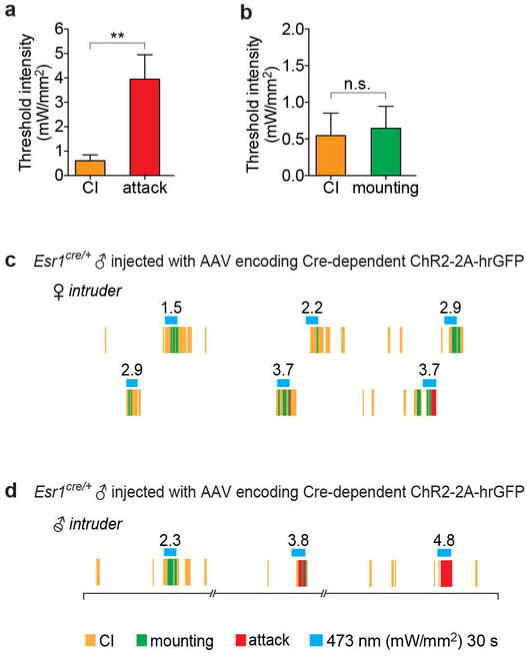
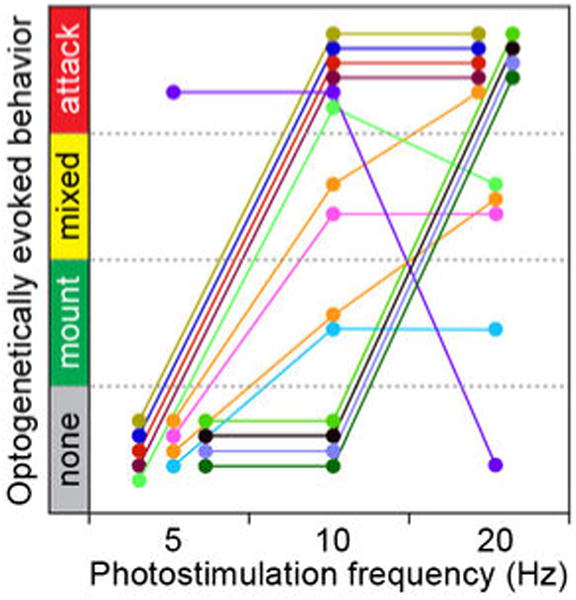
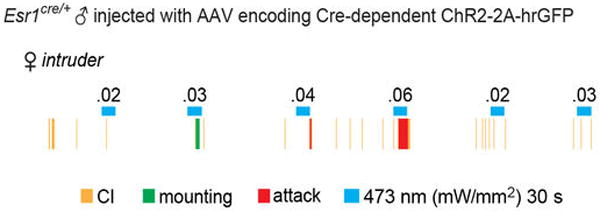
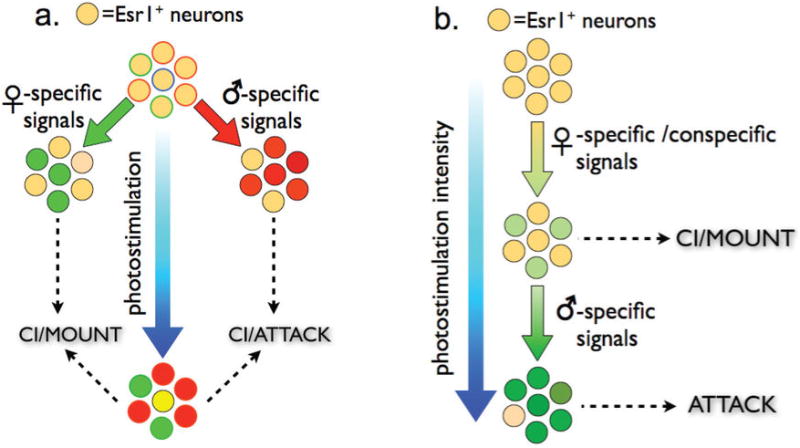
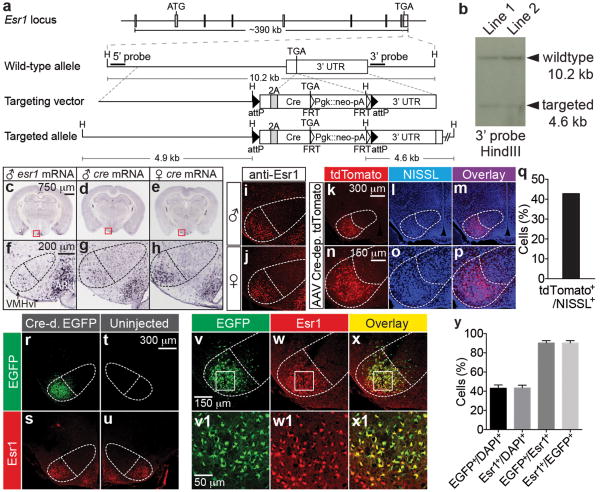
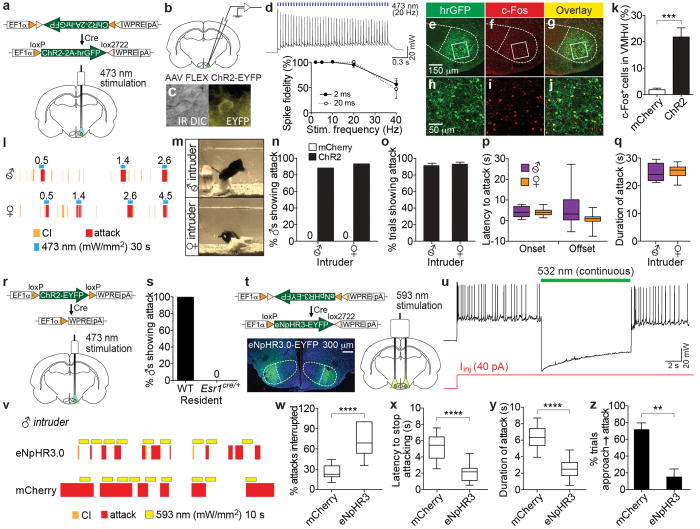
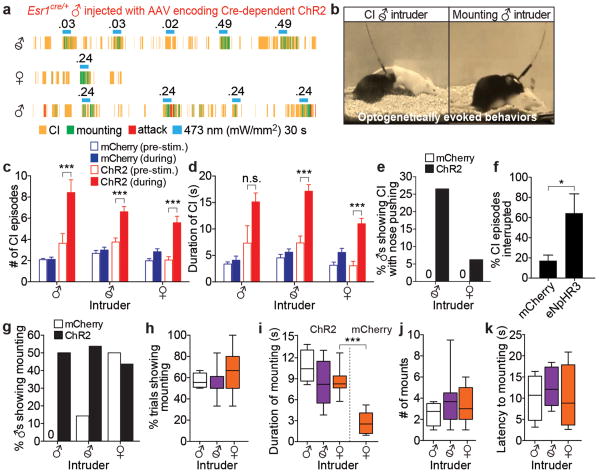
Social behaviours, such as aggression or mating, proceed through a series of appetitive and consummatory phases that are associated with increasing levels of arousal. How such escalation is encoded in the brain, and linked to behavioural action selection, remains an unsolved problem in neuroscience. The ventrolateral subdivision of the murine ventromedial hypothalamus (VMHvl) contains neurons whose activity increases during male-male and male-female social encounters. Non-cell-type-specific optogenetic activation of this region elicited attack behaviour, but not mounting. We have identified a subset of VMHvl neurons marked by the oestrogen receptor 1 (Esr1), and investigated their role in male social behaviour. Optogenetic manipulations indicated that Esr1(+) (but not Esr1(-)) neurons are sufficient to initiate attack, and that their activity is continuously required during ongoing agonistic behaviour. Surprisingly, weaker optogenetic activation of these neurons promoted mounting behaviour, rather than attack, towards both males and females, as well as sniffing and close investigation. Increasing photostimulation intensity could promote a transition from close investigation and mounting to attack, within a single social encounter. Importantly, time-resolved optogenetic inhibition experiments revealed requirements for Esr1(+) neurons in both the appetitive (investigative) and the consummatory phases of social interactions. Combined optogenetic activation and calcium imaging experiments in vitro, as well as c-Fos analysis in vivo, indicated that increasing photostimulation intensity increases both the number of active neurons and the average level of activity per neuron. These data suggest that Esr1(+) neurons in VMHvl control the progression of a social encounter from its appetitive through its consummatory phases, in a scalable manner that reflects the number or type of active neurons in the population.
社会行为,如攻击或交配,通过一系列的欲望和满足阶段进行,这些阶段与唤醒水平的增加有关。这种升级是如何在大脑中编码的,以及与行为动作选择的联系,仍然是神经科学中的一个未解决的问题。鼠内侧下丘脑腹外侧部分(VMHvl)包含在雄性间和雄性-雌性社会接触期间活动增加的神经元。该区域的非细胞类型特异性光遗传学激活引起攻击行为,但不引起交配。我们已经确定了一组 VMHvl 神经元,其特征是雌激素受体 1(Esr1),并研究了它们在雄性社会行为中的作用。光遗传学操作表明,Esr1(+)(但不是 Esr1(-))神经元足以引发攻击,并且在持续的攻击行为中需要其活性。令人惊讶的是,这些神经元的较弱光遗传学激活促进了对雄性和雌性的交配行为,以及嗅探和近距离调查。在单次社会接触中,增加光刺激强度可以促进从近距离调查和交配到攻击的转变。重要的是,时间分辨光遗传学抑制实验揭示了 Esr1(+)神经元在社会互动的欲望(调查)和满足阶段都有需求。体外的联合光遗传学激活和钙成像实验,以及体内的 c-Fos 分析,表明增加光刺激强度会增加活跃神经元的数量和每个神经元的平均活动水平。这些数据表明,VMHvl 中的 Esr1(+)神经元以可扩展的方式控制社会互动从欲望到满足阶段的进展,这种方式反映了群体中活跃神经元的数量或类型。