Pathak Narendra, Austin-Tse Christina A, Liu Yan, Vasilyev Aleksandr, Drummond Iain A
Nephrology Division, Massachusetts General Hospital, Charlestown, MA 02129
Department of Genetics, Harvard Medical School, Boston, MA 02115.
Mol Biol Cell. 2014 Jun 15;25(12):1836-44. doi: 10.1091/mbc.E13-01-0033. Epub 2014 Apr 17.
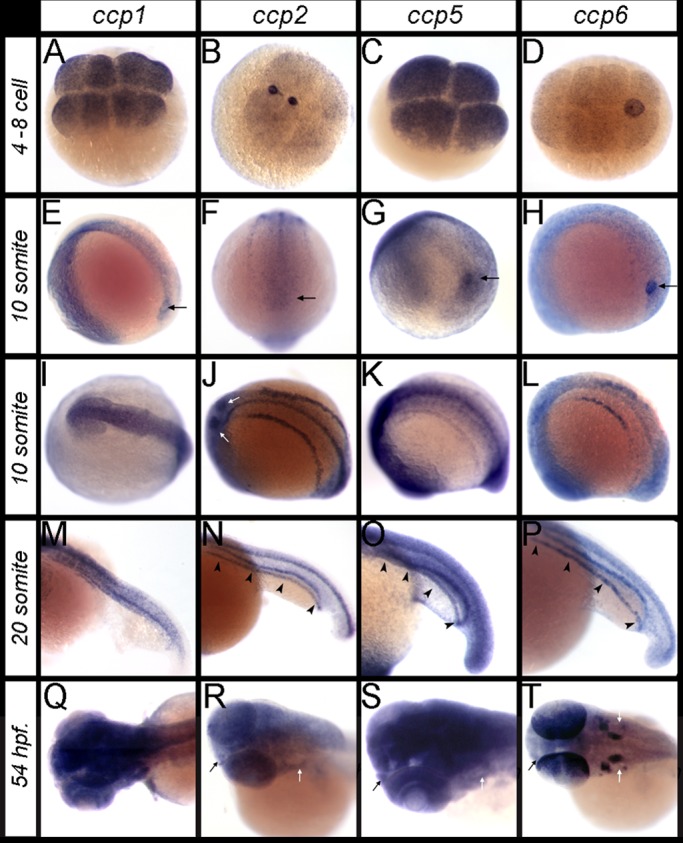
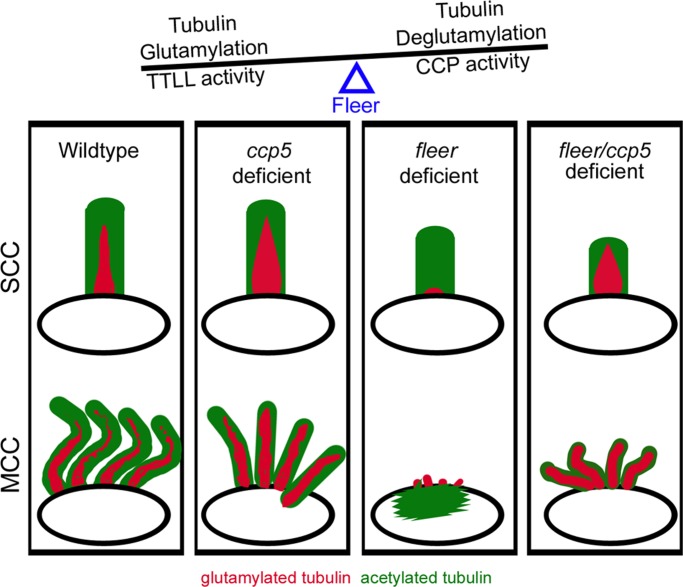
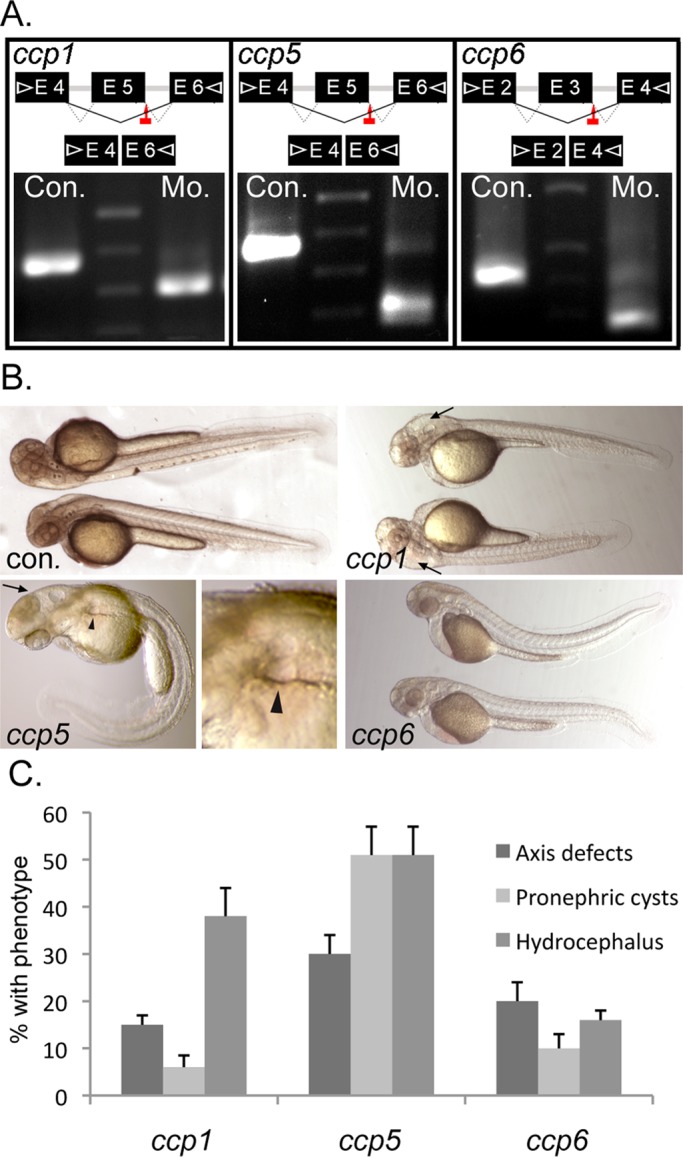
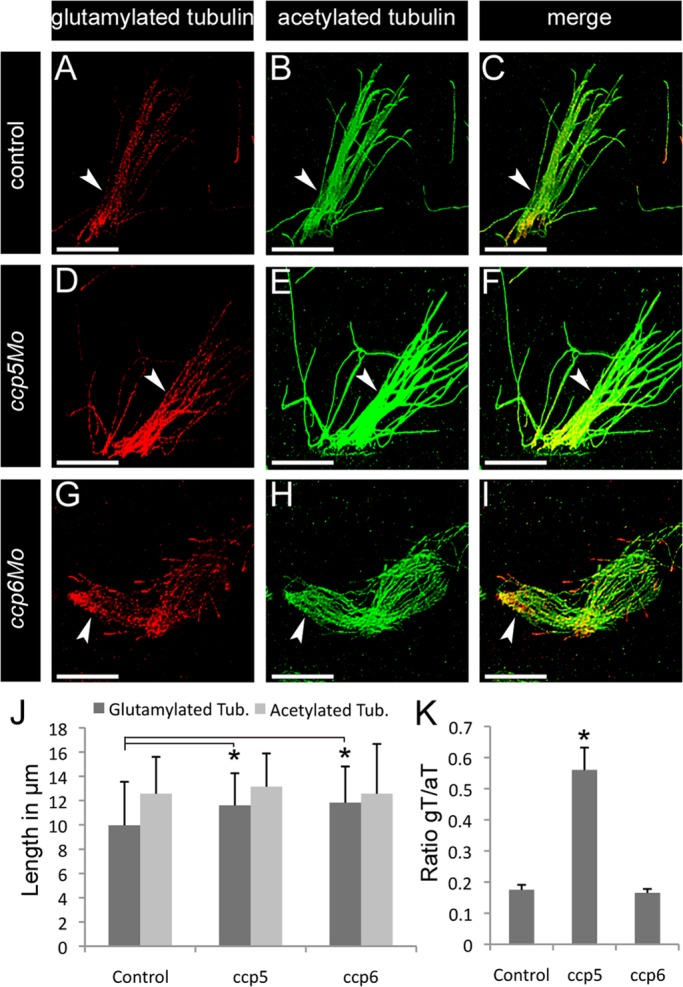
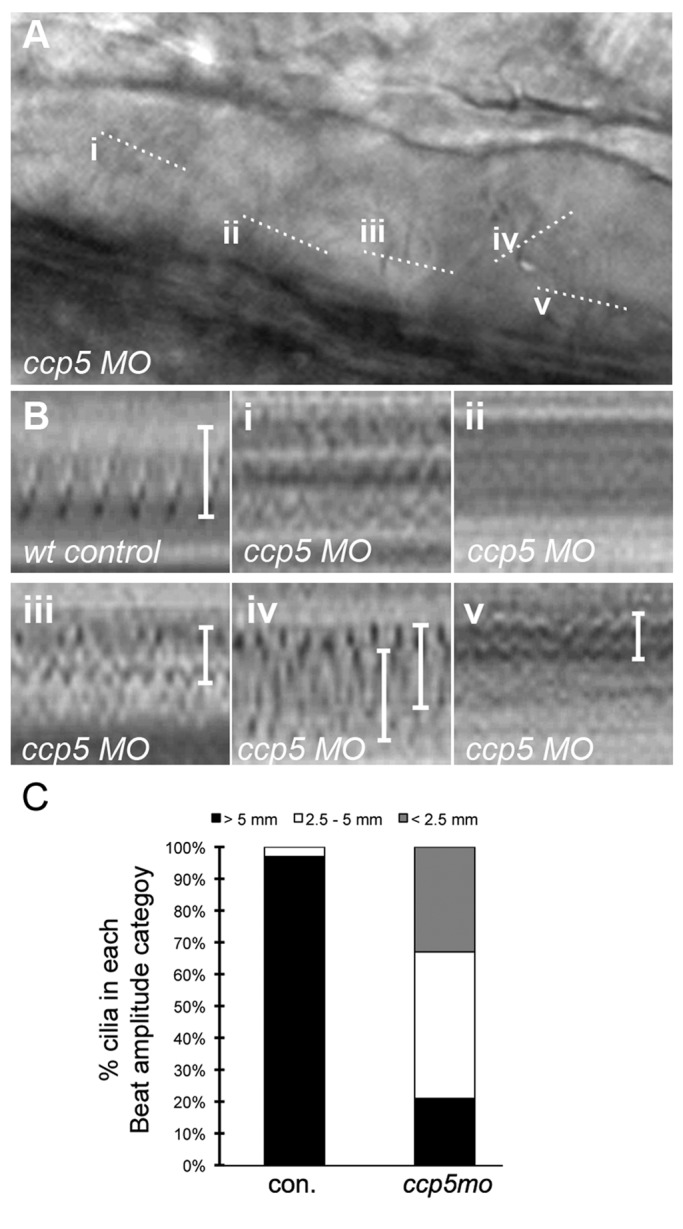
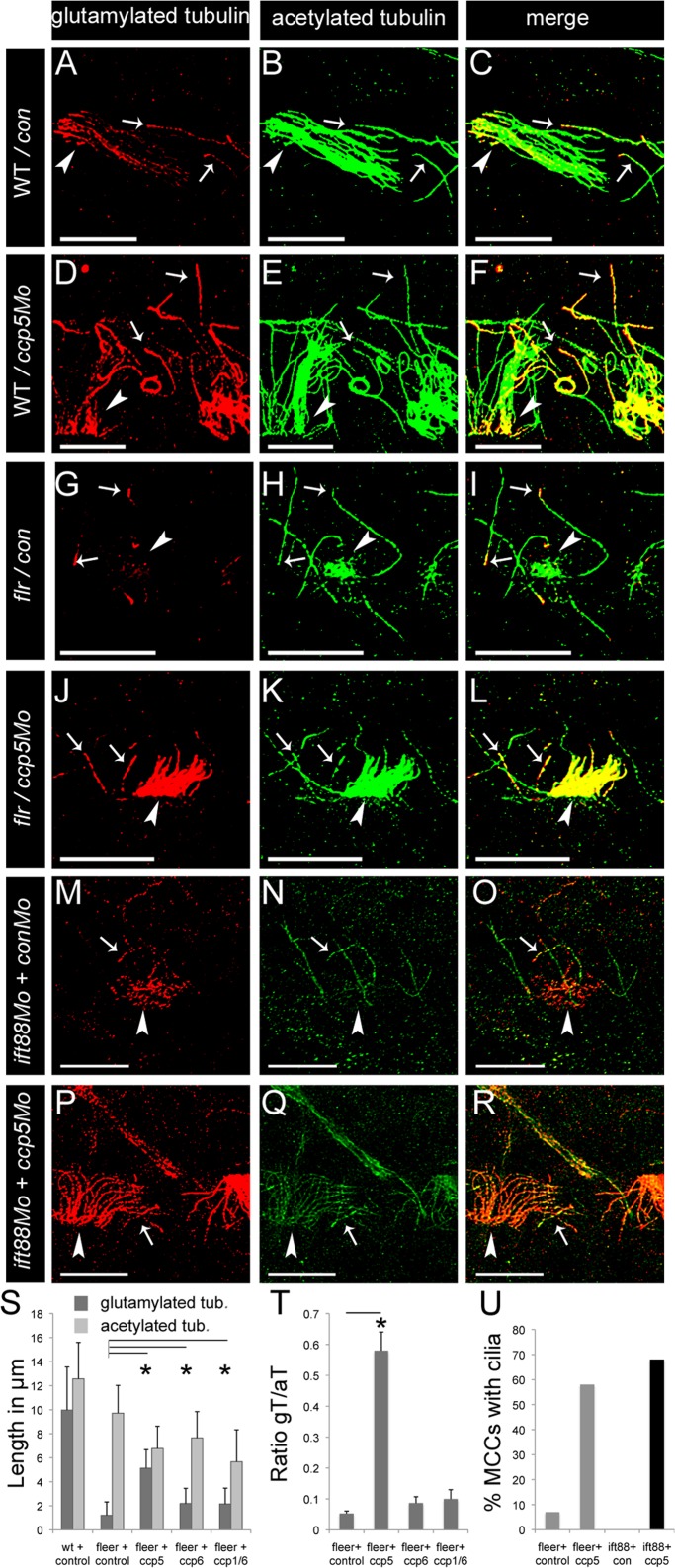
Glutamylation is a functionally important tubulin posttranslational modification enriched on stable microtubules of neuronal axons, mitotic spindles, centrioles, and cilia. In vertebrates, balanced activities of tubulin glutamyl ligase and cytoplasmic carboxypeptidase deglutamylase enzymes maintain organelle- and cell type-specific tubulin glutamylation patterns. Tubulin glutamylation in cilia is regulated via restricted subcellular localization or expression of tubulin glutamyl ligases (ttlls) and nonenzymatic proteins, including the zebrafish TPR repeat protein Fleer/Ift70. Here we analyze the expression patterns of ccp deglutamylase genes during zebrafish development and the effects of ccp gene knockdown on cilia formation, morphology, and tubulin glutamylation. The deglutamylases ccp2, ccp5, and ccp6 are expressed in ciliated cells, whereas ccp1 expression is restricted to the nervous system. Only ccp5 knockdown increases cilia tubulin glutamylation, induces ciliopathy phenotypes, including axis curvature, hydrocephalus, and pronephric cysts, and disrupts multicilia motility, suggesting that Ccp5 is the principal tubulin deglutamylase that maintains functional levels of cilia tubulin glutamylation. The ability of ccp5 knockdown to restore cilia tubulin glutamylation in fleer/ift70 mutants and rescue pronephric multicilia formation in both fleer- and ift88-deficient zebrafish indicates that tubulin glutamylation is a key driver of ciliogenesis.
谷氨酰胺化是一种功能上重要的微管蛋白翻译后修饰,在神经元轴突、有丝分裂纺锤体、中心粒和纤毛的稳定微管上富集。在脊椎动物中,微管蛋白谷氨酰胺连接酶和细胞质羧肽酶去谷氨酰胺酶的平衡活性维持细胞器和细胞类型特异性的微管蛋白谷氨酰胺化模式。纤毛中的微管蛋白谷氨酰胺化通过微管蛋白谷氨酰胺连接酶(ttlls)和非酶蛋白(包括斑马鱼TPR重复蛋白Fleer/Ift70)的受限亚细胞定位或表达来调节。在这里,我们分析了斑马鱼发育过程中ccp去谷氨酰胺酶基因的表达模式,以及ccp基因敲低对纤毛形成、形态和微管蛋白谷氨酰胺化的影响。去谷氨酰胺酶ccp2、ccp5和ccp6在纤毛细胞中表达,而ccp1的表达仅限于神经系统。只有ccp5敲低会增加纤毛微管蛋白谷氨酰胺化,诱导纤毛病表型,包括轴弯曲、脑积水和前肾囊肿,并破坏多纤毛运动,这表明Ccp5是维持纤毛微管蛋白谷氨酰胺化功能水平的主要微管蛋白去谷氨酰胺酶。ccp5敲低恢复fleer/ift70突变体中纤毛微管蛋白谷氨酰胺化以及拯救fleer和ift88缺陷斑马鱼中前肾多纤毛形成的能力表明,微管蛋白谷氨酰胺化是纤毛发生的关键驱动因素。