Ohira Tomotaka, Ohira Takashi, Kawano Fuminori, Shibaguchi Tsubasa, Okabe Hirooki, Goto Katsumasa, Ogita Futoshi, Sudoh Masamichi, Roy Roland Richard, Edgerton Victor Reggie, Cancedda Ranieri, Ohira Yoshinobu
Graduate School of Health Sciences, Toyohashi SOZO University, Toyohashi City, 440-8511, Aichi, Japan.
Space Biomedical Research Office, Japan Aerospace Exploration Agency, Tsukuba City, 305-8505, Ibaraki, Japan.
Physiol Rep. 2014 Jan 13;2(1):e00183. doi: 10.1002/phy2.183. eCollection 2014 Jan 1.
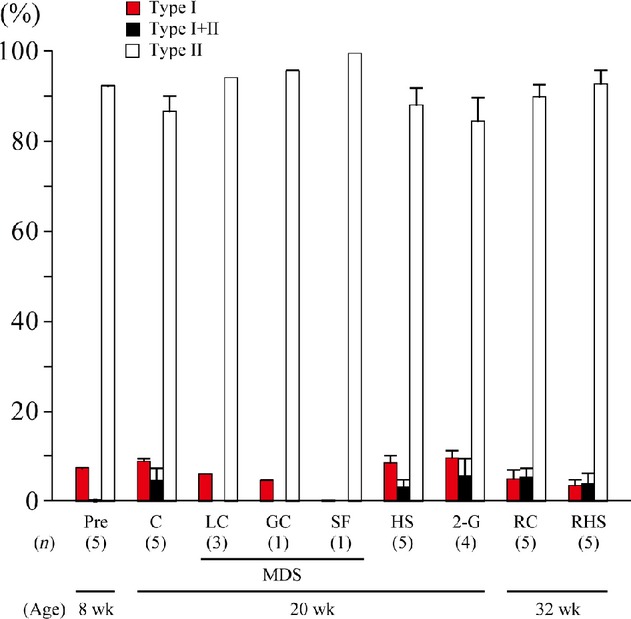
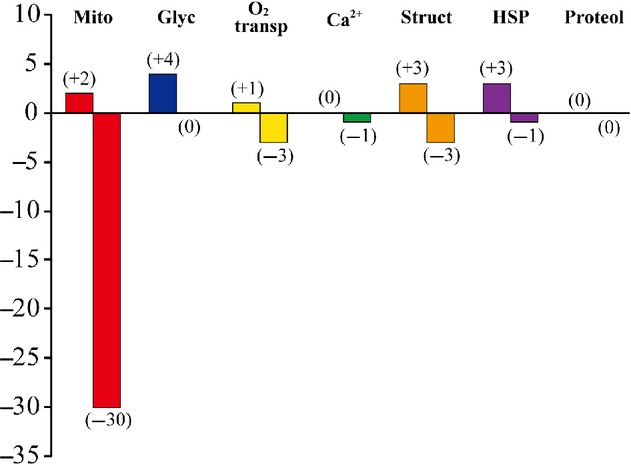
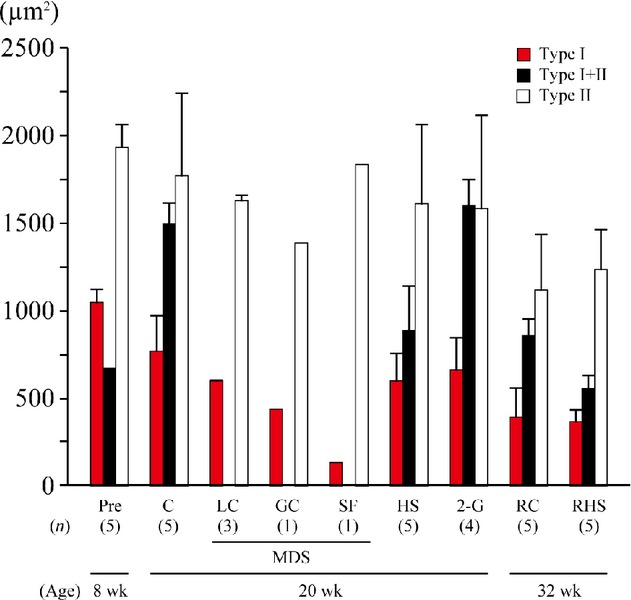
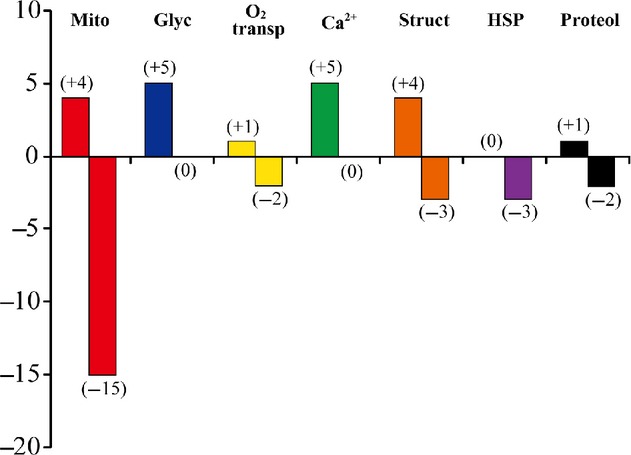
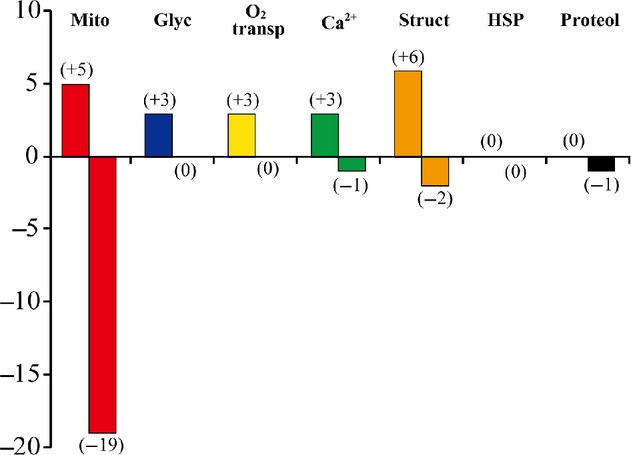
The effects of 3 months of spaceflight (SF), hindlimb suspension, or exposure to 2G on the characteristics of neck muscle in mice were studied. Three 8-week-old male C57BL/10J wild-type mice were exposed to microgravity on the International Space Station in mouse drawer system (MDS) project, although only one mouse returned to the Earth alive. Housing of mice in a small MDS cage (11.6 × 9.8-cm and 8.4-cm height) and/or in a regular vivarium cage was also performed as the ground controls. Furthermore, ground-based hindlimb suspension and 2G exposure by using animal centrifuge (n = 5 each group) were performed. SF-related shift of fiber phenotype from type I to II and atrophy of type I fibers were noted. Shift of fiber phenotype was related to downregulation of mitochondrial proteins and upregulation of glycolytic proteins, suggesting a shift from oxidative to glycolytic metabolism. The responses of proteins related to calcium handling, myofibrillar structure, and heat stress were also closely related to the shift of muscular properties toward fast-twitch type. Surprisingly, responses of proteins to 2G exposure and hindlimb suspension were similar to SF, although the shift of fiber types and atrophy were not statistically significant. These phenomena may be related to the behavior of mice that the relaxed posture without lifting their head up was maintained after about 2 weeks. It was suggested that inhibition of normal muscular activities associated with gravitational unloading causes significant changes in the protein expression related to metabolic and/or morphological properties in mouse neck muscle.
研究了3个月的太空飞行(SF)、后肢悬吊或暴露于2G环境对小鼠颈部肌肉特征的影响。三只8周龄的雄性C57BL/10J野生型小鼠在国际空间站的小鼠抽屉系统(MDS)项目中暴露于微重力环境,不过只有一只小鼠活着返回地球。将小鼠饲养在小型MDS笼(11.6×9.8厘米,高8.4厘米)中和/或常规饲养笼中作为地面对照。此外,还进行了地面后肢悬吊和使用动物离心机进行2G暴露实验(每组n = 5)。观察到与SF相关的纤维表型从I型向II型转变以及I型纤维萎缩。纤维表型的转变与线粒体蛋白下调和糖酵解蛋白上调有关,表明从氧化代谢向糖酵解代谢转变。与钙处理、肌原纤维结构和热应激相关的蛋白质反应也与肌肉特性向快肌型转变密切相关。令人惊讶的是,蛋白质对2G暴露和后肢悬吊的反应与SF相似,尽管纤维类型的转变和萎缩在统计学上不显著。这些现象可能与小鼠的行为有关,即大约2周后小鼠保持不抬头的放松姿势。研究表明,与重力卸载相关的正常肌肉活动抑制会导致小鼠颈部肌肉中与代谢和/或形态特性相关的蛋白质表达发生显著变化。