Jiang Ning, Wang Dongsheng, Hu Zhongliang, Shin Hyung Ju C, Qian Guoqing, Rahman Mohammad Aminur, Zhang Hongzheng, Amin A R M Ruhul, Nannapaneni Sreenivas, Wang Xiaojing, Chen Zhengjia, Garcia Gabriela, MacBeath Gavin, Shin Dong M, Khuri Fadlo R, Ma Jun, Chen Zhuo G, Saba Nabil F
Authors' Affiliations: State Key Laboratory of Oncology in Southern China, Department of Radiation Oncology, Sun Yat-sen University Cancer Center, Guangzhou, Guangdong, People's Republic of China; Department of Hematology and Medical Oncology, Winship Cancer Institute Emory University School of Medicine;
Department of Hematology and Medical Oncology, Winship Cancer Institute Emory University School of Medicine;
Mol Cancer Ther. 2014 Jul;13(7):1826-36. doi: 10.1158/1535-7163.MCT-13-1093. Epub 2014 Apr 18.
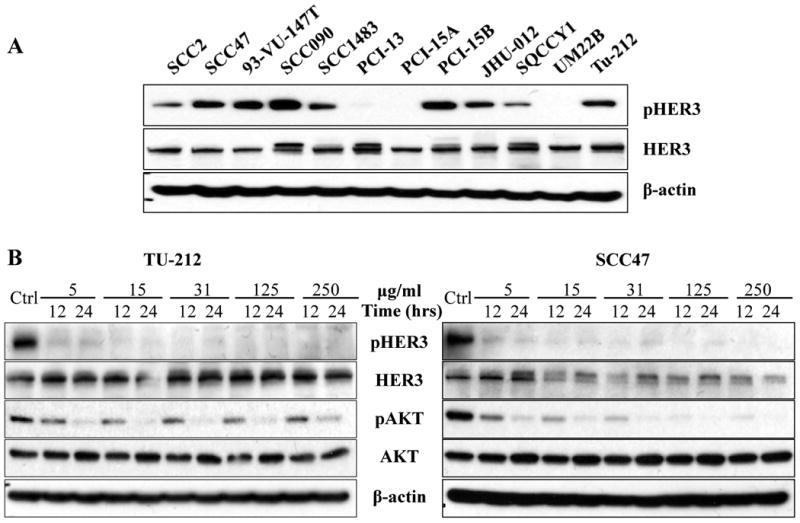
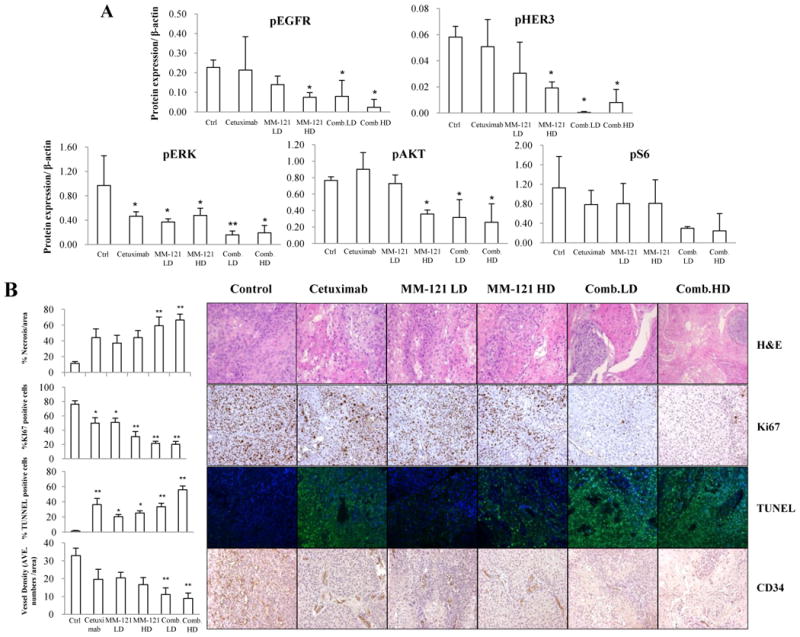
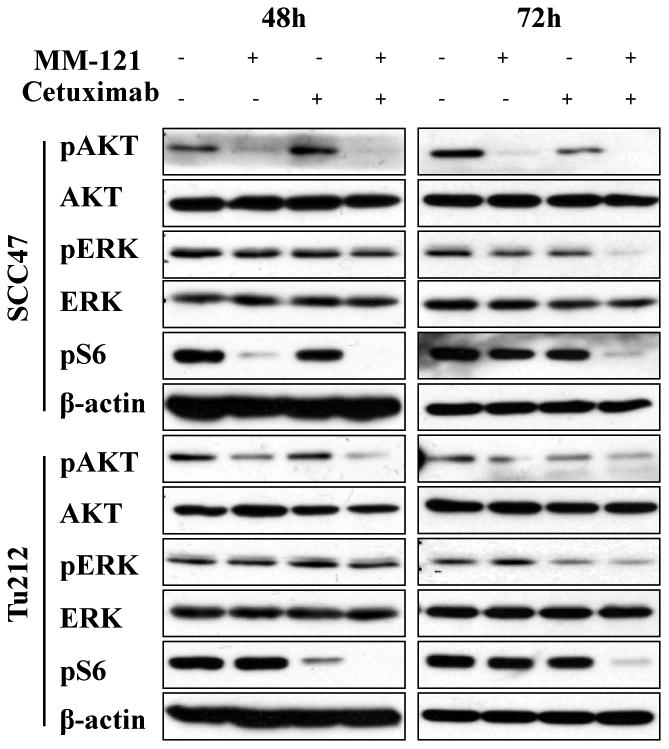
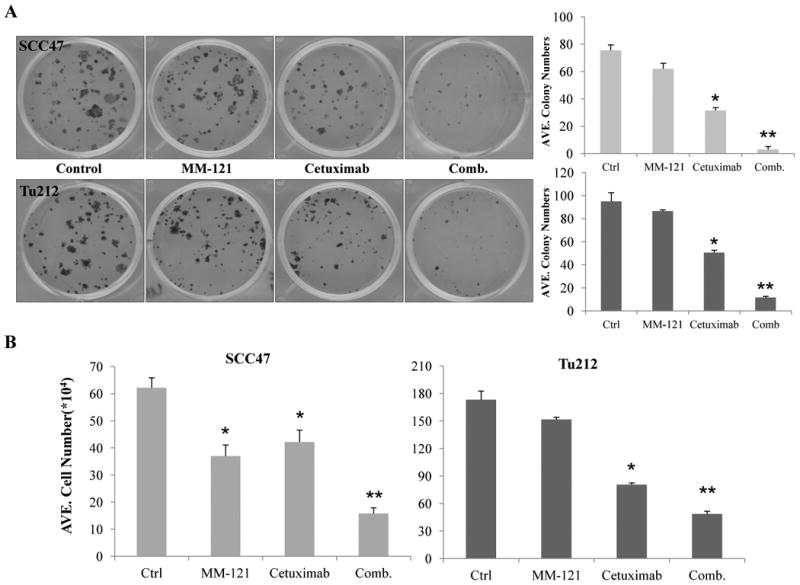
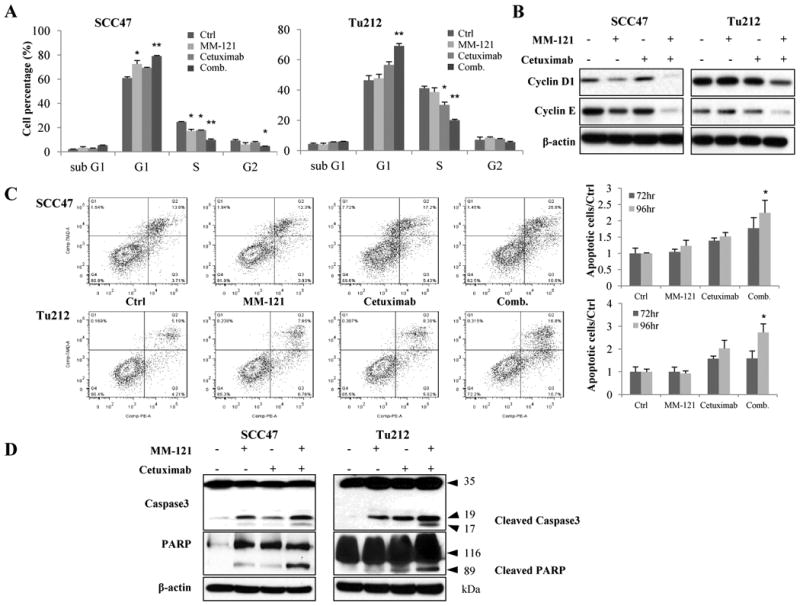
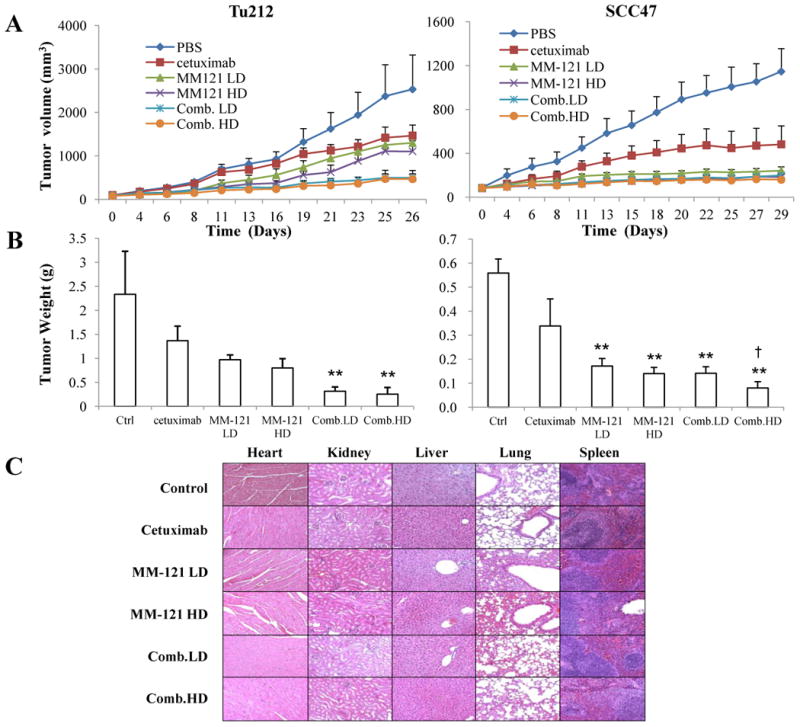
The EGFR monoclonal antibody cetuximab is the only approved targeted agent for treating head and neck squamous cell carcinoma (HNSCC). Yet resistance to cetuximab has hindered its activity in this disease. Intrinsic or compensatory HER3 signaling may contribute to cetuximab resistance. To investigate the therapeutic benefit of combining MM-121/SAR256212, an anti-HER3 monoclonal antibody, with cetuximab in HNSCC, we initially screened 12 HNSCC cell lines for total and phosphorylated levels of the four HER receptors. We also investigated the combination of MM-121 with cetuximab in preclinical models of HNSCC. Our results revealed that HER3 is widely expressed and activated in HNSCC cell lines. MM-121 strongly inhibited phosphorylation of HER3 and AKT. When combined with cetuximab, MM-121 exerted a more potent antitumor activity through simultaneously inhibiting the activation of HER3 and EGFR and consequently the downstream PI3K/AKT and ERK pathways in vitro. Both high and low doses of MM-121 in combination with cetuximab significantly suppressed tumor growth in xenograft models and inhibited activations of HER3, EGFR, AKT, and ERK in vivo. Our work is the first report on this new combination in HNSCC and supports the concept that HER3 inhibition may play an important role in future therapy of HNSCC. Our results open the door for further mechanistic studies to better understand the role of HER3 in resistance to EGFR inhibitors in HNSCC.
表皮生长因子受体(EGFR)单克隆抗体西妥昔单抗是唯一被批准用于治疗头颈部鳞状细胞癌(HNSCC)的靶向药物。然而,对西妥昔单抗的耐药性阻碍了其在该疾病中的疗效。内在或代偿性HER3信号传导可能导致西妥昔单抗耐药。为了研究抗HER3单克隆抗体MM - 121/SAR256212与西妥昔单抗联合用于HNSCC治疗的益处,我们首先筛选了12种HNSCC细胞系,检测四种HER受体的总水平和磷酸化水平。我们还在HNSCC临床前模型中研究了MM - 121与西妥昔单抗的联合应用。我们的结果显示,HER3在HNSCC细胞系中广泛表达并被激活。MM - 121强烈抑制HER3和AKT的磷酸化。与西妥昔单抗联合使用时,MM - 121通过在体外同时抑制HER3和EGFR的激活以及下游的PI3K/AKT和ERK途径,发挥更强的抗肿瘤活性。高剂量和低剂量的MM - 121与西妥昔单抗联合使用均能显著抑制异种移植模型中的肿瘤生长,并在体内抑制HER3、EGFR、AKT和ERK的激活。我们的工作是关于HNSCC中这种新联合治疗的首次报道,并支持HER3抑制可能在HNSCC未来治疗中发挥重要作用的观点。我们的结果为进一步的机制研究打开了大门,以便更好地理解HER3在HNSCC对EGFR抑制剂耐药中的作用。