McCarthy Claudia A, Vinh Antony, Miller Alyson A, Hallberg Anders, Alterman Mathias, Callaway Jennifer K, Widdop Robert E
Department of Pharmacology, Monash University, Clayton, Victoria, Australia.
Department of Medical Sciences, RMIT University, Bundoora, Victoria, Australia.
PLoS One. 2014 Apr 21;9(4):e95762. doi: 10.1371/journal.pone.0095762. eCollection 2014.
In this study, the neuroprotective effect of a novel nonpeptide AT2R agonist, C21, was examined in a conscious model of stroke to verify a class effect of AT2R agonists as neuroprotective agents.
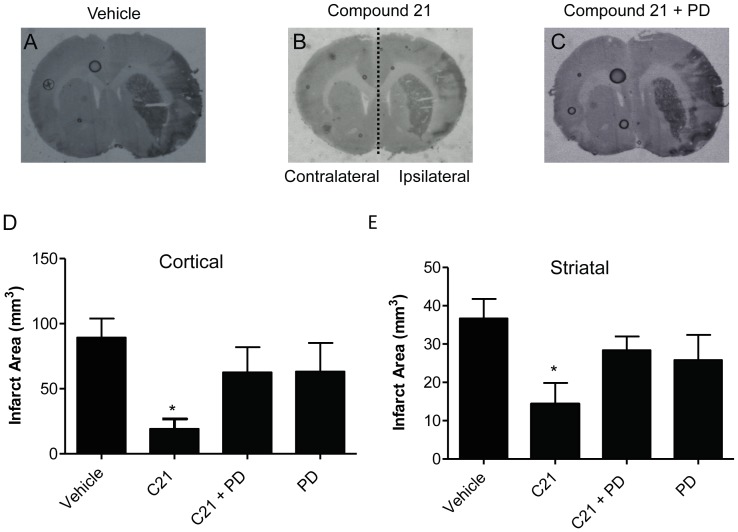
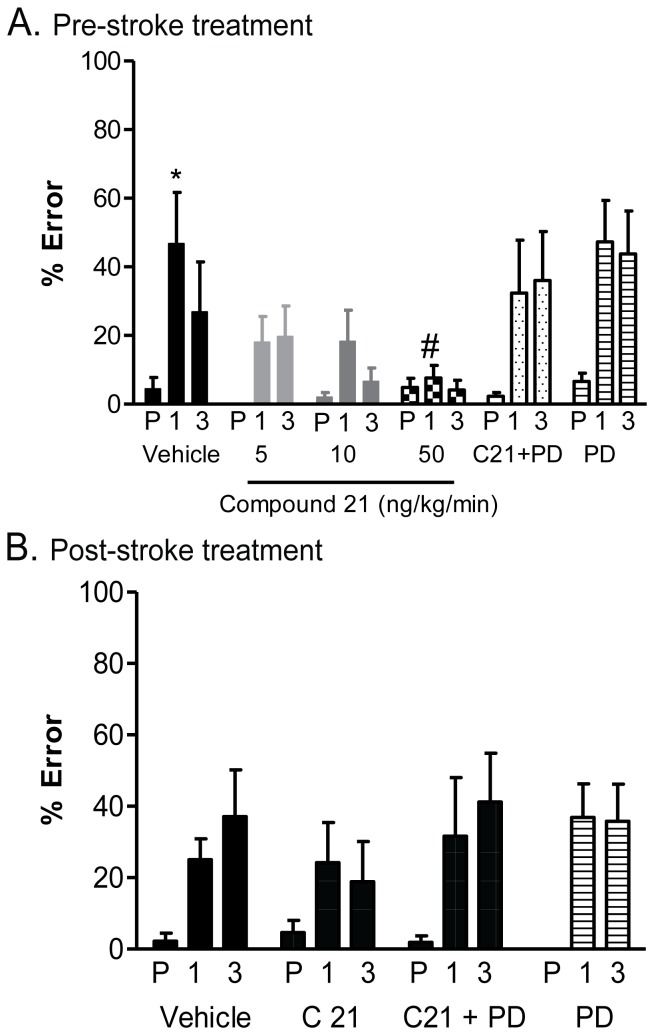
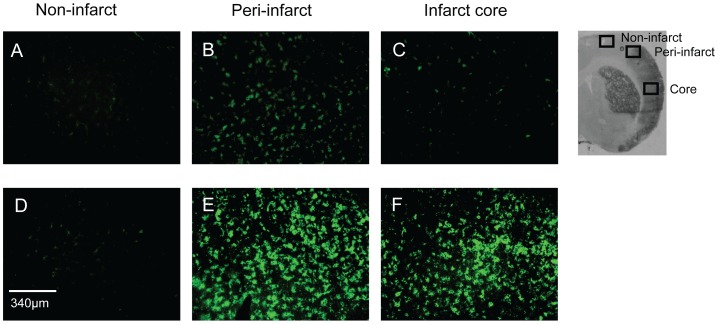
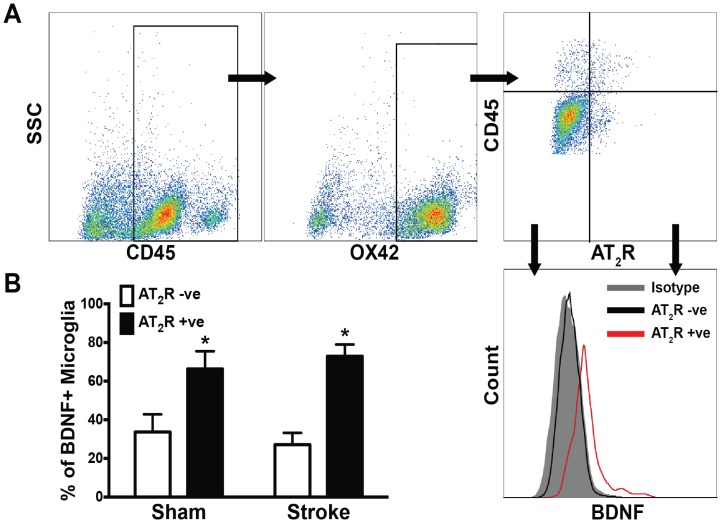
Spontaneously hypertensive rats (SHR) were pre-treated for 5 days prior to stroke with C21 alone or in combination with the AT2R antagonist PD123319. In a separate series of experiments C21 was administered in a series of 4 doses commencing 6 hours after stroke. A focal reperfusion model of ischemia was induced in conscious SHR by administering endothelin-1 to the middle cerebral artery (MCA). Motor coordination was assessed at 1 and 3 days after stroke and post mortem analyses of infarct volumes, microglia activation and neuronal survival were performed at 72 hours post MCA occlusion. When given prior to stroke, C21 dose dependently decreased infarct volume, which is consistent with the behavioural findings illustrating an improvement in motor deficit. During the pre-treatment protocol C21 was shown to enhance microglia activation, which are likely to be evoking protection by releasing brain derived neurotrophic factor. When drug administration was delayed until 6 hours after stroke, C21 still reduced brain injury.
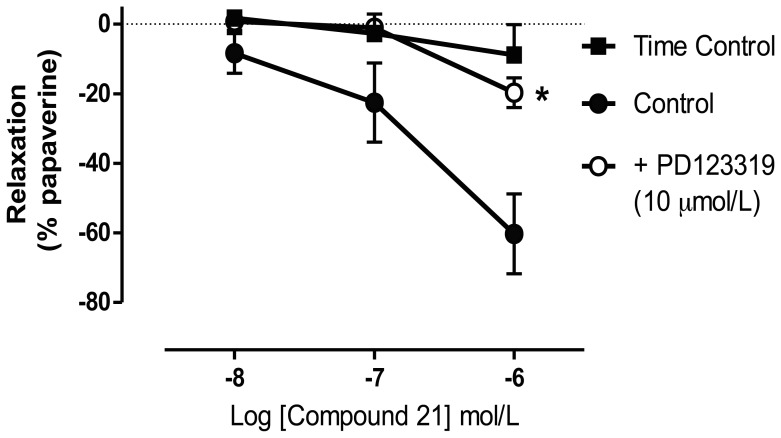
These results indicate that centrally administered C21 confers neuroprotection against stroke damage. This benefit is likely to involve various mechanisms, including microglial activation of endogenous repair and enhanced cerebroperfusion. Thus, we have confirmed the neuroprotective effect of AT2R stimulation using a nonpeptide compound which highlights the clinical potential of the AT2R agonists for future development.
在本研究中,在清醒的中风模型中检测了一种新型非肽类AT2R激动剂C21的神经保护作用,以验证AT2R激动剂作为神经保护剂的类效应。
自发性高血压大鼠(SHR)在中风前5天单独用C21或与AT2R拮抗剂PD123319联合预处理。在另一系列实验中,在中风后6小时开始以4个剂量系列给予C21。通过向大脑中动脉(MCA)注射内皮素-1在清醒的SHR中诱导局灶性缺血再灌注模型。在中风后1天和3天评估运动协调性,并在MCA闭塞后72小时进行梗死体积、小胶质细胞活化和神经元存活的死后分析。在中风前给予时,C21剂量依赖性地减少梗死体积,这与行为学结果一致,表明运动功能障碍有所改善。在预处理方案期间,C21被证明可增强小胶质细胞活化,这可能是通过释放脑源性神经营养因子来发挥保护作用。当给药延迟至中风后6小时时,C21仍能减轻脑损伤。
这些结果表明,中枢给予C21可对中风损伤起到神经保护作用。这种益处可能涉及多种机制,包括内源性修复的小胶质细胞活化和增强的脑灌注。因此,我们使用一种非肽化合物证实了AT2R刺激的神经保护作用,这突出了AT2R激动剂在未来发展中的临床潜力。