Fujioka Ryuta, Nii Takenobu, Iwaki Akiko, Shibata Atsushi, Ito Isao, Kitaichi Kiyoyuki, Nomura Masatoshi, Hattori Satoko, Takao Keizo, Miyakawa Tsuyoshi, Fukumaki Yasuyuki
Division of Human Molecular Genetics, Research Center for Genetic Information, Medical Institute of Bioregulation, Fukuoka 812-8582, Japan.
Mol Brain. 2014 Apr 23;7:31. doi: 10.1186/1756-6606-7-31.
We previously performed systematic association studies of glutamate receptor gene family members with schizophrenia, and found positive associations of polymorphisms in the GRM3 (a gene of metabotropic glutamate receptor 3: mGluR3) with the disorder. Physiological roles of GRM3 in brain functions and its functional roles in the pathogenesis of schizophrenia remain to be resolved.
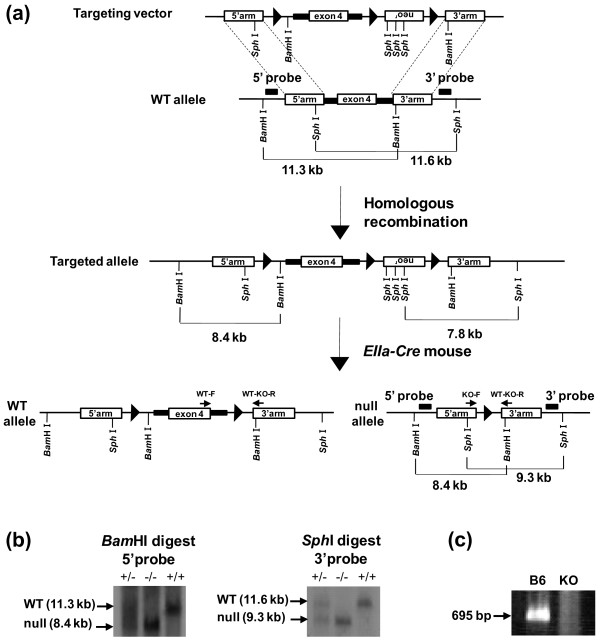
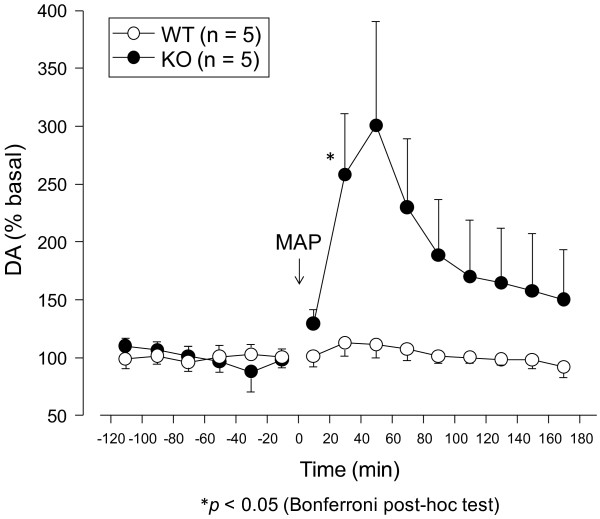
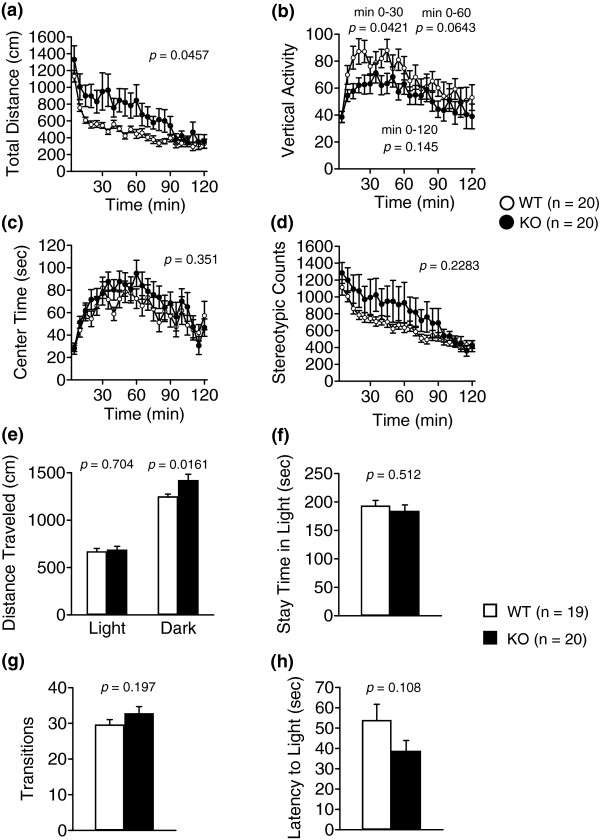
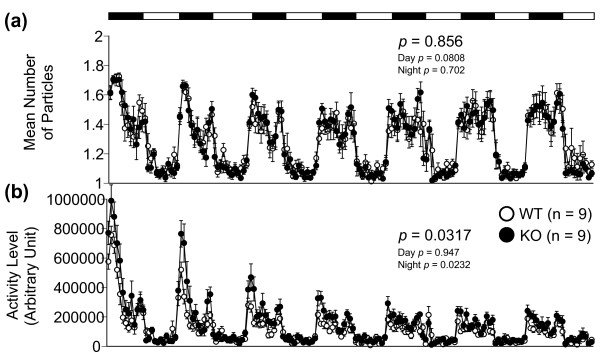
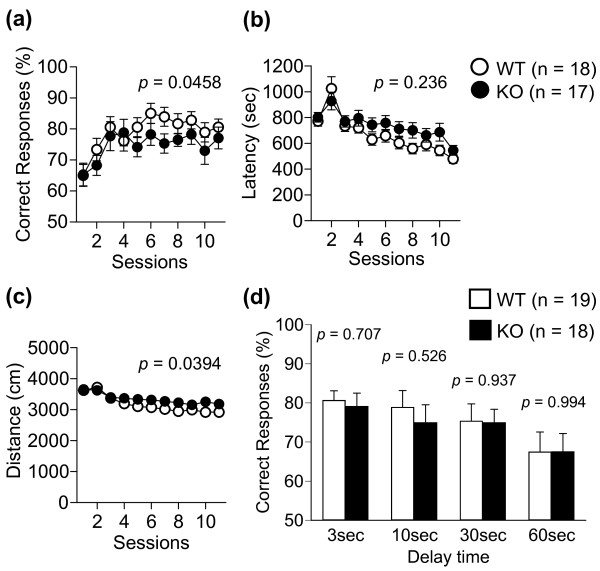
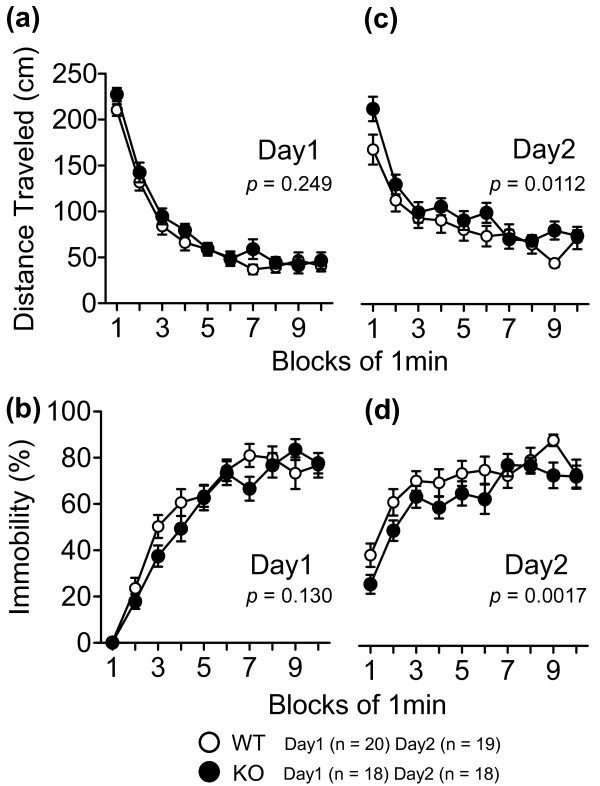
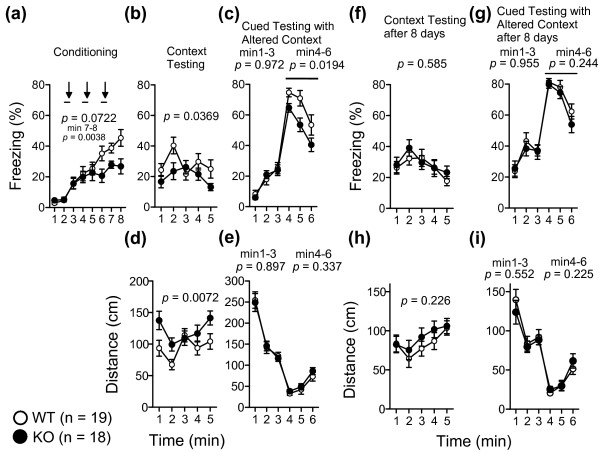
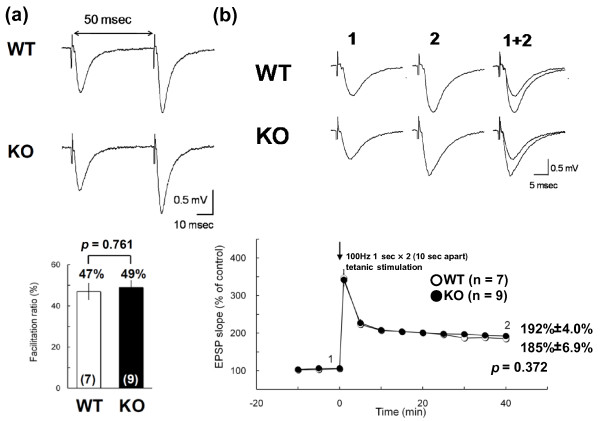
We generated mGluR3 knockout (KO) mice and conducted comprehensive behavioral analyses. KO mice showed hyperactivity in the open field, light/dark transition, and 24-hour home cage monitoring tests, impaired reference memory for stressful events in the Porsolt forced swim test, impaired contextual memory in cued and contextual fear conditioning test, and impaired working memory in the T-Maze forced alternation task test. Hyperactivity and impaired working memory are known as endophenotypes of schizophrenia. We examined long-term synaptic plasticity by assessing long-term potentiation (LTP) in the CA1 region in the hippocampi of KO and wild-type (WT) mice. We observed no differences in the amplitude of LTP between the two genotypes, suggesting that mGluR3 is not essential for LTP in the CA1 region of the mouse hippocampus. As hyperactivity is typically associated with increased dopaminergic transmission, we performed in vivo microdialysis measurements of extracellular dopamine in the nucleus accumbens of KO and WT mice. We observed enhancements in the methamphetamine (MAP)-induced release of dopamine in KO mice.
These results demonstrate that a disturbance in the glutamate-dopamine interaction may be involved in the pathophysiology of schizophrenia-like behavior, such as hyperactivity in mGluR3 KO mice.
我们之前对谷氨酸受体基因家族成员与精神分裂症进行了系统性关联研究,发现GRM3(代谢型谷氨酸受体3:mGluR3的一个基因)中的多态性与该疾病呈正相关。GRM3在脑功能中的生理作用及其在精神分裂症发病机制中的功能作用仍有待阐明。
我们培育了mGluR3基因敲除(KO)小鼠并进行了全面的行为分析。KO小鼠在旷场试验、明暗转换试验和24小时笼内监测试验中表现出多动,在波索尔特强迫游泳试验中对应激事件的参考记忆受损,在线索性和情境性恐惧条件反射试验中的情境记忆受损,以及在T迷宫强迫交替任务试验中的工作记忆受损。多动和工作记忆受损是已知的精神分裂症的内表型。我们通过评估KO小鼠和野生型(WT)小鼠海马体CA1区的长时程增强(LTP)来检测长期突触可塑性。我们观察到两种基因型之间LTP的幅度没有差异,这表明mGluR3对小鼠海马体CA1区的LTP不是必需的。由于多动通常与多巴胺能传递增加有关,我们对KO小鼠和WT小鼠伏隔核中的细胞外多巴胺进行了体内微透析测量。我们观察到KO小鼠中甲基苯丙胺(MAP)诱导的多巴胺释放增强。
这些结果表明,谷氨酸-多巴胺相互作用的紊乱可能参与了精神分裂症样行为的病理生理学过程,如mGluR3 KO小鼠中的多动。