Vadu Rural Health Program, KEM Hospital, Pune, India;
Glob Health Action. 2014 Apr 22;7:23421. doi: 10.3402/gha.v7.23421. eCollection 2014.
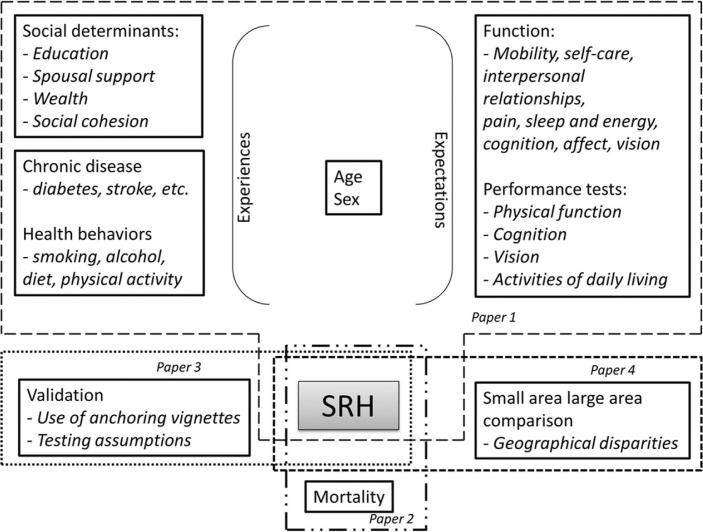
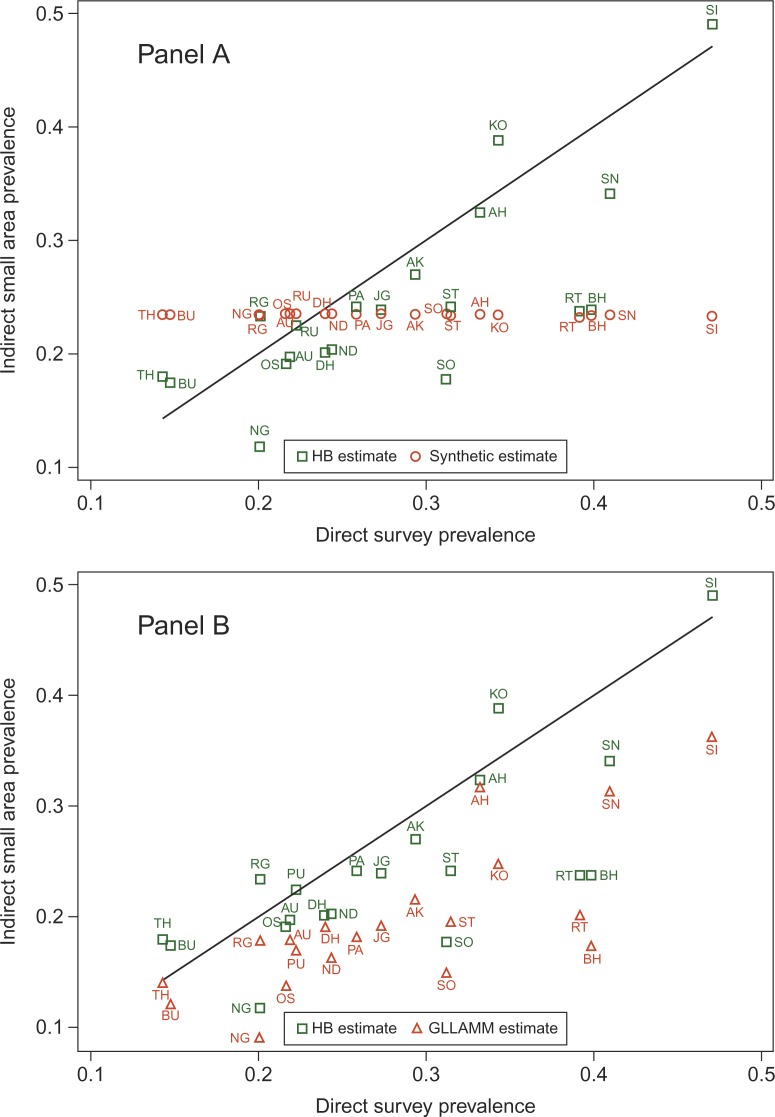
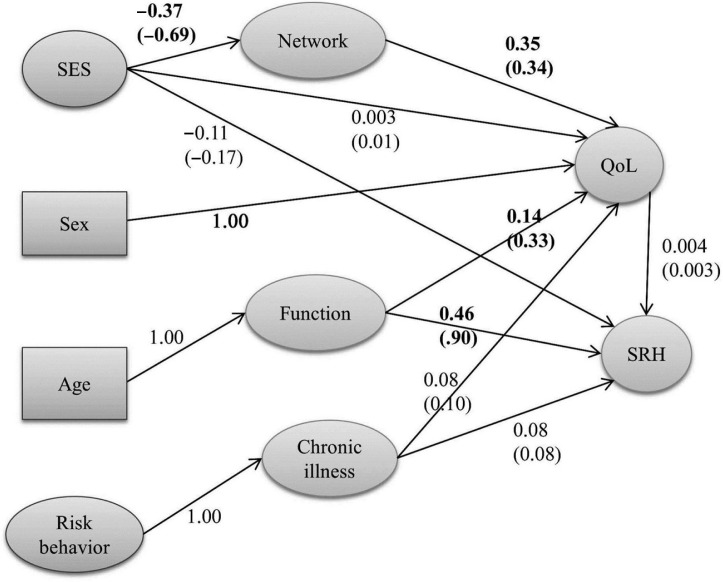
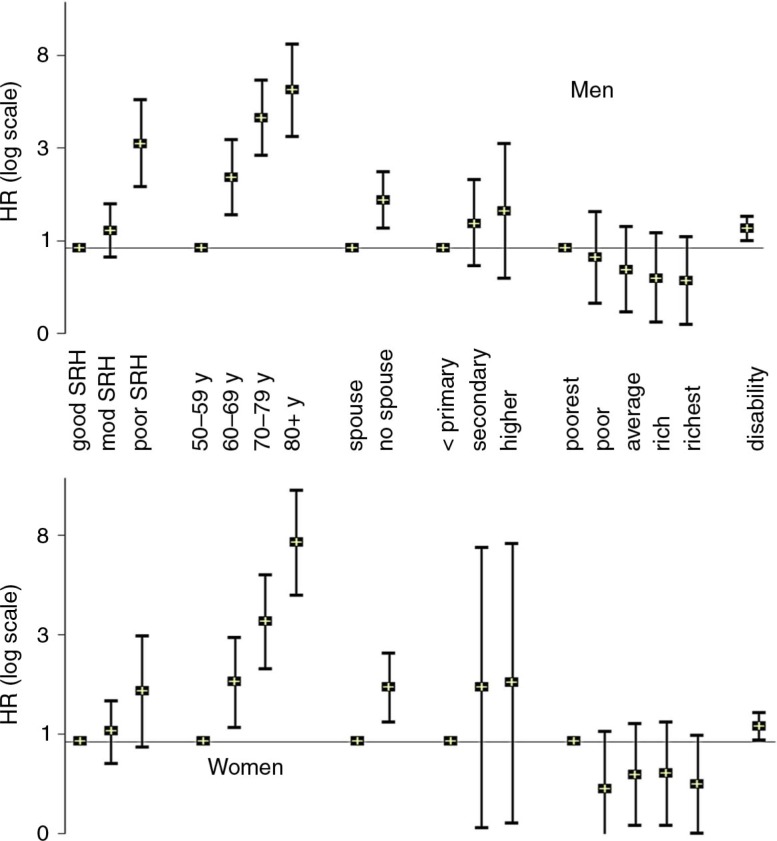
This thesis is centered on self-rated health (SRH) as an outcome measure, as a predictor, and as a marker. The thesis uses primary data from the WHO Study on global AGEing and adult health (SAGE) implemented in India in 2007. The structural equation modeling approach is employed to understand the pathways through which the social environment, disability, disease, and sociodemographic characteristics influence SRH among older adults aged 50 years and above. Cox proportional hazard model is used to explore the role of SRH as a predictor for mortality and the role of disability in modifying this effect. The hierarchical ordered probit modeling approach, which combines information from anchoring vignettes with SRH, was used to address the long overlooked methodological concern of interpersonal incomparability. Finally, multilevel model-based small area estimation techniques were used to demonstrate the use of large national surveys and census information to derive precise SRH prevalence estimates at the district and sub-district level. The thesis advocates the use of such a simple measure to identify vulnerable communities for targeted health interventions, to plan and prioritize resource allocation, and to evaluate health interventions in resource-scarce settings. The thesis provides the basis and impetus to generate and integrate similar and harmonized adult health and aging data platforms within demographic surveillance systems in different regions of India and elsewhere.
本论文以自评健康(SRH)为研究对象,从结果测量、预测因素和标志物三个角度进行探讨。研究数据来源于 2007 年世界卫生组织(WHO)老龄化与成人健康全球研究(SAGE)在印度开展的调查。本文采用结构方程模型(SEM)方法,旨在探讨社会环境、残疾、疾病和人口统计学特征等因素影响老年人自评健康的作用路径。采用 Cox 比例风险模型探讨自评健康作为死亡预测因素的作用,以及残疾在其中的调节作用。采用层次有序概率模型(HPOP)方法,结合锚定情景和自评健康信息,解决了长期以来被忽视的人际不可比性这一方法学问题。最后,采用基于多层次模型的小区域估计技术,展示了如何利用大型国家调查和人口普查信息,在地区和分区层面获得更精确的自评健康流行率估计。本论文提倡使用这种简单的测量方法来识别脆弱社区,以便有针对性地开展健康干预,规划和优先分配资源,并评估资源匮乏环境下的健康干预措施。本论文为在印度不同地区和其他地区的人口监测系统中生成和整合类似的、协调的成人健康和老龄化数据平台提供了基础和动力。