Jaszczynska-Nowinka Karolina, Rucinski Marcin, Ziolkowska Agnieszka, Markowska Anna, Malendowicz Ludwik K
Department of Oncology, Poznań University of Medical Sciences, Poznań 60-781, Poland.
Department of Histology and Embryology, Poznań University of Medical Sciences, Poznań 60-781, Poland.
Oncol Lett. 2014 May;7(5):1618-1624. doi: 10.3892/ol.2014.1897. Epub 2014 Feb 20.
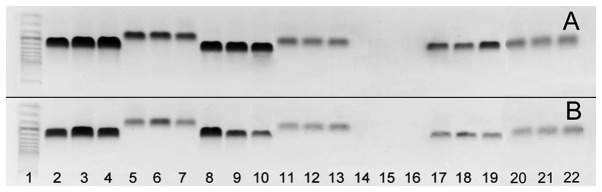
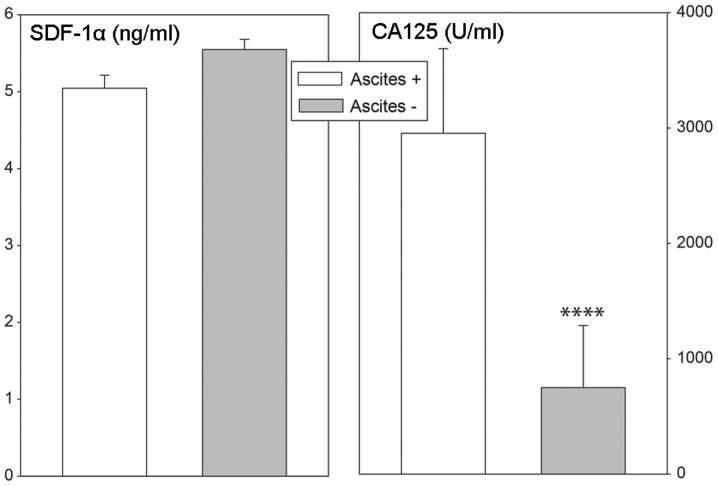
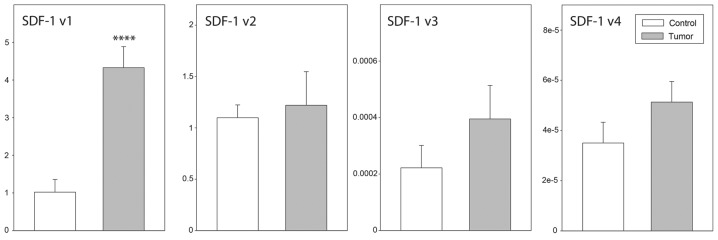
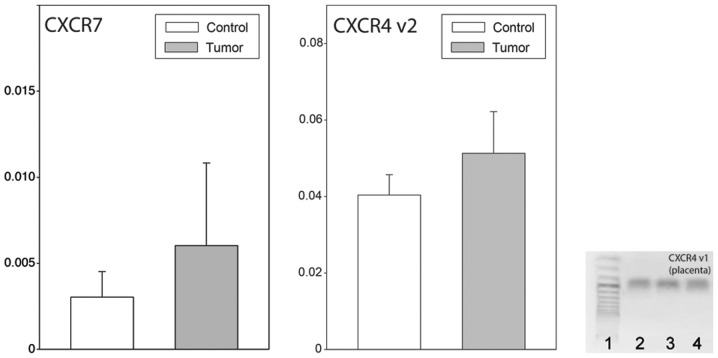
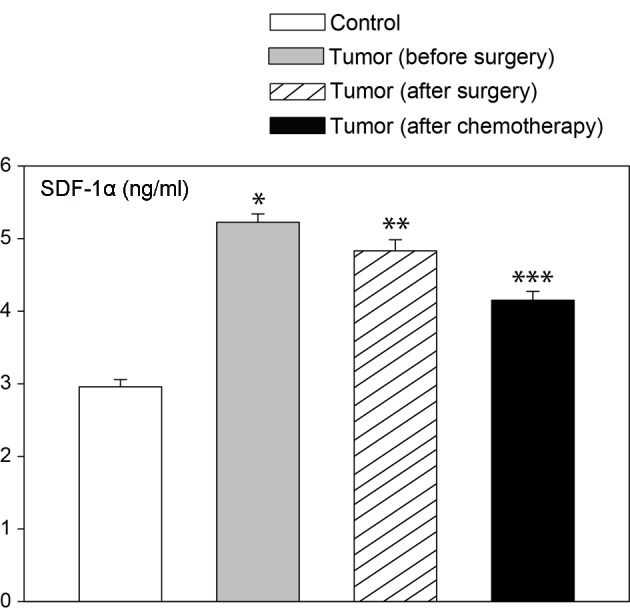
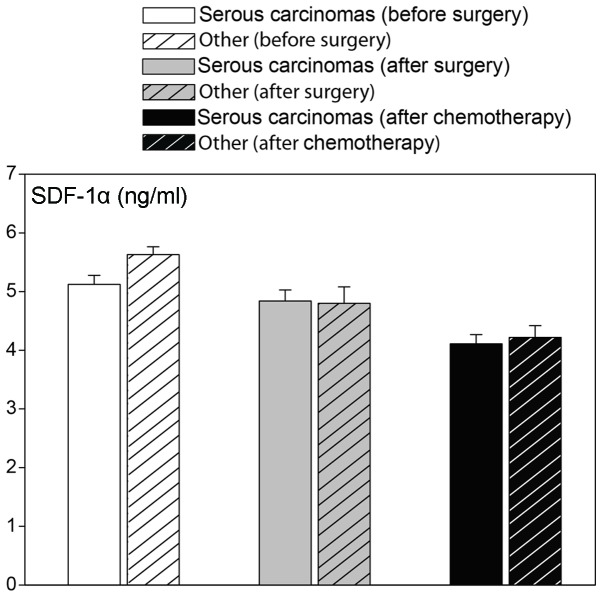
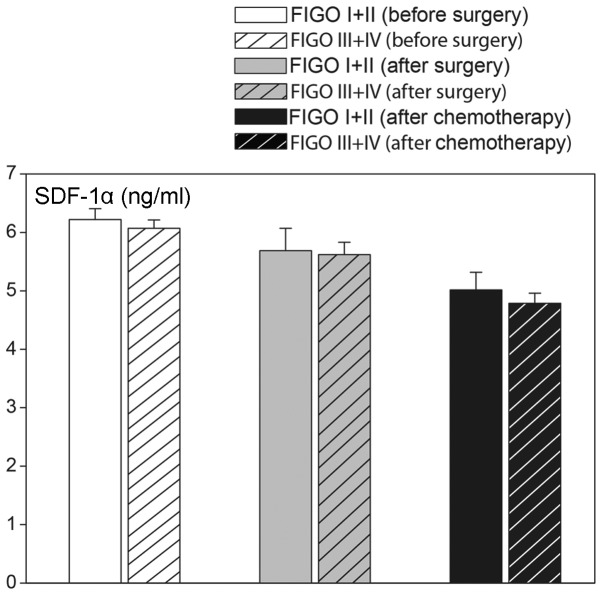
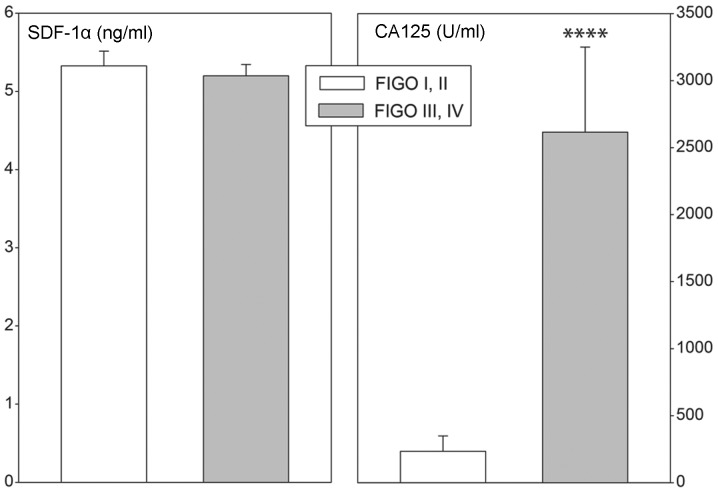
Chemokine stromal cell-derived factor-1 (SDF-1) and its receptors, CXCR4 and CXCR7, have been implicated in epithelial ovarian cancer progression and metastasis. However, limited data are available on the expression levels of and variants and in human epithelial ovarian cancer. The present study aimed to characterize the expression pattern and levels of , and in normal human ovaries and epithelial ovarian cancer. The expression of and transcript variants and CXCR7 was determined by quantitative polymerase chain reaction (qPCR). Plasma SDF-1α levels were determined by commercially available EIA kits and cancer antigen 125 (CA 125) levels were quantified by automated microparticle enzyme immunosorbent assay. High expression levels of transcript variant 1 were identified in ovarian cancer and control ovaries. By contrast, in both groups the expression levels of transcript variants 3 and 4 were extremely low. Furthermore, variant 1 levels were notably higher in epithelial ovarian cancer than in control ovaries, while data for the remaining transcripts were similar in both groups. transcript variant 2 and expression levels in normal and neoplastic ovaries were similar. In both groups, transcript variant 2 was not detected. Plasma SDF-1α levels were notably higher in females with epithelial ovarian cancer than in the control ovaries. Elevated levels of blood SDF-1α were found prior to surgery, 6 days after surgery and following completion of the first chemotherapy course. These increases were independent of the type of epithelial ovarian cancer. Our results suggest that the expression of and the genes controlling alternative splicing are elevated in epithelial ovarian cancer, leading to an increased formation of variant 1. Elevated plasma SDF-1α levels in epithelial ovarian cancer patients are not associated with the presence of tumors and/or metastases, however reflect a general response to the disease.
趋化因子基质细胞衍生因子-1(SDF-1)及其受体CXCR4和CXCR7与上皮性卵巢癌的进展和转移有关。然而,关于人类上皮性卵巢癌中SDF-1及其变体以及CXCR7的表达水平的数据有限。本研究旨在描述SDF-1、CXCR4和CXCR7在正常人类卵巢和上皮性卵巢癌中的表达模式及水平。通过定量聚合酶链反应(qPCR)测定CXCR4和CXCR7转录变体以及CXCR7的表达。采用市售酶免疫分析试剂盒测定血浆SDF-1α水平,并通过自动微粒酶免疫分析法对癌抗原125(CA 125)水平进行定量。在卵巢癌和对照卵巢中均鉴定出CXCR4转录变体1的高表达水平。相比之下,在两组中CXCR4转录变体3和4的表达水平极低。此外,上皮性卵巢癌中CXCR4变体1的水平显著高于对照卵巢,而其余转录本在两组中的数据相似。CXCR4转录变体2和CXCR7在正常卵巢和肿瘤性卵巢中的表达水平相似。在两组中均未检测到CXCR4转录变体2。上皮性卵巢癌女性的血浆SDF-1α水平显著高于对照卵巢。在手术前、手术后6天以及完成第一个化疗疗程后均发现血液SDF-1α水平升高。这些升高与上皮性卵巢癌的类型无关。我们的结果表明,上皮性卵巢癌中CXCR4以及控制可变剪接的基因表达升高,导致CXCR4变体1的形成增加。上皮性卵巢癌患者血浆SDF-1α水平升高与肿瘤和/或转移的存在无关,而是反映了对该疾病的一种普遍反应。