Hattermann Kirsten, Holzenburg Eric, Hans Friederike, Lucius Ralph, Held-Feindt Janka, Mentlein Rolf
Department of Anatomy, University of Kiel, Olshausenstraße 40, 24098, Kiel, Germany.
Cell Tissue Res. 2014 Jul;357(1):253-66. doi: 10.1007/s00441-014-1823-y. Epub 2014 Apr 26.
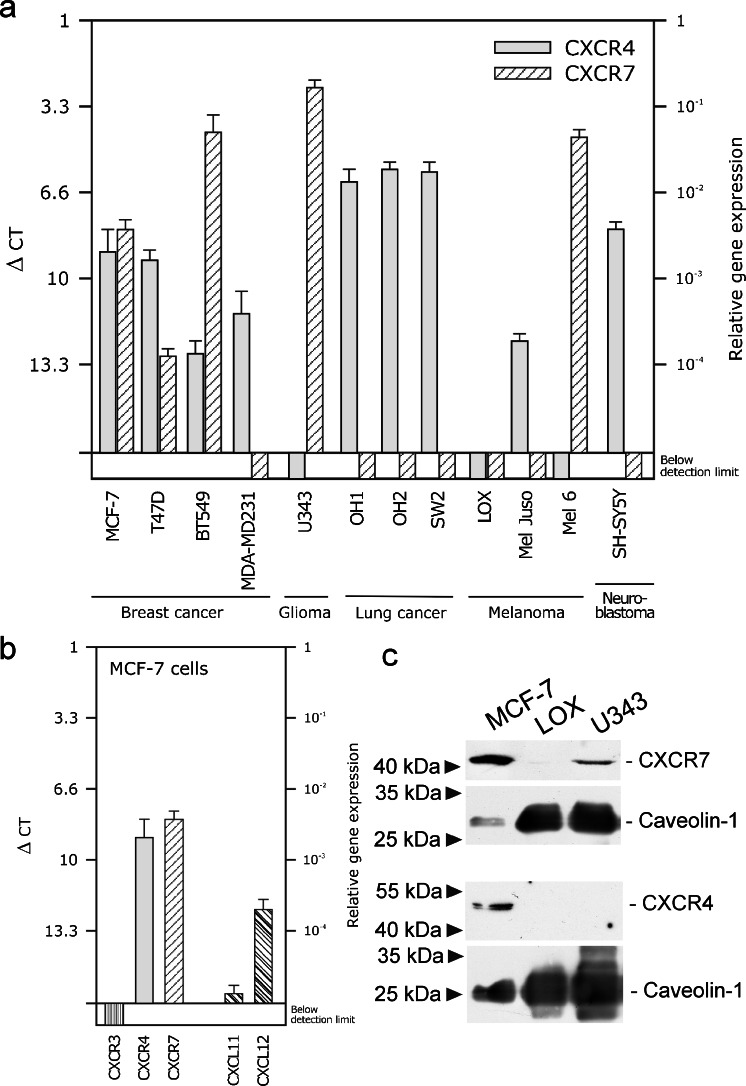
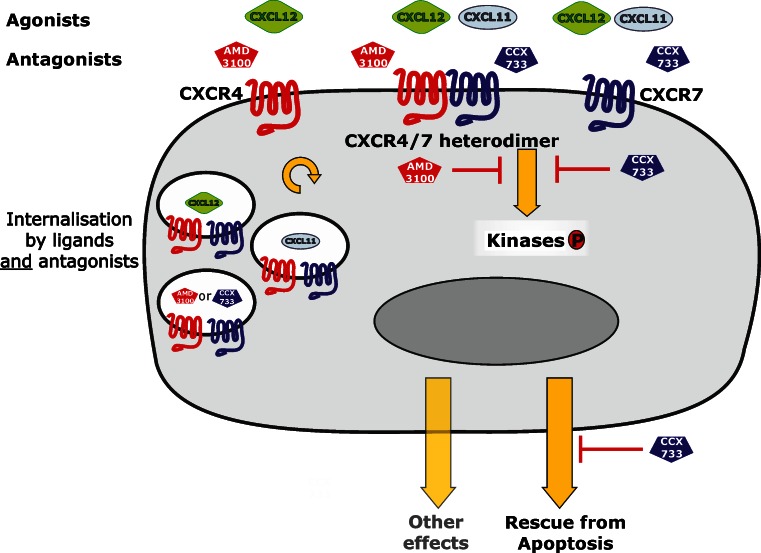
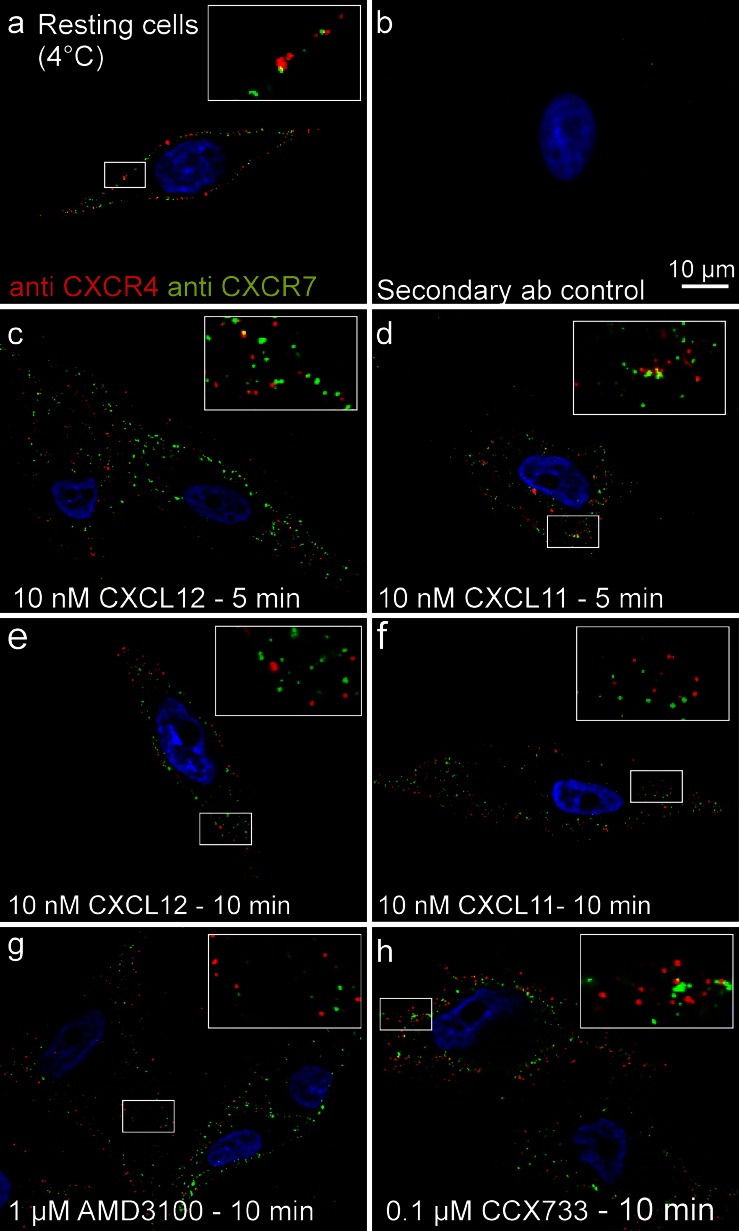
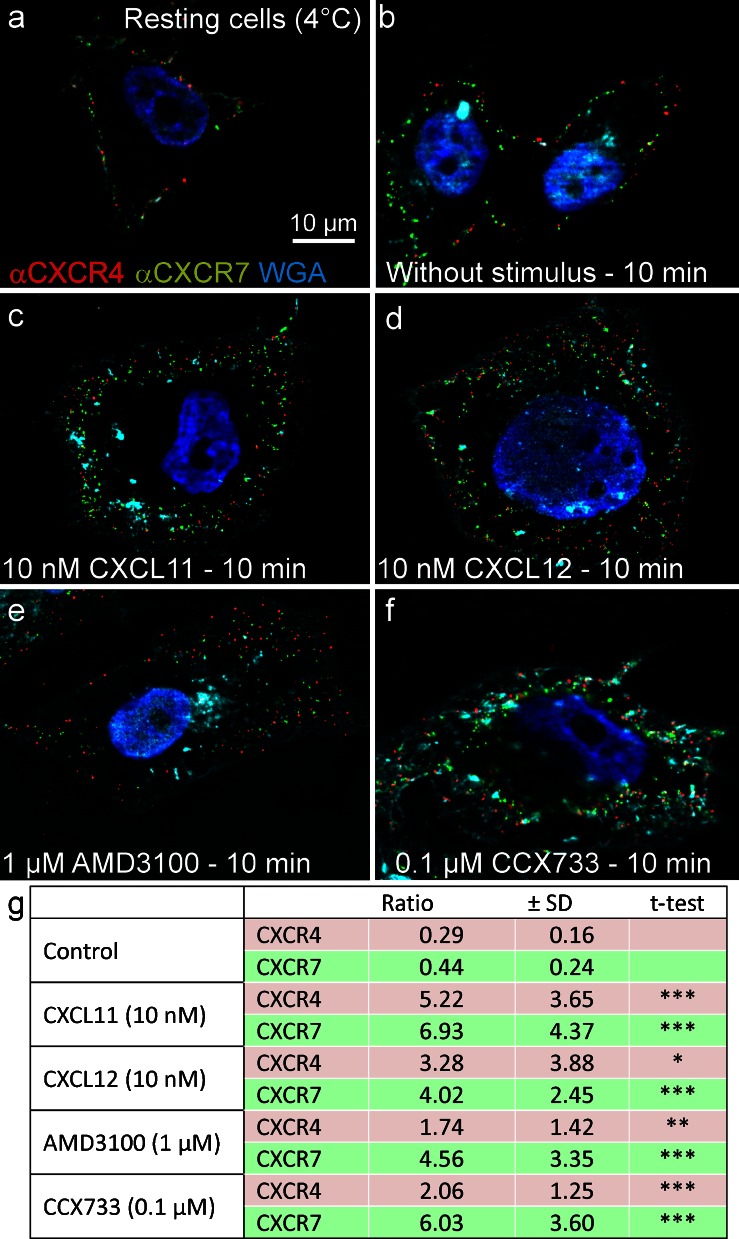
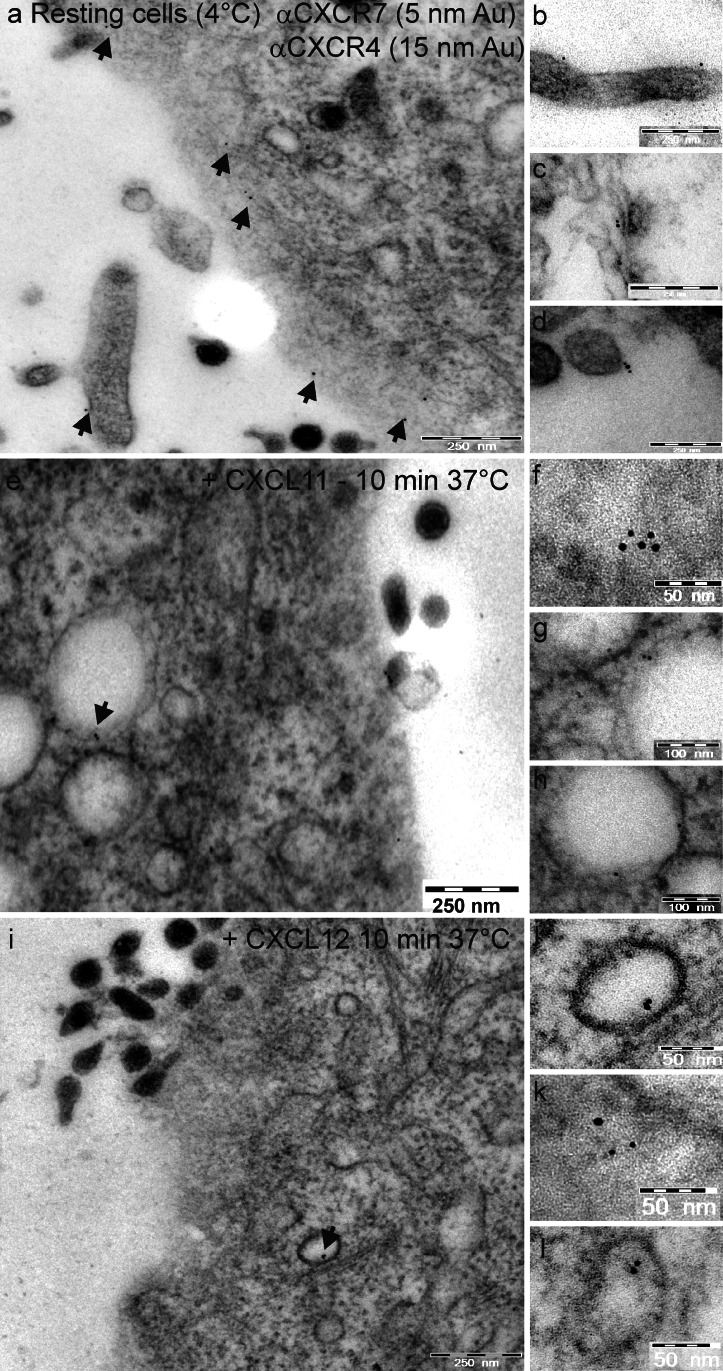
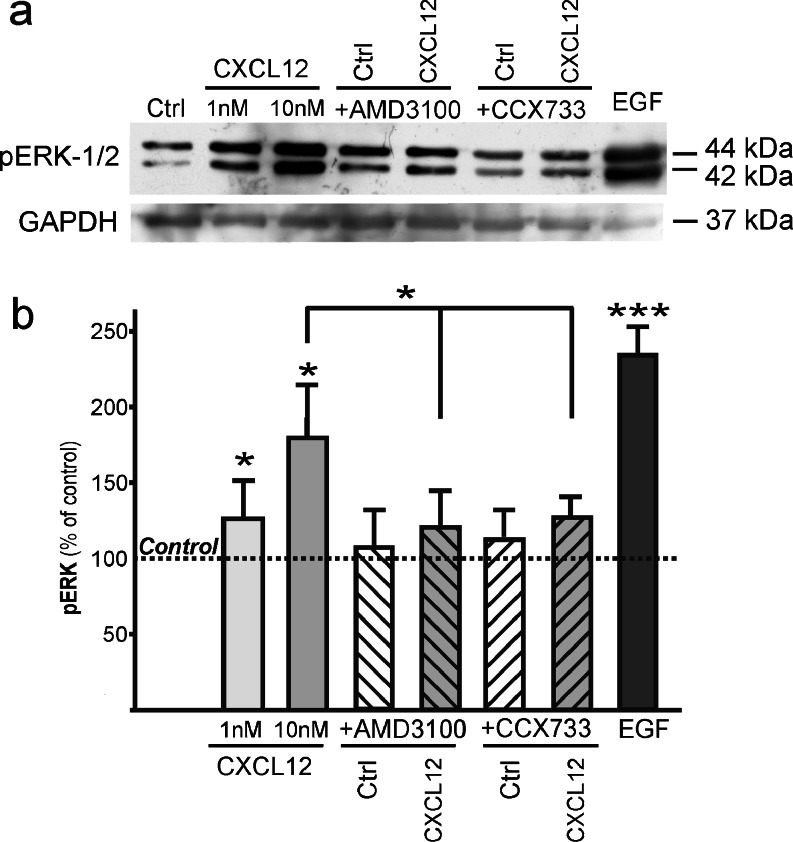
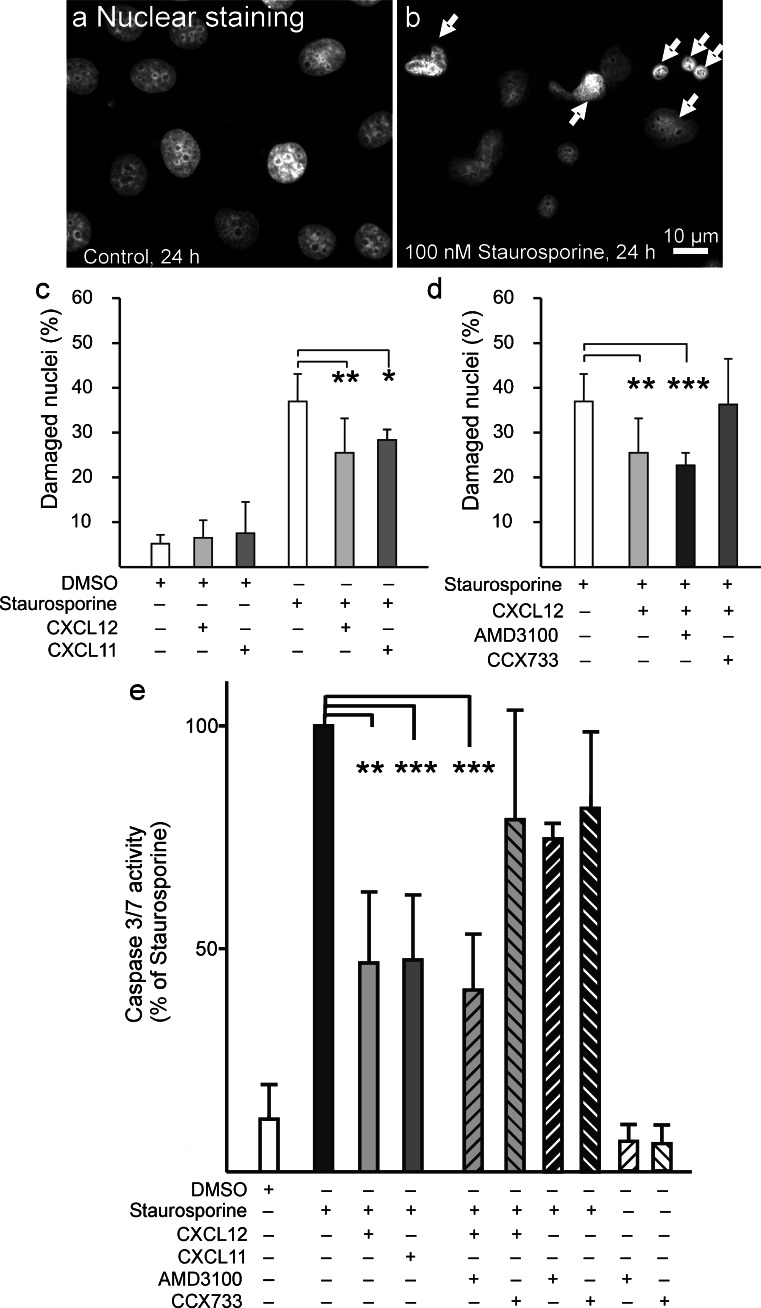
The chemokine CXCL12 (stromal cell-derived factor-1, SDF-1) and its receptor CXCR4 play a major role in tumor initiation, promotion, progression and metastasis, especially for breast cancer cells. Recently, CXCR7 has been identified as a second receptor for CXCL12; nevertheless, it also binds CXCL11 (interferon-inducible T cell α chemoattractant, I-TAC). However, little is known about the co-expression of the two receptors and their interactions. Quantitative reverse transcription plus the polymerase chain reaction has demonstrated that both receptors are frequently co-expressed in breast cancer cell lines, whereas other tumor cell lines often express only one of them. For interaction studies, we chose MCF-7 breast cancer cells, since they highly express CXCR4 and CXCR7 at the protein level but not CXCR3 (another target for CXCL11). Immunofluorescence and gold-labeling by light and electron microscopy, respectively, revealed that both receptors were localized at the cell surface in non-stimulated cells. After exposure to CXCL12 or CXCL11, the receptors were rapidly internalized alone or in close proximity. Stimulation with the CXCR4- or CXCR7-selective non-peptide antagonists AMD3100 and CCX733 resulted not only in single internalization but partly also in co-internalization of the two receptors. Furthermore, both chemokine ligands reduced staurosporine-induced apoptosis and caspase-3/7 activation; however, the selective inhibitors merely had partial inhibitory effects on these biological responses. Our findings suggest that CXCR4 and CXCR7 closely interact in breast cancer cells. Both are co-internalized, transduce signals and induce further biological effects partly independently of a selective stimulus or antagonist.
趋化因子CXCL12(基质细胞衍生因子-1,SDF-1)及其受体CXCR4在肿瘤的起始、促进、进展和转移中起主要作用,尤其是对乳腺癌细胞而言。最近,CXCR7已被确定为CXCL12的第二种受体;然而,它也能结合CXCL11(干扰素诱导的T细胞α趋化因子,I-TAC)。然而,关于这两种受体的共表达及其相互作用却知之甚少。定量逆转录加聚合酶链反应已证明,这两种受体在乳腺癌细胞系中经常共表达,而其他肿瘤细胞系通常只表达其中一种。为了进行相互作用研究,我们选择了MCF-7乳腺癌细胞,因为它们在蛋白质水平上高表达CXCR4和CXCR7,但不表达CXCR3(CXCL11的另一个靶点)。分别通过光学显微镜和电子显微镜进行的免疫荧光和金标记显示,在未受刺激的细胞中,两种受体都定位于细胞表面。暴露于CXCL12或CXCL11后,这些受体单独或紧密相邻地迅速内化。用CXCR4或CXCR7选择性非肽拮抗剂AMD3100和CCX733刺激不仅导致单个受体内化,部分还导致两种受体共同内化。此外,两种趋化因子配体都减少了星形孢菌素诱导的细胞凋亡和半胱天冬酶-3/7激活;然而,选择性抑制剂对这些生物学反应仅具有部分抑制作用。我们的研究结果表明,CXCR4和CXCR7在乳腺癌细胞中密切相互作用。两者共同内化,转导信号,并部分独立于选择性刺激或拮抗剂诱导进一步的生物学效应。