Mathews Lesley A, Hurt Elaine M, Zhang Xiaohu, Farrar William L
Division of Preclinical Innovation, National Center for Advancing Translational Sciences, National Institutes of Health, Bethesda, MD 20892, USA.
Med Immune, LLC, Gaithersburg, MD 20878, USA.
J Bone Marrow Res. 2013 May 23;1:122. doi: 10.4172/2329-8820.1000122.
Human bone marrow derived mesenchymal stem cells (hMSCs) are capable of differentiation into multiple cell lineages and demonstrate a wide variety of use in various therapeutic applications. Only recently has research begun to understand the gene expression profiles of hMSCs and their differentiated counterparts and .
The research presented here aimed at gaining a better understanding of gene expression patterns present during hMSC invasion through a basement membrane.
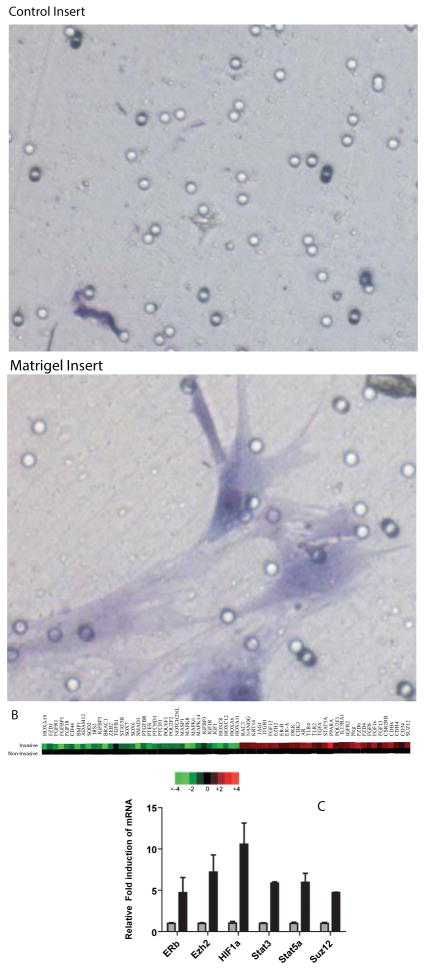
Changes in gene expression were evaluated between invasive and non-invasive cells using Agilent's gene expression arrays and Matrigel invasion chambers. The cells were specifically attracted to a defined stem cell media called SCM.
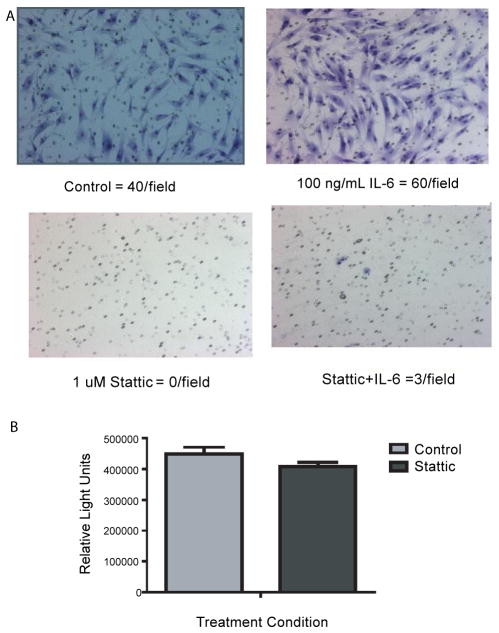
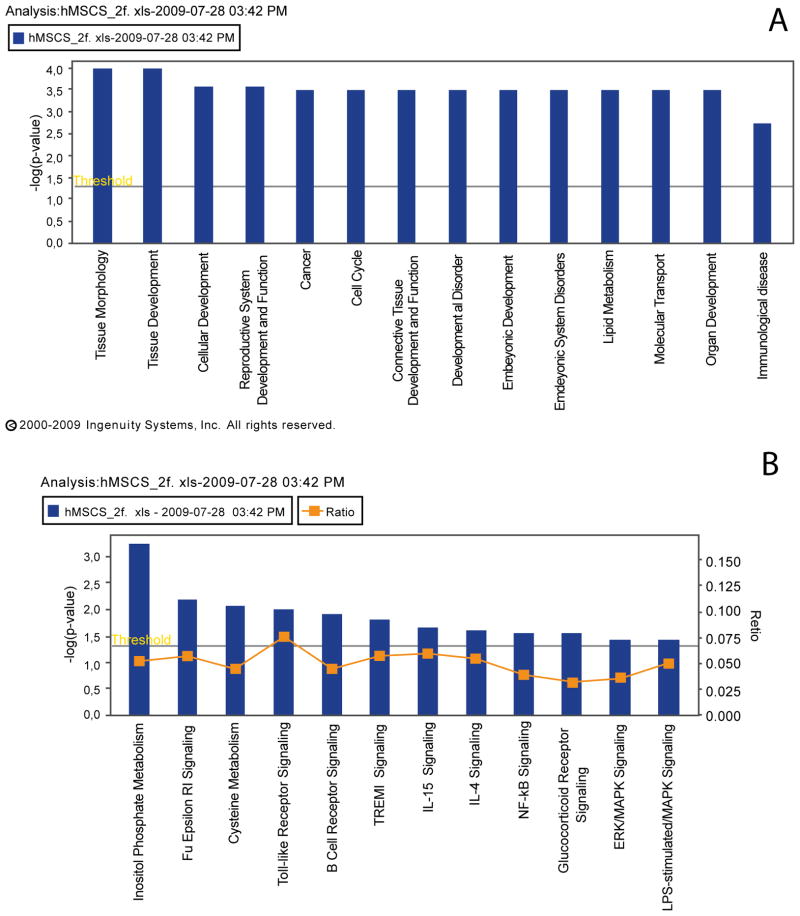
A total 435 genes were up-regulated by 2- fold or more in the invasive population of cells and classified into developmental programs and immunological/inflammatory signaling pathways determined by Ingenuity Pathway Analysis (IPA). This list included a variety of regulators of growth and differentiation including NANOG, STAT3 and STAT5A and members of the polycomb repressive complex-2 (PCRC2) EZH2 and SUZ12. The known regulator of inflammation and hypoxia HIF-1α was also increased suggesting that regulation of the microenvironment is important during this process. Finally, the invasion process could be reversed using the STAT3 inhibitor Static.
Overall these data will increase the understanding of the genetic pathways functioning during hMSC invasion and aid in the development of their therapeutic applications.
人骨髓间充质干细胞(hMSCs)能够分化为多种细胞谱系,并在各种治疗应用中显示出广泛的用途。直到最近,研究才开始了解hMSCs及其分化对应物的基因表达谱。
本文提出的研究旨在更好地了解hMSC通过基底膜侵袭过程中存在的基因表达模式。
使用安捷伦基因表达阵列和基质胶侵袭小室评估侵袭性细胞和非侵袭性细胞之间的基因表达变化。细胞被一种名为SCM的特定干细胞培养基特异性吸引。
在侵袭性细胞群体中,共有435个基因上调了2倍或更多,并根据 Ingenuity Pathway Analysis(IPA)分为发育程序和免疫/炎症信号通路。该列表包括多种生长和分化调节因子,包括NANOG、STAT3和STAT5A以及多梳抑制复合物-2(PCRC2)的成员EZH2和SUZ12。已知的炎症和缺氧调节因子HIF-1α也增加,这表明在此过程中微环境的调节很重要。最后,使用STAT3抑制剂Static可以逆转侵袭过程。
总体而言,这些数据将增加对hMSC侵袭过程中起作用的遗传途径的理解,并有助于其治疗应用的开发。