Parsons E C M, Favaro Brett, Aguirre A Alonso, Bauer Amy L, Blight Louise K, Cigliano John A, Coleman Melinda A, Côté Isabelle M, Draheim Megan, Fletcher Stephen, Foley Melissa M, Jefferson Rebecca, Jones Miranda C, Kelaher Brendan P, Lundquist Carolyn J, McCarthy Julie-Beth, Nelson Anne, Patterson Katheryn, Walsh Leslie, Wright Andrew J, Sutherland William J
Department of Environmental Science & Policy, George Mason University, Fairfax, VA, 22030, U.S.A..
Conserv Biol. 2014 Oct;28(5):1206-14. doi: 10.1111/cobi.12303. Epub 2014 Apr 29.
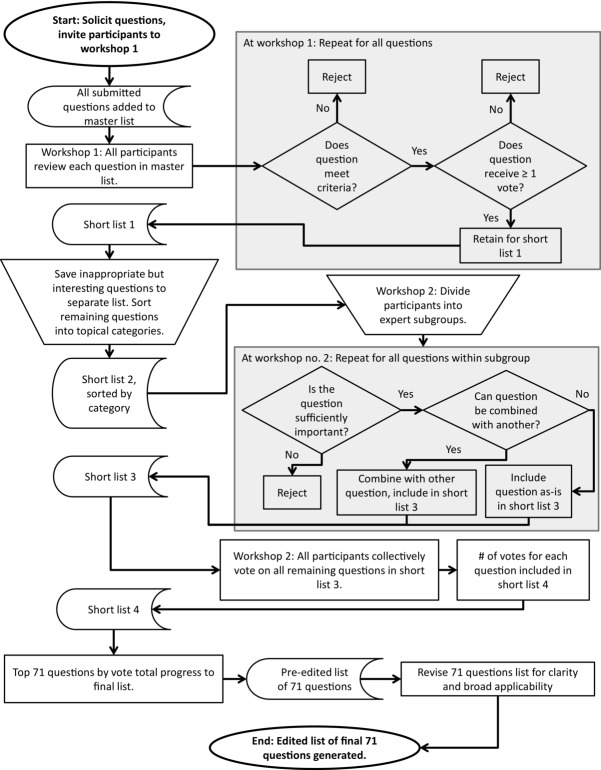
The ocean provides food, economic activity, and cultural value for a large proportion of humanity. Our knowledge of marine ecosystems lags behind that of terrestrial ecosystems, limiting effective protection of marine resources. We describe the outcome of 2 workshops in 2011 and 2012 to establish a list of important questions, which, if answered, would substantially improve our ability to conserve and manage the world's marine resources. Participants included individuals from academia, government, and nongovernment organizations with broad experience across disciplines, marine ecosystems, and countries that vary in levels of development. Contributors from the fields of science, conservation, industry, and government submitted questions to our workshops, which we distilled into a list of priority research questions. Through this process, we identified 71 key questions. We grouped these into 8 subject categories, each pertaining to a broad component of marine conservation: fisheries, climate change, other anthropogenic threats, ecosystems, marine citizenship, policy, societal and cultural considerations, and scientific enterprise. Our questions address many issues that are specific to marine conservation, and will serve as a road map to funders and researchers to develop programs that can greatly benefit marine conservation.
海洋为很大一部分人类提供食物、经济活动和文化价值。我们对海洋生态系统的了解落后于陆地生态系统,这限制了对海洋资源的有效保护。我们描述了2011年和2012年举办的两次研讨会的成果,以确定一系列重要问题,若能找到答案,将大幅提升我们保护和管理全球海洋资源的能力。参与者包括来自学术界、政府和非政府组织的个人,他们在不同学科、海洋生态系统以及不同发展水平的国家拥有广泛经验。来自科学、保护、产业和政府领域的贡献者向我们的研讨会提交了问题,我们将其提炼为一份优先研究问题清单。通过这一过程,我们确定了71个关键问题。我们将这些问题分为8个主题类别,每个类别都与海洋保护的一个广泛组成部分相关:渔业、气候变化、其他人为威胁、生态系统、海洋公民意识、政策、社会和文化考量以及科学事业。我们的问题涉及许多海洋保护特有的问题,并将为资助者和研究人员提供一份路线图,以制定能够极大地造福海洋保护的项目。