Asaithambi Arunkumar, Ay Muhammet, Jin Huajun, Gosh Anamitra, Anantharam Vellareddy, Kanthasamy Arthi, Kanthasamy Anumantha G
Department of Biomedical Sciences, Iowa State University, Ames, Iowa, United States of America.
PLoS One. 2014 May 7;9(5):e96947. doi: 10.1371/journal.pone.0096947. eCollection 2014.
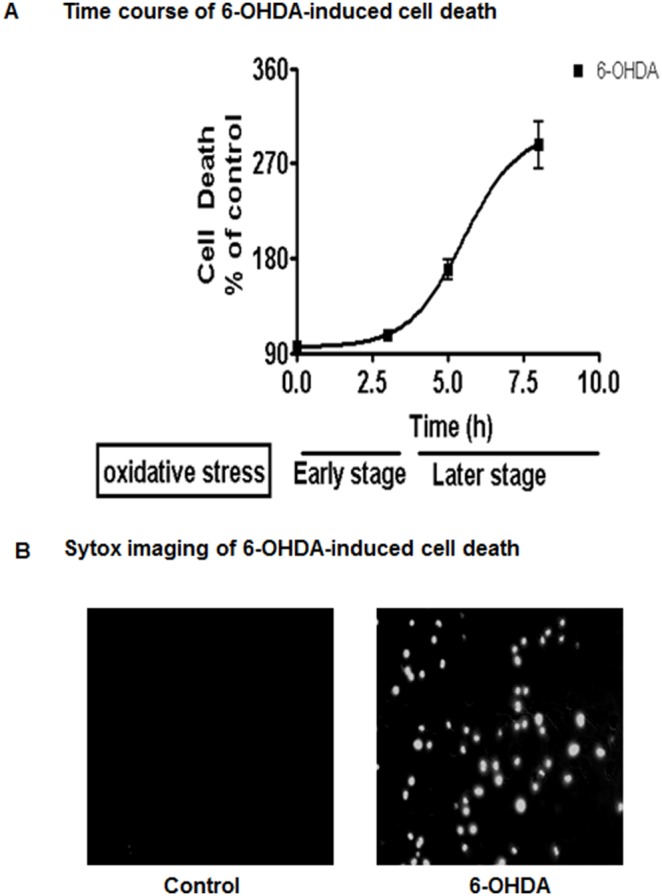
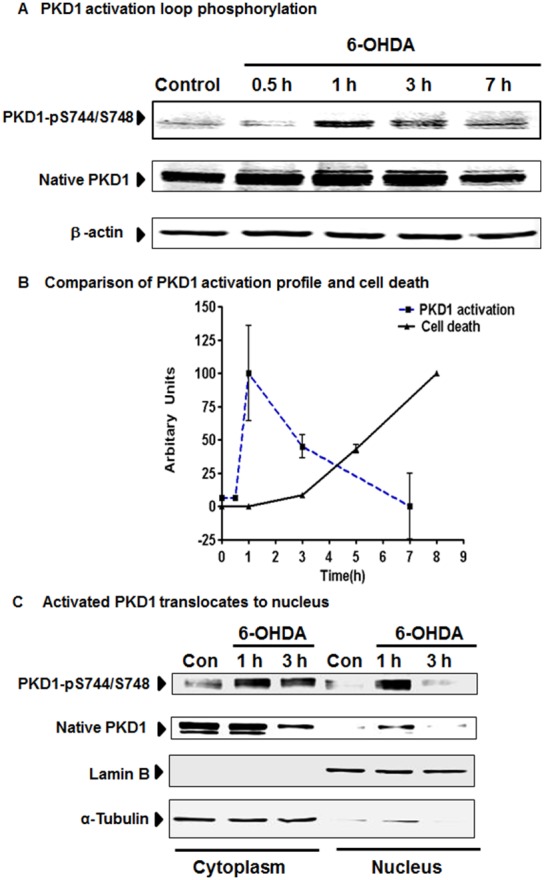
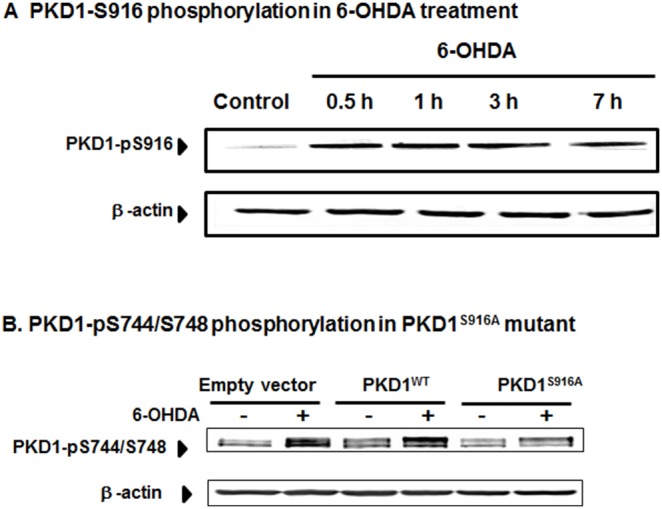
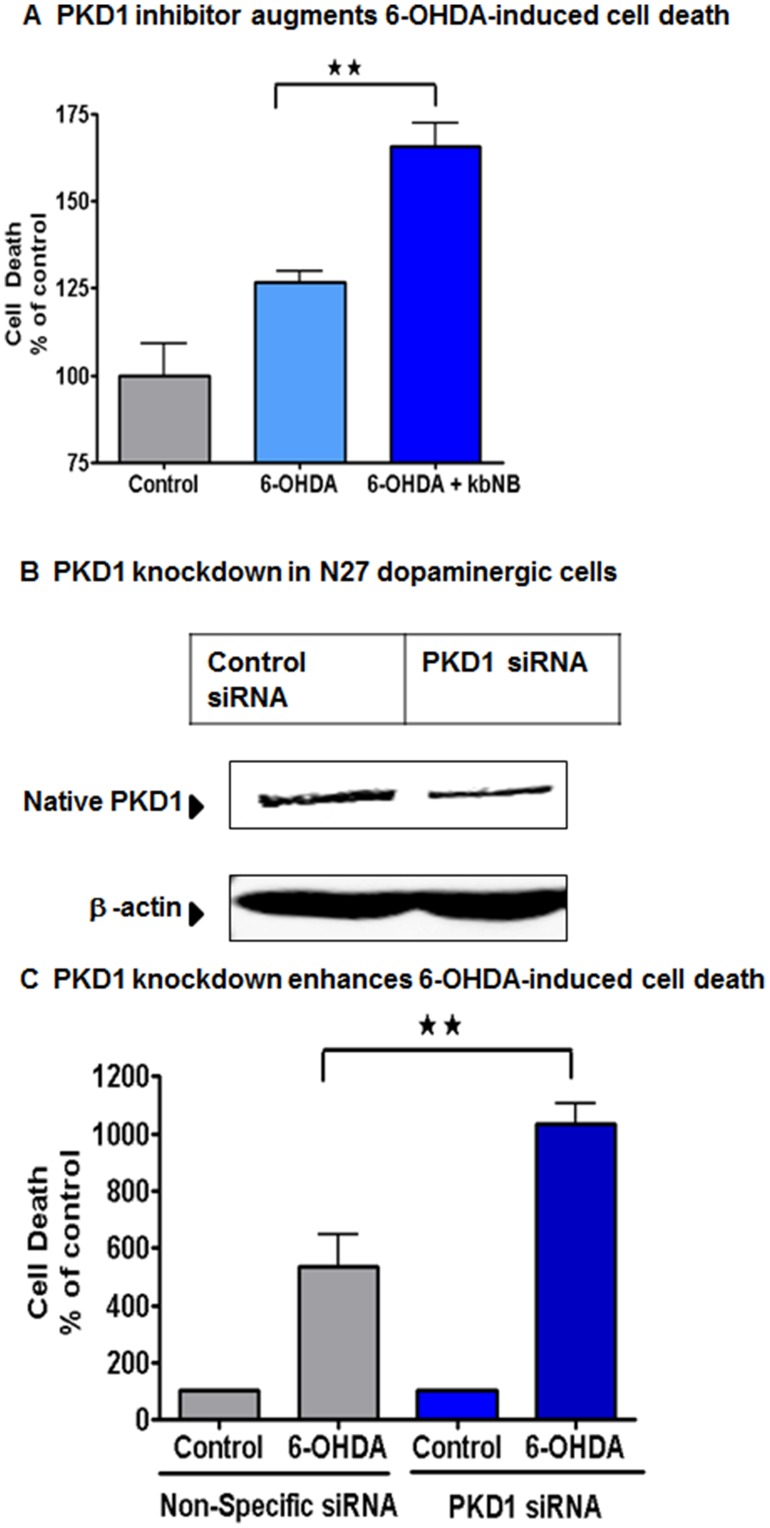
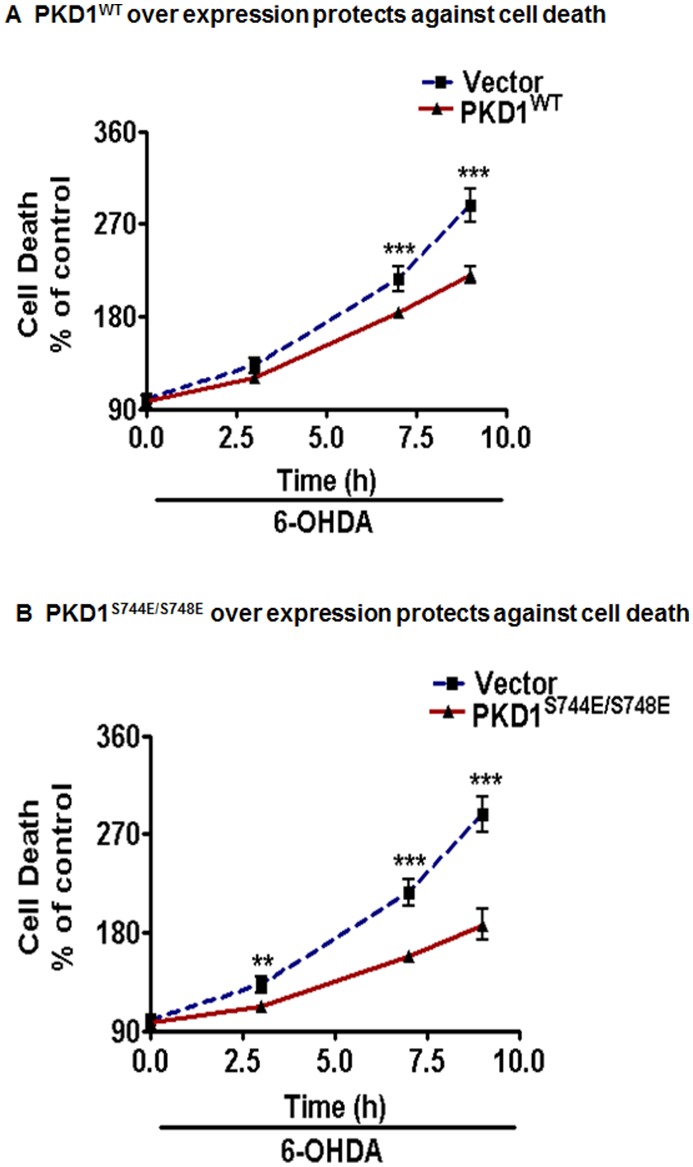
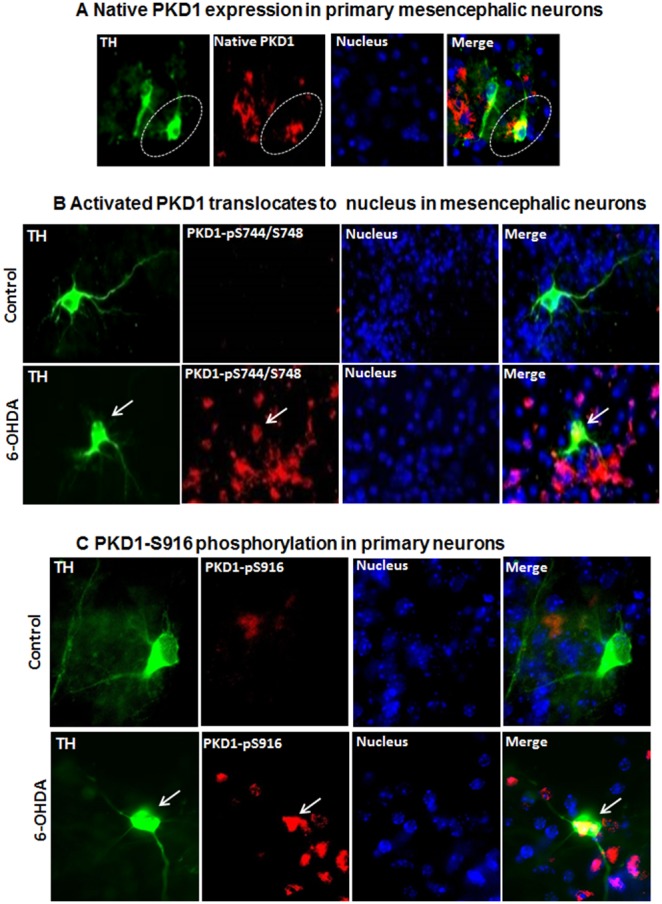
Oxidative stress is a major pathophysiological mediator of degenerative processes in many neurodegenerative diseases including Parkinson's disease (PD). Aberrant cell signaling governed by protein phosphorylation has been linked to oxidative damage of dopaminergic neurons in PD. Although several studies have associated activation of certain protein kinases with apoptotic cell death in PD, very little is known about protein kinase regulation of cell survival and protection against oxidative damage and degeneration in dopaminergic neurons. Here, we characterized the PKD1-mediated protective pathway against oxidative damage in cell culture models of PD. Dopaminergic neurotoxicant 6-hydroxy dopamine (6-OHDA) was used to induce oxidative stress in the N27 dopaminergic cell model and in primary mesencephalic neurons. Our results indicated that 6-OHDA induced the PKD1 activation loop (PKD1S744/S748) phosphorylation during early stages of oxidative stress and that PKD1 activation preceded cell death. We also found that 6-OHDA rapidly increased phosphorylation of the C-terminal S916 in PKD1, which is required for PKD1 activation loop (PKD1S744/748) phosphorylation. Interestingly, negative modulation of PKD1 activation by RNAi knockdown or by the pharmacological inhibition of PKD1 by kbNB-14270 augmented 6-OHDA-induced apoptosis, while positive modulation of PKD1 by the overexpression of full length PKD1 (PKD1WT) or constitutively active PKD1 (PKD1S744E/S748E) attenuated 6-OHDA-induced apoptosis, suggesting an anti-apoptotic role for PKD1 during oxidative neuronal injury. Collectively, our results demonstrate that PKD1 signaling plays a cell survival role during early stages of oxidative stress in dopaminergic neurons and therefore, positive modulation of the PKD1-mediated signal transduction pathway can provide a novel neuroprotective strategy against PD.
氧化应激是包括帕金森病(PD)在内的许多神经退行性疾病中退行性变过程的主要病理生理介质。由蛋白质磷酸化控制的异常细胞信号传导与PD中多巴胺能神经元的氧化损伤有关。尽管多项研究将某些蛋白激酶的激活与PD中的凋亡性细胞死亡联系起来,但关于蛋白激酶对多巴胺能神经元细胞存活以及抗氧化损伤和退变的调节作用却知之甚少。在此,我们在PD的细胞培养模型中对PKD1介导的抗氧化损伤保护途径进行了表征。多巴胺能神经毒物6-羟基多巴胺(6-OHDA)用于在N27多巴胺能细胞模型和原代中脑神经元中诱导氧化应激。我们的结果表明,6-OHDA在氧化应激早期诱导PKD1激活环(PKD1S744/S748)磷酸化,且PKD1激活先于细胞死亡。我们还发现,6-OHDA迅速增加PKD1中C末端S916的磷酸化,这是PKD1激活环(PKD1S744/748)磷酸化所必需的。有趣的是,通过RNA干扰敲低或通过kbNB-14270对PKD1进行药理抑制来对PKD1激活进行负调节会增强6-OHDA诱导的凋亡,而通过全长PKD1(PKD1WT)或组成型活性PKD1(PKD1S744E/S748E)的过表达对PKD1进行正调节则会减弱6-OHDA诱导的凋亡,这表明PKD1在氧化神经元损伤期间具有抗凋亡作用。总体而言,我们的结果表明,PKD1信号传导在多巴胺能神经元氧化应激早期发挥细胞存活作用,因此,对PKD1介导的信号转导途径进行正调节可为对抗PD提供一种新的神经保护策略。