Smith Maria W, Ghindilis Andrei L, Seoudi Ihab A, Smith Kenneth, Billharz Rosalind, Simon Holly M
Center for Coastal Margin Observation & Prediction, and Institute of Environmental Health, Oregon Health & Science University, Portland, Oregon, United States of America; Cascade Biosystems, Inc., Colfax, Wisconsin, United States of America.
Cascade Biosystems, Inc., Colfax, Wisconsin, United States of America.
PLoS One. 2014 May 15;9(5):e97826. doi: 10.1371/journal.pone.0097826. eCollection 2014.
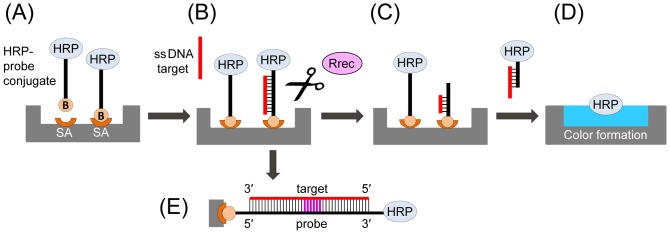
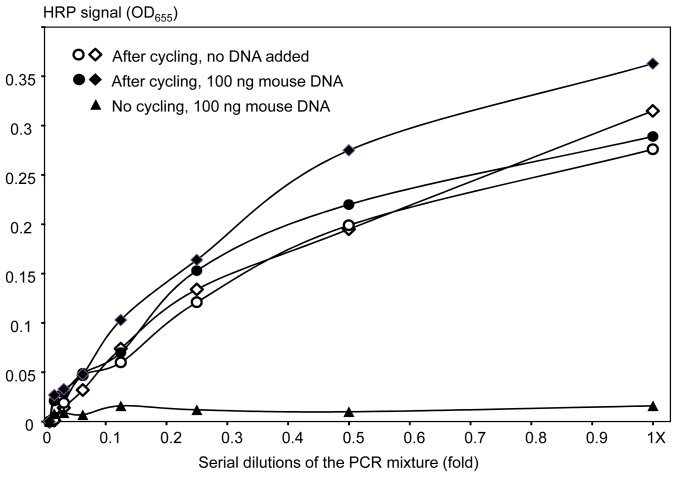
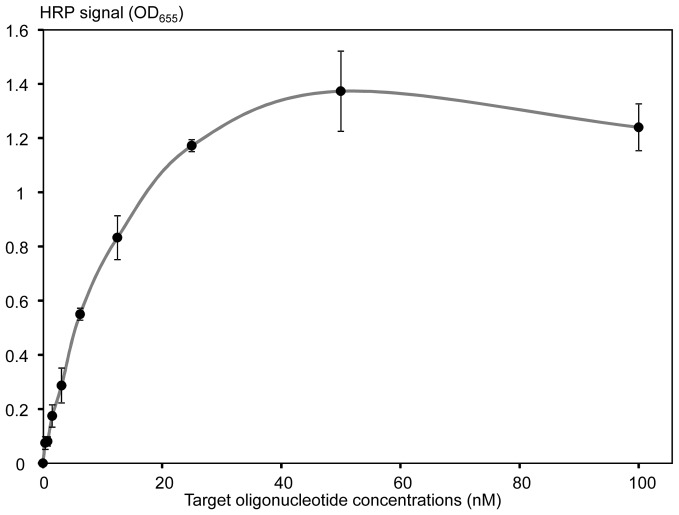
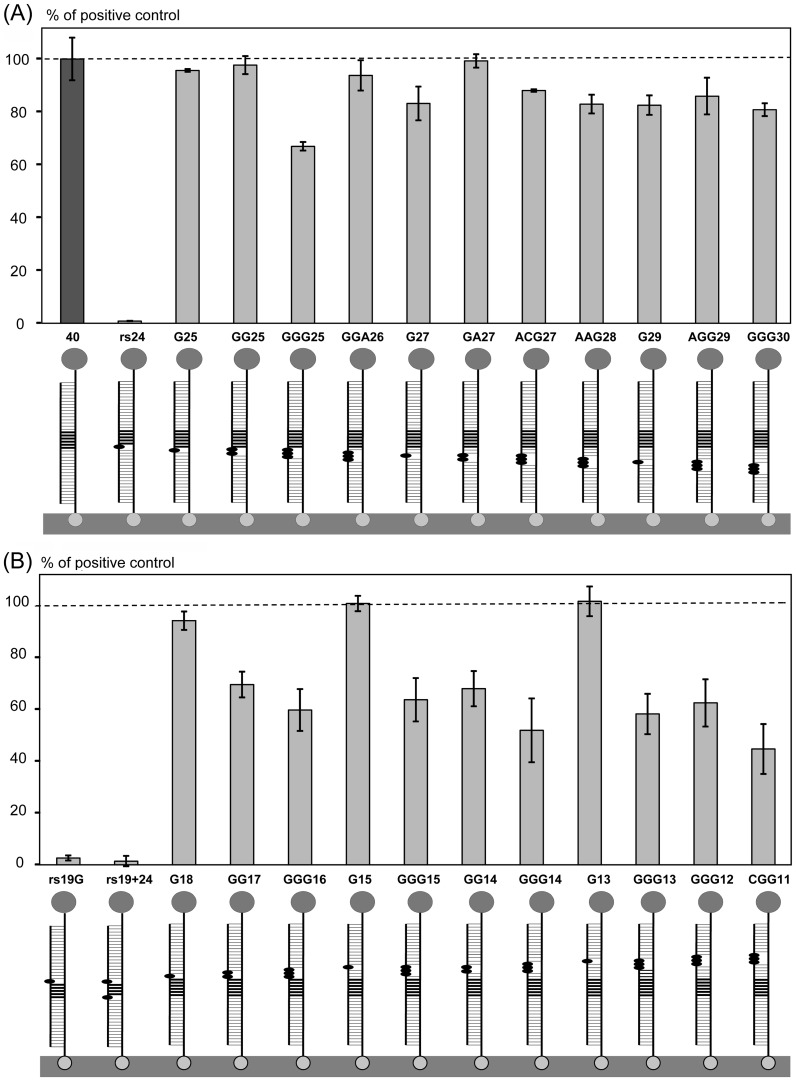
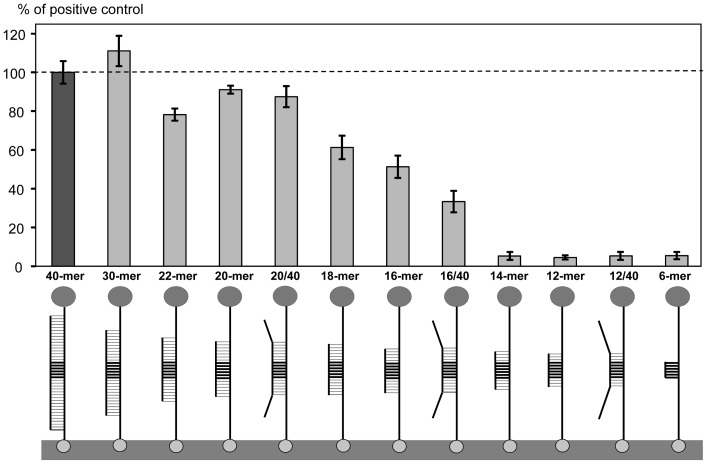
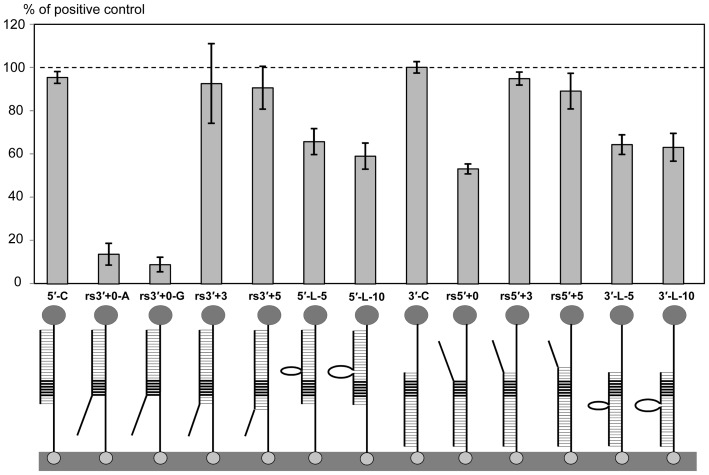
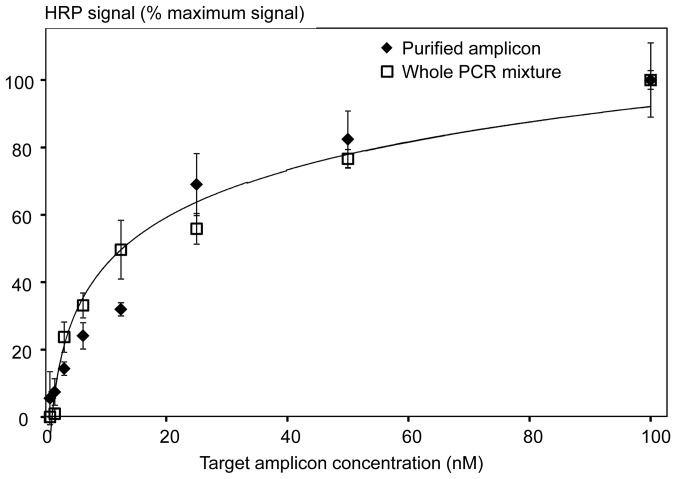
PCR multiplexing has proven to be challenging, and thus has provided limited means for pathogen genotyping. We developed a new approach for analysis of PCR amplicons based on restriction endonuclease digestion. The first stage of the restriction enzyme assay is hybridization of a target DNA to immobilized complementary oligonucleotide probes that carry a molecular marker, horseradish peroxidase (HRP). At the second stage, a target-specific restriction enzyme is added, cleaving the target-probe duplex at the corresponding restriction site and releasing the HRP marker into solution, where it is quantified colorimetrically. The assay was tested for detection of the methicillin-resistant Staphylococcus aureus (MRSA) pathogen, using the mecA gene as a target. Calibration curves indicated that the limit of detection for both target oligonucleotide and PCR amplicon was approximately 1 nM. Sequences of target oligonucleotides were altered to demonstrate that (i) any mutation of the restriction site reduced the signal to zero; (ii) double and triple point mutations of sequences flanking the restriction site reduced restriction to 50-80% of the positive control; and (iii) a minimum of a 16-bp target-probe dsDNA hybrid was required for significant cleavage. Further experiments showed that the assay could detect the mecA amplicon from an unpurified PCR mixture with detection limits similar to those with standard fluorescence-based qPCR. Furthermore, addition of a large excess of heterologous genomic DNA did not affect amplicon detection. Specificity of the assay is very high because it involves two biorecognition steps. The proposed assay is low-cost and can be completed in less than 1 hour. Thus, we have demonstrated an efficient new approach for pathogen detection and amplicon genotyping in conjunction with various end-point and qPCR applications. The restriction enzyme assay may also be used for parallel analysis of multiple different amplicons from the same unpurified mixture in broad-range PCR applications.
聚合酶链式反应(PCR)多重检测已被证明具有挑战性,因此为病原体基因分型提供的手段有限。我们开发了一种基于限制性内切酶消化分析PCR扩增子的新方法。限制性酶分析的第一阶段是将目标DNA与携带分子标记辣根过氧化物酶(HRP)的固定化互补寡核苷酸探针杂交。在第二阶段,加入目标特异性限制性酶,在相应的限制性位点切割目标-探针双链体,并将HRP标记释放到溶液中,在溶液中通过比色法对其进行定量。使用mecA基因作为靶点,对该检测方法进行了耐甲氧西林金黄色葡萄球菌(MRSA)病原体检测测试。校准曲线表明,目标寡核苷酸和PCR扩增子的检测限约为1 nM。改变目标寡核苷酸的序列以证明:(i)限制性位点的任何突变都会使信号降至零;(ii)限制性位点侧翼序列的双点和三点突变会使限制性降至阳性对照的50-80%;(iii)至少需要16 bp的目标-探针双链DNA杂交体才能进行有效切割。进一步的实验表明,该检测方法可以从未纯化的PCR混合物中检测到mecA扩增子,其检测限与基于标准荧光的定量PCR相似。此外,加入大量过量的异源基因组DNA不会影响扩增子检测。该检测方法的特异性非常高,因为它涉及两个生物识别步骤。所提出的检测方法成本低,可在不到1小时内完成。因此,我们展示了一种结合各种终点和定量PCR应用进行病原体检测和扩增子基因分型的高效新方法。在广泛的PCR应用中,限制性酶分析还可用于对来自同一未纯化混合物的多个不同扩增子进行平行分析。