Center for Immunity, Inflammation and Regenerative Medicine, School of Medicine, University of Virginia, Charlottesville, VA 22908, USA.
Department of Psychiatry and Neurobehavioral Sciences, School of Medicine, University of Virginia, Charlottesville, VA 22908, USA.
Biology (Basel). 2012 Apr 4;1(1):18-42. doi: 10.3390/biology1010018.
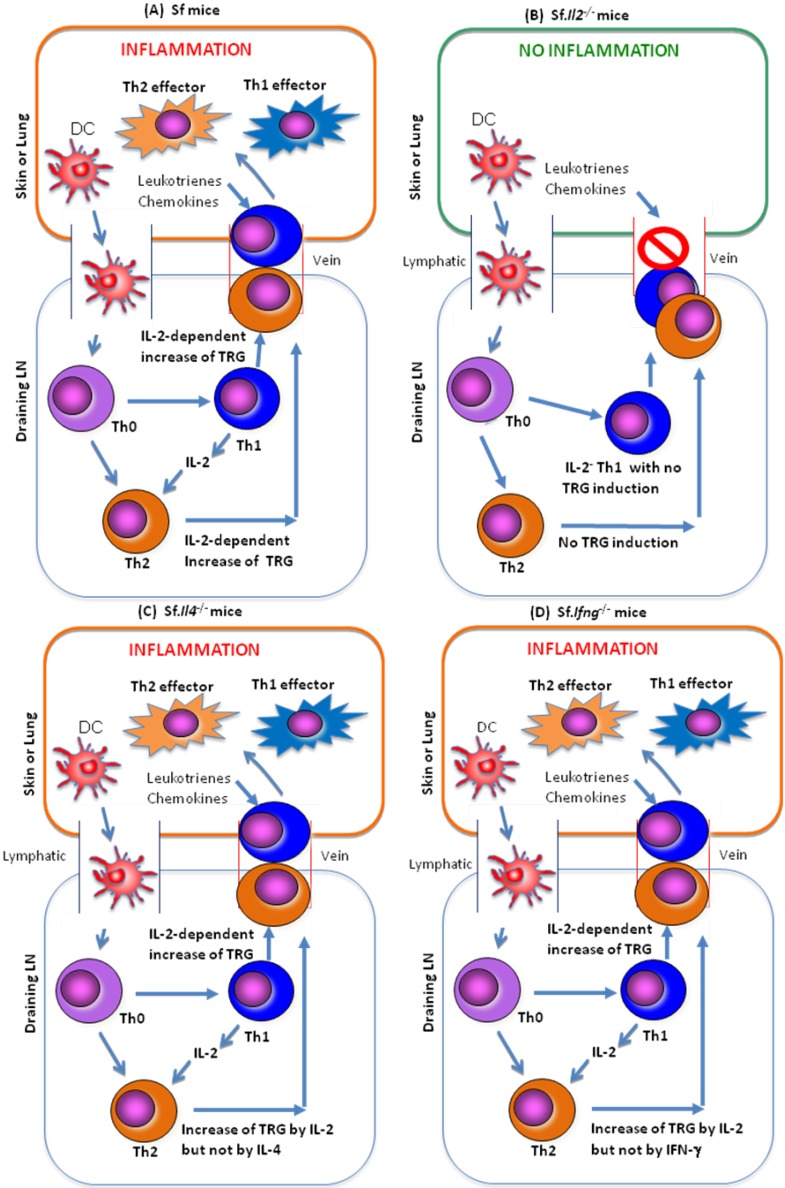
Due to a mutation in the Foxp3 transcription factor, Scurfy mice lack regulatory T-cells that maintain self-tolerance of the immune system. They develop multi-organ inflammation (MOI) and die around four weeks old. The affected organs are skin, tail, lungs and liver. In humans, endocrine and gastrointestinal inflammation are also observed, hence the disease is termed IPEX (Immunodysregulation, Polyendocrinopathy, Enteropathy, X-linked) syndrome. The three week period of fatal MOI offers a useful autoimmune model in which the controls by genetics, T-cell subsets, cytokines, and effector mechanisms could be efficiently investigated. In this report, we will review published work, summarize our recent studies of Scurfy double mutants lacking specific autoimmune-related genes, discuss the cellular and cytokine controls by these genes on MOI, the organ-specificities of the MOI controlled by environments, and the effector mechanisms regulated by specific Th cytokines, including several newly identified control mechanisms for organ-specific autoimmune response.
由于 Foxp3 转录因子的突变,Scurfy 小鼠缺乏维持免疫系统自身耐受的调节性 T 细胞。它们会发展出多器官炎症(MOI),并在四周龄左右死亡。受影响的器官包括皮肤、尾巴、肺和肝脏。在人类中,还观察到内分泌和胃肠道炎症,因此该疾病被称为 IPEX(免疫失调、多内分泌腺病、肠病、X 连锁)综合征。三周的致命 MOI 期提供了一个有用的自身免疫模型,可以有效地研究遗传、T 细胞亚群、细胞因子和效应机制的控制。在本报告中,我们将回顾已发表的工作,总结我们最近关于缺乏特定自身免疫相关基因的 Scurfy 双突变体的研究,讨论这些基因对 MOI 的细胞和细胞因子控制、受环境控制的 MOI 的器官特异性,以及特定 Th 细胞因子调节的效应机制,包括几个新确定的器官特异性自身免疫反应的控制机制。