Department of Economics, Brown University, Providence, RI 02912, USA. National Bureau of Economic Research, Cambridge, MA 02138, USA.
National Bureau of Economic Research, Cambridge, MA 02138, USA. Department of Economics, Princeton University, Princeton, NJ 08544, USA.
Science. 2014 May 23;344(6186):856-61. doi: 10.1126/science.1251872.
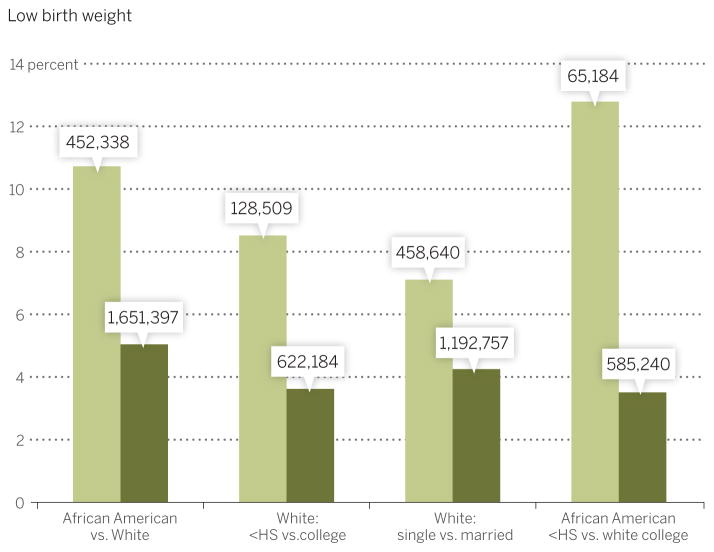
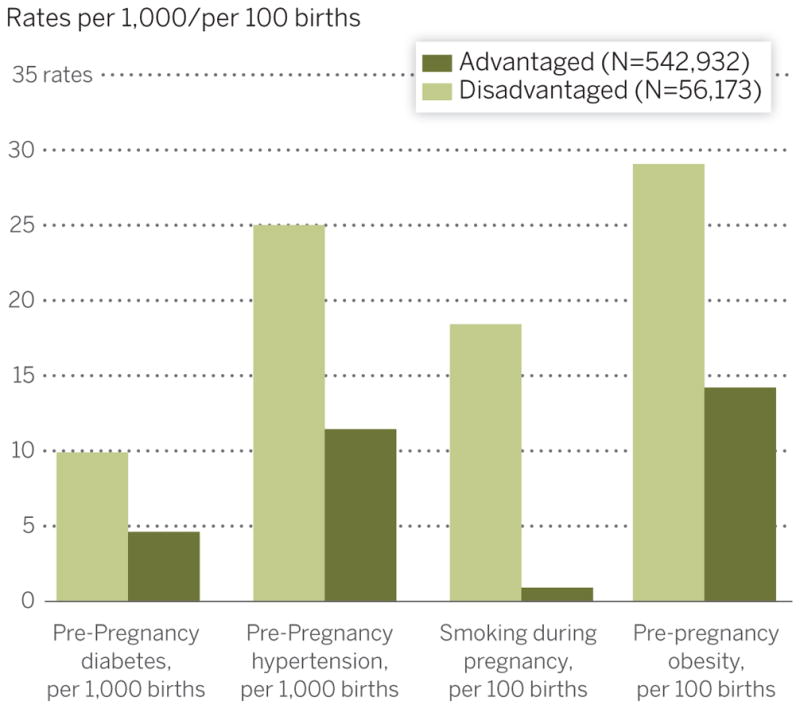
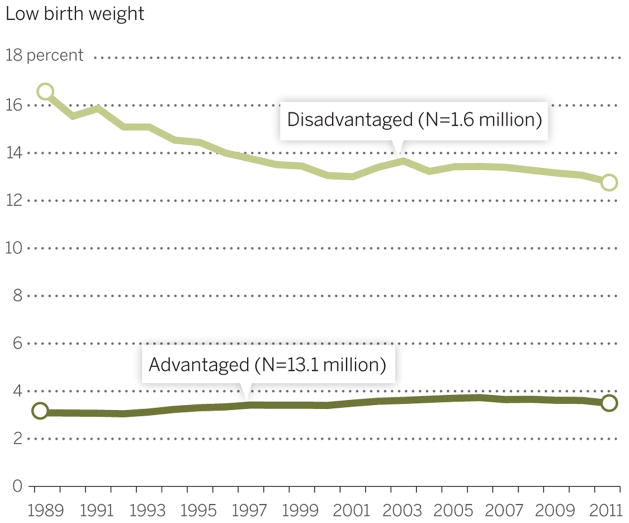
Health at birth is an important predictor of long-term outcomes, including education, income, and disability. Recent evidence suggests that maternal disadvantage leads to worse health at birth through poor health behaviors; exposure to harmful environmental factors; worse access to medical care, including family planning; and worse underlying maternal health. With increasing inequality, those at the bottom of the distribution now face relatively worse economic conditions, but newborn health among the most disadvantaged has actually improved. The most likely explanation is increasing knowledge about determinants of infant health and how to protect it along with public policies that put this knowledge into practice.
出生时的健康是长期结果(包括教育、收入和残疾)的重要预测因素。最近的证据表明,母亲的劣势会通过不良的健康行为、暴露于有害的环境因素、更难获得医疗保健(包括计划生育)以及更差的潜在产妇健康,导致出生时的健康状况恶化。随着不平等的加剧,处于分配底层的人现在面临着相对较差的经济条件,但最弱势群体的新生儿健康实际上已经得到了改善。最可能的解释是,人们对婴儿健康决定因素及其保护方法的认识不断提高,以及将这些知识付诸实践的公共政策。