Jobski Kathrin, Enders Dirk, Amann Ute, Suzart Kiliana, Wallander Mari-Ann, Schink Tania, Garbe Edeltraut
Leibniz Institute for Prevention Research and Epidemiology-BIPS GmbH, Achter Str. 30, 28359, Bremen, Germany.
Eur J Clin Pharmacol. 2014 Aug;70(8):975-81. doi: 10.1007/s00228-014-1697-7. Epub 2014 May 27.
The purpose of this drug utilization study was to describe the use of rivaroxaban in Germany during a time period in which approval was limited to the prevention of venous thromboembolism following hip or knee replacement. Additionally, we explored the feasibility of reconstructing inpatient drug use of rivaroxaban in a database where with a few exceptions inpatient prescribing information is not available.
Source of data was one statutory health insurance providing data on about seven million insurants throughout Germany. Analyses were based on a cohort of rivaroxaban users from launch (October 2008) to December 2009 and encompassed potential indications for rivaroxaban use, treatment duration, and co-prescribing of potentially interacting drugs. Start of rivaroxaban treatment was defined by the date of surgery.
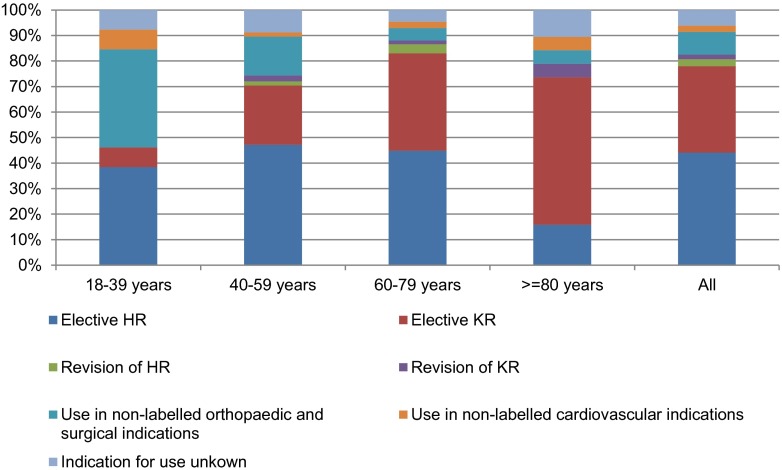
During the study period, 425 rivaroxaban users were identified contributing 440 treatment periods. For more than 82% of these episodes labelled indications could be determined. Treatment durations exceeded recommendations in 95% of the episodes following knee replacement whereas rivaroxaban use after elective hip surgery was found to be longer than recommended in 56%. Prescribing of potentially interacting medication was rare except for non-steroidal anti-inflammatory drugs.
Overall, no important off-label use of rivaroxaban was identified. Based on several assumptions that have to be considered in the interpretation of the results our study describes a database approach to reconstruct inpatient drug use for a drug started after a coded hospital procedure, when treatment continues after hospital discharge and no change in drug use is expected in the outpatient setting.
本药物利用研究的目的是描述在德国利伐沙班批准仅限于预防髋关节或膝关节置换术后静脉血栓栓塞的时间段内其使用情况。此外,我们探讨了在一个除少数情况外无法获得住院处方信息的数据库中重建利伐沙班住院用药情况的可行性。
数据来源是一家法定健康保险公司,该公司提供了全德国约700万参保人的数据。分析基于一组从利伐沙班上市(2008年10月)至2009年12月的使用者,涵盖利伐沙班的潜在适应证、治疗持续时间以及可能相互作用药物的联合处方情况。利伐沙班治疗开始时间由手术日期确定。
在研究期间,确定了425名利伐沙班使用者,共有440个治疗周期。在这些病例中,超过82%的病例可确定有明确的适应证。膝关节置换术后95%的病例治疗持续时间超过了推荐时间,而择期髋关节置换术后使用利伐沙班的时间比推荐时间长的情况占56%。除了非甾体类抗炎药外,开具可能相互作用药物的情况很少见。
总体而言,未发现利伐沙班有重要的超适应证使用情况。基于在解释结果时必须考虑的几个假设,我们的研究描述了一种数据库方法,用于重建在编码的医院程序后开始使用的药物的住院用药情况,当出院后继续治疗且预计门诊用药无变化时。