Ibrahim Wael M, Karam Mohamed A, El-Shahat Reda M, Adway Asmaa A
Botany Department, Faculty of Science, Fayoum University, Fayoum, Egypt.
Agricultural Research Center, Ministry of Agriculture, Egypt.
Biomed Res Int. 2014;2014:392682. doi: 10.1155/2014/392682. Epub 2014 Apr 17.
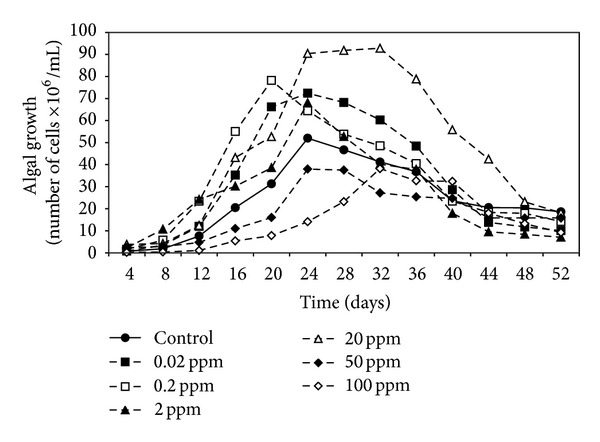
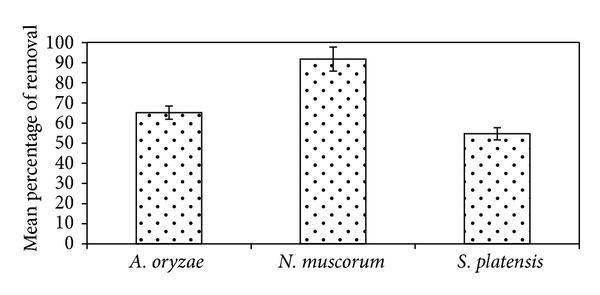
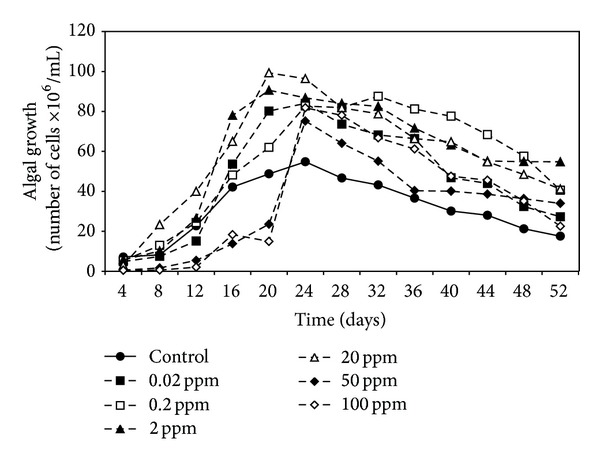
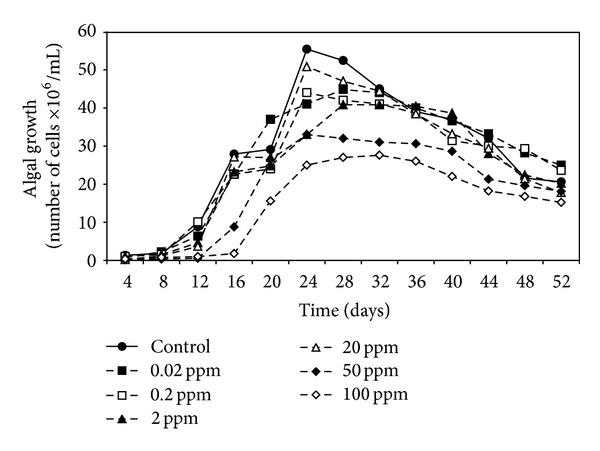
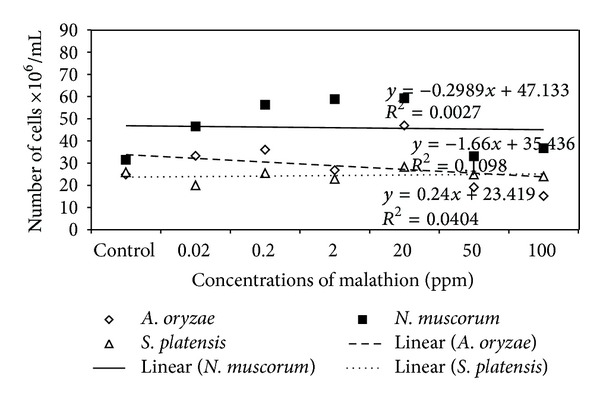
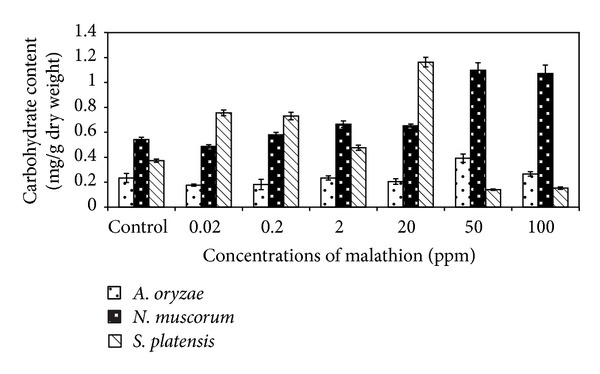
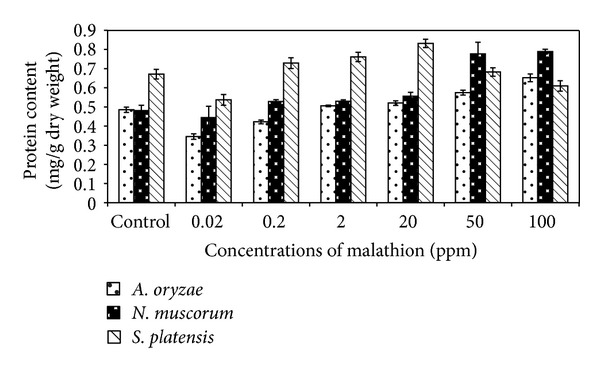
Three strains of filamentous Cyanobacteria were used to study their growth and utilization of organophosphorus pesticide malathion. A sharp decrease in the growth of the algal strains was observed by increasing the concentration of malathion. Amongst them Nostoc muscorum tolerated different concentrations and was recorded as the highest efficient strain for biodegradation (91%) of this compound. Moreover, carbohydrate and protein content of their cells overtopped the other strains especially at higher concentrations. The algal strains were further subjected to grow under P-limitation in absence and presence of malathion. Although, the algal growth under P-limitation recorded a very poor level, a massive enhanced growth and phosphorous content of cells were obtained when the P-limited medium was amended with malathion. This study clarified that N. muscorum with its capability to utilize malathion as a sole phosphorous source is considered as an inexpensive and efficient biotechnology for remediation of organophosphorus pesticide from contaminated wastewater.
使用了三株丝状蓝藻来研究它们对有机磷农药马拉硫磷的生长和利用情况。通过增加马拉硫磷的浓度,观察到藻类菌株的生长急剧下降。其中,地木耳能耐受不同浓度,被记录为对该化合物生物降解效率最高的菌株(91%)。此外,尤其是在较高浓度下,它们细胞中的碳水化合物和蛋白质含量超过了其他菌株。藻类菌株进一步在无磷和有马拉硫磷存在的条件下进行限磷培养。尽管在限磷条件下藻类生长水平很低,但当向限磷培养基中添加马拉硫磷时,细胞的生长和磷含量大幅增加。这项研究表明,地木耳具有将马拉硫磷作为唯一磷源利用的能力,被认为是一种从受污染废水中修复有机磷农药的廉价且高效的生物技术。