Li D, Wei X, Xie K, Chen K, Li J, Fang J
School of Life Sciences and Technology, Tongji University, 1239 Siping Road, Shanghai 200092, China.
Br J Cancer. 2014 Jul 8;111(1):68-77. doi: 10.1038/bjc.2014.282. Epub 2014 May 29.
Antiangiogenic therapies have been proven effective in cancer treatment. Fibroblast growth factor-2 (FGF-2) has been functionally implicated in tumour angiogenesis and is an important target of antiangiogenic therapies. The aim of this work was to develop a novel FGF-2 inhibitor for cancer therapy.
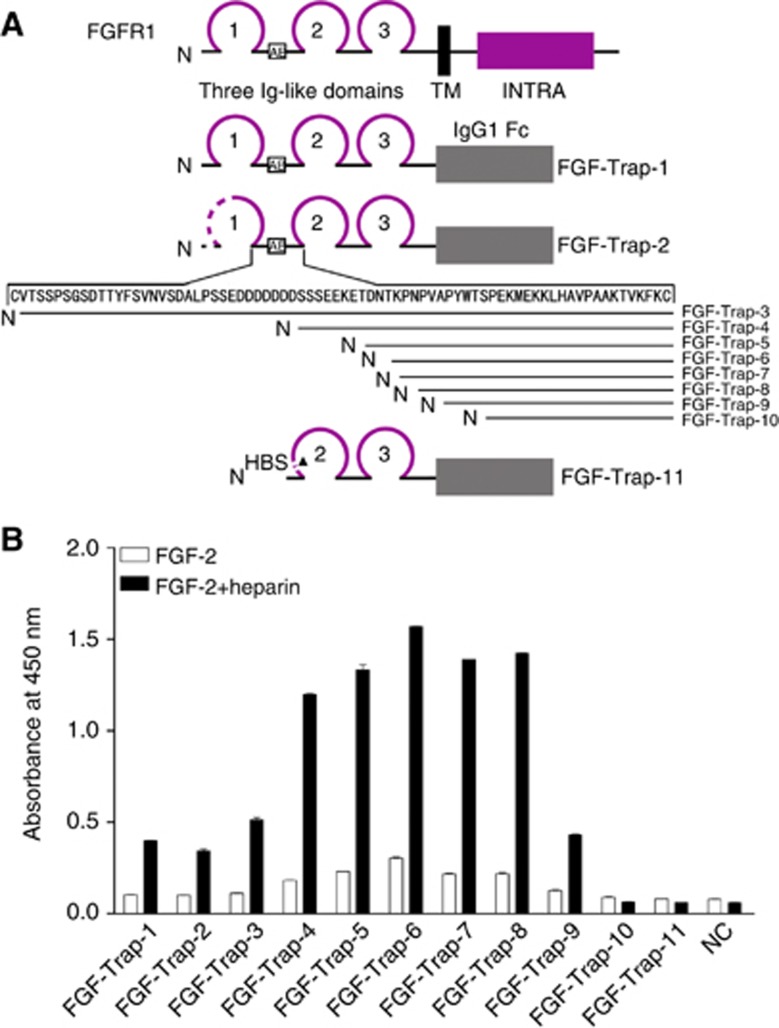
Eleven fusion proteins were developed by fusing various truncated extracellular regions of FGFR1 with the Fc region of IgG1. The optimal decoy receptor fusion protein with the highest binding affinity for FGF-2 was identified by an FGF-2-binding assay and its potential antitumour effects were investigated.
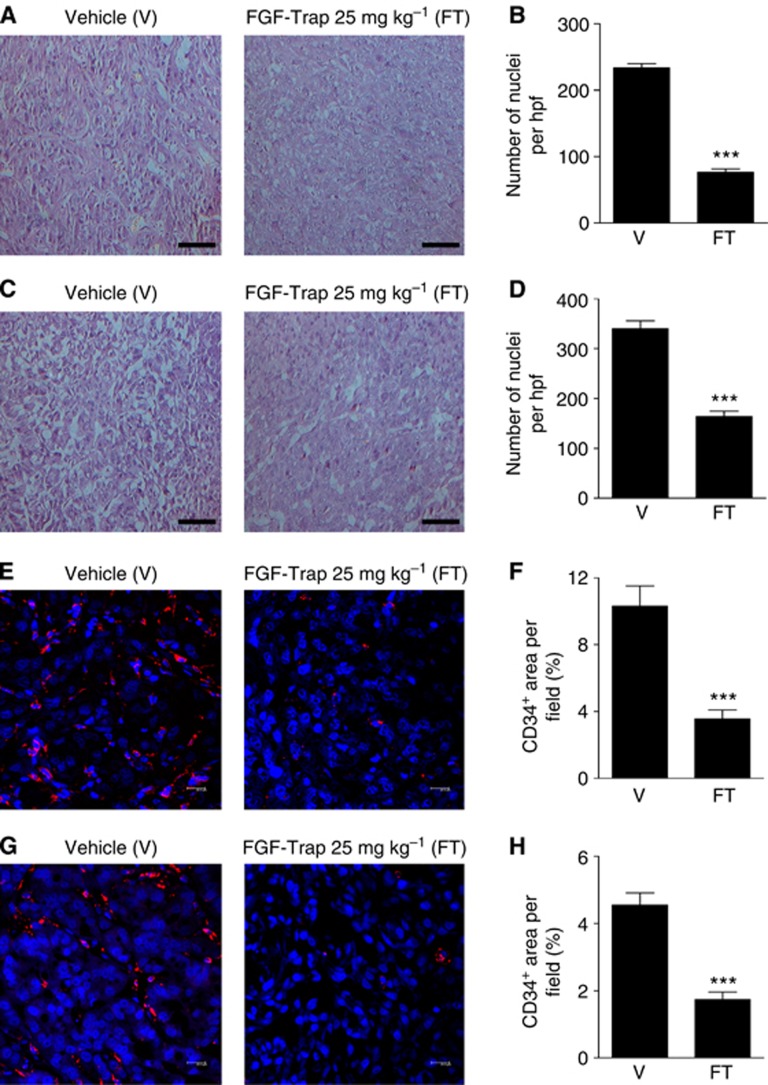
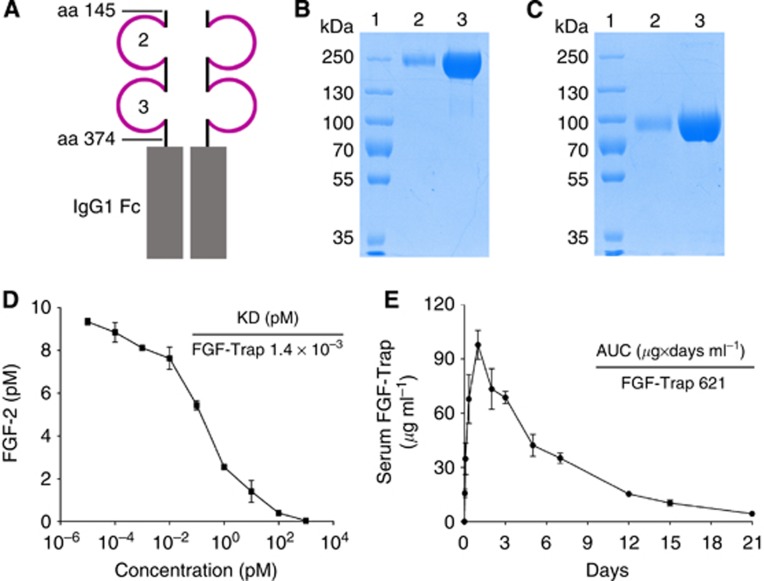
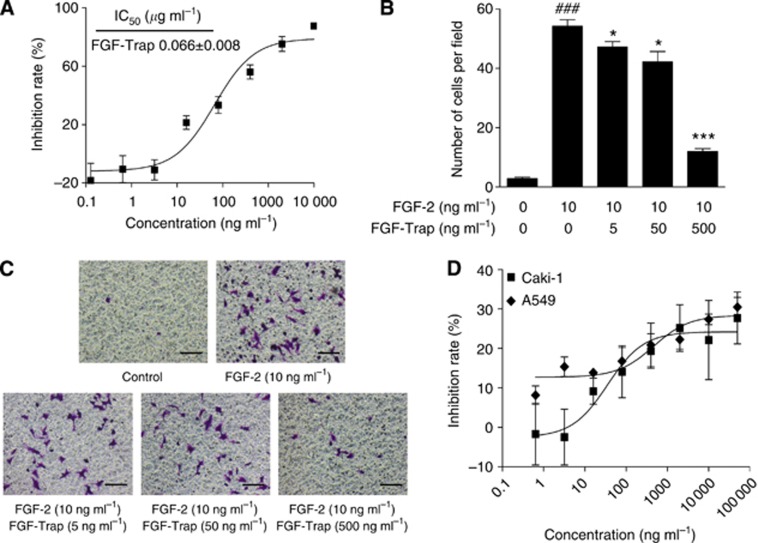
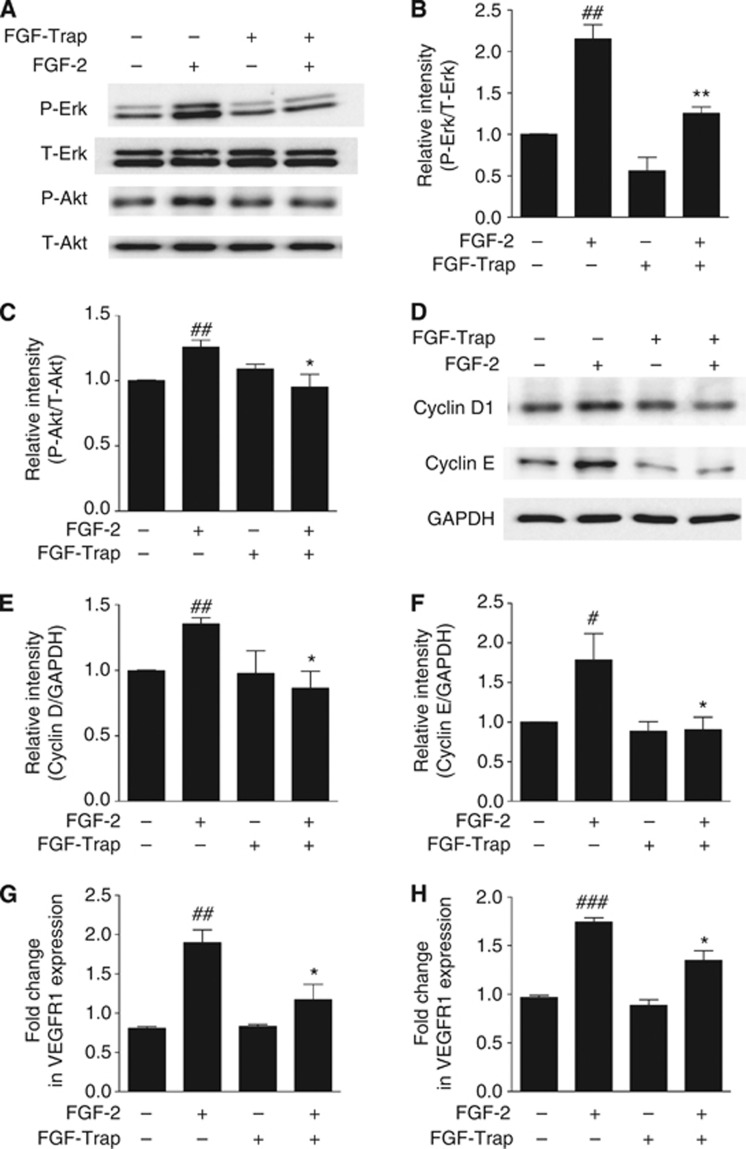
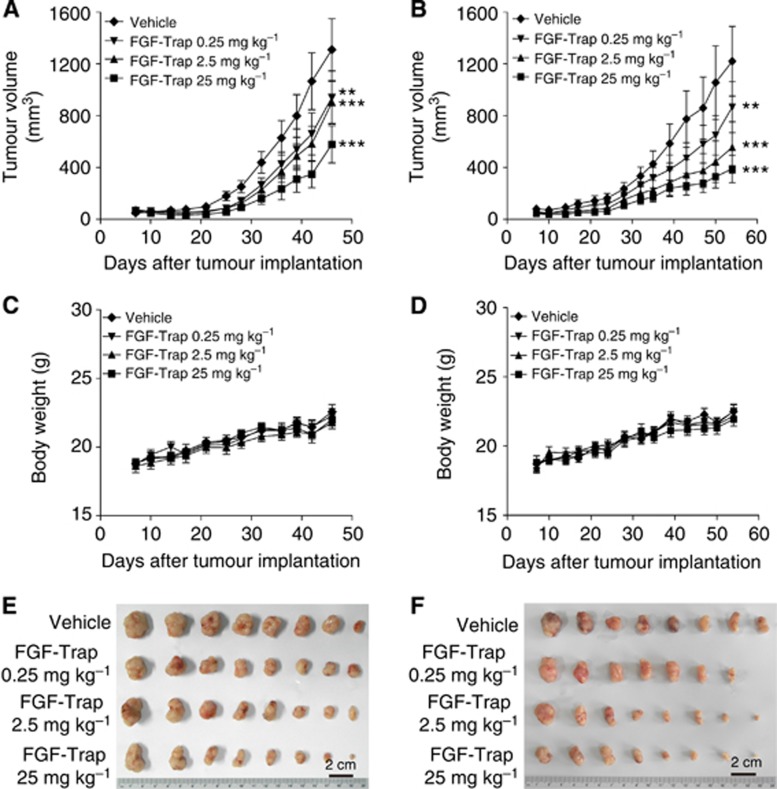
We obtained a soluble decoy receptor fusion protein with the highest binding activity for FGF-2, named FGF-Trap. Fibroblast growth factor-Trap significantly abolished FGF-2-stimulated activation of FGF signalling as demonstrated by its suppression of FGF-2-mediated phosphorylation of Erk1/2 and Akt, upregulation of cyclins D1 and E and the increase in mRNA levels of vascular endothelial growth factor R1 and R2 (VEGFR1 and VEGFR2). Furthermore, FGF-Trap effectively suppressed FGF-2-induced proliferation and migration of human umbilical vein endothelial cells (HUVECs) in vitro. Most importantly, FGF-Trap potently inhibited tumour growth and angiogenesis in Caki-1 and A549 xenograft models in vivo.
Fibroblast growth factor-Trap potently inhibits tumour growth by blocking FGF-2 signalling pathways and could be an effective therapeutic agent for cancer patients.
抗血管生成疗法已被证明在癌症治疗中有效。成纤维细胞生长因子-2(FGF-2)在肿瘤血管生成中具有功能作用,是抗血管生成疗法的重要靶点。本研究的目的是开发一种新型的用于癌症治疗的FGF-2抑制剂。
通过将FGFR1的各种截短的细胞外区域与IgG1的Fc区域融合,开发了11种融合蛋白。通过FGF-2结合试验鉴定了对FGF-2具有最高结合亲和力的最佳诱饵受体融合蛋白,并研究了其潜在的抗肿瘤作用。
我们获得了一种对FGF-2具有最高结合活性的可溶性诱饵受体融合蛋白,命名为FGF-Trap。成纤维细胞生长因子-Trap显著消除了FGF-2刺激的FGF信号激活,这表现为它抑制了FGF-2介导的Erk1/2和Akt磷酸化、细胞周期蛋白D1和E的上调以及血管内皮生长因子R1和R2(VEGFR1和VEGFR2)mRNA水平的增加。此外,FGF-Trap在体外有效抑制了FGF-2诱导的人脐静脉内皮细胞(HUVECs)的增殖和迁移。最重要的是,FGF-Trap在体内显著抑制了Caki-1和A549异种移植模型中的肿瘤生长和血管生成。
成纤维细胞生长因子-Trap通过阻断FGF-2信号通路有效抑制肿瘤生长,可能是癌症患者的一种有效治疗药物。