Institute of Medical Biology, Chinese Academy of Medical Science & Peking Union Medical College, Kunming 650118, People's Republic of China.
Sichuan Institute for Food and Drug Control, Chengdu 611731, People's Republic of China.
Int J Nanomedicine. 2020 Mar 24;15:1983-1996. doi: 10.2147/IJN.S237182. eCollection 2020.
Fibroblast growth factor (FGF)-2 is overexpressed in various tumor tissues. It affects tumor cell proliferation, invasion and survival, promotes tumor angiogenesis and is tightly involved in the development of systemic and local immunosuppressive tumor mechanisms.
This study aimed to develop an effective vaccine against FGF-2 and to investigate the effects of anti-FGF-2 immunization on tumor growth and antitumor immune responses.
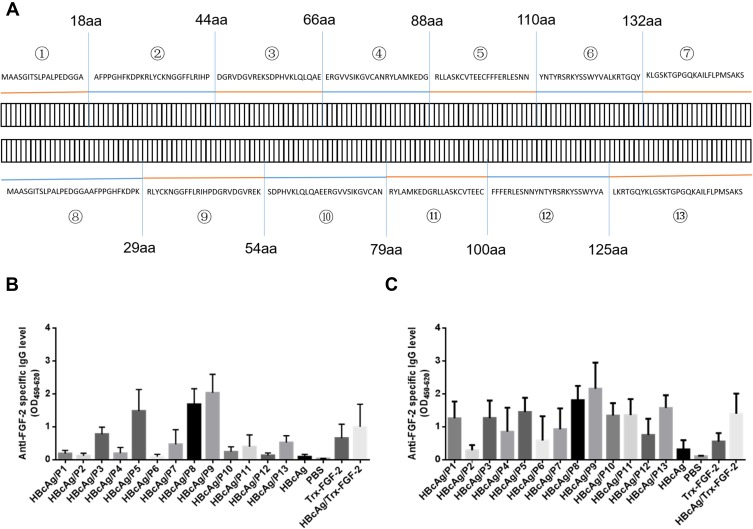
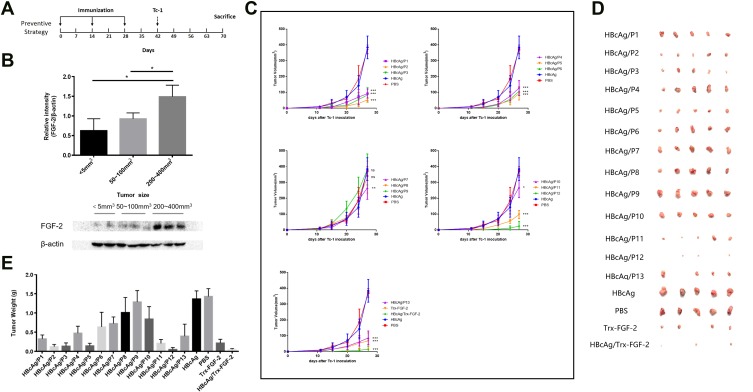
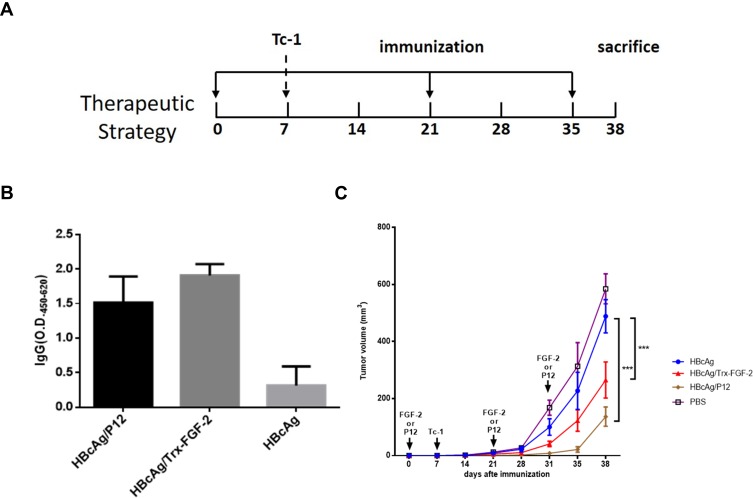
A set of thirteen synthesized overlapping peptides covering all possible linear B-cell epitopes of murine FGF-2 and a recombinant FGF-2 protein were conjugated to virus-like particles (VLPs) of recombinant hepatitis B core antigen (HBcAg). The VLPs were immunized through a preventive or therapeutic strategy in a TC-1 or 4T1 grafted tumor model.
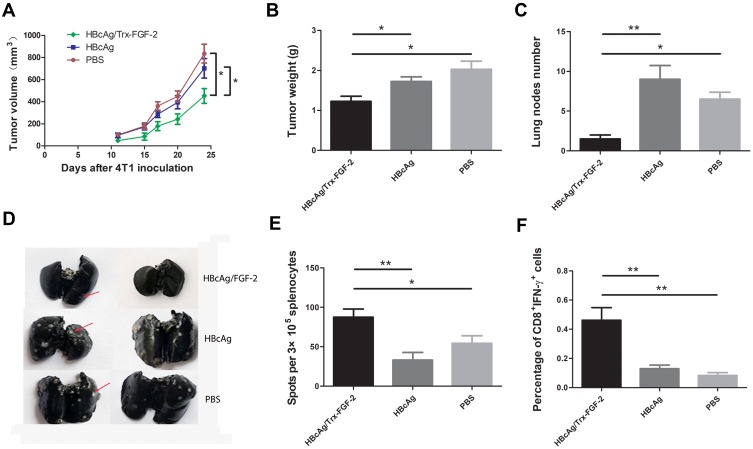
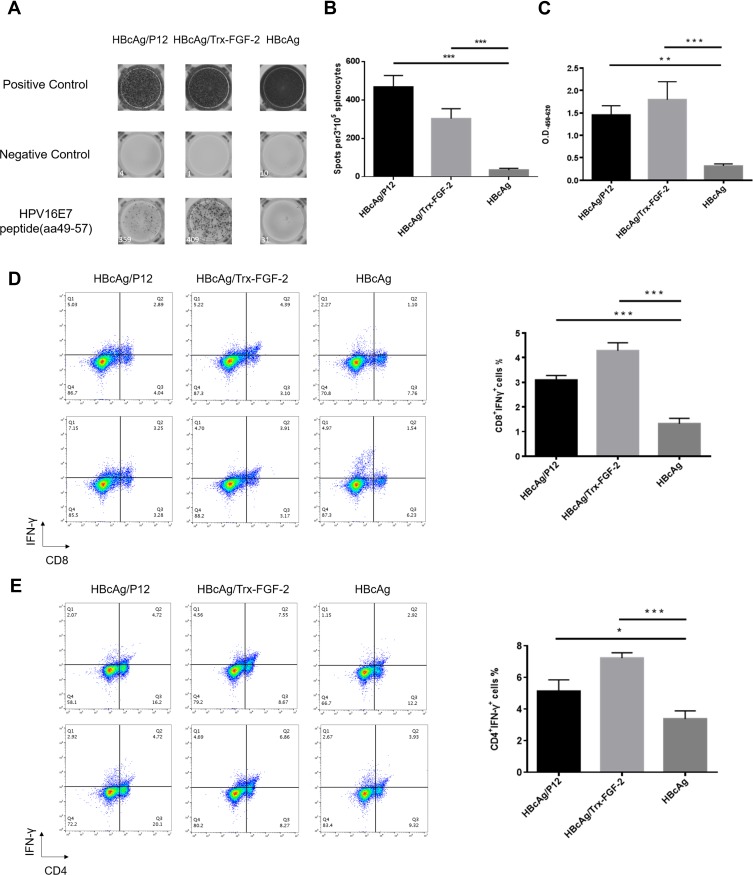
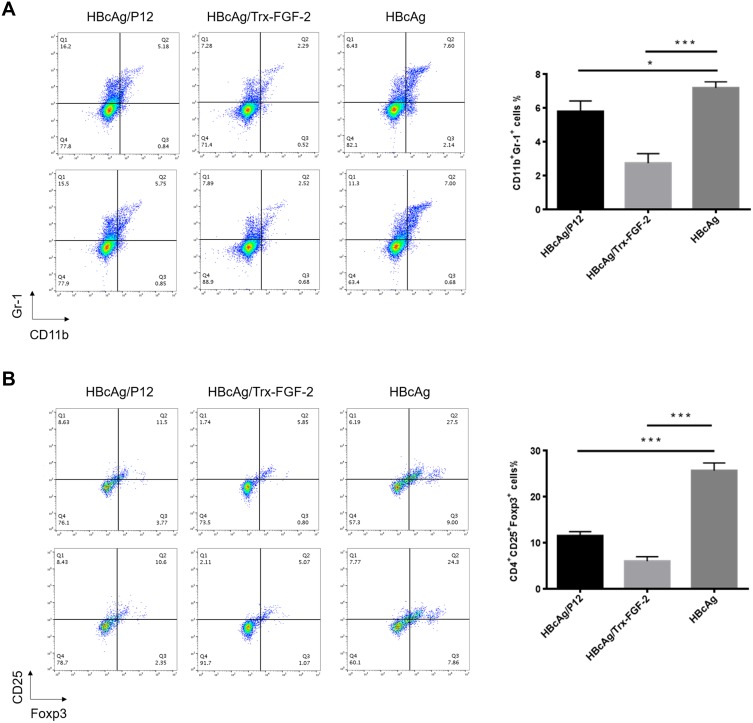
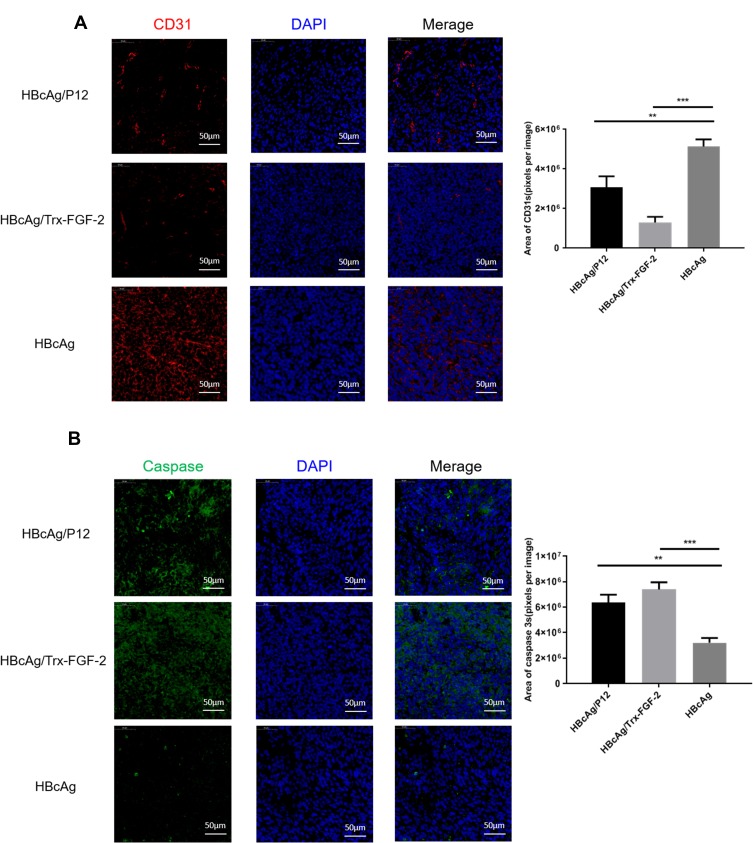
Immunization with FGF-2 peptides or full-length protein-coupled VLPs produced FGF-2-specific antibodies with a high titer. Peptide 12, which is located in the heparin-binding site of FGF-2, or protein-conjugated VLPs presented the most significant effects on the suppression of TC-1 tumor growth. The levels of IFN-γ-expressing splenocytes and serum IFN-γ were significantly elevated; further, the immune effector cells CD8 IFN-γ cytotoxic T lymphocytes (CTLs) and CD4 IFN-γ Th1 cells were significantly increased, whereas the immunosuppressive cells CD4 CD25 FOXP3 Treg cells and Gr-1 CD11b myeloid-derived suppressor cells (MDSCs) were decreased in the immunized mice. In addition, VLP immunization significantly suppressed tumor vascularization and promoted tumor cell apoptosis. In mice bearing 4T1 breast tumor, preventive immunization with FGF-2-conjugated VLPs suppressed tumor growth and lung metastasis, and increased effector cell responses.
Active immunization against FGF-2 is a new possible strategy for tumor immunotherapy.
成纤维细胞生长因子 (FGF)-2 在各种肿瘤组织中过度表达。它影响肿瘤细胞的增殖、侵袭和存活,促进肿瘤血管生成,并与全身性和局部免疫抑制肿瘤机制的发展密切相关。
本研究旨在开发针对 FGF-2 的有效疫苗,并研究抗 FGF-2 免疫接种对肿瘤生长和抗肿瘤免疫反应的影响。
一组 13 个合成的重叠肽覆盖了小鼠 FGF-2 的所有可能的线性 B 细胞表位,以及一个重组 FGF-2 蛋白与重组乙型肝炎核心抗原 (HBcAg) 的病毒样颗粒 (VLPs) 相连。通过预防性或治疗性策略,将 VLPs 免疫接种于 TC-1 或 4T1 移植瘤模型中。
用 FGF-2 肽或全长蛋白偶联 VLP 免疫产生了高滴度的 FGF-2 特异性抗体。位于 FGF-2 肝素结合位点的肽 12 或蛋白偶联 VLP 对 TC-1 肿瘤生长的抑制作用最为显著。表达 IFN-γ 的脾细胞和血清 IFN-γ水平显著升高;此外,免疫效应细胞 CD8 IFN-γ 细胞毒性 T 淋巴细胞 (CTL) 和 CD4 IFN-γ Th1 细胞显著增加,而免疫抑制细胞 CD4 CD25 FOXP3 Treg 细胞和 Gr-1 CD11b 髓源抑制细胞 (MDSCs) 在免疫小鼠中减少。此外,VLP 免疫显著抑制肿瘤血管生成并促进肿瘤细胞凋亡。在患有 4T1 乳腺癌的小鼠中,预防性免疫接种 FGF-2 偶联 VLP 抑制肿瘤生长和肺转移,并增加效应细胞反应。
针对 FGF-2 的主动免疫是肿瘤免疫治疗的一种新的可能策略。