Scheyerer Max J, Copeland Carol E, Stromberg Jeffrey, Ruckstuhl Thomas, Werner Clément M L
Department of Surgery, Division of Trauma Surgery, University Hospital Zurich, Raemistrasse 100, 8091 Zurich, Switzerland.
R Adams Cowley Shock Trauma Center, University of Maryland Medical Systems, 22 S. Greene Street, Baltimore, MD 21201, USA.
Adv Orthop. 2014;2014:432728. doi: 10.1155/2014/432728. Epub 2014 Apr 27.
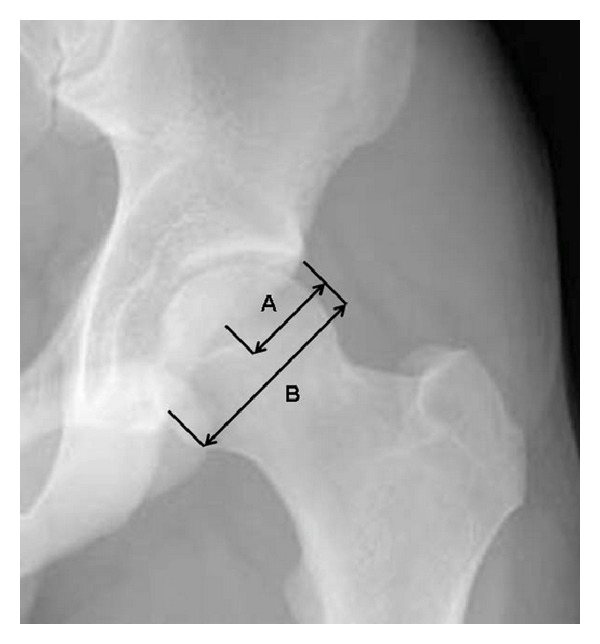
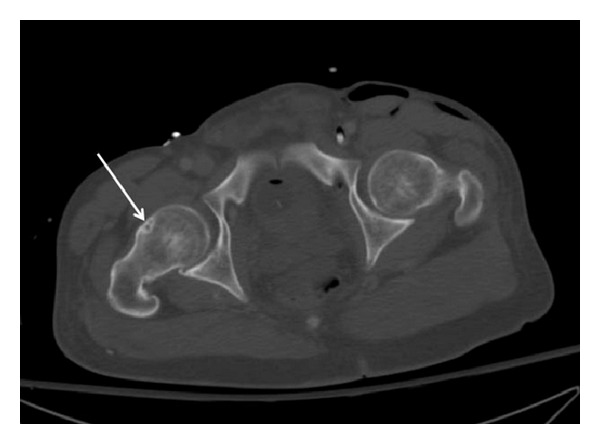
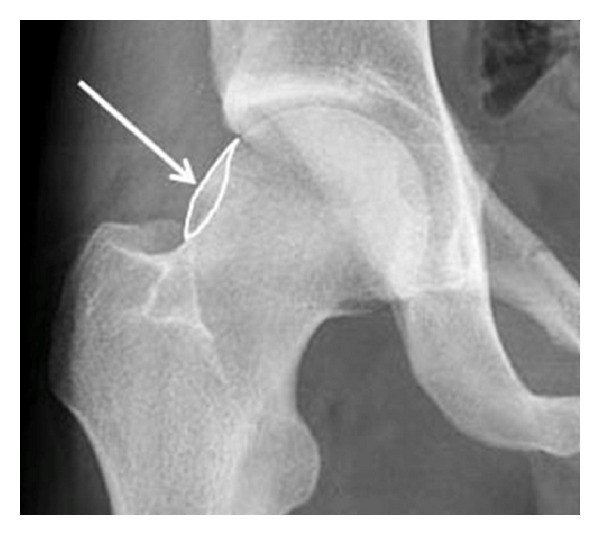
Introduction. The goal of this study was to research the association of femoral bumps and herniation pits with the overlap-ratio of the cross-over sign. Methods. Pelvic X-rays and CT-scans of 2925 patients with good assessment of the anterior and the posterior acetabular wall and absence of neutral pelvic tilt were enrolled in the investigation. Finally pelvic X-rays were assessed for the presence of a positive cross-over sign, and CT-scans for a femoral bump or a herniation pit. Additionally, if a positive cross-over sign was discovered, the overlap-ratio was calculated. Results. A femoral bump was found in 53.3% (n = 1559), and a herniation pit in 27.2% (n = 796) of all hips. The overlap-ratio correlated positively with the presence of a femoral bump, while a negative correlation between the overlap-ratio and the presence of a herniation pit was found. The latter was significantly more often combined with a femoral bump than without. Conclusions. We detected an increased prevalence of femoral bump with increasing overlap-ratios of the cross-over sign indicating a relation to biomechanical stress. The observed decreased prevalence of herniation pits with increasing overlap-ratios could be explained by reduced mechanical stress due to nontightened iliofemoral ligament in the presence of retroversion of the acetabulum.
引言。本研究的目的是探究股骨隆起和疝坑与交叉征重叠率之间的关联。方法。纳入2925例患者的骨盆X线片和CT扫描图像,这些患者髋臼前壁和后壁评估良好且无骨盆中立位倾斜。最后,评估骨盆X线片上交叉征是否为阳性,CT扫描图像上是否存在股骨隆起或疝坑。此外,若发现交叉征为阳性,则计算重叠率。结果。在所有髋关节中,53.3%(n = 1559)发现有股骨隆起,27.2%(n = 796)发现有疝坑。重叠率与股骨隆起的存在呈正相关,而重叠率与疝坑的存在呈负相关。后者与股骨隆起同时出现的情况明显多于单独出现的情况。结论。我们发现随着交叉征重叠率增加,股骨隆起的患病率升高,这表明其与生物力学应力有关。随着重叠率增加,疝坑患病率降低可能是由于髋臼后倾时髂股韧带未拉紧导致机械应力降低所致。