Liu Peng, Yin Lina, Deng Xiping, Wang Shiwen, Tanaka Kiyoshi, Zhang Suiqi
State Key Laboratory of Soil Erosion and Dryland Farming on the Loess Plateau, Institute of Soil and Water Conservation, Chinese Academy of Sciences and Ministry of Water Resources, Yangling, Shaanxi, 712100, China.
State Key Laboratory of Soil Erosion and Dryland Farming on the Loess Plateau, Institute of Soil and Water Conservation, Chinese Academy of Sciences and Ministry of Water Resources, Yangling, Shaanxi, 712100, China Institute of Soil and Water Conservation, Northwest A&F University, Yangling, Shaanxi, 712100, China Faculty of Agriculture, Tottori University, Koyama Minami 4-101, Tottori 680-8533, Japan.
J Exp Bot. 2014 Sep;65(17):4747-56. doi: 10.1093/jxb/eru220. Epub 2014 May 30.
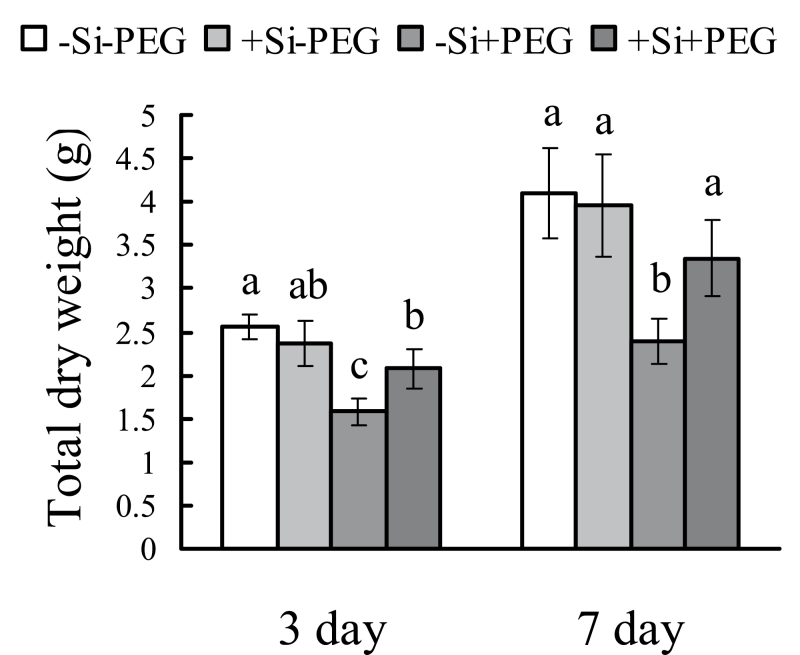
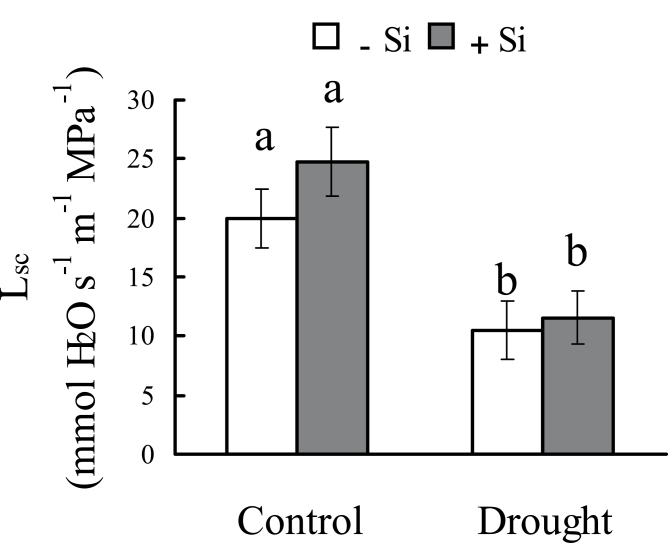
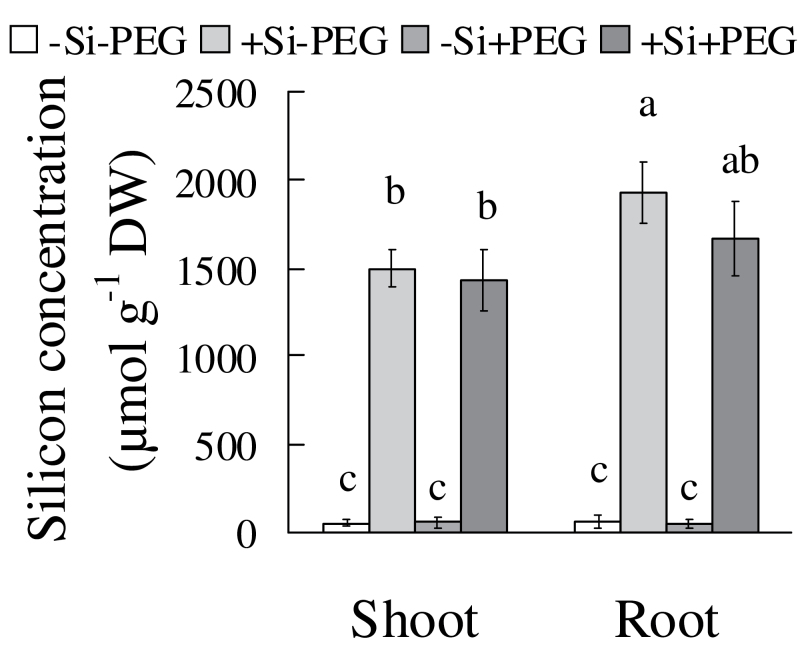
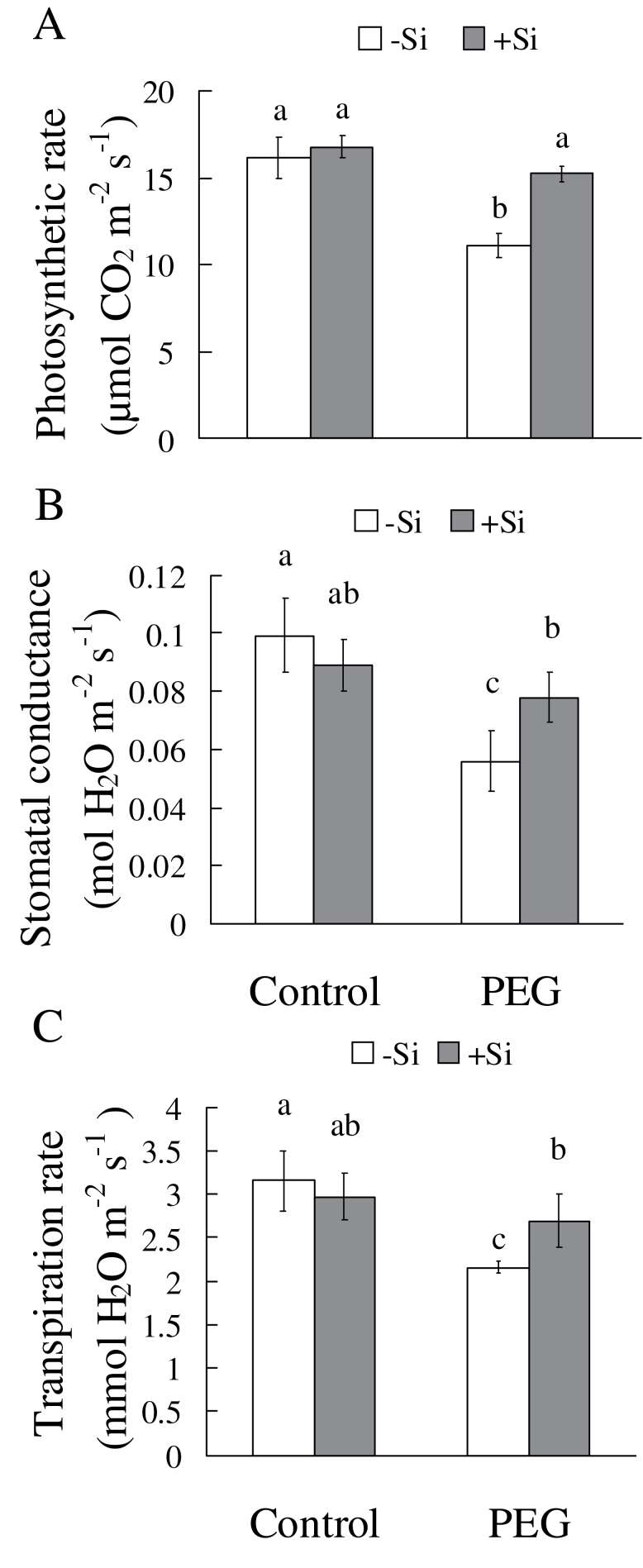
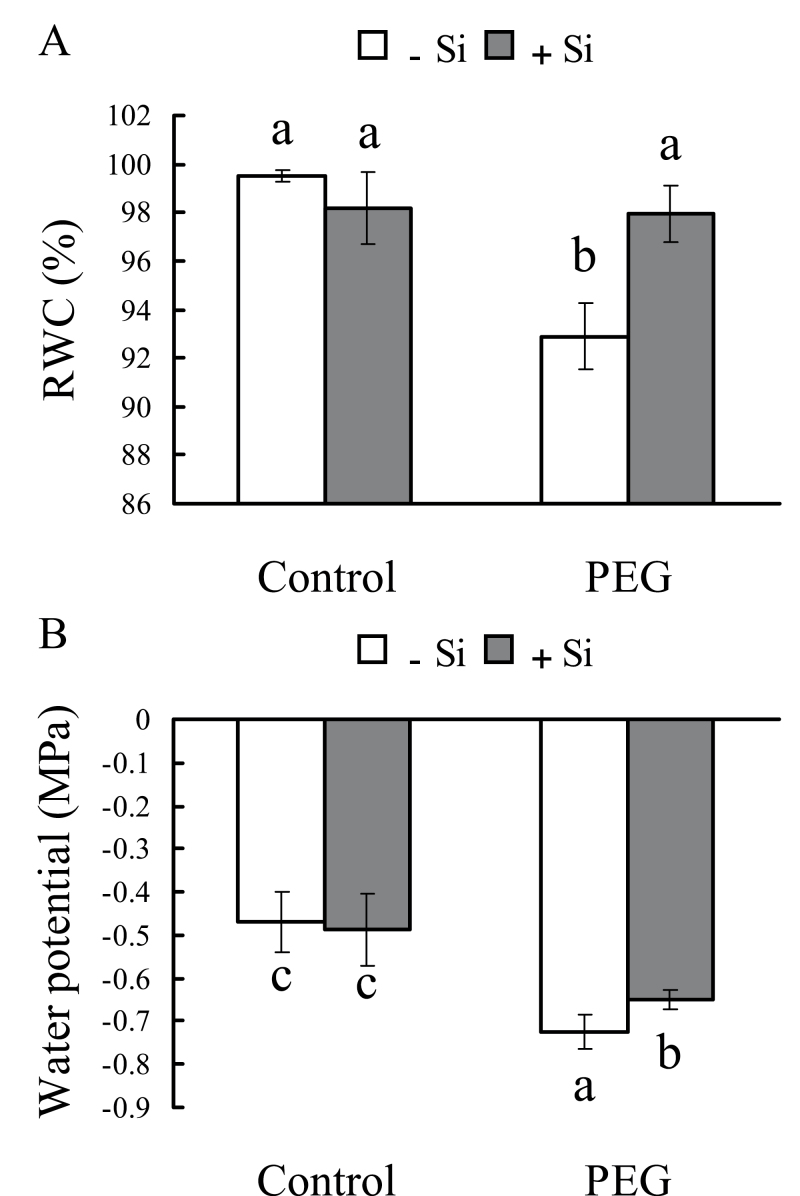
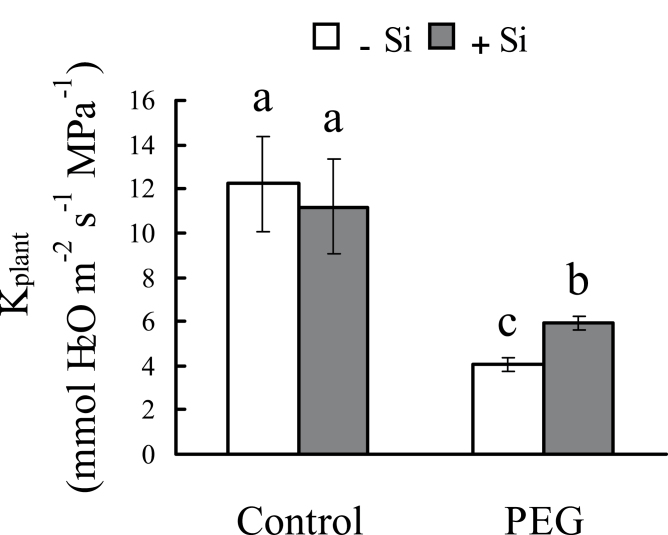
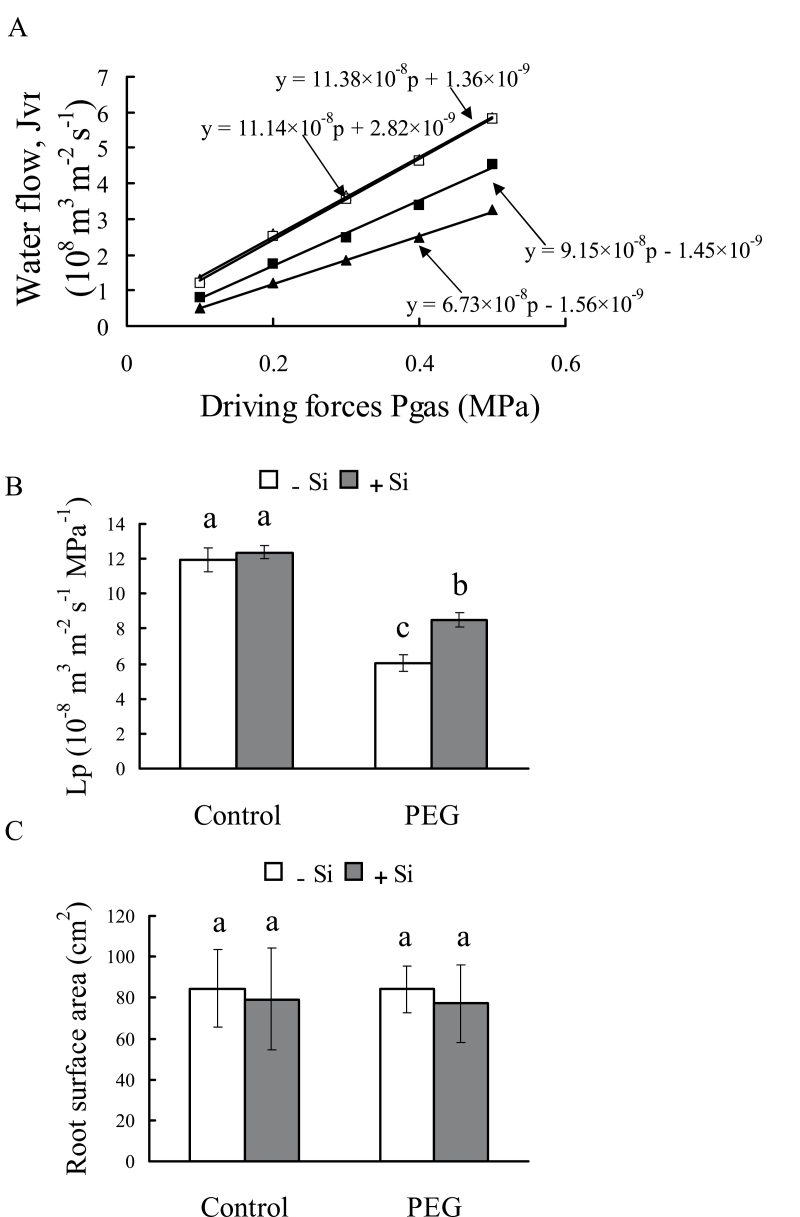
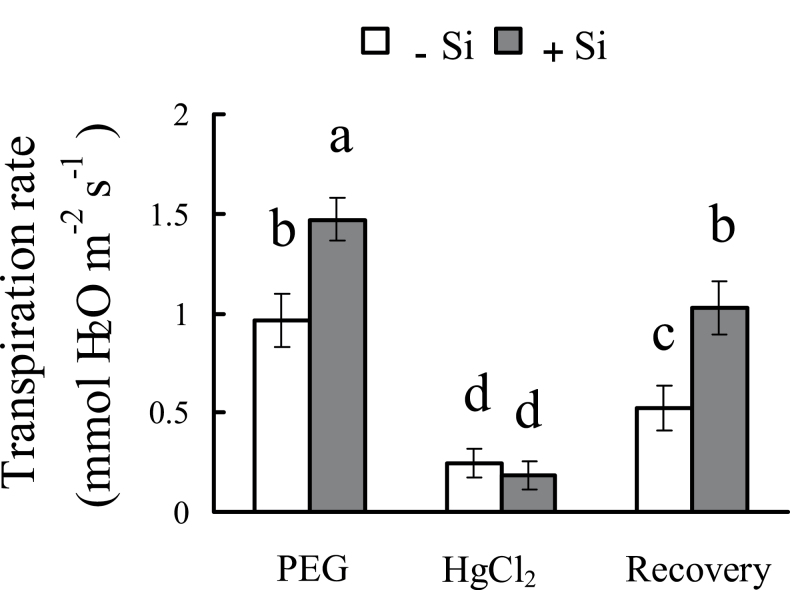
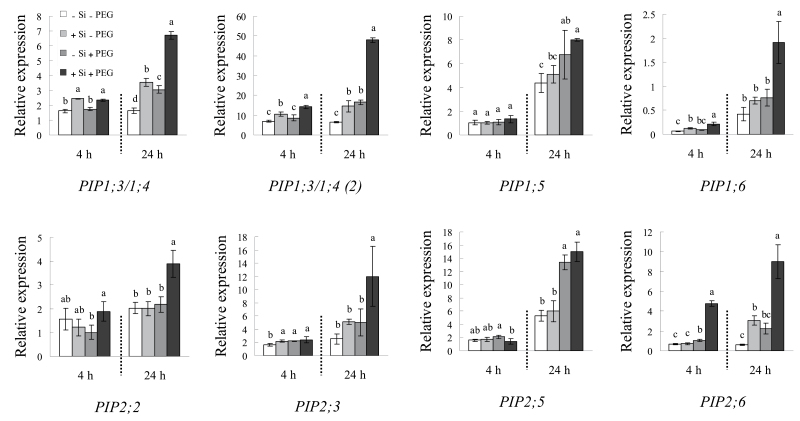
The fact that silicon application alleviates water deficit stress has been widely reported, but the underlying mechanism remains unclear. Here the effects of silicon on water uptake and transport of sorghum seedlings (Sorghum bicolor L.) growing under polyethylene glycol-simulated osmotic stress in hydroponic culture and water deficit stress in sand culture were investigated. Osmotic stress dramatically decreased dry weight, photosynthetic rate, transpiration rate, stomatal conductance, and leaf water content, but silicon application reduced these stress-induced decreases. Although silicon application had no effect on stem water transport capacity, whole-plant hydraulic conductance (Kplant) and root hydraulic conductance (Lp) were higher in silicon-treated seedlings than in those without silicon treatment under osmotic stress. Furthermore, the extent of changes in transpiration rate was similar to the changes in Kplant and Lp. The contribution of aquaporin to Lp was characterized using the aquaporin inhibitor mercury. Under osmotic stress, the exogenous application of HgCl2 decreased the transpiration rates of seedlings with and without silicon to the same level; after recovery induced by dithiothreitol (DTT), however, the transpiration rate was higher in silicon-treated seedlings than in untreated seedlings. In addition, transcription levels of several root aquaporin genes were increased by silicon application under osmotic stress. These results indicate that the silicon-induced up-regulation of aquaporin, which was thought to increase Lp, was involved in improving root water uptake under osmotic stress. This study also suggests that silicon plays a modulating role in improving plant resistance to osmotic stress in addition to its role as a mere physical barrier.
硅的施用能缓解水分亏缺胁迫这一事实已被广泛报道,但其潜在机制仍不清楚。本文研究了硅对水培条件下聚乙二醇模拟渗透胁迫以及砂培条件下水分亏缺胁迫下高粱幼苗(Sorghum bicolor L.)水分吸收和运输的影响。渗透胁迫显著降低了干重、光合速率、蒸腾速率、气孔导度和叶片含水量,但施用硅减轻了这些胁迫诱导的降低。尽管施用硅对茎的水分运输能力没有影响,但在渗透胁迫下,施用硅的幼苗的全株水力导度(Kplant)和根水力导度(Lp)高于未施用硅的幼苗。此外,蒸腾速率的变化程度与Kplant和Lp的变化相似。使用水通道蛋白抑制剂汞来表征水通道蛋白对Lp的贡献。在渗透胁迫下,外源施用HgCl2使施用硅和未施用硅的幼苗的蒸腾速率降低到相同水平;然而,在二硫苏糖醇(DTT)诱导恢复后,施用硅的幼苗的蒸腾速率高于未处理的幼苗。此外,在渗透胁迫下,施用硅可提高几个根水通道蛋白基因的转录水平。这些结果表明,硅诱导的水通道蛋白上调被认为增加了Lp,参与了渗透胁迫下根系水分吸收的改善。本研究还表明,硅除了作为单纯的物理屏障外,在提高植物对渗透胁迫的抗性方面也发挥着调节作用。