Center for Human Movement Sciences, University of Groningen, University Medical Center Groningen, Groningen, The Netherlands.
Department of Rehabilitation Medicine, Center for Rehabilitation, University of Groningen, University Medical Center Groningen, Groningen, The Netherlands.
PLoS One. 2014 Jun 3;9(6):e98494. doi: 10.1371/journal.pone.0098494. eCollection 2014.
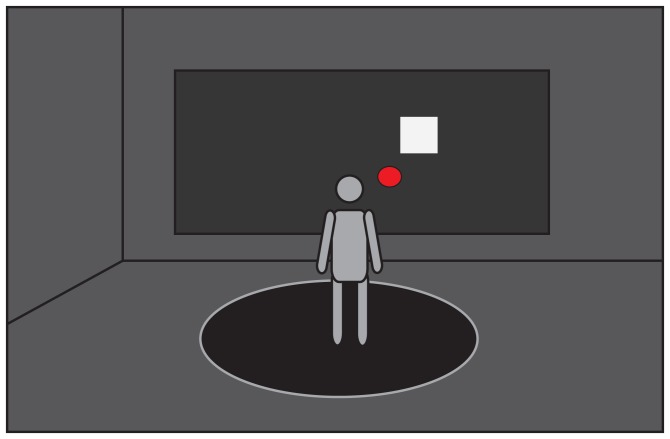
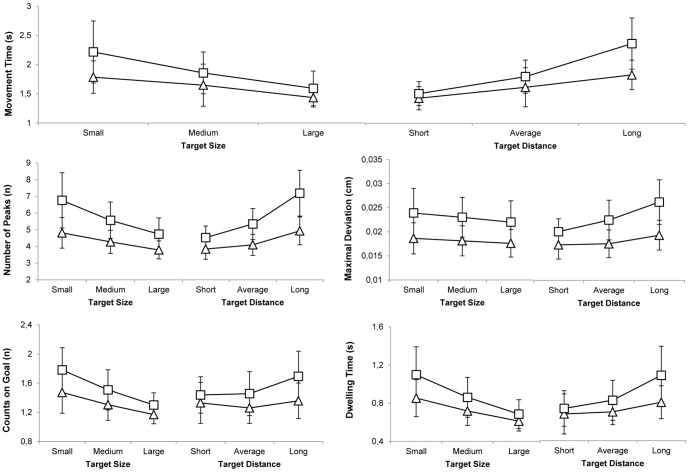
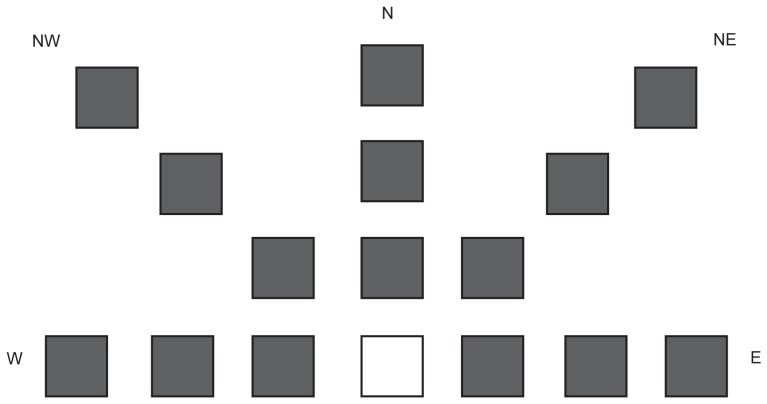
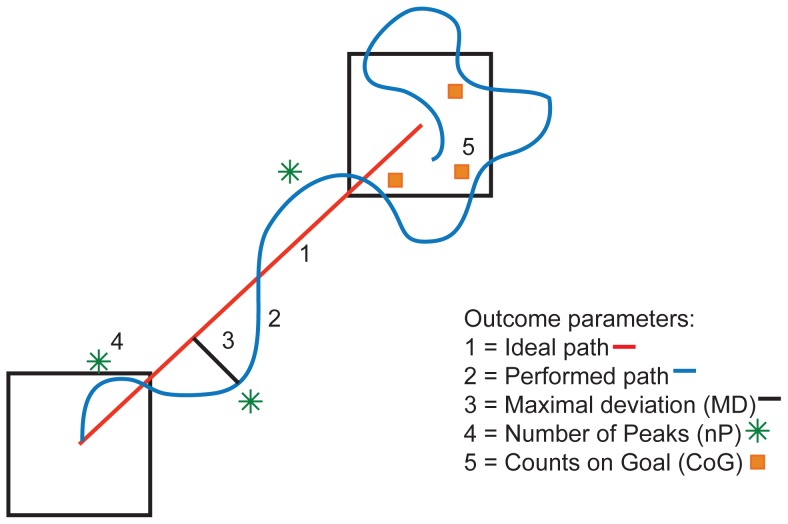
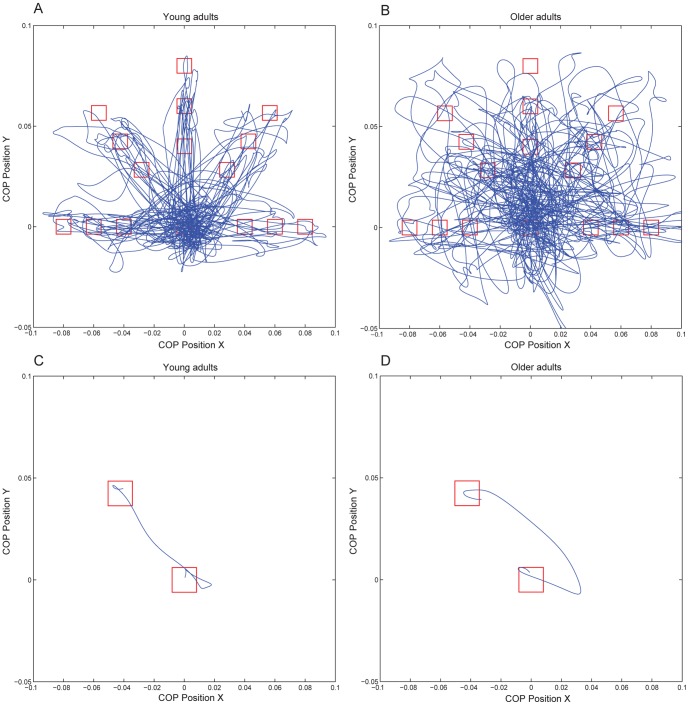
An important reason for falling in elderly is incorrect weight-shifting. In many daily life activities quick and accurate weight-shifting is needed to maintain balance and to prevent from falling. The present study aims to gain more insight in age-related differences in the control of weight-shifting. Nine healthy older adults (70.3 ± 6.9 years) and twelve young adults (20.9 ± 0.5 years) participated in the study. They performed a weight shifting task by moving the body's center of pressure, represented by a red dot on a screen, in different directions, towards targets of different sizes and at different distances projected on a screen. Movement time, fluency and accuracy of the movement were determined. Accuracy was quantified by the number of times the cursor hit the goal target before a target switch was realized (counts on goal) and by the time required to realize a target switch after the goal target was hit by the cursor for the first time (dwelling time). Fluency was expressed by the maximal deviation of the performed path with respect to the ideal path and the number of peaks, or inflections in the performed path. Significant main effects of target size, target distance and age on all outcome measures were found. With decreasing target size, increasing target distance and increasing age, movement time significantly increased and fluency and accuracy significantly decreased (i.e. increased number of peaks, maximal deviation, number of times on the goal target and longer dwelling time around the goal target). In addition, significant interaction effects of sizeage and distanceage were found. Older adults needed more time to perform the weight-shifting task and their movements were less fluent and accurate compared to younger adults, especially with increasing task difficulty. This indicates that elderly might have difficulties with executing an adequate adaptation to a perturbation in daily life.
老年人摔倒的一个重要原因是不正确的体重转移。在许多日常生活活动中,需要快速、准确地转移体重以保持平衡并防止摔倒。本研究旨在更深入地了解与年龄相关的体重转移控制差异。九名健康的老年人(70.3±6.9 岁)和十二名年轻人(20.9±0.5 岁)参加了这项研究。他们通过将身体的压力中心(由屏幕上的一个红点表示)移向屏幕上投影的不同大小和不同距离的目标,来完成体重转移任务。测量了运动时间、流畅性和运动准确性。准确性通过在实现目标切换之前光标击中目标的次数(击中目标的次数)和在光标第一次击中目标后实现目标切换所需的时间(停留时间)来量化。流畅性通过执行路径与理想路径之间的最大偏差以及执行路径中的峰值或拐点的数量来表示。目标大小、目标距离和年龄对所有结果测量都有显著的主效应。随着目标大小的减小、目标距离的增加和年龄的增加,运动时间显著增加,流畅性和准确性显著降低(即峰值数量增加、最大偏差增加、击中目标的次数增加和在目标周围的停留时间增加)。此外,还发现了大小年龄和距离年龄的显著交互效应。与年轻人相比,老年人完成体重转移任务需要更多的时间,他们的动作也不够流畅和准确,尤其是在任务难度增加的情况下。这表明老年人可能难以在日常生活中对干扰做出适当的适应。