Department of Microbiology and Immunology, Albert Einstein College of Medicine, 1300 Morris Park Avenue, Bronx, NY 10461, USA.
AIDS Res Ther. 2014 May 19;11:13. doi: 10.1186/1742-6405-11-13. eCollection 2014.
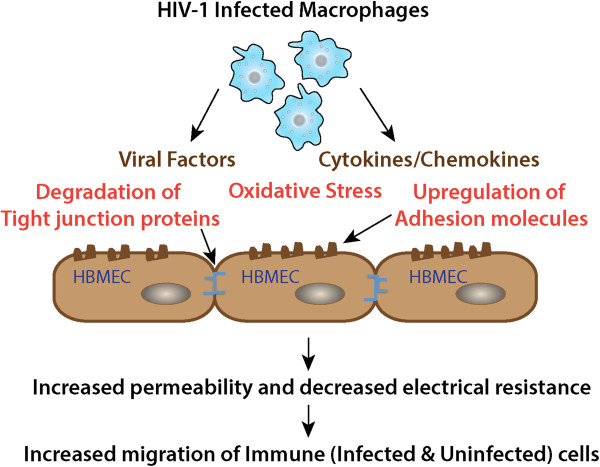
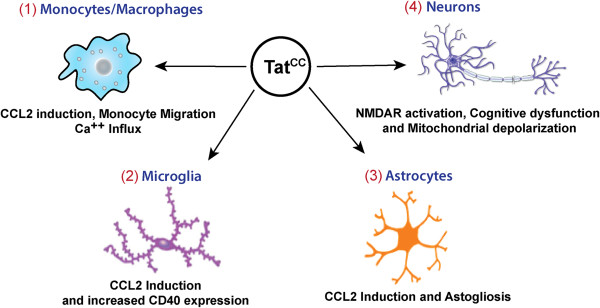
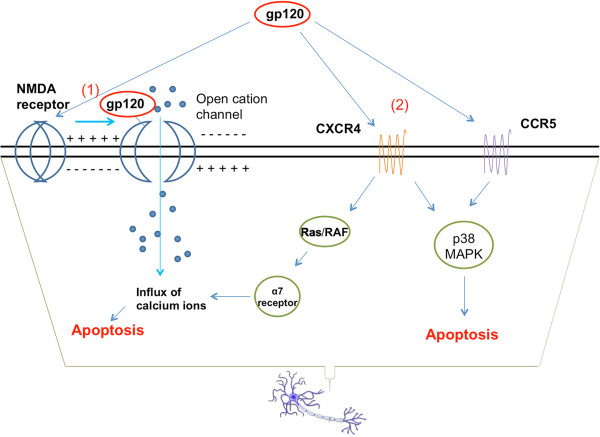
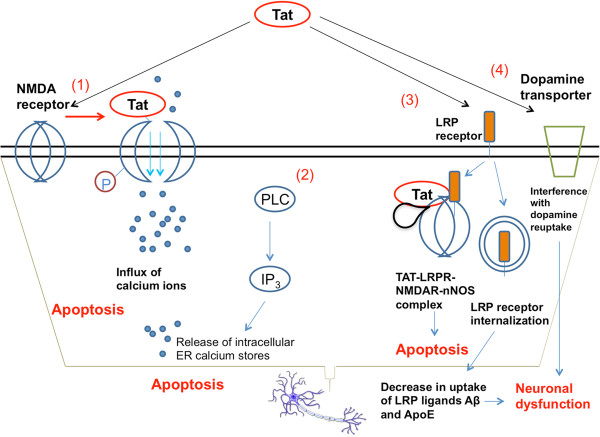
As the HIV-1 epidemic enters its fourth decade, HIV-1 associated neurological disorders (HAND) continue to be a major concern in the infected population, despite the widespread use of anti-retroviral therapy. Advancing age and increased life expectancy of the HIV-1 infected population have been shown to increase the risk of cognitive dysfunction. Over the past 10 years, there has been a significant progress in our understanding of the mechanisms and the risk factors involved in the development of HAND. Key events that lead up to neuronal damage in HIV-1 infected individuals can be categorized based on the interaction of HIV-1 with the various cell types, including but not limited to macrophages, brain endothelial cells, microglia, astrocytes and the neurons. This review attempts to decipher these interactions, beginning with HIV-1 infection of macrophages and ultimately resulting in the release of neurotoxic viral and host products. These include: interaction with endothelial cells, resulting in the impairment of the blood brain barrier; interaction with the astrocytes, leading to metabolic and neurotransmitter imbalance; interactions with resident immune cells in the brain, leading to release of toxic cytokines and chemokines. We also review the mechanisms underlying neuronal damage caused by the factors mentioned above. We have attempted to bring together recent findings in these areas to help appreciate the viral and host factors that bring about neurological dysfunction. In addition, we review host factors and viral genotypic differences that affect phenotypic pathological outcomes, as well as recent advances in treatment options to specifically address the neurotoxic mechanisms in play.
随着 HIV-1 流行进入第四个十年,尽管广泛使用抗逆转录病毒疗法,但 HIV-1 相关的神经障碍 (HAND) 仍然是感染人群的主要关注点。年龄的增长和 HIV-1 感染人群预期寿命的延长已被证明会增加认知功能障碍的风险。在过去的 10 年中,我们对 HAND 发病机制和相关危险因素的理解取得了重大进展。导致 HIV-1 感染个体神经元损伤的关键事件可以根据 HIV-1 与各种细胞类型(包括但不限于巨噬细胞、脑内皮细胞、小胶质细胞、星形胶质细胞和神经元)的相互作用进行分类。本综述试图阐明这些相互作用,从 HIV-1 感染巨噬细胞开始,最终导致释放出毒性病毒和宿主产物。这些包括:与内皮细胞的相互作用,导致血脑屏障受损;与星形胶质细胞的相互作用,导致代谢和神经递质失衡;与脑内常驻免疫细胞的相互作用,导致毒性细胞因子和趋化因子的释放。我们还综述了上述因素导致神经元损伤的机制。我们试图将这些领域的最新发现汇集在一起,以帮助理解导致神经功能障碍的病毒和宿主因素。此外,我们还综述了影响表型病理结果的宿主因素和病毒基因型差异,以及针对发挥作用的神经毒性机制的治疗选择的最新进展。