Hu Weidong, Liu Yue, Zhou Wenhui, Si Lianlian, Ren Liang
Department of Thoracic Oncology, Zhongnan Hospital of Wuhan University, Wuhan, People's Republic of China; Hubei Cancer Clinical Study Center & Hubei Key Laboratory of Tumor Biological Behaviors, Wuhan, People's Republic of China.
Department of Thoracic Oncology, Zhongnan Hospital of Wuhan University, Wuhan, People's Republic of China.
PLoS One. 2014 Jun 4;9(6):e99056. doi: 10.1371/journal.pone.0099056. eCollection 2014.
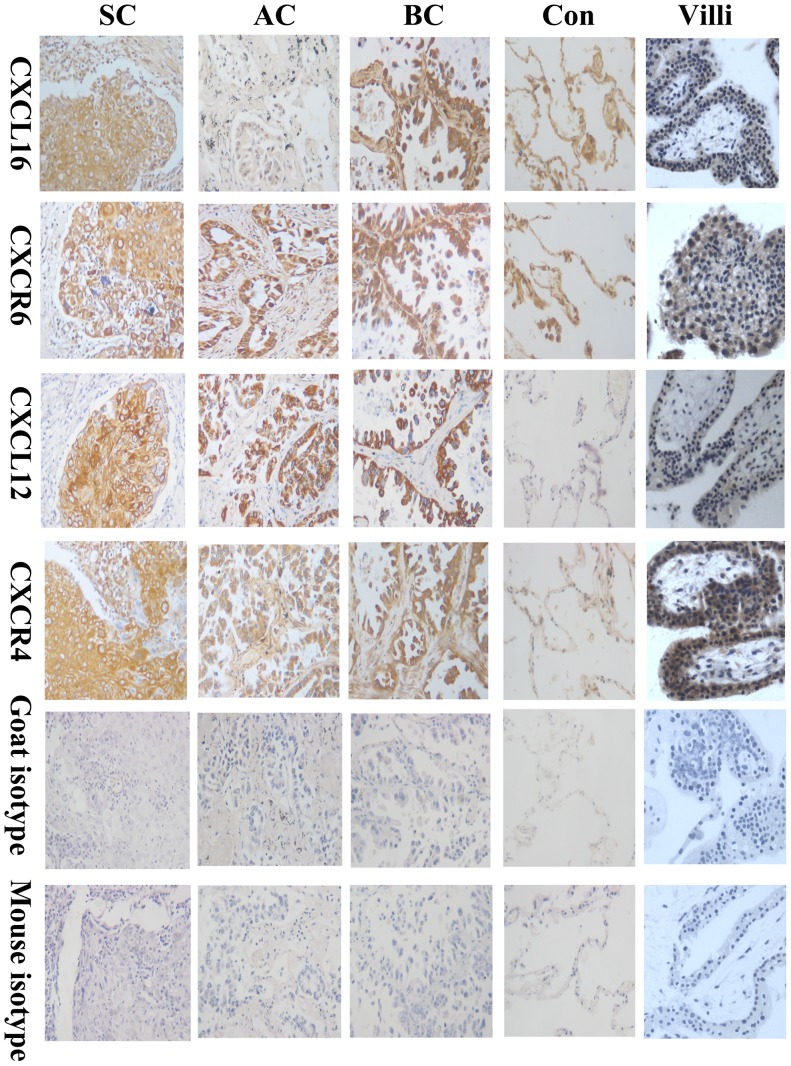
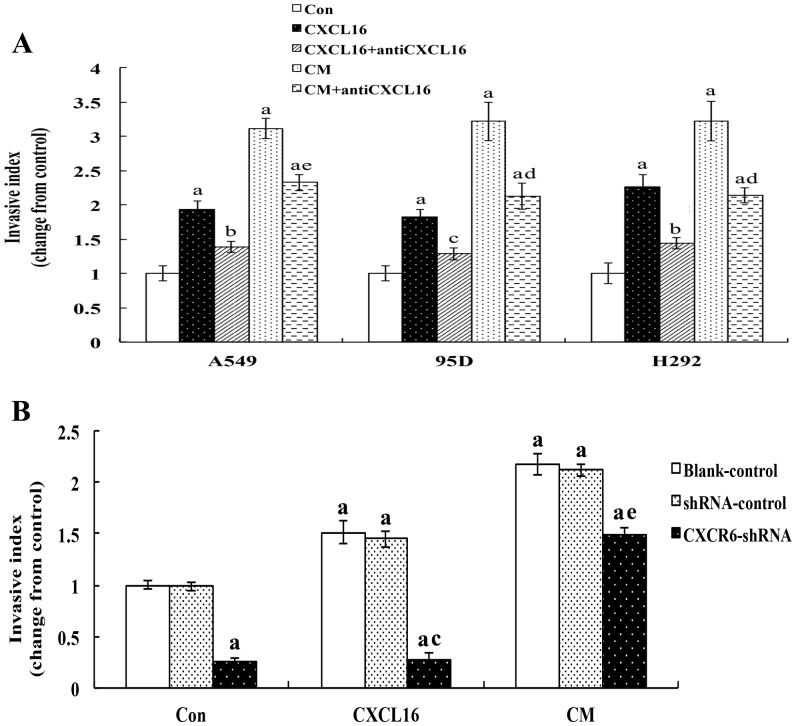
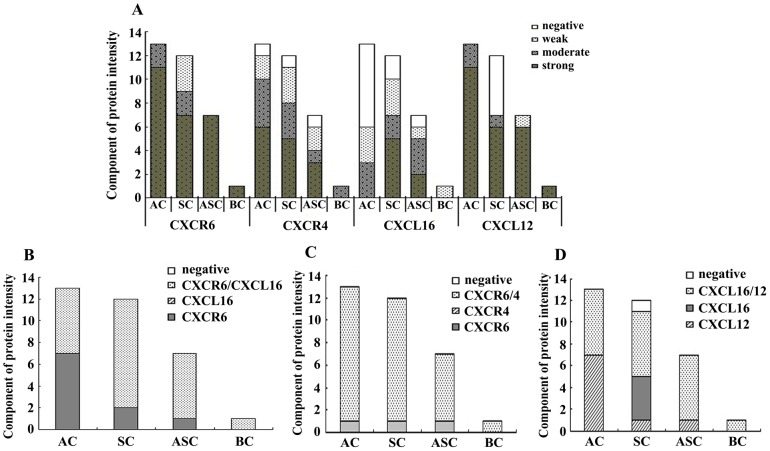
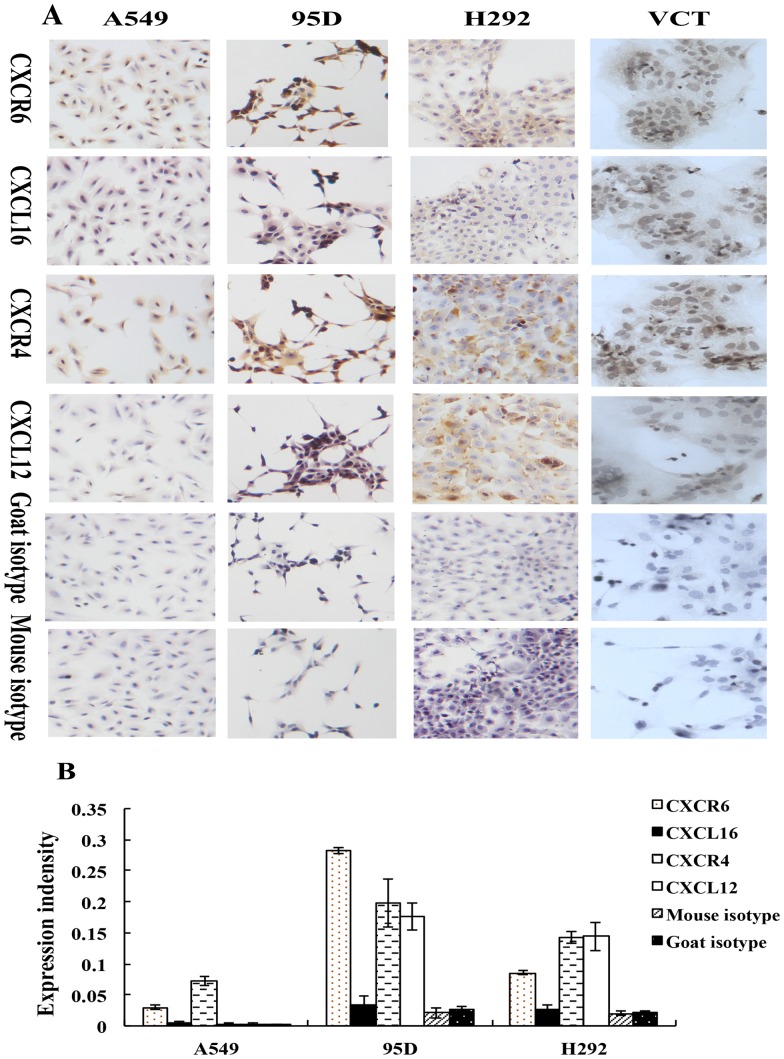
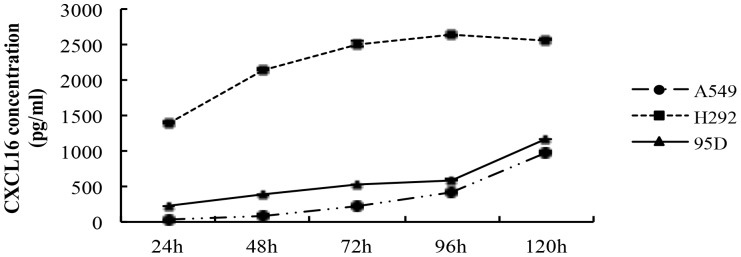
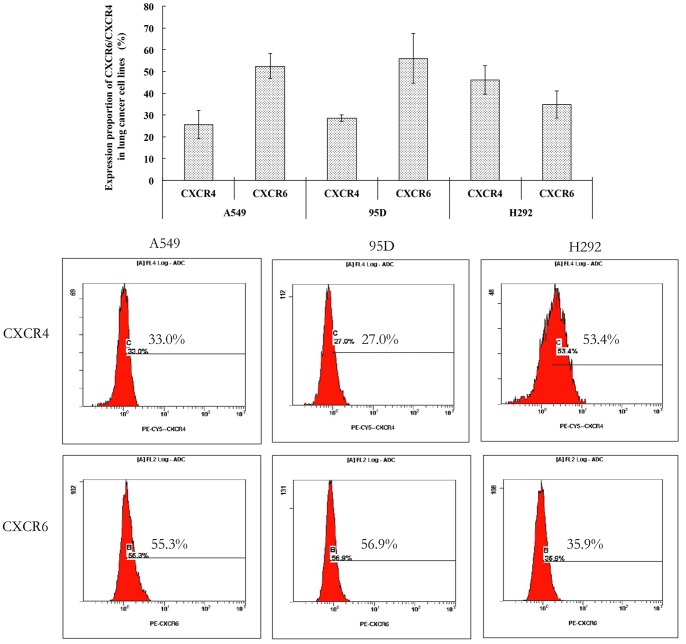
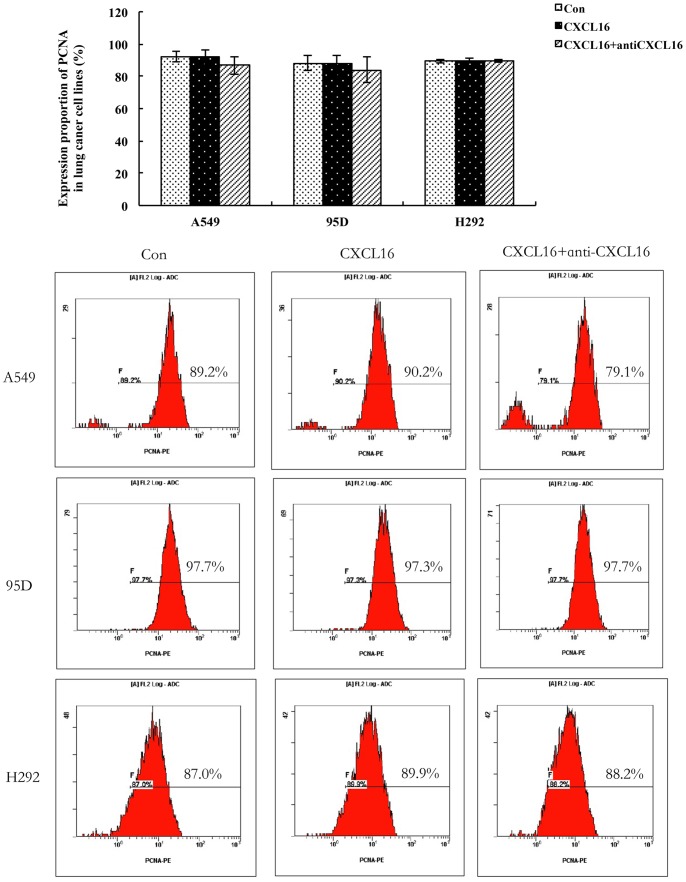
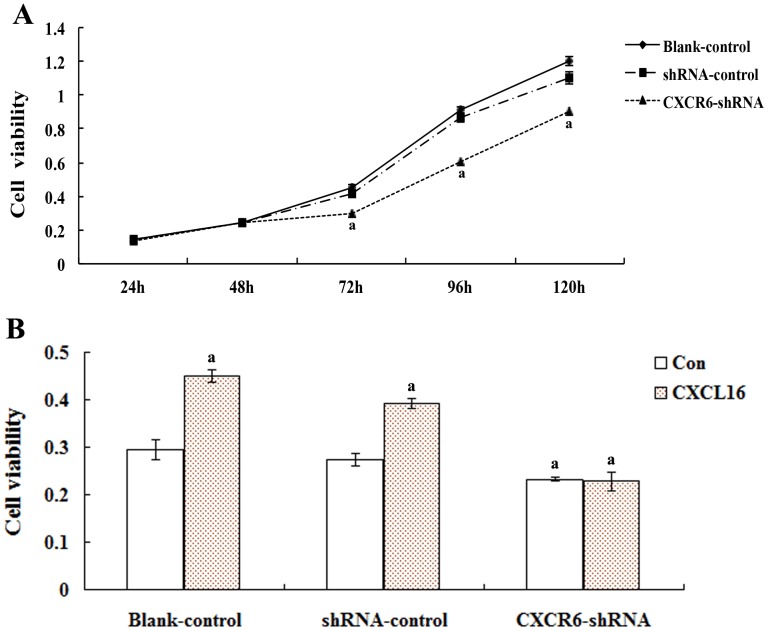
Despite advances in early diagnosis and multimodality therapy for cancers, most of lung cancer patients have been locally advanced or metastatic at the time of diagnosis, suggesting the highly progressive characteristic of lung cancer cells. The mechanisms underling invasiveness and metastasis of lung cancer are yet to be elucidated. In the present study, immunohistochemistry was performed to detect the expression of CXCL16-CXCR6 in human lung cancer tissues. It was demonstrated that similar to CXCL12 and CXCR4, CXCL16 and CXCR6 were also coexpressed in human primary lung cancer tissues. After confirming the functional existence of CXCL16 and CXCR6 protein in A549, 95D and H292 cells by ELSA and flow cytometry analysis, we further explored the significance of CXCL16-CXCR6 axis in the biological functions of lung cancer cell lines in vitro. It was found that CXCL16 had no effects on the PCNA (proliferating cell nuclear antigen) expression of A549, 95D and H292 cells. However, both exogenous CXCL16 and CM (conditioned medium from A549, 95D or H292) significantly improved the in vitro viability and invasion of three lung cancer cell lines. The neutralizing antibody to CXCL16 or down-regulation of CXCR6 was able to inhibit the increased viability and invasiveness of A549, 95D and H292 cells stimulated by CXCL16 or CM. Our results imply that CXCL16-CXCR6 axis is involved in the regulation of viability and invasion rather than PCNA expression of lung caner cells, which opens the door for better understanding the mechanisms of lung tumor progression and metastasis.
尽管癌症的早期诊断和多模态治疗取得了进展,但大多数肺癌患者在确诊时已处于局部晚期或发生转移,这表明肺癌细胞具有高度侵袭性。肺癌侵袭和转移的潜在机制尚待阐明。在本研究中,采用免疫组织化学法检测人肺癌组织中CXCL16 - CXCR6的表达。结果表明,与CXCL12和CXCR4相似,CXCL16和CXCR6也在人原发性肺癌组织中共表达。通过酶联免疫吸附测定(ELSA)和流式细胞术分析证实A549、95D和H292细胞中存在CXCL16和CXCR6蛋白的功能后,我们进一步探讨了CXCL16 - CXCR6轴在体外肺癌细胞系生物学功能中的意义。发现CXCL16对A549、95D和H292细胞的增殖细胞核抗原(PCNA)表达没有影响。然而,外源性CXCL16和条件培养基(来自A549、95D或H292的条件培养基)均显著提高了三种肺癌细胞系的体外活力和侵袭能力。CXCL16的中和抗体或CXCR6的下调能够抑制CXCL16或条件培养基刺激的A549、95D和H292细胞活力和侵袭能力的增加。我们的结果表明,CXCL16 - CXCR6轴参与调节肺癌细胞的活力和侵袭,而非PCNA表达,这为更好地理解肺肿瘤进展和转移机制打开了大门。