Boeckx Carolien, Weyn Christine, Vanden Bempt Isabelle, Deschoolmeester Vanessa, Wouters An, Specenier Pol, Van Laer Carl, Van den Weyngaert Danielle, Kockx Mark, Vermorken Jan B, Peeters Marc, Pauwels Patrick, Lardon Filip, Baay Marc
Center for Oncological Research (CORE) Antwerp, Laboratory of Cancer Research and Clinical Oncology, University of Antwerp, Wilrijk, Belgium.
BMC Res Notes. 2014 Jun 4;7:337. doi: 10.1186/1756-0500-7-337.
Targeted therapy against the Epidermal Growth Factor Receptor (EGFR) is among the most promising molecular therapeutics for Head and Neck Squamous Cell Carcinoma (HNSCC). However, drug resistance limits the clinical efficacy of anti-EGFR monoclonal antibodies and no predictive biomarker has entered the clinic yet.
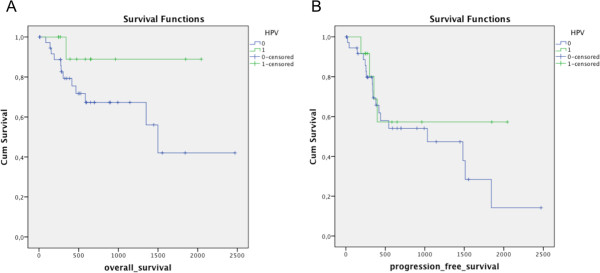
A retrospective clinical study was performed utilizing pathological specimens from 52 newly diagnosed HNSCC patients. These patients were screened for mutations in EGFR and KRAS. Tyrosine kinase mutations in EGFR and KRAS mutations were evaluated by high resolution melting analysis (HRMA), whereas EGFRvIII was determined using one-step real-time PCR. Finally, patient samples were screened for HPV-DNA by GP5+/6+ PCR. Survival analysis was performed using Kaplan-Meier analysis and significance was calculated using log-rank statistic.
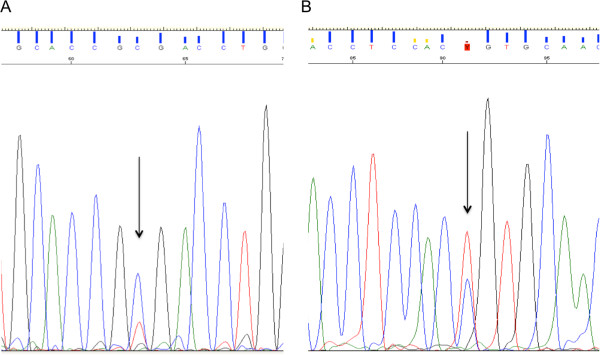
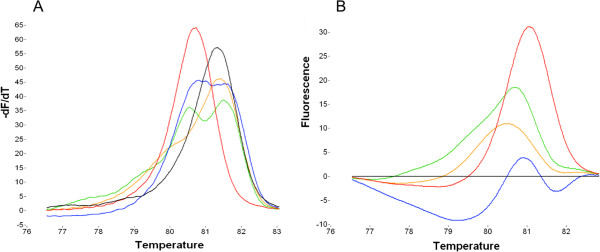
In our study population no EGFRvIII mutations were present. However, two silent mutations were found; T785T in exon 20 and R836R in exon 21 of the EGFR gene. Additionally, HRMA revealed an abnormal KRAS melting pattern in 7.0% of the samples. However, the KRAS StripAssay could confirm only one sample with a G12S mutation and none of these samples could be confirmed by direct sequencing. HPV DNA was present in 3/25 larynx and 9/27 oropharynx tumors.
The low rate of EGFR and KRAS mutations in this Belgian HNSCC population suggests that these genes will probably not play a major role in predicting response to anti-EGFR therapy in HNSCC. Hence, other predictive markers need to be discovered in order to optimize EGFR targeting therapy.
针对表皮生长因子受体(EGFR)的靶向治疗是头颈部鳞状细胞癌(HNSCC)最有前景的分子治疗方法之一。然而,耐药性限制了抗EGFR单克隆抗体的临床疗效,且尚无预测性生物标志物进入临床应用。
利用52例新诊断的HNSCC患者的病理标本进行回顾性临床研究。对这些患者进行EGFR和KRAS突变筛查。通过高分辨率熔解分析(HRMA)评估EGFR中的酪氨酸激酶突变和KRAS突变,而使用一步实时PCR测定EGFRvIII。最后,通过GP5+/6+ PCR对患者样本进行HPV-DNA筛查。使用Kaplan-Meier分析进行生存分析,并使用对数秩统计计算显著性。
在我们的研究人群中未发现EGFRvIII突变。然而,发现了两个沉默突变;EGFR基因第20外显子的T785T和第21外显子的R836R。此外,HRMA显示7.0%的样本中KRAS熔解模式异常。然而,KRAS StripAssay仅能确认一个具有G12S突变的样本,且这些样本均无法通过直接测序确认。HPV DNA存在于3/25例喉肿瘤和9/27例口咽肿瘤中。
该比利时HNSCC人群中EGFR和KRAS突变率较低,表明这些基因可能在预测HNSCC对抗EGFR治疗的反应中不起主要作用。因此,需要发现其他预测标志物以优化EGFR靶向治疗。