Tancioni Isabelle, Uryu Sean, Sulzmaier Florian J, Shah Nina R, Lawson Christine, Miller Nichol L G, Jean Christine, Chen Xiao Lei, Ward Kristy K, Schlaepfer David D
Department of Reproductive Medicine, UCSD Moores Cancer Center, La Jolla, California.
Department of Reproductive Medicine, UCSD Moores Cancer Center, La Jolla, California
Mol Cancer Ther. 2014 Aug;13(8):2050-61. doi: 10.1158/1535-7163.MCT-13-1063. Epub 2014 Jun 4.
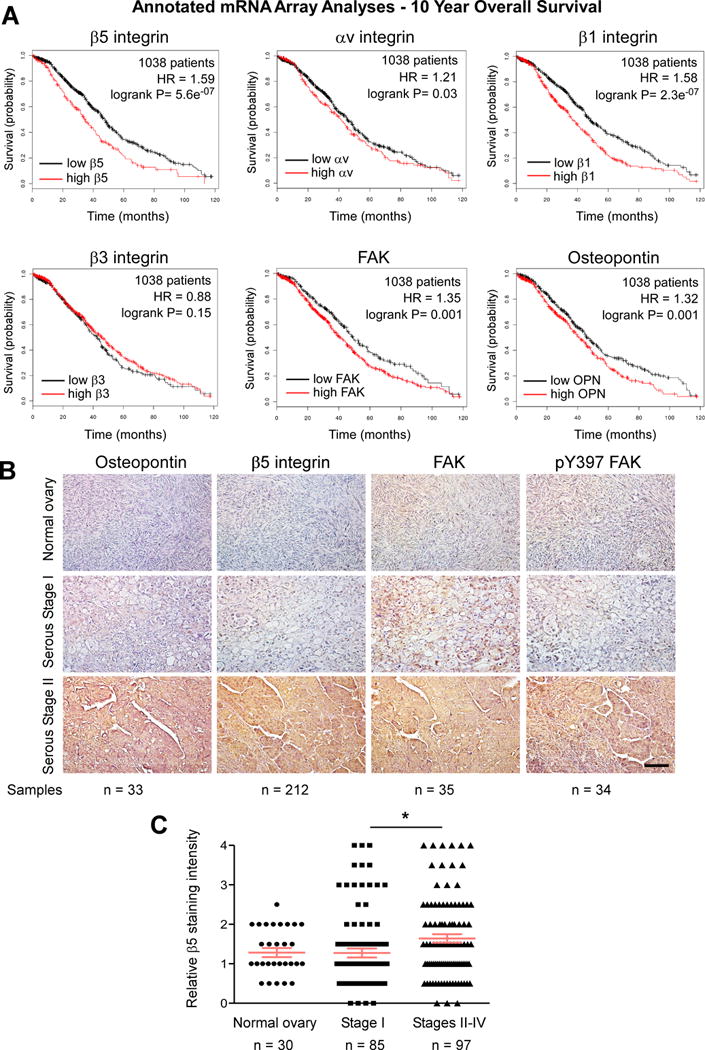
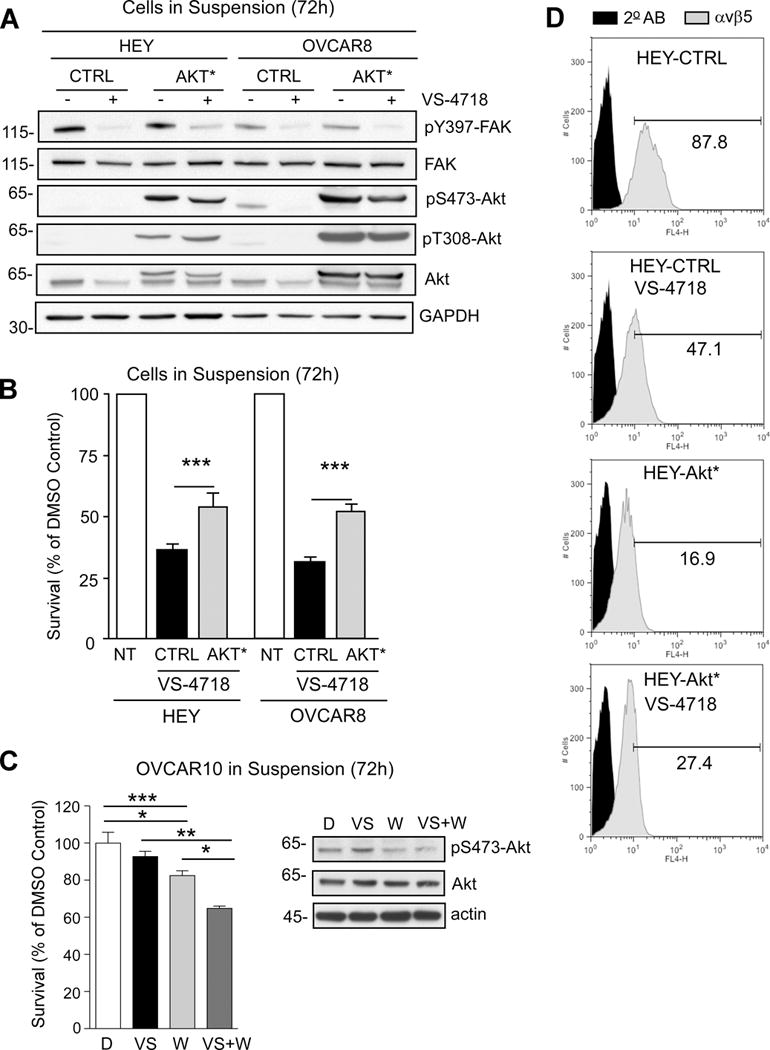
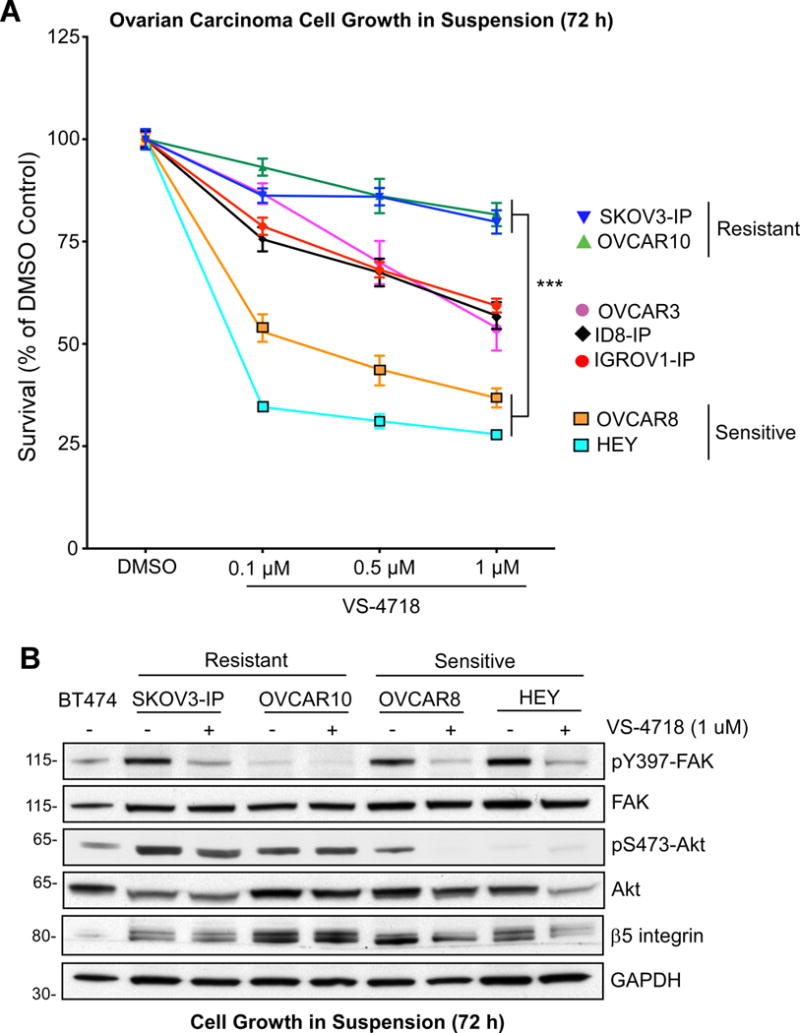
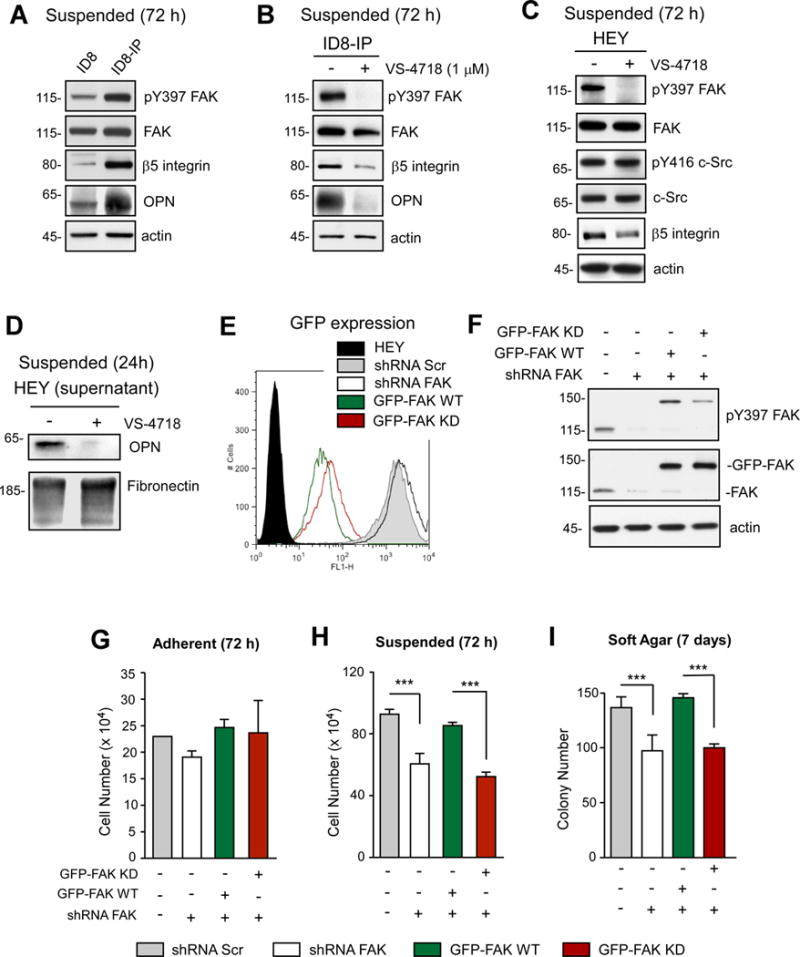
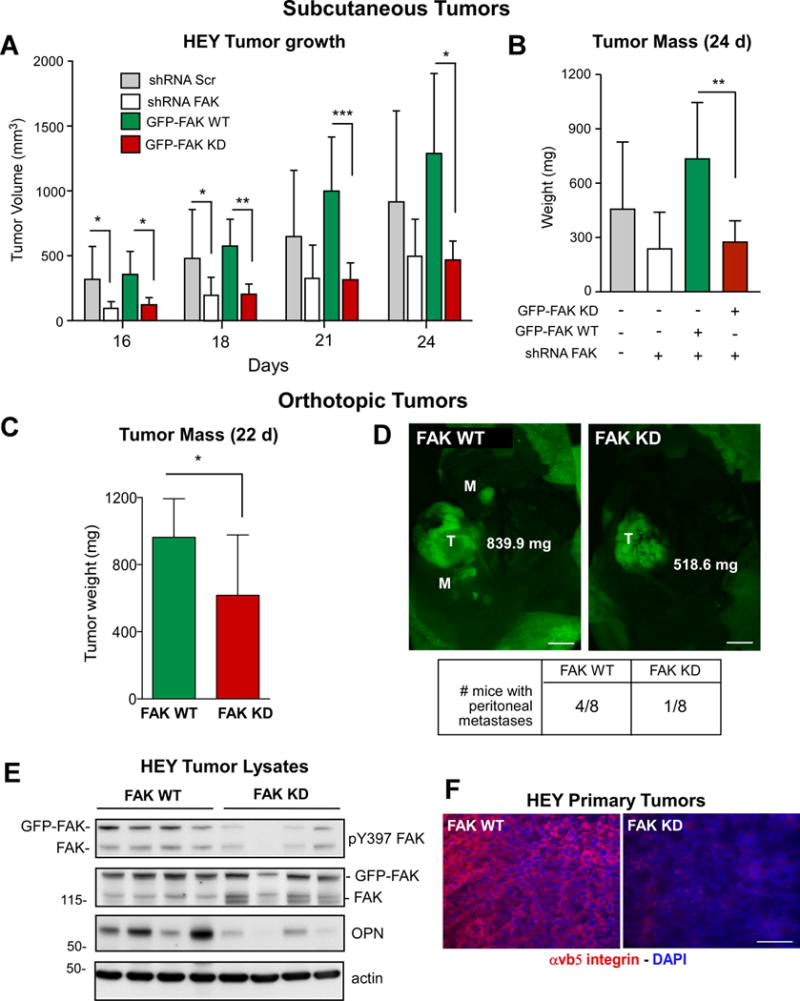
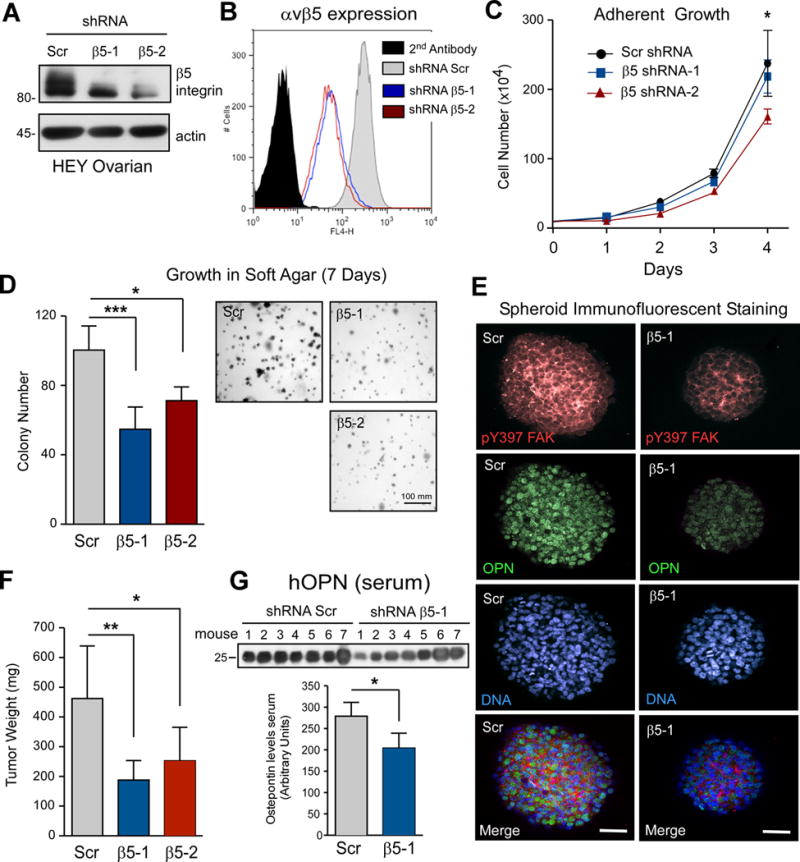
Ovarian cancer ascites fluid contains matrix proteins that can impact tumor growth via integrin receptor binding. In human ovarian tumor tissue arrays, we find that activation of the cytoplasmic focal adhesion (FAK) tyrosine kinase parallels increased tumor stage, β5 integrin, and osteopontin matrix staining. Elevated osteopontin, β5 integrin, and FAK mRNA levels are associated with decreased serous ovarian cancer patient survival. FAK remains active within ovarian cancer cells grown as spheroids, and anchorage-independent growth analyses of seven ovarian carcinoma cell lines identified sensitive (HEY, OVCAR8) and resistant (SKOV3-IP, OVCAR10) cells to 0.1 μmol/L FAK inhibitor (VS-4718, formerly PND-1186) treatment. VS-4718 promoted HEY and OVCAR8 G0-G1 cell-cycle arrest followed by cell death, whereas growth of SKOV3-IP and OVCAR10 cells was resistant to 1.0 μmol/L VS-4718. In HEY cells, genetic or pharmacological FAK inhibition prevented tumor growth in mice with corresponding reductions in β5 integrin and osteopontin expression. β5 knockdown reduced HEY cell growth in soft agar, tumor growth in mice, and both FAK Y397 phosphorylation and osteopontin expression in spheroids. FAK inhibitor-resistant (SKOV3-IP, OVCAR10) cells exhibited anchorage-independent Akt S473 phosphorylation, and expression of membrane-targeted and active Akt in sensitive cells (HEY, OVCAR8) increased growth but did not create a FAK inhibitor-resistant phenotype. These results link osteopontin, β5 integrin, and FAK in promoting ovarian tumor progression. β5 integrin expression may serve as a biomarker for serous ovarian carcinoma cells that possess active FAK signaling.
卵巢癌腹水中含有可通过整合素受体结合影响肿瘤生长的基质蛋白。在人类卵巢肿瘤组织阵列中,我们发现细胞质粘着斑激酶(FAK)酪氨酸激酶的激活与肿瘤分期增加、β5整合素和骨桥蛋白基质染色增加平行。骨桥蛋白、β5整合素和FAK mRNA水平升高与浆液性卵巢癌患者生存率降低相关。FAK在作为球体生长的卵巢癌细胞内保持活性,对七种卵巢癌细胞系进行的非锚定依赖性生长分析确定了对0.1 μmol/L FAK抑制剂(VS-4718,原PND-1186)治疗敏感(HEY、OVCAR8)和耐药(SKOV3-IP、OVCAR10)的细胞。VS-4718促进HEY和OVCAR8细胞G0-G1期细胞周期停滞,随后细胞死亡,而SKOV3-IP和OVCAR10细胞的生长对1.0 μmol/L VS-4718耐药。在HEY细胞中,基因或药物抑制FAK可阻止小鼠肿瘤生长,同时β5整合素和骨桥蛋白表达相应降低。敲低β5可减少HEY细胞在软琼脂中的生长、小鼠肿瘤生长以及球体中FAK Y397磷酸化和骨桥蛋白表达。对FAK抑制剂耐药的(SKOV3-IP、OVCAR10)细胞表现出非锚定依赖性Akt S473磷酸化,在敏感细胞(HEY、OVCAR8)中表达膜靶向且有活性的Akt可增加细胞生长,但未产生对FAK抑制剂耐药的表型。这些结果表明骨桥蛋白、β5整合素和FAK在促进卵巢肿瘤进展中存在关联。β5整合素表达可能作为具有活跃FAK信号的浆液性卵巢癌细胞的生物标志物。