Wu J, Liang S, Bergholz J, He H, Walsh E M, Zhang Y, Xiao Z-X
Department of Biochemistry, Boston University School of Medicine, Boston, MA, 02118, USA.
Center of Growth, Metabolism and Aging, Key Laboratory of Bio-Resource and Eco-Environment of Ministry of Education, College of Life Sciences and State Key Laboratory of Biotherapy, Sichuan University, Chengdu 610014, China.
Cell Death Dis. 2014 Jun 5;5(6):e1280. doi: 10.1038/cddis.2014.239.
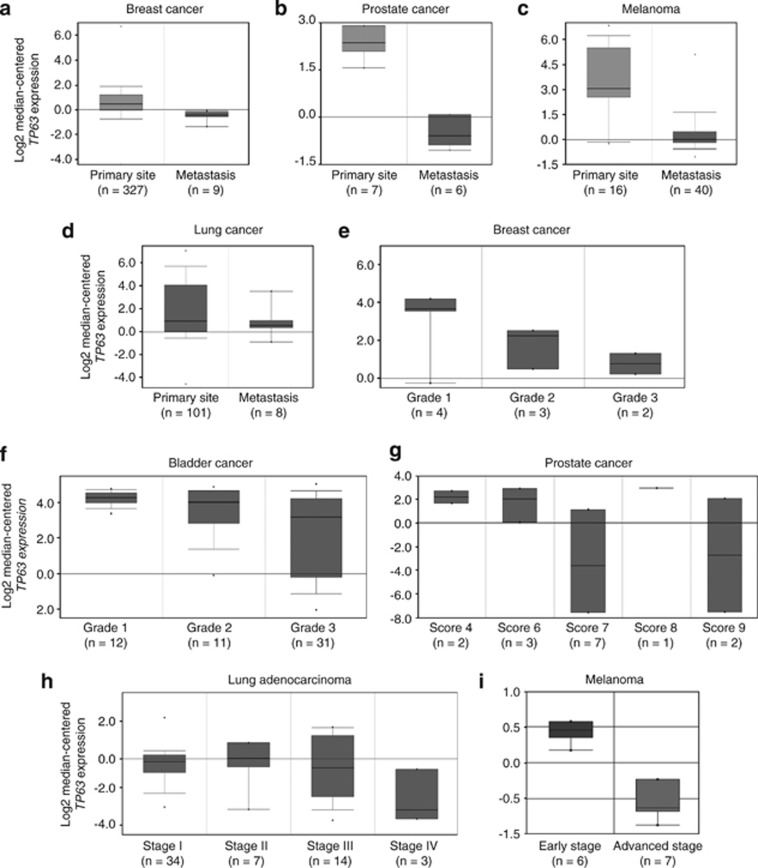
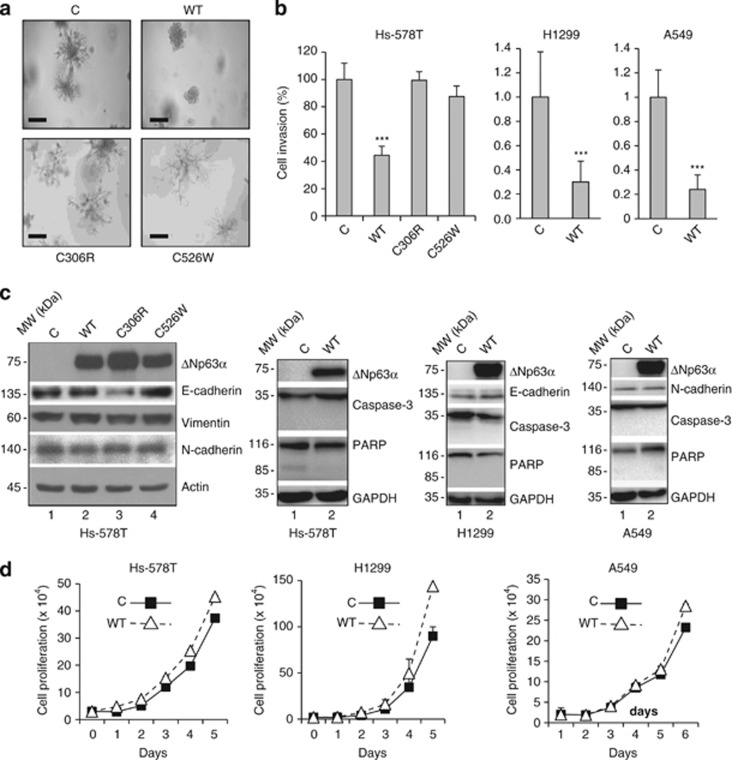
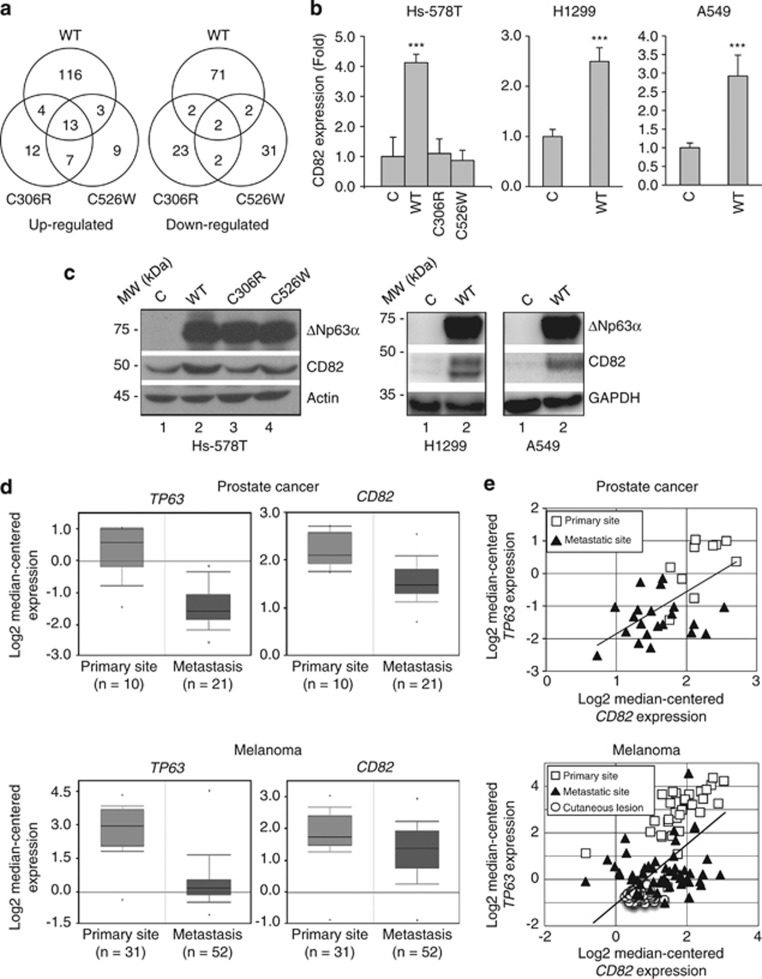
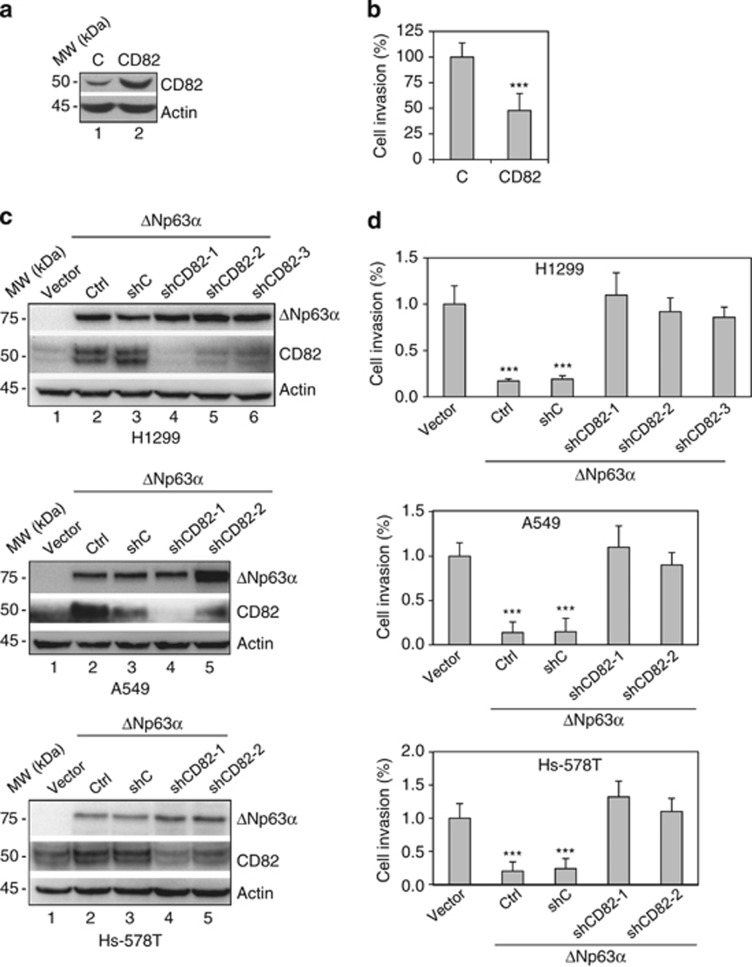
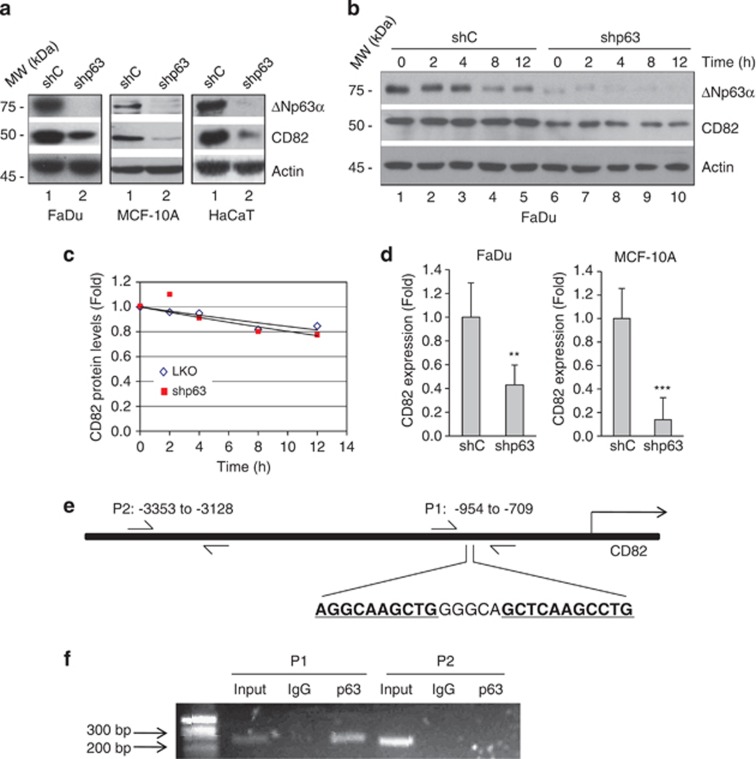
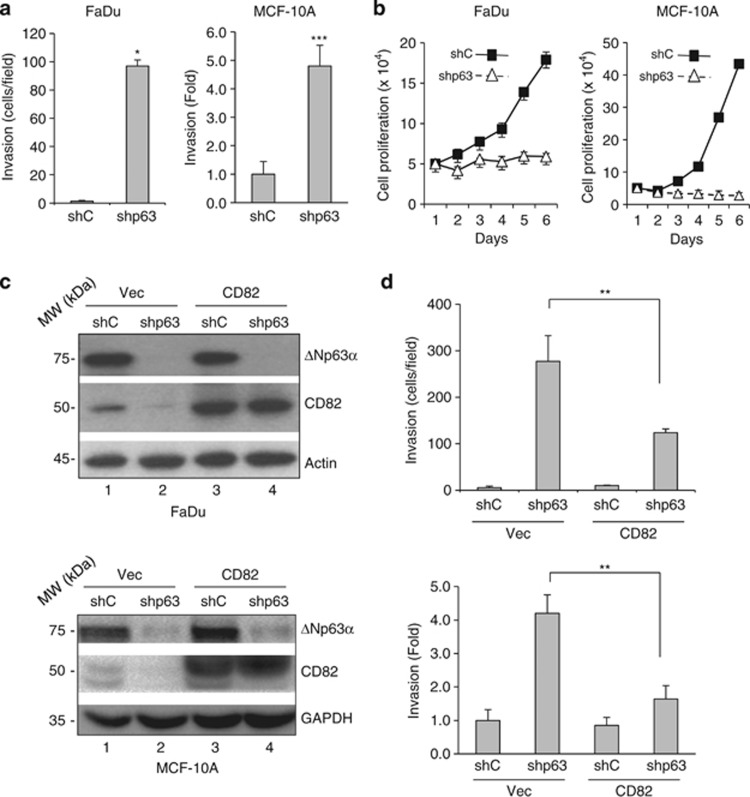
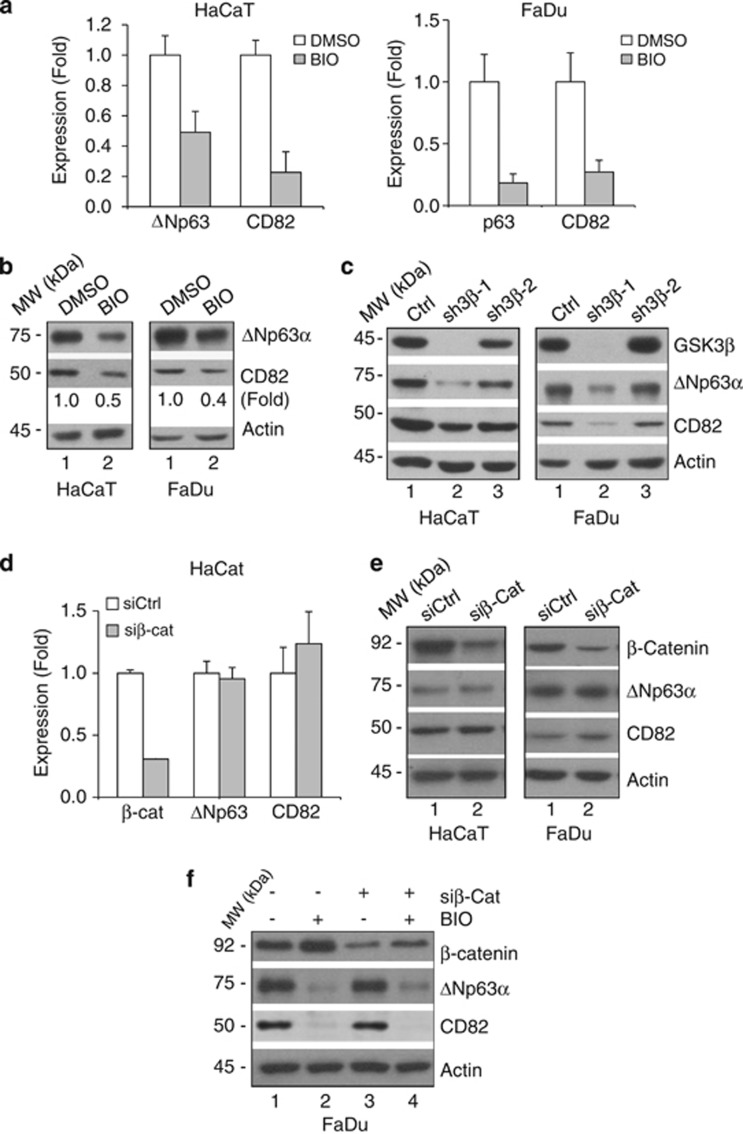
P63 is a p53 family member involved in multiple facets of biology, including embryonic development, cell proliferation, differentiation, survival, apoptosis, senescence and aging. The p63 gene encodes multiple protein isoforms either with (TAp63) or without (ΔNp63) the N-terminal transactivation domain. Amounting evidence suggests that p63 can function as a tumor suppressor, yet the precise molecular mechanisms, and particularly the specific roles of TAp63 and ΔNp63 in cancer progression, are still largely unclear. Here, we demonstrated that ΔNp63α, the predominant isoform expressed in epithelial cells and squamous cell carcinomas, inhibits cell invasion. Affymetrix gene expression profiling, combined with gain- and loss-of-function analyses and chromatin immunoprecipitation, indicated that cluster of differentiation 82 (CD82), a documented metastasis suppressor, is a direct transcriptional target of ΔNp63α. Expression of ΔNp63α inhibited outgrowth in Matrigel and cancer cell invasion, which was largely reversed by specific ablation of CD82. Conversely, ΔNp63α knockdown led to increased cell invasion, which was reversed by ectopic expression of CD82. Moreover, inhibition of glycogen synthase kinase-3β (GSK3β) by either pharmacological inhibitors or by RNA interference resulted in the downregulation of ΔNp63α and CD82 expression, concomitant with increased cell invasion, independently of β-catenin. Furthermore, decreased expression of p63 and CD82 is correlated with cancer progression. Taken together, this study reveals that ΔNp63α upregulates CD82 to inhibit cell invasion, and suggests that GSK3β can regulate cell invasion by modulating the ΔNp63α-CD82 axis.
p63是一种p53家族成员,参与生物学的多个方面,包括胚胎发育、细胞增殖、分化、存活、凋亡、衰老和老化。p63基因编码多种蛋白质异构体,有的带有(TAp63)N端反式激活结构域,有的则没有(ΔNp63)。越来越多的证据表明p63可作为一种肿瘤抑制因子,但其确切的分子机制,尤其是TAp63和ΔNp63在癌症进展中的具体作用,仍不清楚。在此,我们证明,ΔNp63α是上皮细胞和鳞状细胞癌中表达的主要异构体,可抑制细胞侵袭。Affymetrix基因表达谱分析,结合功能获得和功能缺失分析以及染色质免疫沉淀,表明分化簇82(CD82),一种已被证实的转移抑制因子,是ΔNp63α的直接转录靶点。ΔNp63α的表达抑制了基质胶中的生长和癌细胞侵袭,而这在很大程度上可通过特异性敲除CD82来逆转。相反,ΔNp63α的敲低导致细胞侵袭增加,这可通过CD82的异位表达来逆转。此外,通过药物抑制剂或RNA干扰抑制糖原合酶激酶-3β(GSK3β),导致ΔNp63α和CD82表达下调,同时细胞侵袭增加,且与β-连环蛋白无关。此外,p63和CD82的表达降低与癌症进展相关。综上所述,本研究揭示ΔNp63α上调CD82以抑制细胞侵袭,并表明GSK3β可通过调节ΔNp63α-CD82轴来调节细胞侵袭。