Abe Hideyuki, Kamai Takao, Hayashi Keitaro, Anzai Naohiko, Shirataki Hiromichi, Mizuno Tomoya, Yamaguchi Yoshiyuki, Masuda Akinori, Yuki Hideo, Betsunoh Hironori, Yashi Masahiro, Fukabori Yoshitatsu, Yoshida Ken-Ichiro
Department of Urology, Dokkyo Medical University, 880 Kitakobayashi, Mibu, Tochigi 321-0293, Japan.
BMC Cancer. 2014 Jun 7;14:412. doi: 10.1186/1471-2407-14-412.
Activation of Rho, one of the small GTPases, and its major downstream target Rho-kinase (ROCK) promotes the development and metastasis of cancer. We previously showed that elevation of Rho and ROCK expression was associated with tumor invasion, metastasis, and an unfavorable prognosis in patients with urothelial cancer of the bladder or upper urinary tract.
We investigated the effects of a ROCK inhibitor on the growth, migration, and apoptosis of bladder cancer cells. We also examined phosphorylation of RhoA (RhoA activity) by measuring its GTP-bound active form and assessed the expression of ROCK to explore the underlying molecular mechanisms.
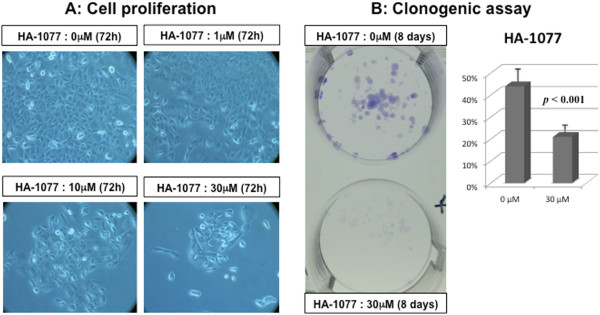
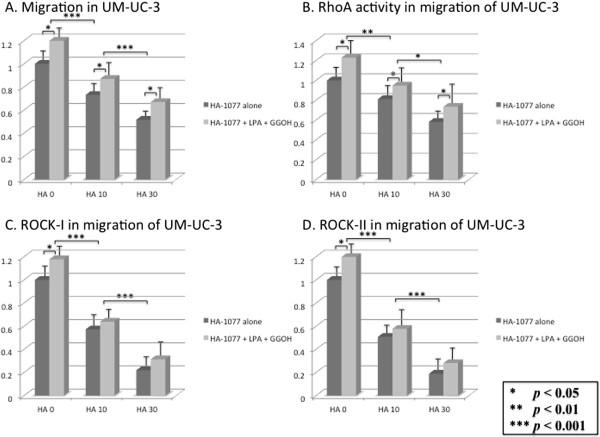
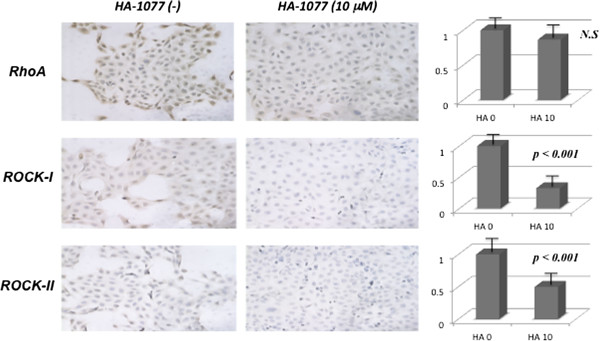
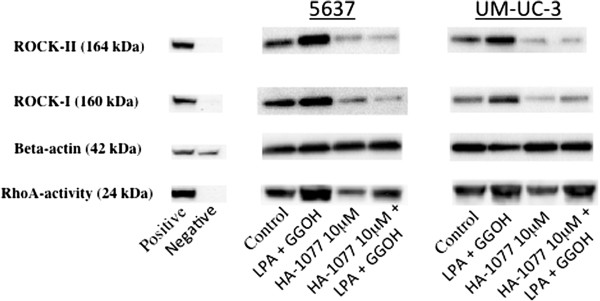
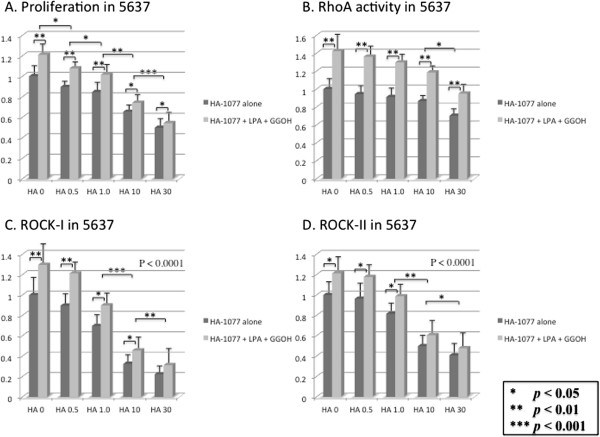
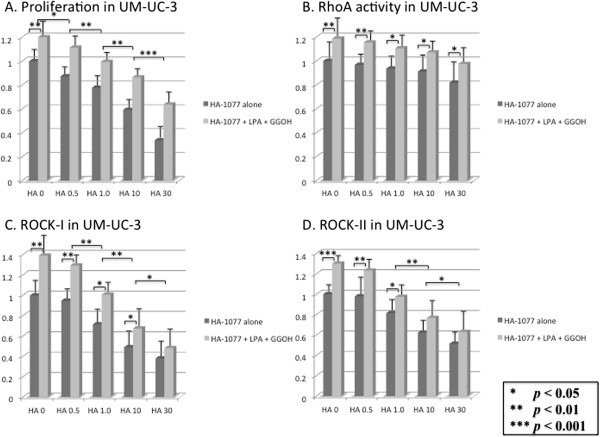
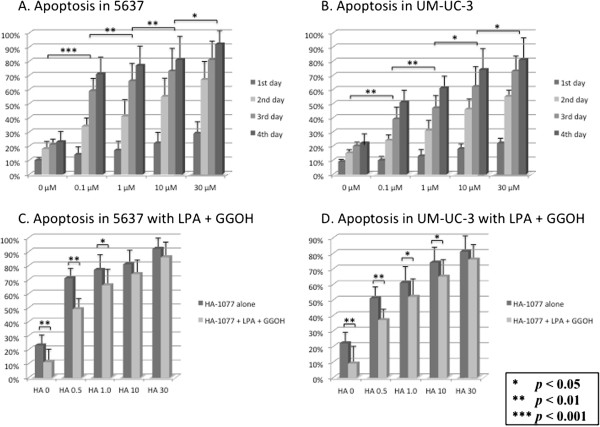
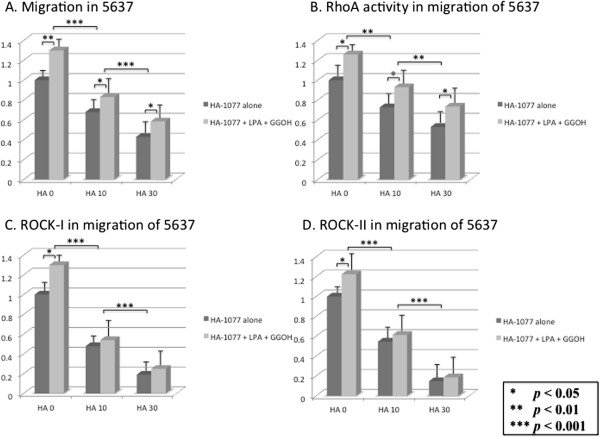
Lysophosphatidic acid (LPA) and geranylgeraniol (GGOH) induced an increase of cell proliferation and migration in association with promotion of RhoA activity and upregulation of ROCK expression. The ROCK inhibitor fasudil (HA-1077) suppressed cell proliferation and migration, and also induced apoptosis in a dose-dependent manner. HA-1077 dramatically suppressed the expression of ROCK-I and ROCK-II, but did not affect RhoA activity.
These findings suggest that ROCK could be a potential molecular target for the treatment of urothelial cancer.
小GTP酶之一的Rho及其主要下游靶点Rho激酶(ROCK)的激活促进癌症的发展和转移。我们之前表明,Rho和ROCK表达的升高与膀胱或上尿路尿路上皮癌患者的肿瘤侵袭、转移及不良预后相关。
我们研究了一种ROCK抑制剂对膀胱癌细胞生长、迁移和凋亡的影响。我们还通过测量其GTP结合的活性形式来检测RhoA的磷酸化(RhoA活性),并评估ROCK的表达以探索潜在的分子机制。
溶血磷脂酸(LPA)和香叶基香叶醇(GGOH)诱导细胞增殖和迁移增加,同时促进RhoA活性并上调ROCK表达。ROCK抑制剂法舒地尔(HA - 1077)以剂量依赖性方式抑制细胞增殖和迁移,并诱导凋亡。HA - 1077显著抑制ROCK - I和ROCK - II的表达,但不影响RhoA活性。
这些发现表明ROCK可能是治疗尿路上皮癌的潜在分子靶点。