Tarumi Wataru, Itoh Masanori T, Suzuki Nao
Department of Obstetrics and Gynecology, St. Marianna University School of Medicine, Kawasaki, Japan.
Department of Biology, College of Liberal Arts and Sciences, Tokyo Medical and Dental University, Ichikawa, Chiba, Japan.
PLoS One. 2014 Jun 9;9(6):e99423. doi: 10.1371/journal.pone.0099423. eCollection 2014.
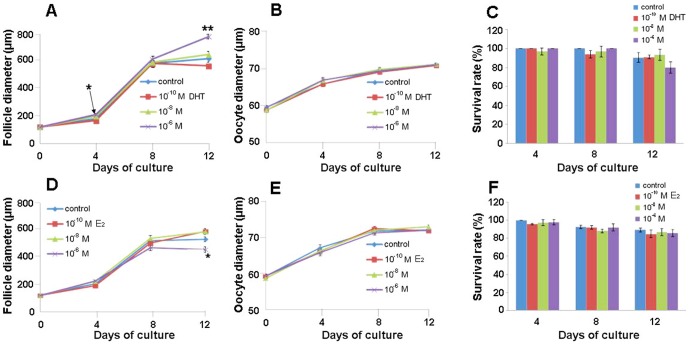
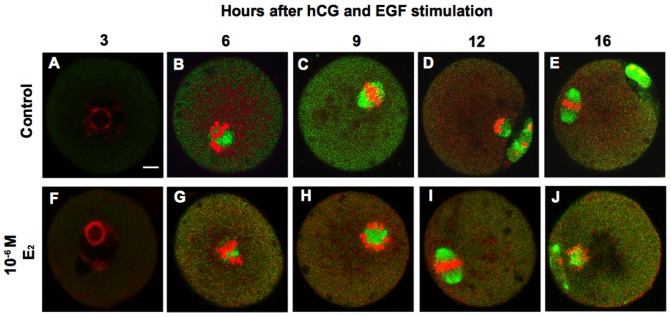
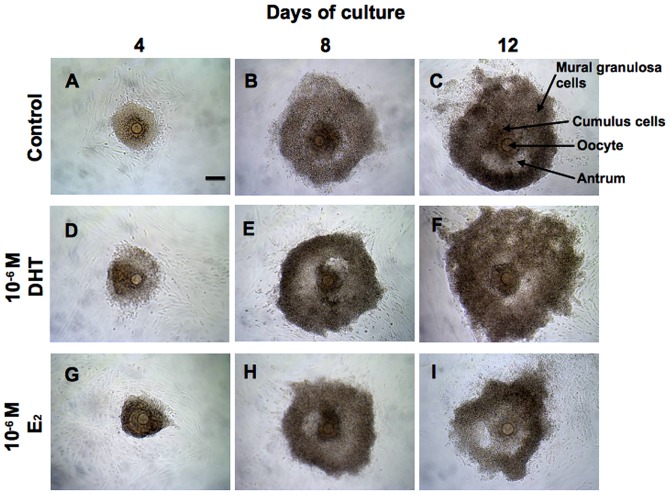
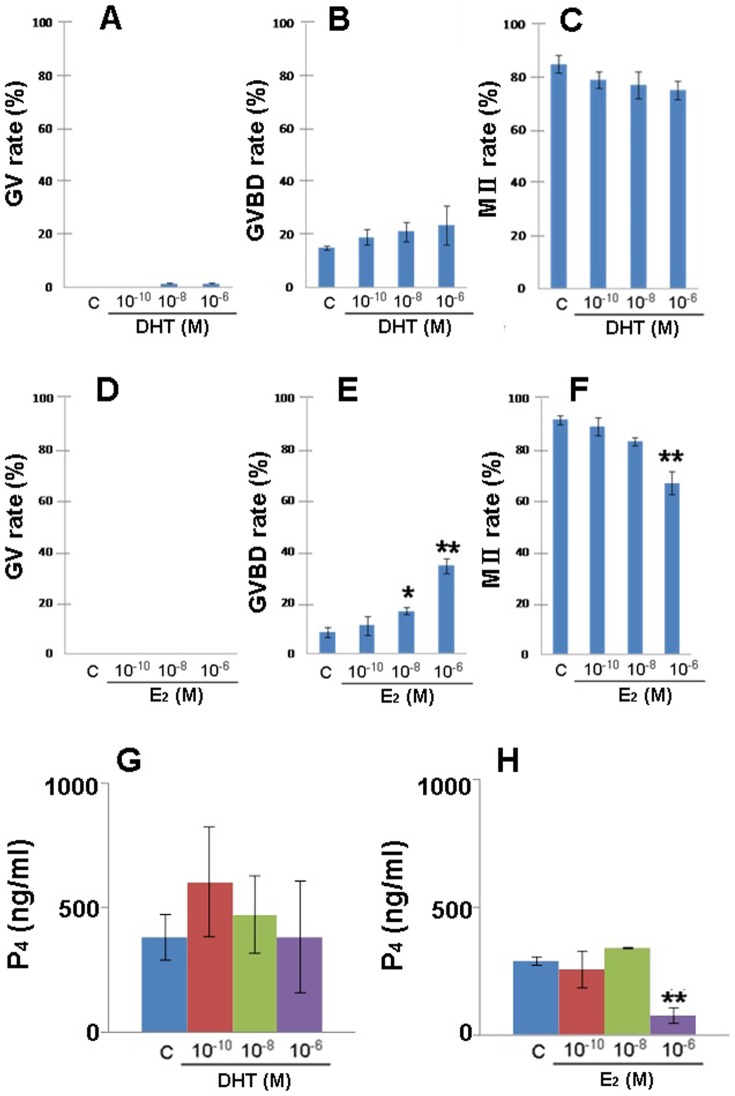
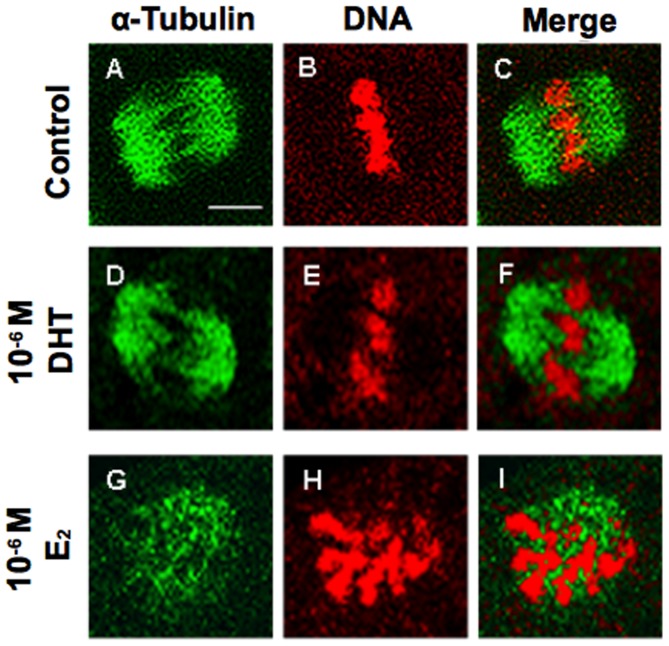
We have previously reported that androstenedione induces abnormalities of follicle development and oocyte maturation in the mouse ovary. In granulosa cells of the ovarian follicle, androstenedione is aromatized to 17β-estradiol (E2). To determine whether the androgen or estrogen acts directly on the follicle to induce the above-mentioned abnormalities, we compared the effects of a non-aromatizable androgen, 5α-dihydrotestosterone (DHT), with those of E2 on murine follicular development and oocyte maturation in a single follicle culture system. The high dose (10(-6) M) of DHT prompted normal follicular development, and there was no effect on oocyte meiotic maturation after stimulation with human chorionic gonadotropin (hCG) and epidermal growth factor (EGF). In contrast, culture with the high dose (10(-6) M) of E2 delayed follicular growth and also suppressed proliferation of granulosa cells and antrum formation. Furthermore, culture with E2 delayed or inhibited oocyte meiotic maturation, such as chromosome alignment on the metaphase plate and extrusion of the first polar body, after addition of hCG and EGF. In conclusion, these findings demonstrate that E2, but not DHT, induces abnormalities of follicular development, which leads to delay or inhibition of oocyte meiotic maturation.
我们之前曾报道,雄烯二酮可诱导小鼠卵巢卵泡发育及卵母细胞成熟异常。在卵巢卵泡的颗粒细胞中,雄烯二酮可被芳香化转化为17β-雌二醇(E2)。为确定雄激素或雌激素是否直接作用于卵泡以诱导上述异常,我们在单一卵泡培养系统中比较了不可芳香化的雄激素5α-二氢睾酮(DHT)与E2对小鼠卵泡发育及卵母细胞成熟的影响。高剂量(10^(-6) M)的DHT促进了正常卵泡发育,在用人类绒毛膜促性腺激素(hCG)和表皮生长因子(EGF)刺激后,对卵母细胞减数分裂成熟没有影响。相比之下,用高剂量(10^(-6) M)的E2培养会延迟卵泡生长,还会抑制颗粒细胞增殖和卵泡腔形成。此外,在用hCG和EGF处理后,用E2培养会延迟或抑制卵母细胞减数分裂成熟,如染色体在中期板上的排列和第一极体的排出。总之,这些发现表明,是E2而非DHT诱导卵泡发育异常,进而导致卵母细胞减数分裂成熟延迟或受到抑制。