Department of Cardiology, University of Tartu, 8 Puusepa Street, Tartu 51014, Estonia ; Endothelial Centre, University of Tartu, 8 Puusepa Street, Tartu 51014, Estonia ; Department of Biochemistry, Centre of Excellence for Translational Medicine, University of Tartu, 19 Ravila Street, Tartu 50411, Estonia.
The Australian School of Advanced Medicine, 2 Technology Place, Macquarie University, Sydney, NSW 2109, Australia.
Diabetol Metab Syndr. 2014 May 20;6:57. doi: 10.1186/1758-5996-6-57. eCollection 2014.
Prevention or attenuation of diabetic vascular complications includes anti-hypertensive treatment with renin-angiotensin system inhibitors on account of their protective effects beyond blood pressure reduction. The present study aimed to investigate the effects of telmisartan, an angiotensin II type 1 receptor blocker (ARB), on blood pressure, aortic stiffening, and aortic remodelling in experimental type 1 diabetes in rats.
Diabetes was induced by streptozotocin (STZ) (65 mg/kg) in male Wistar rats. One diabetic group was treated for 10 weeks with telmisartan (10 mg/kg/day p/o). Pressure-independent aortic pulse wave velocity (PWV) was measured under anaesthesia after intravenous infusion of phenylephrine and nitroglycerine. Aortic wall samples were collected for histomorphometrical analysis.
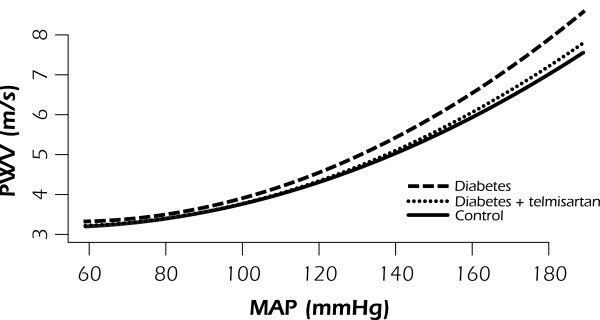
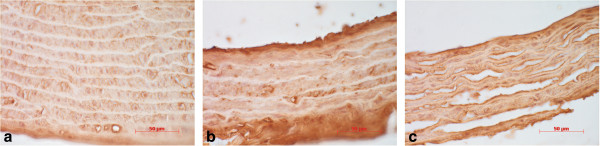
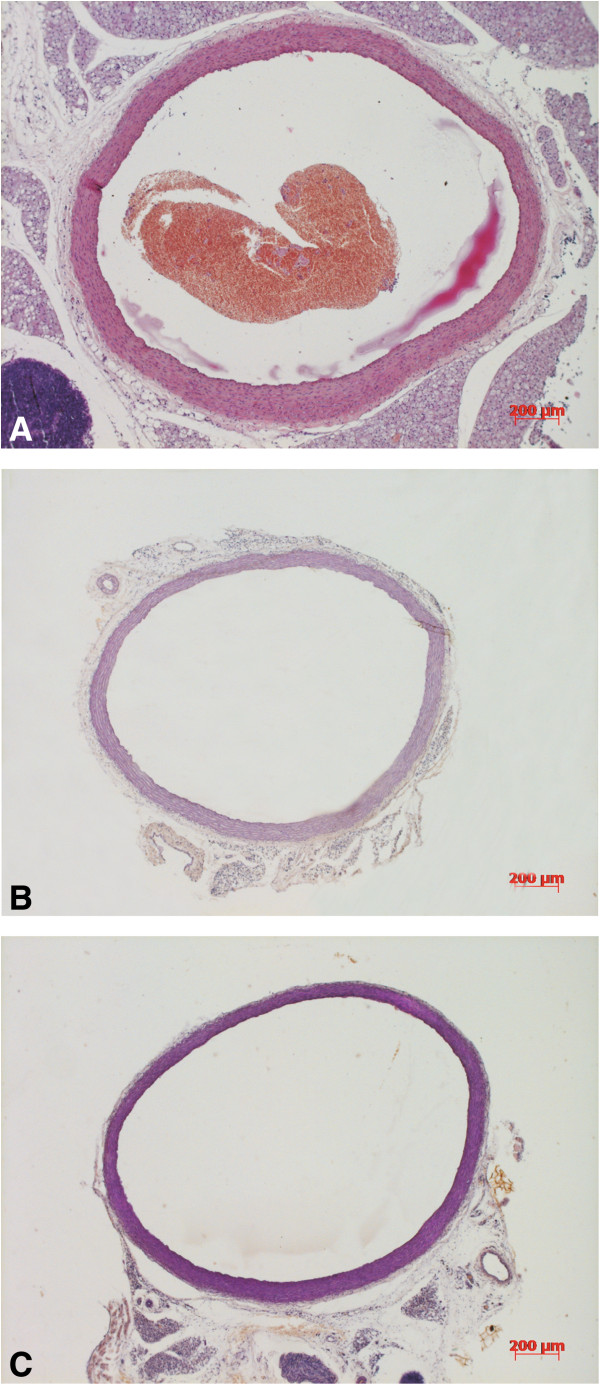
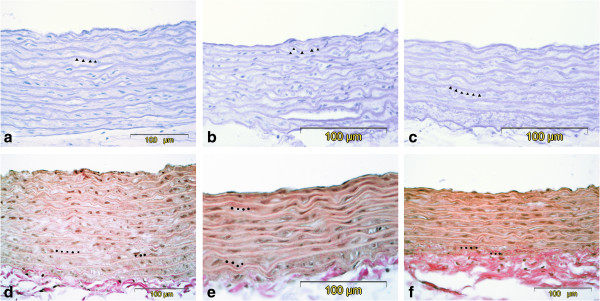
Untreated diabetes imposed differential effects on aortic stiffening, as demonstrated by increased isobaric PWV over a range of high blood pressures, but not at lower blood pressures. This was associated with loss and disruption of elastin fibres and an increase in collagen fibres in the aortic media. Treatment with telmisartan decreased resting blood pressure, reduced aortic stiffness, and partially prevented the degradation of elastin network within the aortic wall.
Telmisartan improved the structural and functional indices of aortic stiffening induced by untreated STZ-diabetes, demonstrating the importance of ARBs in the therapeutic approach to diabetic vascular complications.
预防或减轻糖尿病血管并发症包括使用肾素-血管紧张素系统抑制剂进行抗高血压治疗,因为它们具有降压以外的保护作用。本研究旨在探讨血管紧张素 II 型 1 型受体阻滞剂(ARB)替米沙坦对实验性 1 型糖尿病大鼠血压、主动脉僵硬度和主动脉重构的影响。
雄性 Wistar 大鼠用链脲佐菌素(STZ)(65mg/kg)诱导糖尿病。1 组糖尿病大鼠用替米沙坦(10mg/kg/天 p/o)治疗 10 周。在静脉输注苯肾上腺素和硝酸甘油后,在麻醉下测量压力独立的主动脉脉搏波速度(PWV)。收集主动脉壁样本进行组织形态计量学分析。
未经治疗的糖尿病对主动脉僵硬度产生了不同的影响,表现为在较高血压范围内等压 PWV 增加,但在较低血压范围内没有增加。这与主动脉中层弹性纤维的丧失和破坏以及胶原纤维的增加有关。替米沙坦治疗可降低静息血压,降低主动脉僵硬度,并部分防止 STZ-糖尿病引起的主动脉壁弹性网络降解。
替米沙坦改善了未经治疗的 STZ 糖尿病引起的主动脉僵硬度的结构和功能指标,表明 ARB 在糖尿病血管并发症治疗方法中的重要性。