Sabnis Himalee, Bradley Heath L, Bunting Silvia T, Cooper Todd M, Bunting Kevin D
Department of Pediatrics, Aflac Cancer and Blood Disorders Center, Emory University, 1760 Haygood Drive NE, Atlanta, Georgia, USA.
J Transl Med. 2014 Jun 12;12:166. doi: 10.1186/1479-5876-12-166.
Overall cure rates in acute myeloid leukemia (AML) continue to range between 60-65% with disease relapse being a major cause of mortality. The PI3K-Akt-mTOR kinase pathway plays a vital role in pro-survival signals within leukemic cells and inhibition of this pathway is being investigated to improve patient outcomes. Tracking activation of multiple signaling proteins simultaneously in patient samples can be challenging especially with limiting cell numbers within rare sub-populations.
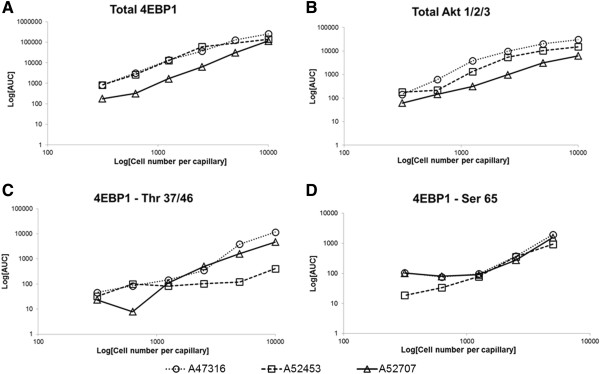
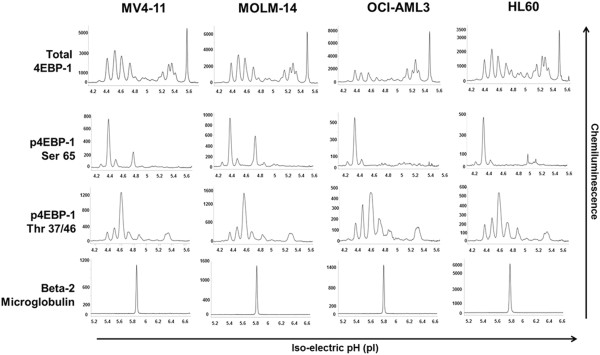
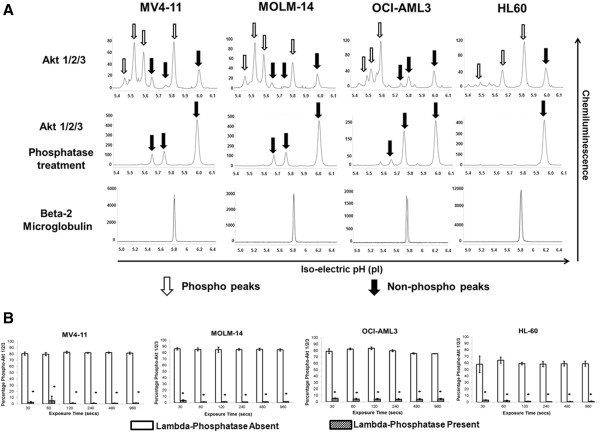
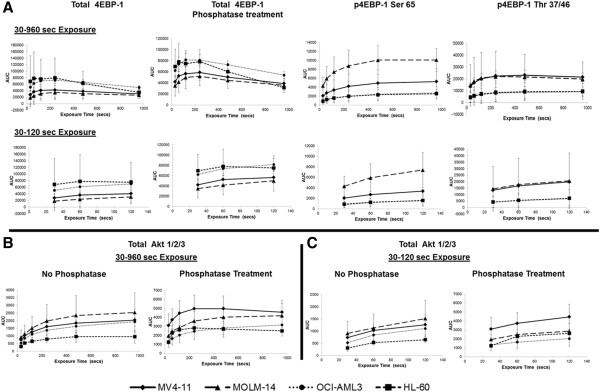
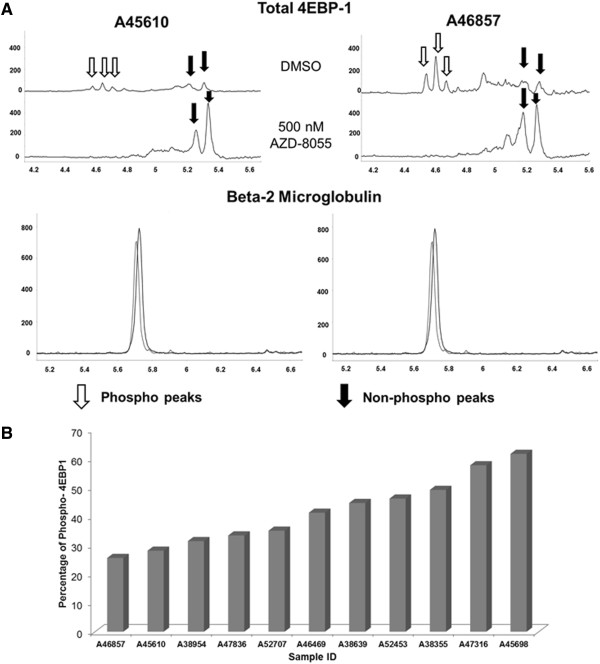
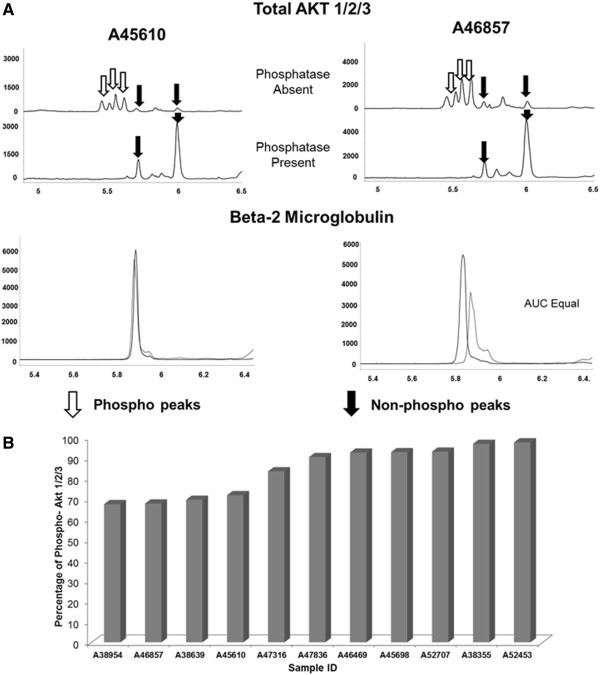
The NanoPro 1000 system (ProteinSimple) is built on an automated, capillary-based immunoassay platform and enables a rapid and quantitative analysis of specific proteins and their phosphorylation states. We have utilized this nano-immunoassay to examine activation of Akt 1/2/3 and downstream mTOR target--eukaryotic initiation factor 4E-Binding Protein 1 (4EBP1).
Assays for Akt 1/2/3 and 4EBP1 were standardized using AML cell lines (MV4-11, MOLM-14, OCI-AML3 and HL-60) prior to testing in patient samples. Target inhibition was studied using mTOR 1/2 inhibitor AZD-8055 and results were corroborated by Western blotting. The assay was able to quantify nanogram amounts of 4EBP1 and Akt 1/2/3 in AML cell lines and primary pediatric AML samples and results were quantifiable, consistent and reproducible.
Our data provides a strong basis for testing this platform on a larger scale and our long term aim is to utilize this nano-immunoassay prospectively in de-novo AML to be able to identify poor responders who might benefit from early introduction of targeted therapy.
急性髓系白血病(AML)的总体治愈率持续保持在60%-65%之间,疾病复发是主要的死亡原因。PI3K-Akt-mTOR激酶通路在白血病细胞的促生存信号中起着至关重要的作用,目前正在研究抑制该通路以改善患者预后。在患者样本中同时追踪多种信号蛋白的激活情况可能具有挑战性,尤其是在罕见亚群中细胞数量有限的情况下。
NanoPro 1000系统(ProteinSimple公司)基于自动化的毛细管免疫分析平台构建,能够对特定蛋白质及其磷酸化状态进行快速定量分析。我们利用这种纳米免疫分析方法检测了Akt 1/2/3的激活情况以及下游mTOR靶点——真核起始因子4E结合蛋白1(4EBP1)。
在对患者样本进行检测之前,使用AML细胞系(MV4-11、MOLM-14、OCI-AML3和HL-60)对Akt 1/2/3和4EBP1的检测进行了标准化。使用mTOR 1/2抑制剂AZD-8055研究了靶点抑制情况,并通过蛋白质印迹法进行了验证。该检测方法能够定量AML细胞系和原发性儿童AML样本中纳克量的4EBP1和Akt 1/2/3,结果可量化、一致且可重复。
我们的数据为大规模测试该平台提供了有力依据,我们的长期目标是在初治AML中前瞻性地利用这种纳米免疫分析方法,以便能够识别可能从早期引入靶向治疗中获益的低反应者。