Hariani Gunjan D, Lam Ernest T, Havener Tammy, Kwok Pui-Yan, McLeod Howard L, Wagner Michael J, Motsinger-Reif Alison A
Bioinformatics Research Center, North Carolina State University, 307 Ricks Hall, 1 Lampe Dr, Raleigh, NC 27695 CB7566, USA.
BMC Res Notes. 2014 Jun 12;7:360. doi: 10.1186/1756-0500-7-360.
The goal of this study was to perform candidate gene association with cytotoxicity of chemotherapeutics in cell line models through resequencing and discovery of rare and low frequency variants along with common variations. Here, an association study of cytotoxicity response to 30 FDA approved drugs was conducted and we applied next generation targeted sequencing technology to discover variants from 103 candidate genes in 95 lymphoblastoid cell lines from 14 CEPH pedigrees. In this article, we called variants across 95 cell lines and performed association analysis for cytotoxic response using the Family Based Association Testing method and software.
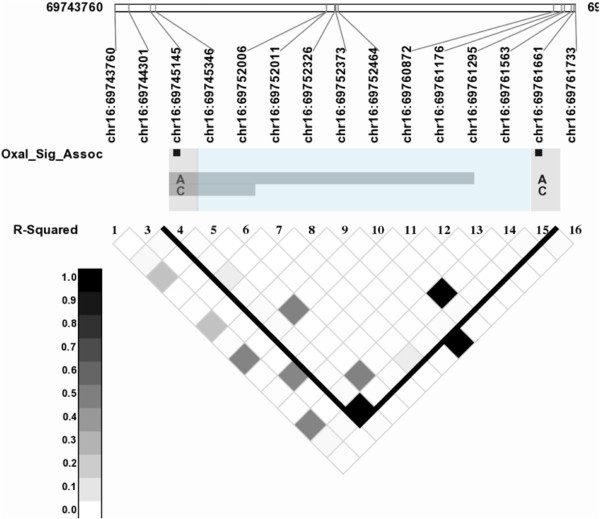
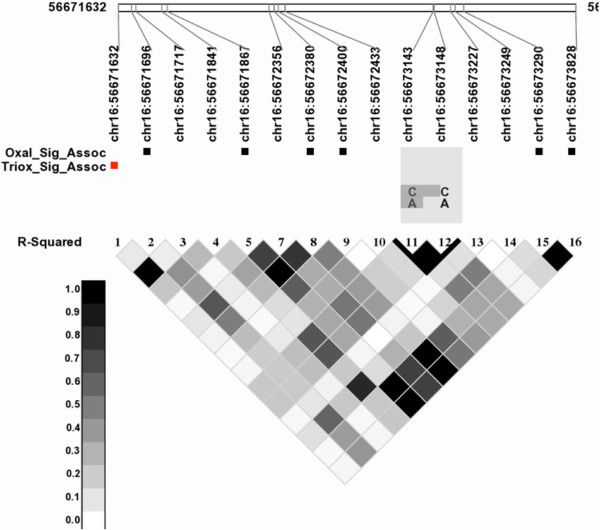
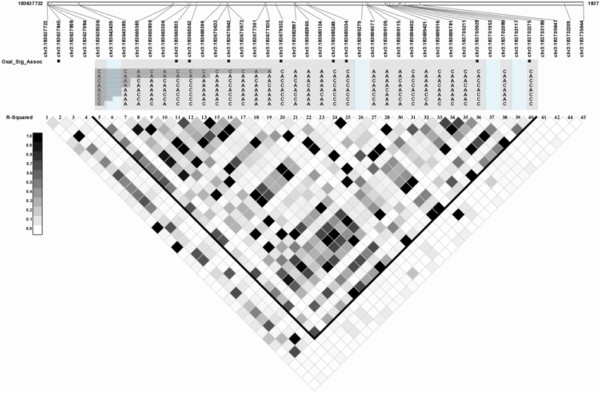
We called 2281 variable SNP genotypes across the 103 genes for these cell lines and identified three genes of significant association within this marker set. Specifically, ATP-binding cassette, sub-family C, member 5 (ABCC5), metallothionein 1A (MT1A) and NAD(P)H dehydrogenase quinone1 (NQO1) were significantly associated with oxaliplatin drug response. The significant SNP on NQO1 (rs1800566) has been linked with poor survival rates in patients with non-small cell lung cancer treated with cisplatin (which belongs to the same class of drugs as oxaliplatin). A SNP (rs1846692) near the 5' region of MT1A was associated with arsenic trioxide.
The results from this study are promising and this serves as a proof-of-principle demonstration of the use of sequencing data in the cytotoxicity models of human cell lines. With increased sample sizes, such studies will be a fast and powerful way to associate common and rare variants with drug response; while overcoming the cost and time limitations to recruit cohorts for association study.
本研究的目的是通过对罕见和低频变异以及常见变异进行重测序和发现,在细胞系模型中进行候选基因与化疗药物细胞毒性的关联研究。在此,我们对30种美国食品药品监督管理局(FDA)批准药物的细胞毒性反应进行了关联研究,并应用新一代靶向测序技术,从14个CEPH家系的95个淋巴母细胞系中的103个候选基因中发现变异。在本文中,我们对95个细胞系中的变异进行了分型,并使用基于家系的关联检验方法和软件对细胞毒性反应进行了关联分析。
我们对这些细胞系的103个基因中的2281个可变单核苷酸多态性(SNP)基因型进行了分型,并在该标记集中鉴定出三个显著关联的基因。具体而言,ATP结合盒转运体C亚家族成员5(ABCC5)、金属硫蛋白1A(MT1A)和NAD(P)H脱氢酶醌1(NQO1)与奥沙利铂药物反应显著相关。NQO1上的显著SNP(rs1800566)与接受顺铂治疗(与奥沙利铂属于同一类药物)的非小细胞肺癌患者的低生存率相关。MT1A 5'区域附近的一个SNP(rs1846692)与三氧化二砷相关。
本研究结果很有前景,这是在人类细胞系细胞毒性模型中使用测序数据的原理验证。随着样本量的增加,此类研究将成为将常见和罕见变异与药物反应相关联的快速且强大的方法;同时克服了招募队列进行关联研究的成本和时间限制。