Javadov Sabzali, Jang Sehwan, Agostini Bryan
Department of Physiology, School of Medicine, University of Puerto Rico, PR, USA.
Department of Physiology, School of Medicine, University of Puerto Rico, PR, USA.
Pharmacol Ther. 2014 Nov;144(2):202-25. doi: 10.1016/j.pharmthera.2014.05.013. Epub 2014 Jun 9.
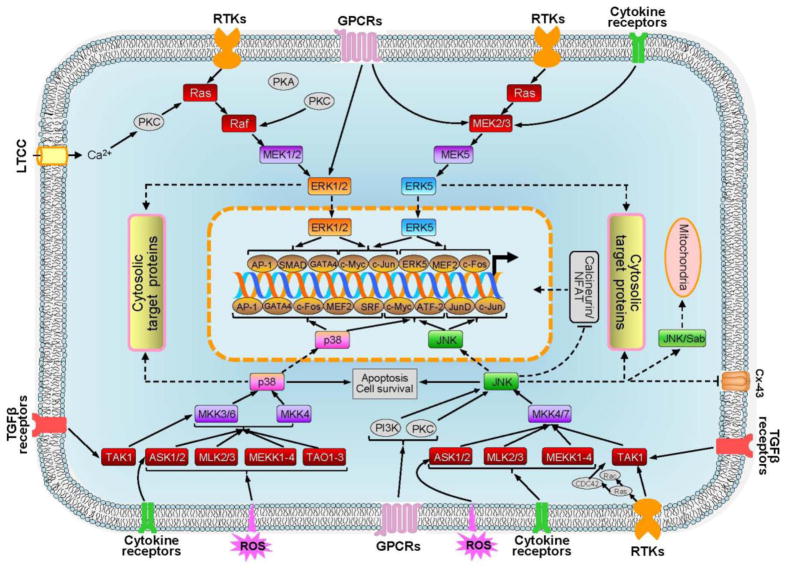
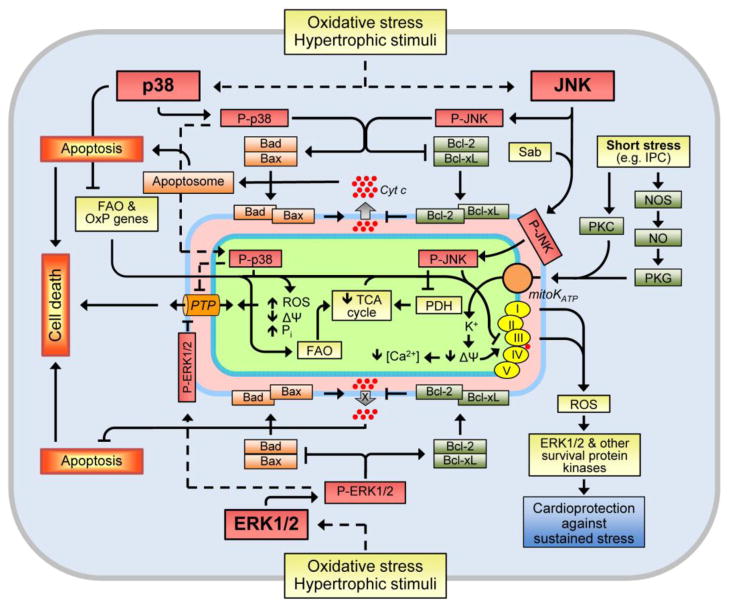
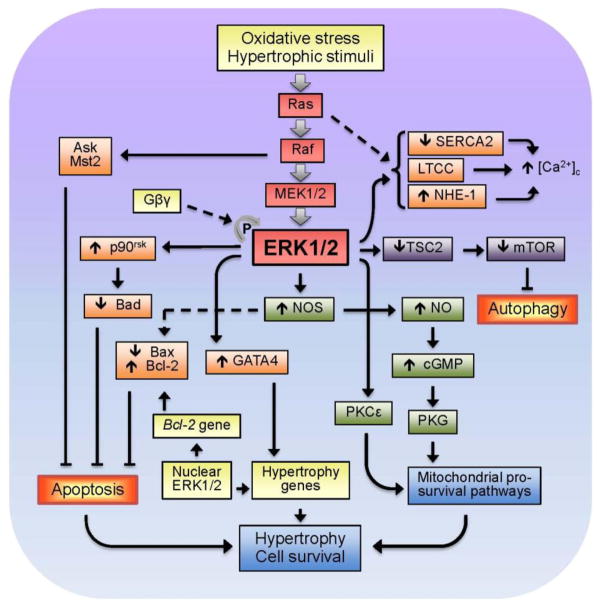
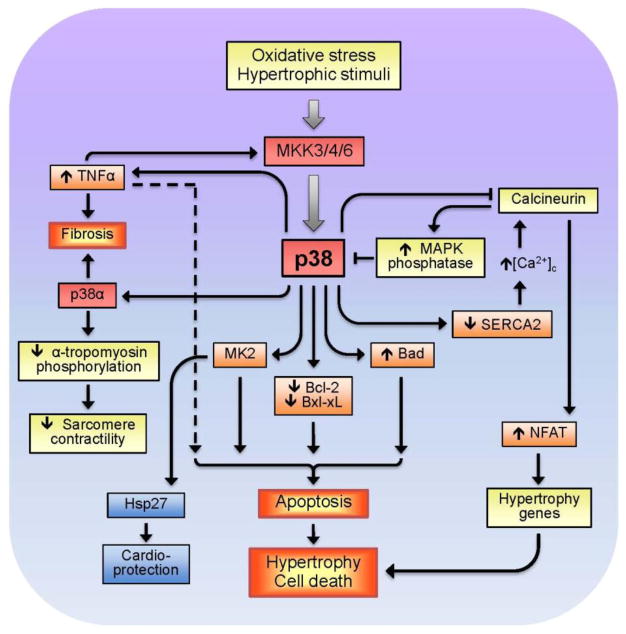
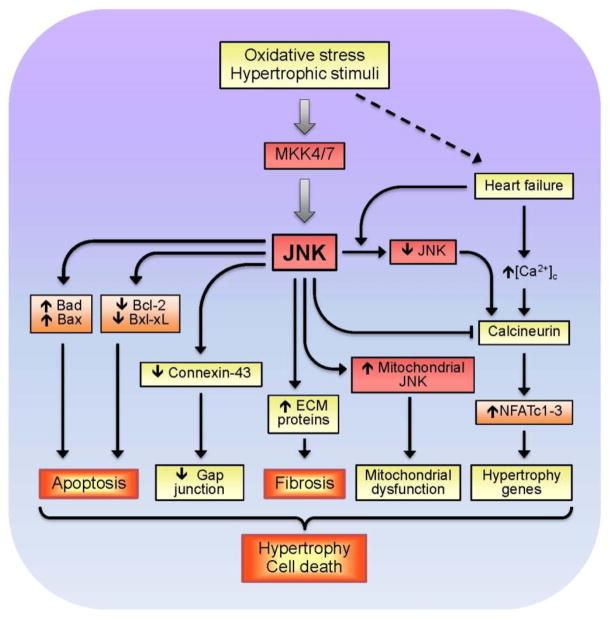
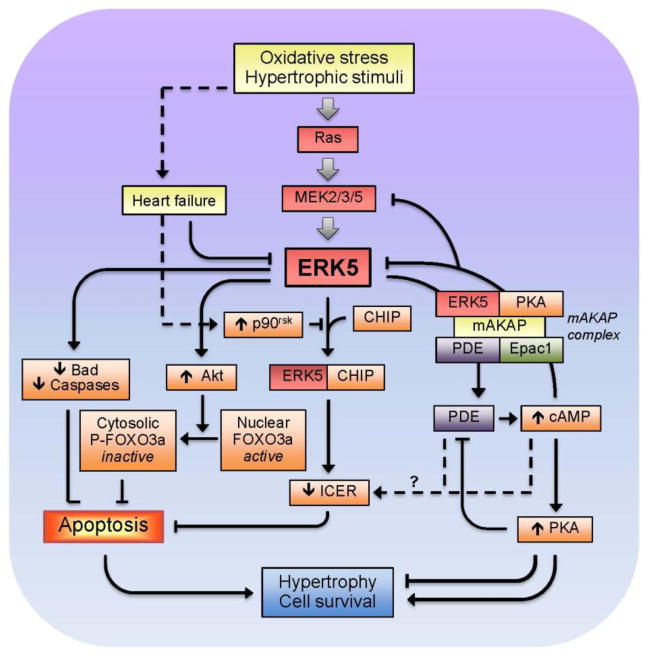
Cardiovascular diseases cause more mortality and morbidity worldwide than any other diseases. Although many intracellular signaling pathways influence cardiac physiology and pathology, the mitogen-activated protein kinase (MAPK) family has garnered significant attention because of its vast implications in signaling and crosstalk with other signaling networks. The extensively studied MAPKs ERK1/2, p38, JNK, and ERK5, demonstrate unique intracellular signaling mechanisms, responding to a myriad of mitogens and stressors and influencing the signaling of cardiac development, metabolism, performance, and pathogenesis. Definitive relationships between MAPK signaling and cardiac dysfunction remain elusive, despite 30 years of extensive clinical studies and basic research of various animal/cell models, severities of stress, and types of stimuli. Still, several studies have proven the importance of MAPK crosstalk with mitochondria, powerhouses of the cell that provide over 80% of ATP for normal cardiomyocyte function and play a crucial role in cell death. Although many questions remain unanswered, there exists enough evidence to consider the possibility of targeting MAPK-mitochondria interactions in the prevention and treatment of heart disease. The goal of this review is to integrate previous studies into a discussion of MAPKs and MAPK-mitochondria signaling in cardiac diseases, such as myocardial infarction (ischemia), hypertrophy and heart failure. A comprehensive understanding of relevant molecular mechanisms, as well as challenges for studies in this area, will facilitate the development of new pharmacological agents and genetic manipulations for therapy of cardiovascular diseases.
在全球范围内,心血管疾病导致的死亡率和发病率高于其他任何疾病。尽管许多细胞内信号通路影响心脏生理和病理,但丝裂原活化蛋白激酶(MAPK)家族因其在信号传导以及与其他信号网络的相互作用中具有广泛影响而备受关注。被广泛研究的MAPK包括ERK1/2、p38、JNK和ERK5,它们展示出独特的细胞内信号传导机制,对多种有丝分裂原和应激源做出反应,并影响心脏发育、代谢、功能和发病机制的信号传导。尽管经过30年对各种动物/细胞模型、应激严重程度和刺激类型的广泛临床研究和基础研究,但MAPK信号传导与心脏功能障碍之间的确切关系仍不明确。不过,一些研究已经证明了MAPK与线粒体相互作用的重要性,线粒体作为细胞的动力源,为正常心肌细胞功能提供超过80%的ATP,并在细胞死亡中起关键作用。尽管许多问题仍未得到解答,但有足够的证据表明,在预防和治疗心脏病时靶向MAPK-线粒体相互作用具有可能性。本综述的目的是将先前的研究整合到对心脏病(如心肌梗死(缺血)、肥大和心力衰竭)中MAPK和MAPK-线粒体信号传导的讨论中。全面了解相关分子机制以及该领域研究面临的挑战,将有助于开发用于治疗心血管疾病的新型药物和基因操作方法。