Kim Young Zoon
Division of Neuro-Oncology, Department of Neurosurgery, Samsung Changwon Hospital, Sungkyunkwan University School of Medicine, Changwon, Korea.
Brain Tumor Res Treat. 2014 Apr;2(1):7-21. doi: 10.14791/btrt.2014.2.1.7. Epub 2014 Apr 29.
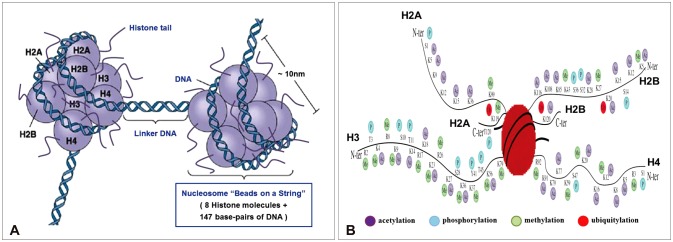
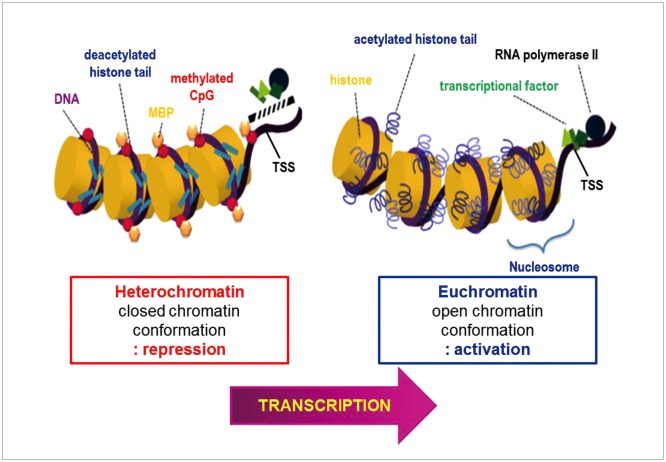
Gliomas are the most frequently occurring primary brain tumors in adults. Although they exist in different malignant stages, including histologically benign forms and highly aggressive states, most gliomas are clinically challenging for neuro-oncologists because of their infiltrative growth patterns and inherent relapse tendency with increased malignancy. Once this disease reaches the glioblastoma multiforme stage, the prognosis of patients is dismal: median survival time is 15 months. Extensive genetic analyses of glial tumors have revealed a variety of deregulated genetic pathways involved in DNA repair, apoptosis, cell migration/adhesion, and cell cycle. Recently, it has become evident that epigenetic alterations may also be an important factor for glioma genesis. Of epigenetic marks, histone modification is a key mark that regulates gene expression and thus modulates a wide range of cellular processes. In this review, I discuss the neuro-oncological significance of altered histone modifications and modifiers in glioma patients while briefly overviewing the biological roles of histone modifications.
神经胶质瘤是成人中最常见的原发性脑肿瘤。尽管它们存在于不同的恶性阶段,包括组织学上的良性形式和高度侵袭性状态,但由于其浸润性生长模式以及随着恶性程度增加而固有的复发倾向,大多数神经胶质瘤对神经肿瘤学家来说在临床上都具有挑战性。一旦这种疾病发展到多形性胶质母细胞瘤阶段,患者的预后就很糟糕:中位生存时间为15个月。对胶质肿瘤的广泛基因分析揭示了多种与DNA修复、细胞凋亡、细胞迁移/黏附以及细胞周期相关的失调基因通路。最近,表观遗传改变也可能是神经胶质瘤发生的一个重要因素这一点已变得很明显。在表观遗传标记中,组蛋白修饰是调节基因表达从而调控广泛细胞过程的关键标记。在这篇综述中,我将讨论胶质瘤患者中组蛋白修饰和修饰酶改变的神经肿瘤学意义,同时简要概述组蛋白修饰的生物学作用。