Yan Fang, Wang Qi, Xu Chao, Cao Mingfeng, Zhou Xiaoming, Wang Tingting, Yu Chunxiao, Jing Fei, Chen Wenbin, Gao Ling, Zhao Jiajun
Department of Endocrinology and Metabolism, Shandong Provincial Hospital affiliated to Shandong University, Jinan, Shandong, China; Institute of Endocrinology, Shandong Academy of Clinical Medicine, Jinan, Shandong, China.
Scientific Center, Shandong Provincial Hospital affiliated to Shandong University, Jinan, Shandong, China; Institute of Pharmacology, Shandong University, Jinan, Shandong, China.
PLoS One. 2014 Jun 13;9(6):e99245. doi: 10.1371/journal.pone.0099245. eCollection 2014.
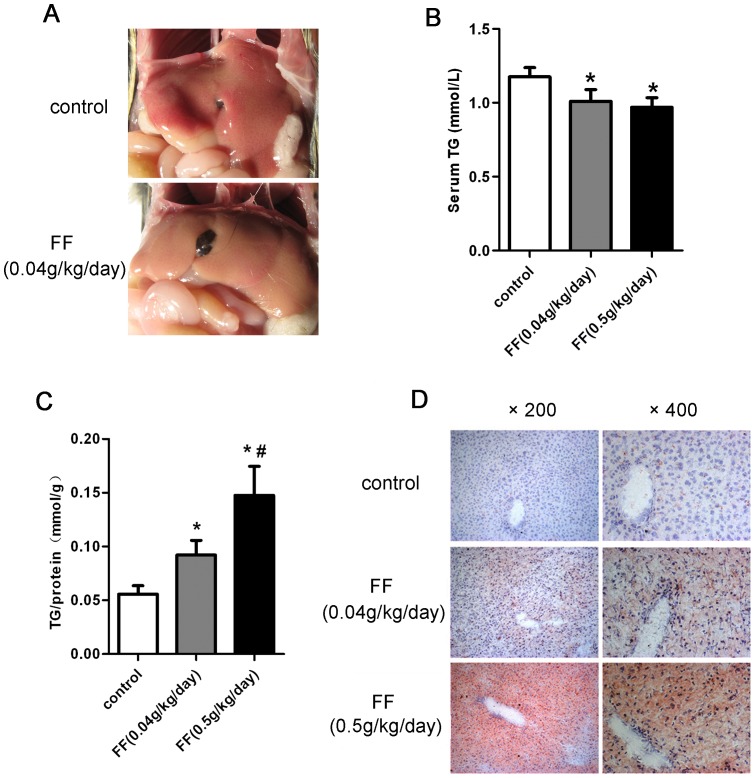
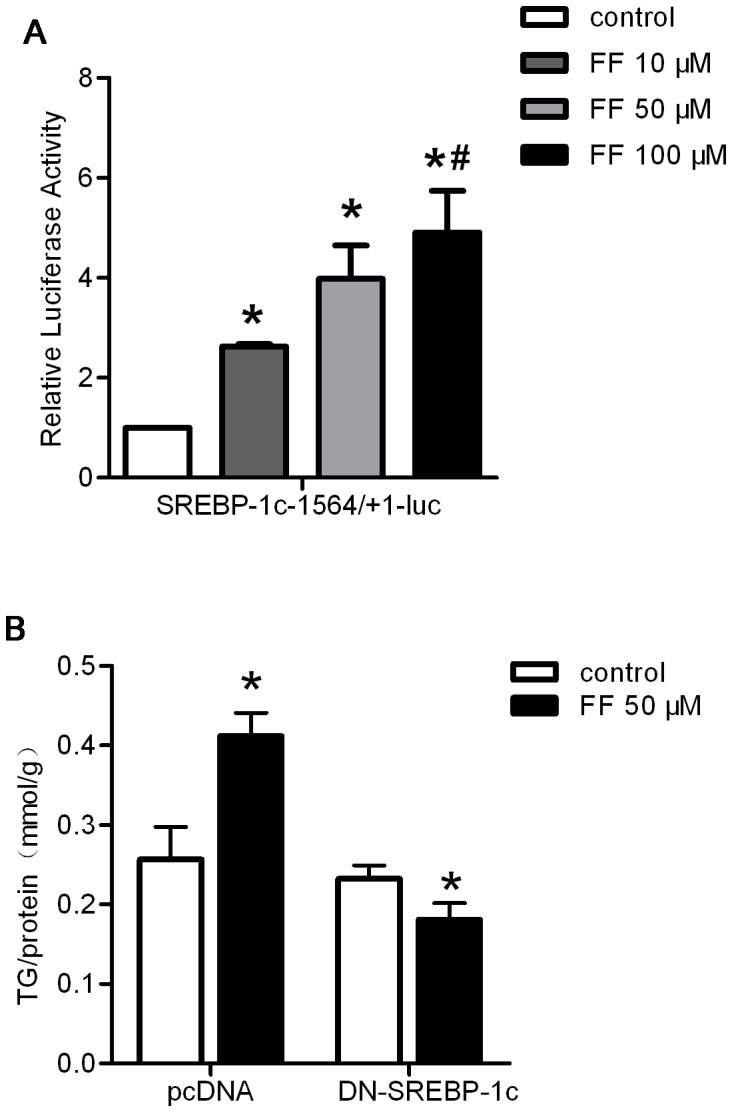
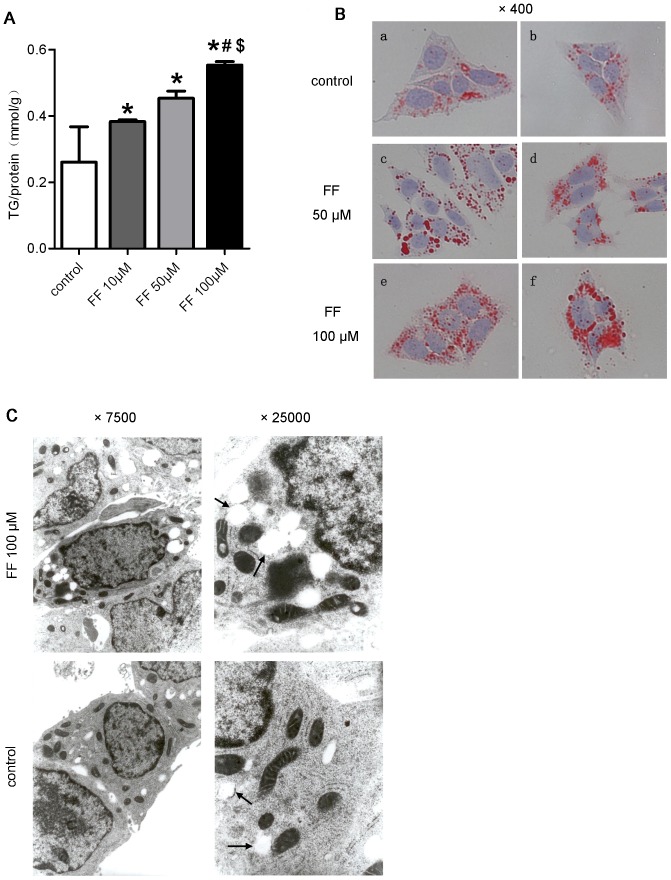
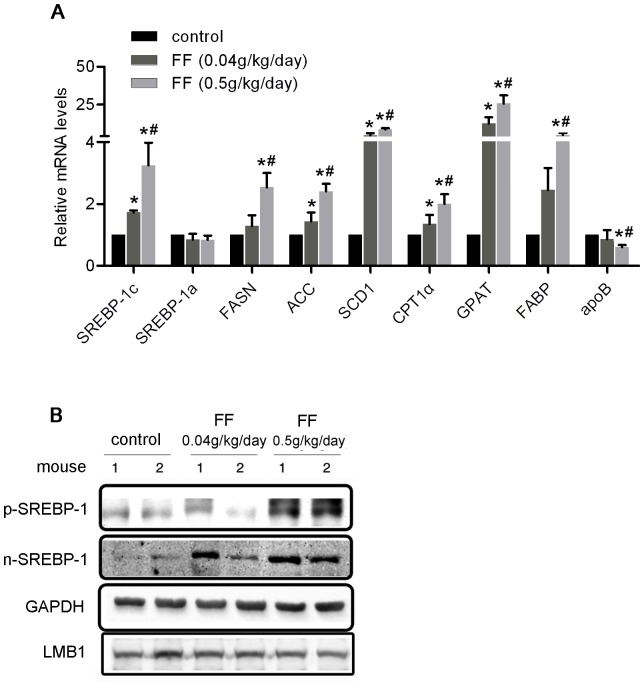
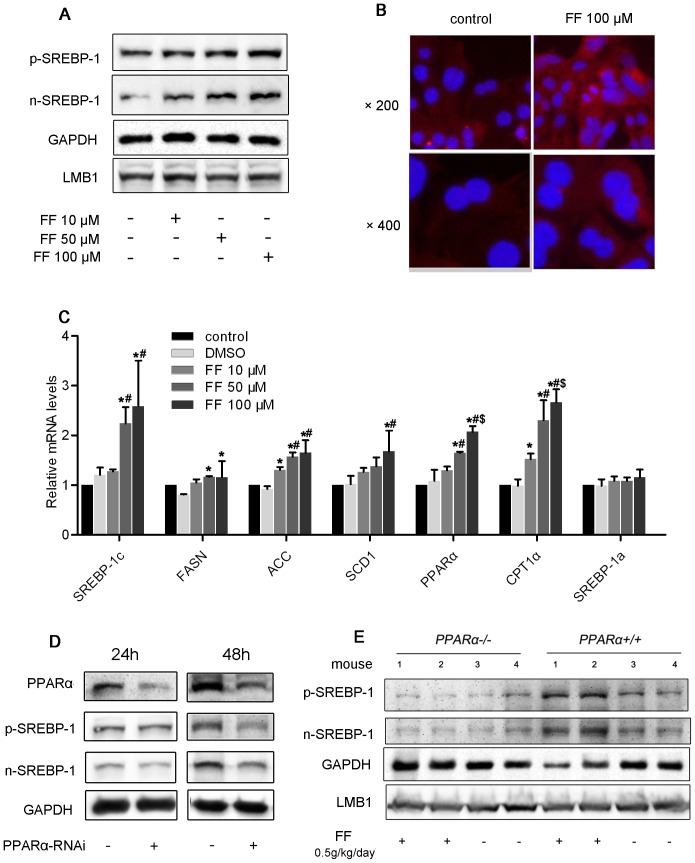
Non-alcoholic fatty liver disease (NAFLD) is characterized by hepatic triglyceride accumulation, ranging from steatosis to steatohepatitis and cirrhosis. NAFLD is a risk factor for cardiovascular diseases and is associated with metabolic syndrome. Antihyperlipidemic drugs are recommended as part of the treatment for NAFLD patients. Although fibrates activate peroxisome proliferator-activated receptor α (PPARα), leading to the reduction of serum triglyceride levels, the effects of these drugs on NAFLD remain controversial. Clinical studies have reported that PPARα activation does not improve hepatic steatosis. In the present study, we focused on exploring the effect and mechanism of PPARα activation on hepatic triglyceride accumulation and hepatic steatosis. Male C57BL/6J mice, Pparα-null mice and HepG2 cells were treated with fenofibrate, one of the most commonly used fibrate drugs. Both low and high doses of fenofibrate were administered. Hepatic steatosis was detected through oil red O staining and electron microscopy. Notably, in fenofibrate-treated mice, the serum triglyceride levels were reduced and the hepatic triglyceride content was increased in a dose-dependent manner. Oil red O staining of liver sections demonstrated that fenofibrate-fed mice accumulated abundant neutral lipids. Fenofibrate also increased the intracellular triglyceride content in HepG2 cells. The expression of sterol regulatory element-binding protein 1c (SREBP-1c) and the key genes associated with lipogenesis were increased in fenofibrate-treated mouse livers and HepG2 cells in a dose-dependent manner. However, the effect was strongly impaired in Pparα-null mice treated with fenofibrate. Fenofibrate treatment induced mature SREBP-1c expression via the direct binding of PPARα to the DR1 motif of the SREBP-1c gene. Taken together, these findings indicate the molecular mechanism by which PPARα activation increases liver triglyceride accumulation and suggest an adverse effect of fibrates on the pathogenesis of hepatic steatosis.
非酒精性脂肪性肝病(NAFLD)的特征是肝脏甘油三酯蓄积,范围从脂肪变性到脂肪性肝炎和肝硬化。NAFLD是心血管疾病的一个危险因素,并且与代谢综合征相关。抗高血脂药物被推荐作为NAFLD患者治疗的一部分。尽管贝特类药物激活过氧化物酶体增殖物激活受体α(PPARα),导致血清甘油三酯水平降低,但这些药物对NAFLD的影响仍存在争议。临床研究报告称,PPARα激活并不能改善肝脏脂肪变性。在本研究中,我们专注于探索PPARα激活对肝脏甘油三酯蓄积和肝脏脂肪变性的影响及机制。雄性C57BL/6J小鼠、Pparα基因敲除小鼠和HepG2细胞用非诺贝特(最常用的贝特类药物之一)进行处理。给予低剂量和高剂量的非诺贝特。通过油红O染色和电子显微镜检测肝脏脂肪变性。值得注意的是,在非诺贝特处理的小鼠中,血清甘油三酯水平降低,而肝脏甘油三酯含量呈剂量依赖性增加。肝脏切片的油红O染色表明,喂食非诺贝特的小鼠积累了大量中性脂质。非诺贝特还增加了HepG2细胞内的甘油三酯含量。在非诺贝特处理的小鼠肝脏和HepG2细胞中,固醇调节元件结合蛋白1c(SREBP-1c)以及与脂肪生成相关的关键基因的表达呈剂量依赖性增加。然而,在用非诺贝特处理的Pparα基因敲除小鼠中,这种作用受到严重损害。非诺贝特处理通过PPARα直接结合SREBP-1c基因的DR1基序诱导成熟SREBP-1c表达。综上所述,这些发现表明了PPARα激活增加肝脏甘油三酯蓄积的分子机制,并提示贝特类药物对肝脏脂肪变性的发病机制有不良影响。