Chen Rong-Jane, Siao Shih-He, Hsu Chung-Huei, Chang Chu-Yung, Chang Louis W, Wu Chih-Hsiung, Lin Pinpin, Wang Ying-Jan
Department of Environmental and Occupational Health, National Cheng Kung University Medical College, Tainan, Taiwan; Graduate Institute of Clinical Medicine, Taipei Medical University, Taipei, Taiwan.
Department of Environmental and Occupational Health, National Cheng Kung University Medical College, Tainan, Taiwan.
PLoS One. 2014 Jun 13;9(6):e99586. doi: 10.1371/journal.pone.0099586. eCollection 2014.
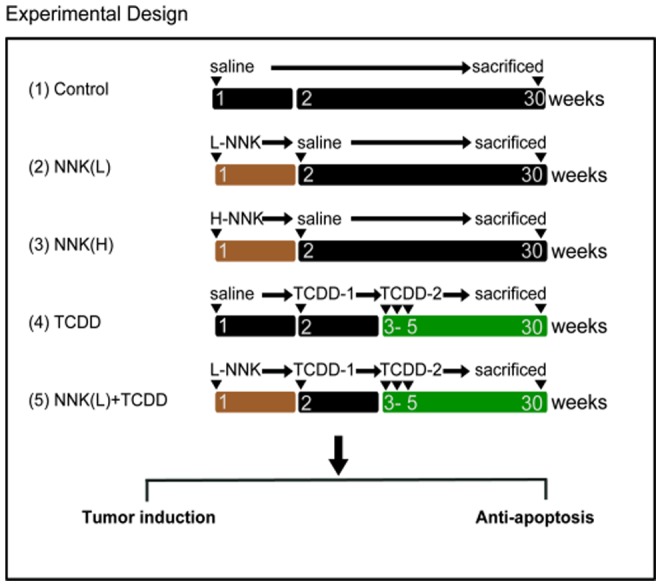
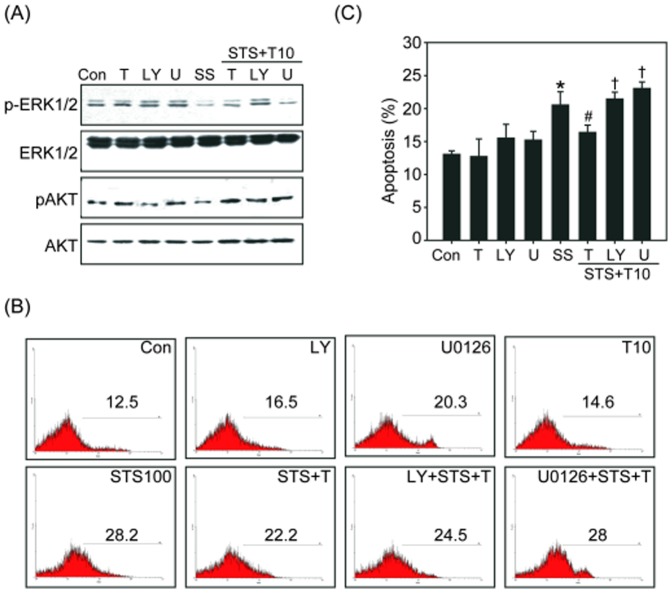
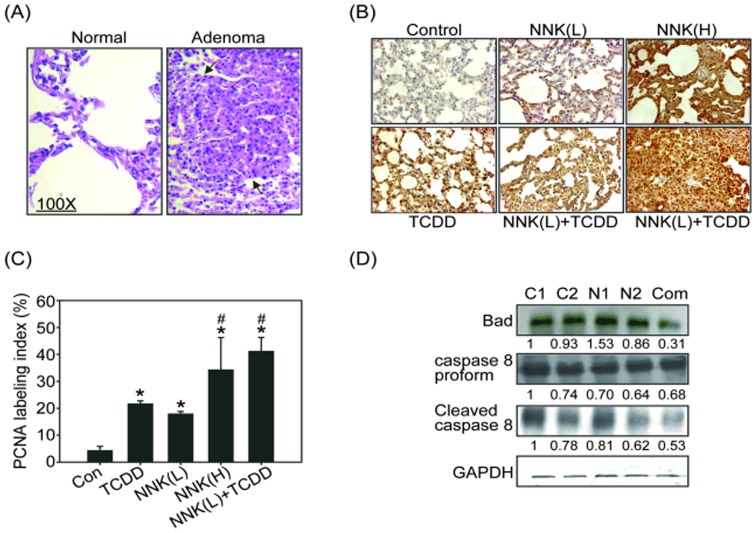
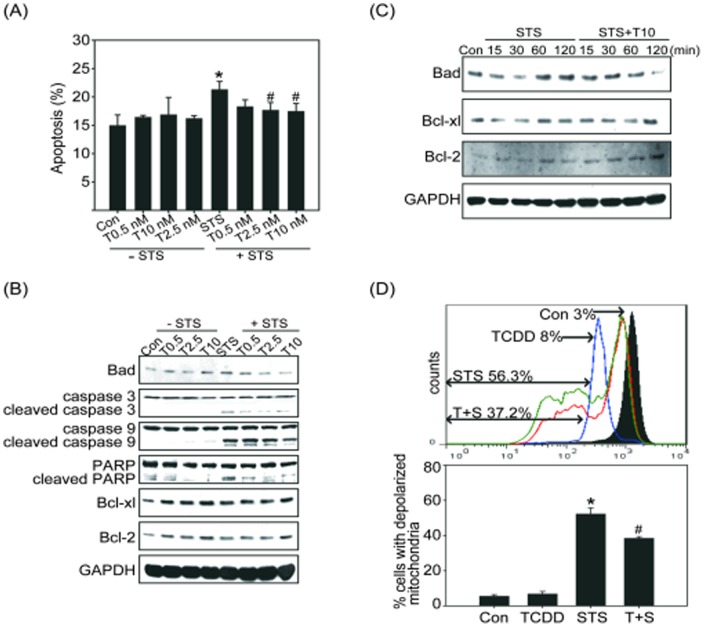
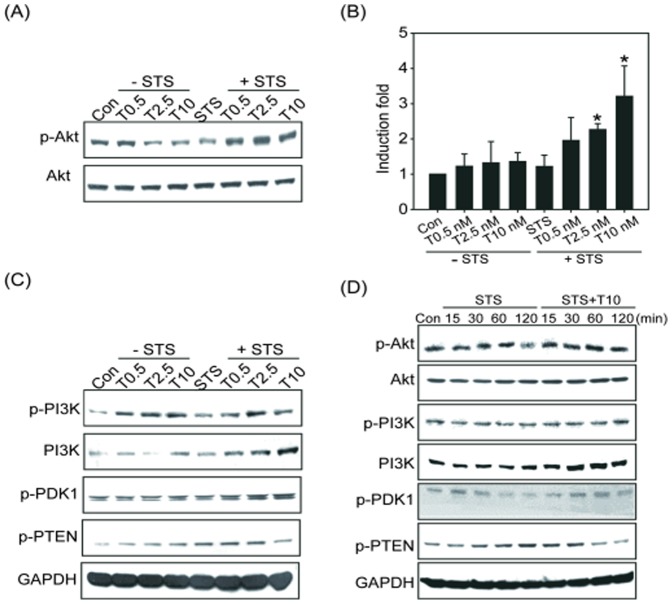
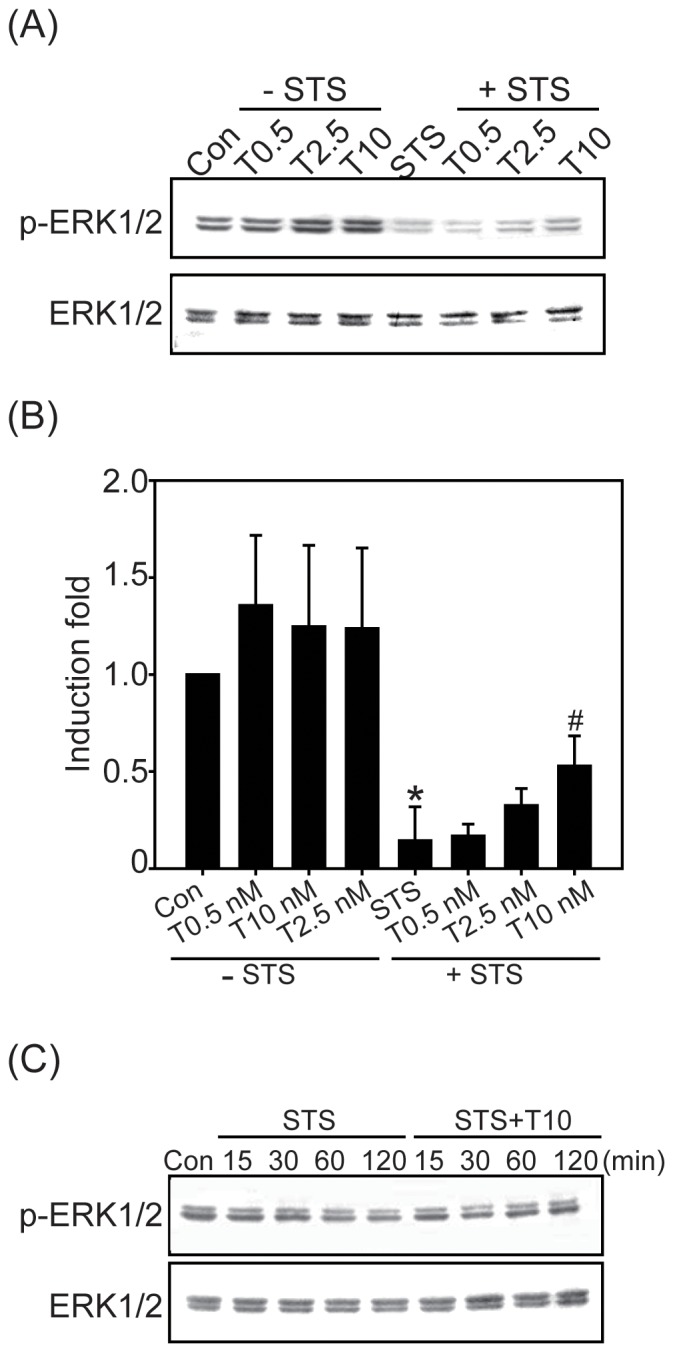
2,3,7,8-Tetrachlorodibenzo-p-dioxin (TCDD) is a multiple-site, multiple-species carcinogen that induces cancer in multiple organs. The molecular mechanisms underlying TCDD-induced lung tumorigenesis remain unclear. In the present study, a two-stage lung tumorigenesis model was established by administrating a single low dose of 4-(methylnitrosamino)-1-(3-pyridyl)-1-butanone (NNK) combined with TCDD to female A/J mice. The results indicated that TCDD combined with low-dose NNK has a significant tumor-promoting effect compared with TCDD or low-dose NNK alone. Resistance to apoptosis is a hallmark of cancer and is thought to be one of the tumor-promoting mechanisms regulated by TCDD. We performed an additional series of experiments in the normal human bronchial epithelial cell line Beas2B cells, in which TCDD was combined with the apoptosis inducer staurosporine. Our in vitro results confirmed that TCDD could rescue cells from apoptosis induced by staurosporine. The inhibition of apoptosis is likely mediated by the activation of the Akt and ERK1/2 pathways, as determined by the effectiveness of pathway-specific inhibitors in abrogating the anti-apoptotic activity of TCDD. In conclusion, we demonstrated that TCDD promoted NNK-induced lung tumorigenesis and revealed that TCDD inhibits staurosporine-induced apoptosis, at least in part, through the Akt and ERK1/2 signaling pathways.
2,3,7,8-四氯二苯并对二恶英(TCDD)是一种多部位、多物种致癌物,可在多个器官诱发癌症。TCDD诱导肺癌发生的分子机制尚不清楚。在本研究中,通过给雌性A/J小鼠单次低剂量给予4-(甲基亚硝胺基)-1-(3-吡啶基)-1-丁酮(NNK)联合TCDD,建立了两阶段肺癌发生模型。结果表明,与单独使用TCDD或低剂量NNK相比,TCDD联合低剂量NNK具有显著的促肿瘤作用。抗凋亡是癌症的一个标志,被认为是TCDD调节的促肿瘤机制之一。我们在正常人支气管上皮细胞系Beas2B细胞中进行了一系列额外实验,其中TCDD与凋亡诱导剂星形孢菌素联合使用。我们的体外实验结果证实,TCDD可以使细胞从星形孢菌素诱导的凋亡中获救。凋亡抑制可能是由Akt和ERK1/2信号通路的激活介导的,这是通过通路特异性抑制剂消除TCDD抗凋亡活性的有效性确定的。总之,我们证明了TCDD促进了NNK诱导的肺癌发生,并揭示了TCDD至少部分通过Akt和ERK1/2信号通路抑制星形孢菌素诱导的凋亡。