Burgoyne Louise, Dowling Lisa, Fitzgerald Anthony, Connolly Micaela, P Browne John, Perry Ivan J
Department of Epidemiology and Public Health, University College Cork, Cork, Ireland.
School of Medicine, University College Cork, Cork, Ireland.
BMJ Open. 2014 Jun 13;4(6):e004786. doi: 10.1136/bmjopen-2014-004786.
While there is an emerging literature on the usefulness of assistance dogs for children with autism spectrum disorder (ASD), there is a dearth of quantitative data on the value of assistance dog interventions for the family unit and family functioning. Using previously validated scales and scales developed specifically for this study, we measured parents'/guardians' perceptions of how having an assistance dog affects: (1) child safety from environmental dangers, (2) public reception of ASD and (3) levels of caregiver strain and sense of competence. We also obtained open-ended response data from parents/guardians on benefits and constraints of having an assistance dog.
This study was based in the primary care setting, within the context of a specific accredited assistance dog centre in Ireland.
A total of 134 parents/guardians with an assistance dog, and 87 parents of children on the waiting list were surveyed.
The primary outcome measures were scores on environmental hazards and public reception scales. The secondary outcome measures were scores on caregiver strain and competence scales.
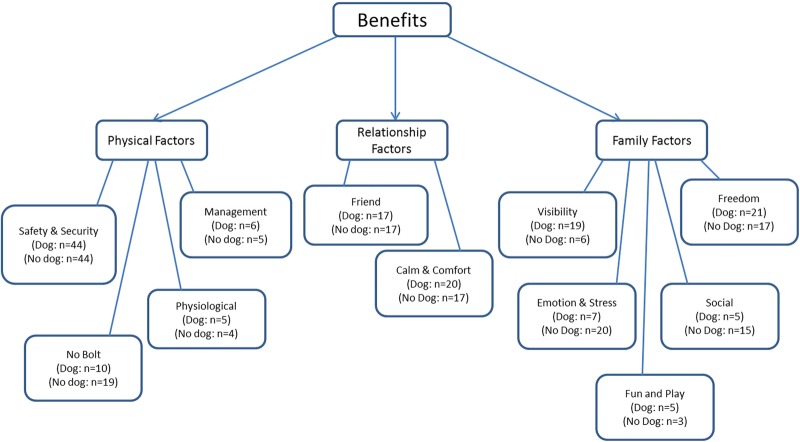
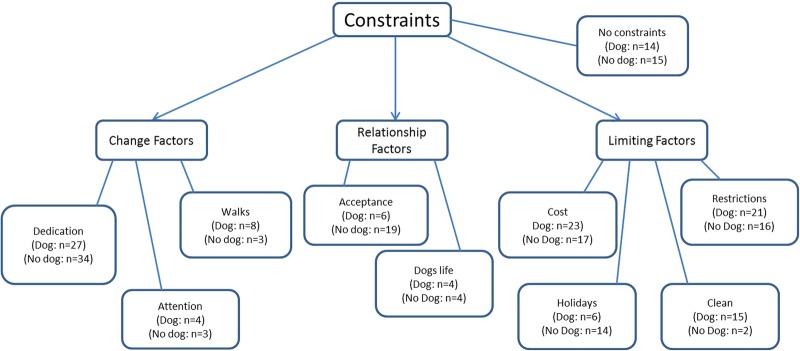
Parents/guardians of children who have ASD and an assistance dog rate their child as significantly safer from environmental dangers (p<0.001), perceive that the public act more respectfully and responsibly towards their child (p<0.001) and feel more competent about managing their child (p=0.023) compared with parents on the waiting list. There was a concentration of positive feeling towards assistance dog interventions with particular focus on safety and comfort for children, and a sense of freedom from family restrictions associated with ASD. The amount of dedication and commitment required to care for a dog were viewed as the primary constraints.
Our findings indicate that parents perceive that assistance dog interventions can be a valuable intervention for families with children who have ASD.
虽然关于辅助犬对自闭症谱系障碍(ASD)儿童有用性的文献不断涌现,但关于辅助犬干预对家庭单元和家庭功能价值的定量数据却很匮乏。我们使用先前验证过的量表以及专门为本研究开发的量表,测量了父母/监护人对拥有辅助犬如何影响以下方面的看法:(1)孩子免受环境危险的安全状况;(2)公众对自闭症谱系障碍的接受程度;(3)照顾者的压力水平和能力感。我们还从父母/监护人那里获得了关于拥有辅助犬的益处和限制的开放式回答数据。
本研究以爱尔兰一个特定的经认可的辅助犬中心为背景,在初级保健环境中进行。
共对134名拥有辅助犬的父母/监护人以及87名孩子在等待名单上的父母进行了调查。
主要结局指标是环境危害和公众接受程度量表的得分。次要结局指标是照顾者压力和能力量表的得分。
与等待名单上的父母相比,患有自闭症谱系障碍且拥有辅助犬的孩子的父母/监护人认为他们的孩子在环境危险中明显更安全(p<0.001),认为公众对他们孩子的行为更尊重、更负责(p<0.001),并且在管理孩子方面感觉更有能力(p=0.023)。对辅助犬干预存在积极感受的集中点,特别关注孩子 的安全和舒适,以及摆脱与自闭症谱系障碍相关的家庭限制的感觉。照顾狗狗所需的奉献精神和投入被视为主要限制因素。
我们的研究结果表明,父母认为辅助犬干预对有自闭症谱系障碍孩子的家庭可能是一种有价值的干预措施。