Togashi Yosuke, Arao Tokuzo, Kato Hiroaki, Matsumoto Kazuko, Terashima Masato, Hayashi Hidetoshi, de Velasco Marco A, Fujita Yoshihiko, Kimura Hideharu, Yasuda Takushi, Shiozaki Hitoshi, Nishio Kazuto
Department of Genome Biology, Kinki University Faculty of Medicine, Osaka-Sayama, Osaka, Japan.
Oncotarget. 2014 May 30;5(10):2962-73. doi: 10.18632/oncotarget.1561.
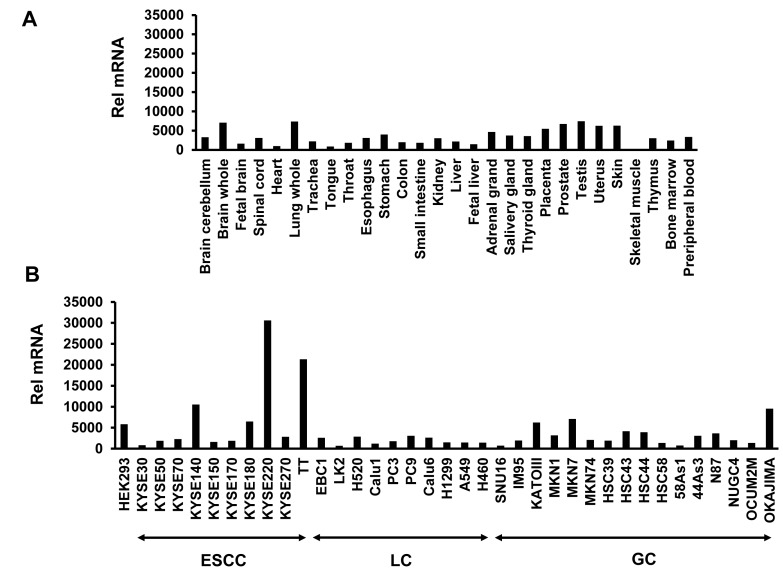
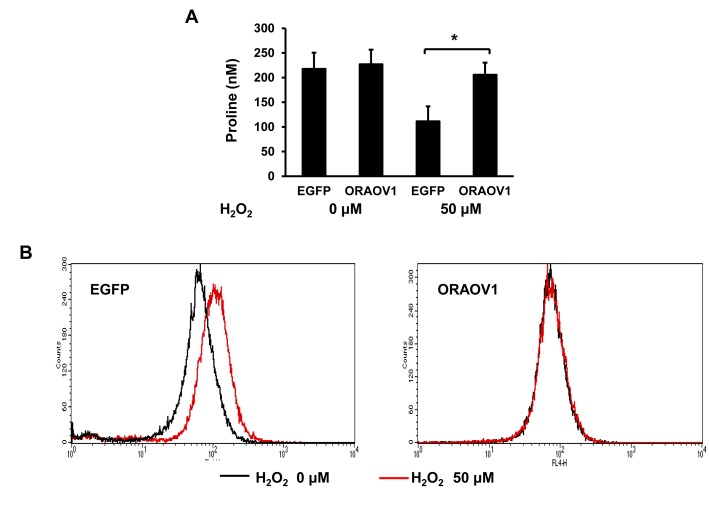
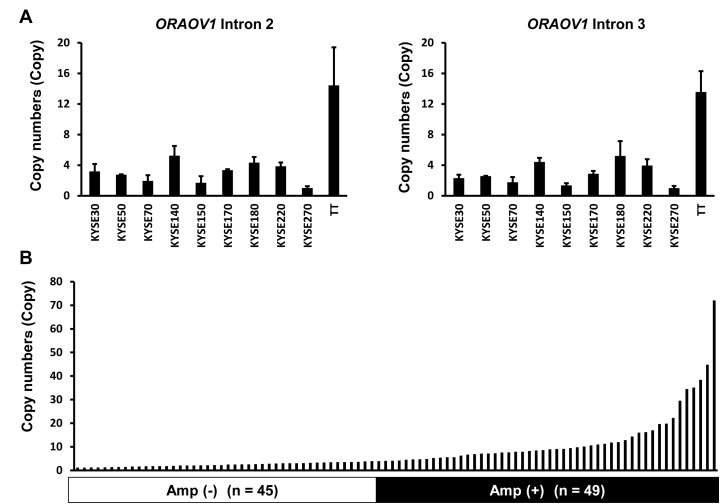
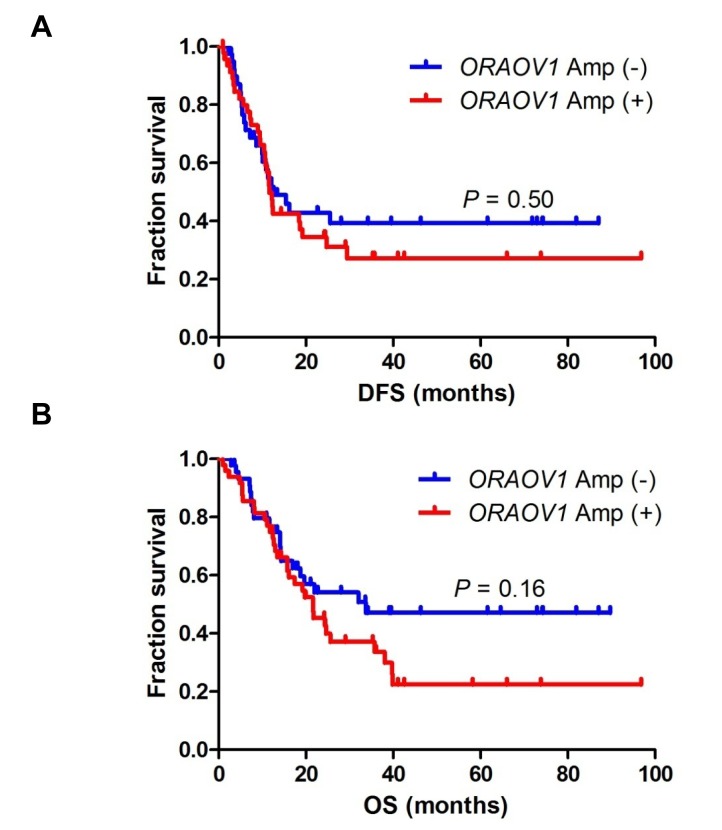
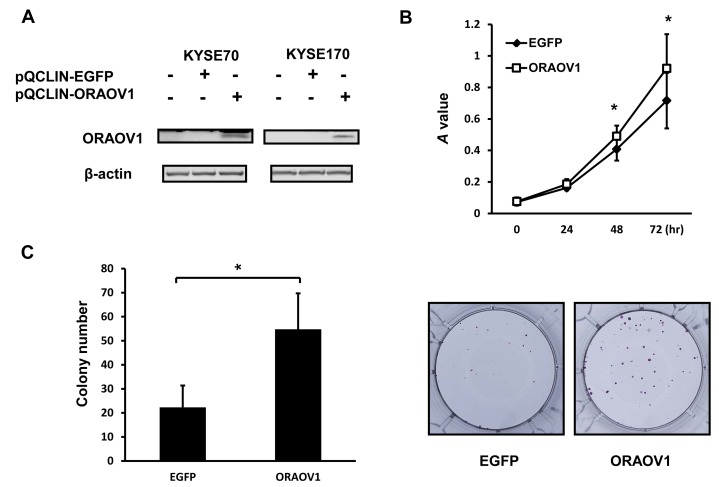
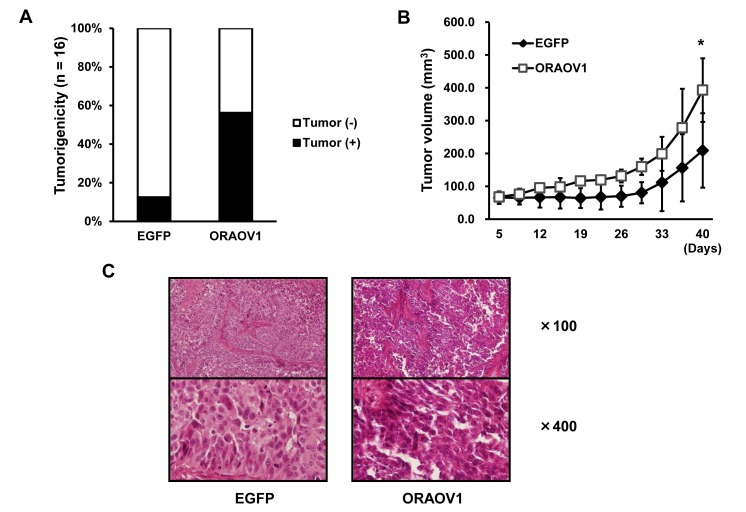
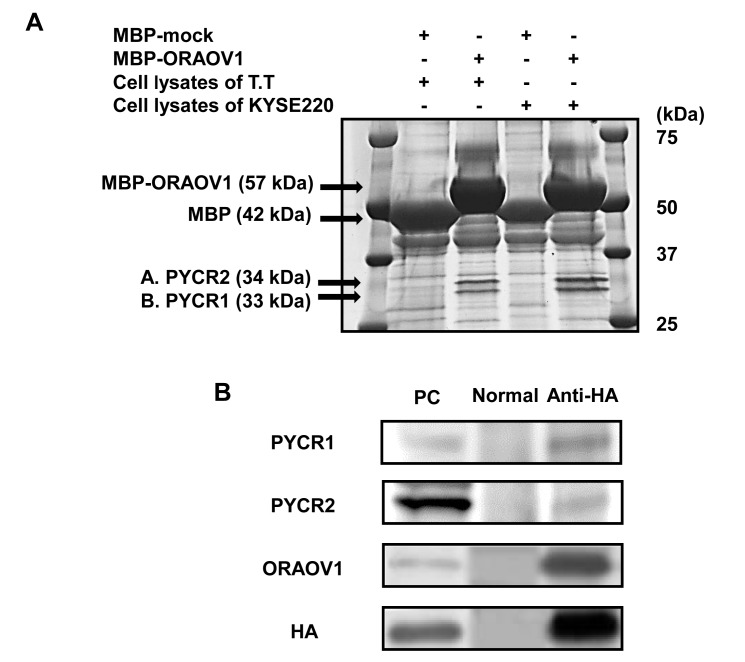
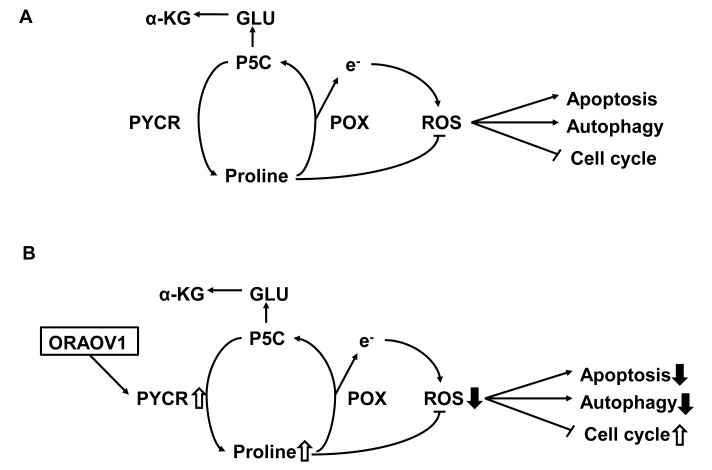
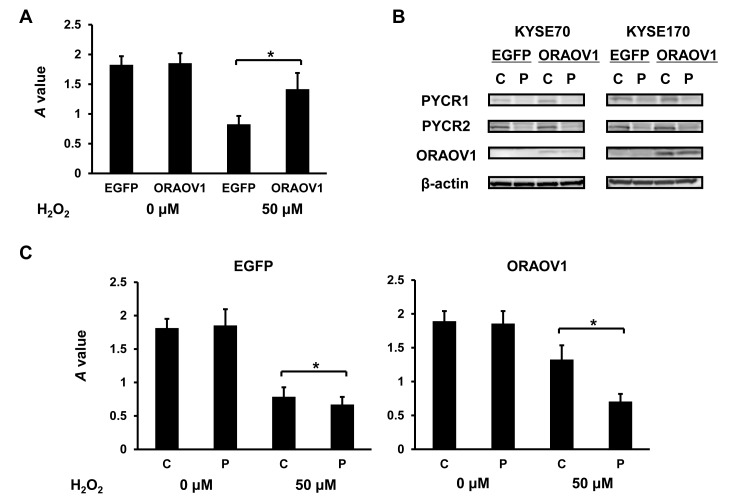
Chromosomal band 11q13 seems to be one of the most frequently amplified lesions in human cancer, including esophageal squamous cell cancer (ESCC). The oral cancer overexpressed 1 (ORAOV1) gene has been identified within this region, but its detailed biological function in human ESCC remains largely unclear. In our clinical samples of stage III ESCC, ORAOV1 amplification was observed in 49 of 94 cases (53%). ORAOV1 amplification was significantly associated with a poorly differentiated histology and tumors located in the upper or middle esophagus. Patients with ORAOV1 amplification tended to have a shorter survival period, although the difference was not significant. To investigate the function of ORAOV1, we created ORAOV1--overexpressed ESCC cell lines that exhibited increased cellular proliferation and colony formation, compared with in vitro controls. In vivo, ORAOV1-overexpressed cells exhibited a significantly increased tumorigenicity and a significantly larger tumor volume and poorer differentiation than controls. The peptide mass fingerprinting technique demonstrated that ORAOV1 bound to pyrroline-5-carboxylate reductase (PYCR), which is associated with proline metabolism and reactive oxygen species (ROS) production. Then, ORAOV1-overexpressed cell lines were resistant to stress treatment, which was cancelled by PYCR-knockdown. In addition, the ORAOV1-overexpressed cell line had a higher intracellular proline concentration and a lower ROS level. Our findings indicate that the ORAOV1 gene is frequently amplified in ESCC, enhances tumorigenicity and tumor growth, and is associated with a poorly differentiated tumor histology via proline metabolism and ROS production. ORAOV1 could be a novel target for the treatment of ESCC.
染色体带11q13似乎是人类癌症中最常发生扩增的病变区域之一,包括食管鳞状细胞癌(ESCC)。口腔癌过表达1(ORAOV1)基因已在该区域被鉴定出来,但其在人类ESCC中的详细生物学功能仍不清楚。在我们的III期ESCC临床样本中,94例中有49例(53%)观察到ORAOV1扩增。ORAOV1扩增与低分化组织学以及位于食管上段或中段的肿瘤显著相关。ORAOV1扩增的患者生存期往往较短,尽管差异不显著。为了研究ORAOV1的功能,我们构建了ORAOV1过表达的ESCC细胞系,与体外对照相比,这些细胞系表现出细胞增殖和集落形成增加。在体内,ORAOV1过表达的细胞表现出显著增加的致瘤性,肿瘤体积显著增大,且分化程度比对照差。肽质量指纹图谱技术表明ORAOV1与脯氨酸-5-羧酸盐还原酶(PYCR)结合,该酶与脯氨酸代谢和活性氧(ROS)产生有关。然后,ORAOV1过表达的细胞系对应激处理具有抗性,而这种抗性可通过敲低PYCR来消除。此外,ORAOV1过表达的细胞系细胞内脯氨酸浓度较高,ROS水平较低。我们的研究结果表明,ORAOV1基因在ESCC中频繁扩增,增强了致瘤性和肿瘤生长,并通过脯氨酸代谢和ROS产生与低分化肿瘤组织学相关。ORAOV1可能是ESCC治疗的一个新靶点。