Section on Cellular and Developmental Biology, Program on Genomics of Differentiation, Eunice Kennedy Shriver, National Institute of Child Health and Human Development, Bethesda, MD, USA.
Laboratory of Cellular and Molecular Biology, Center for Cancer Research, National Cancer Institute, National Institutes of Health, Bethesda, MD, USA.
Immunol Cell Biol. 2014 Sep;92(8):721-8. doi: 10.1038/icb.2014.43. Epub 2014 Jun 17.
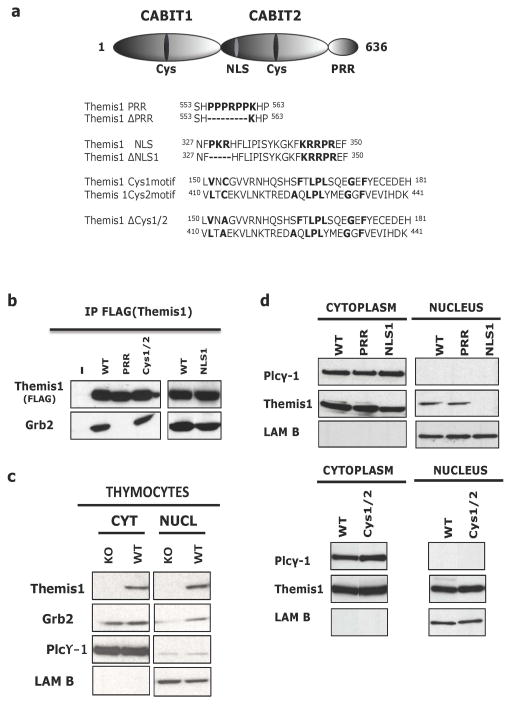
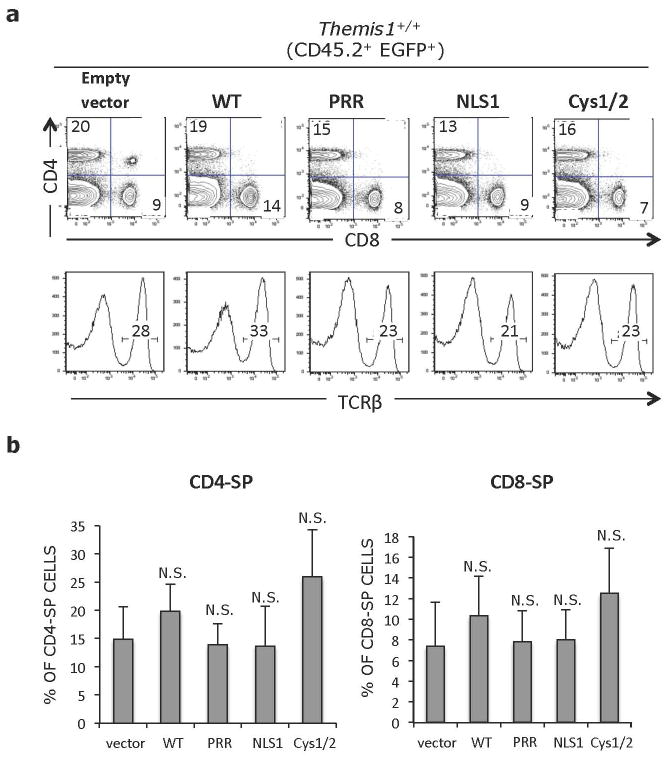
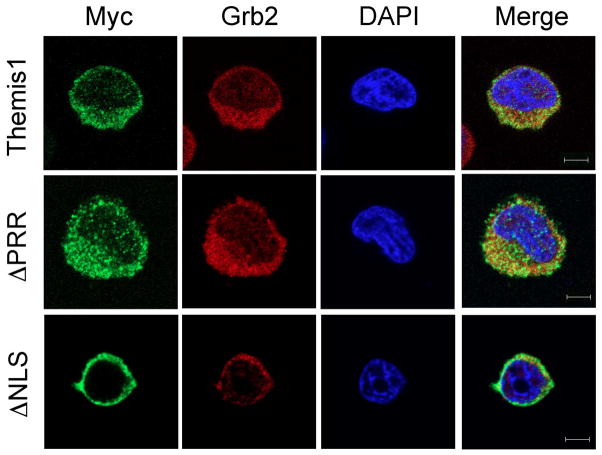
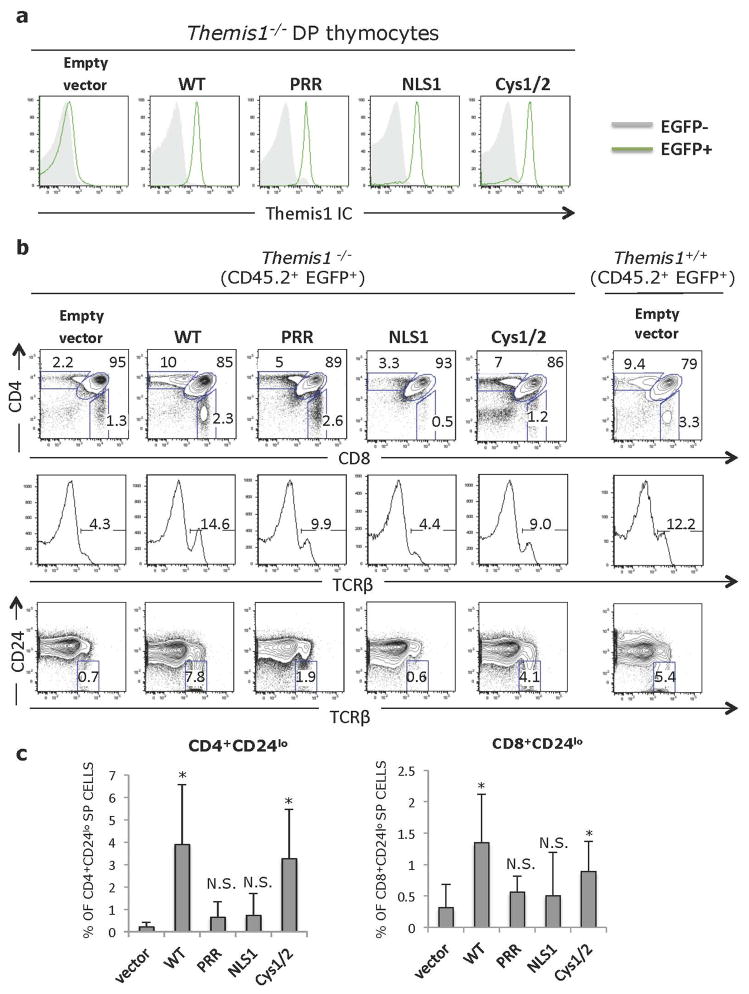
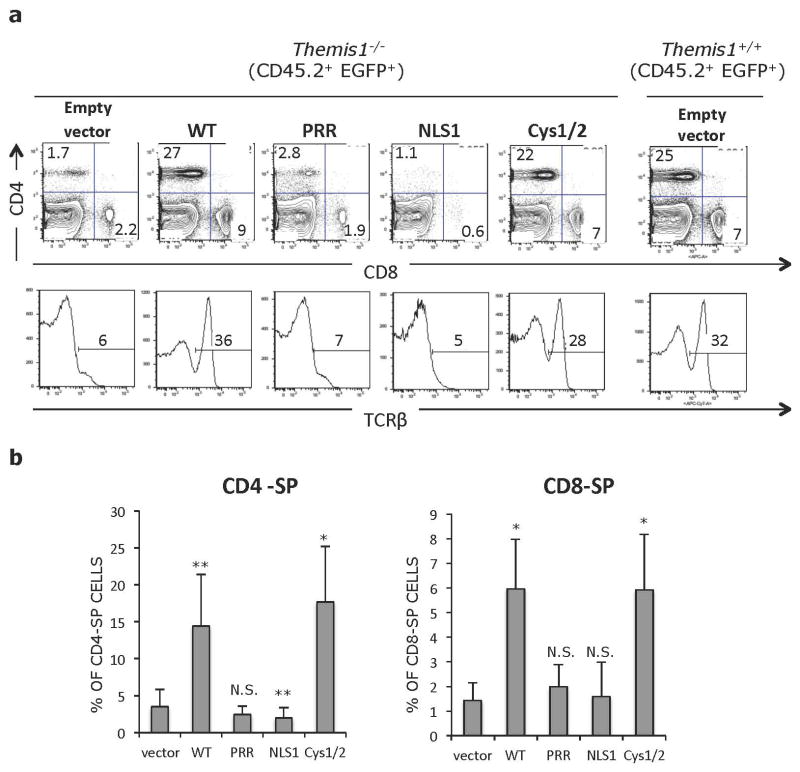
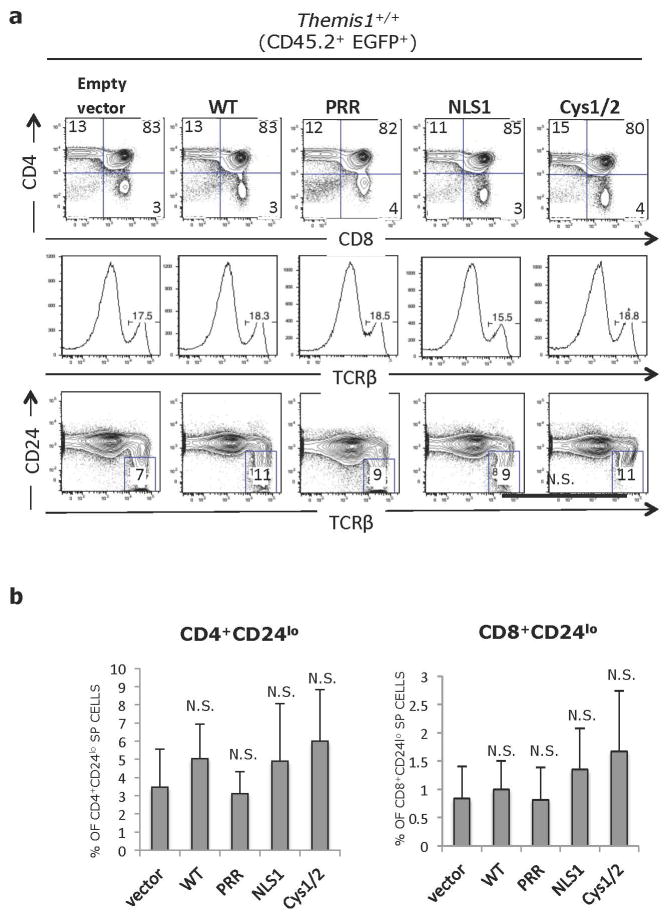
Thymocyte development requires the coordinated input of signals that originate from numerous cell surface molecules. Although the majority of thymocyte signal-initiating receptors are lineage-specific, most trigger 'ubiquitous' downstream signaling pathways. T-lineage-specific receptors are coupled to these signaling pathways by lymphocyte-restricted adapter molecules. We and others recently identified a new putative adapter protein, Themis1, whose expression is largely restricted to the T lineage. Mice lacking Themis1 exhibit a severe block in thymocyte development and a striking paucity of mature T cells revealing a critical role for Themis1 in T-cell maturation. Themis1 orthologs contain three conserved domains: a proline-rich region (PRR) that binds to the ubiquitous cytosolic adapter Grb2, a nuclear localization sequence (NLS), and two copies of a novel cysteine-containing globular (CABIT) domain. In the present study, we evaluated the functional importance of each of these motifs by retroviral reconstitution of Themis1(-/-) progenitor cells. The results demonstrate an essential requirement for the PRR and NLS motifs but not the conserved CABIT cysteines for Themis1 function.
胸腺细胞的发育需要来自众多细胞表面分子的信号的协调输入。虽然大多数胸腺细胞信号起始受体是谱系特异性的,但大多数都触发“普遍存在”的下游信号通路。谱系特异性受体通过淋巴细胞受限的衔接分子与这些信号通路偶联。我们和其他人最近鉴定了一种新的假定衔接蛋白 Themis1,其表达主要局限于 T 谱系。缺乏 Themis1 的小鼠表现出严重的胸腺细胞发育阻滞和成熟 T 细胞的明显缺乏,表明 Themis1 在 T 细胞成熟中起着关键作用。Themis1 的同源物包含三个保守结构域:富含脯氨酸的区域(PRR),可与普遍存在的胞质衔接蛋白 Grb2 结合、核定位序列(NLS)和两个拷贝的新型含半胱氨酸的球状(CABIT)结构域。在本研究中,我们通过逆转录病毒重建 Themis1(-/-)祖细胞来评估这些基序中的每一个的功能重要性。结果表明,PRR 和 NLS 基序对于 Themis1 功能是必需的,但保守的 CABIT 半胱氨酸不是必需的。