Graduate School of Agriculture, Hokkaido University, Kita 9 Nishi 9, Kita-ku, Sapporo 060-8589, Japan.
Graduate School of Life Science, Hokkaido University, Kita 9 Nishi 9, Kita-ku, Sapporo 060-8589, Japan.
Biosci Microbiota Food Health. 2012;31(4):77-84. doi: 10.12938/bmfh.31.77. Epub 2012 Oct 25.
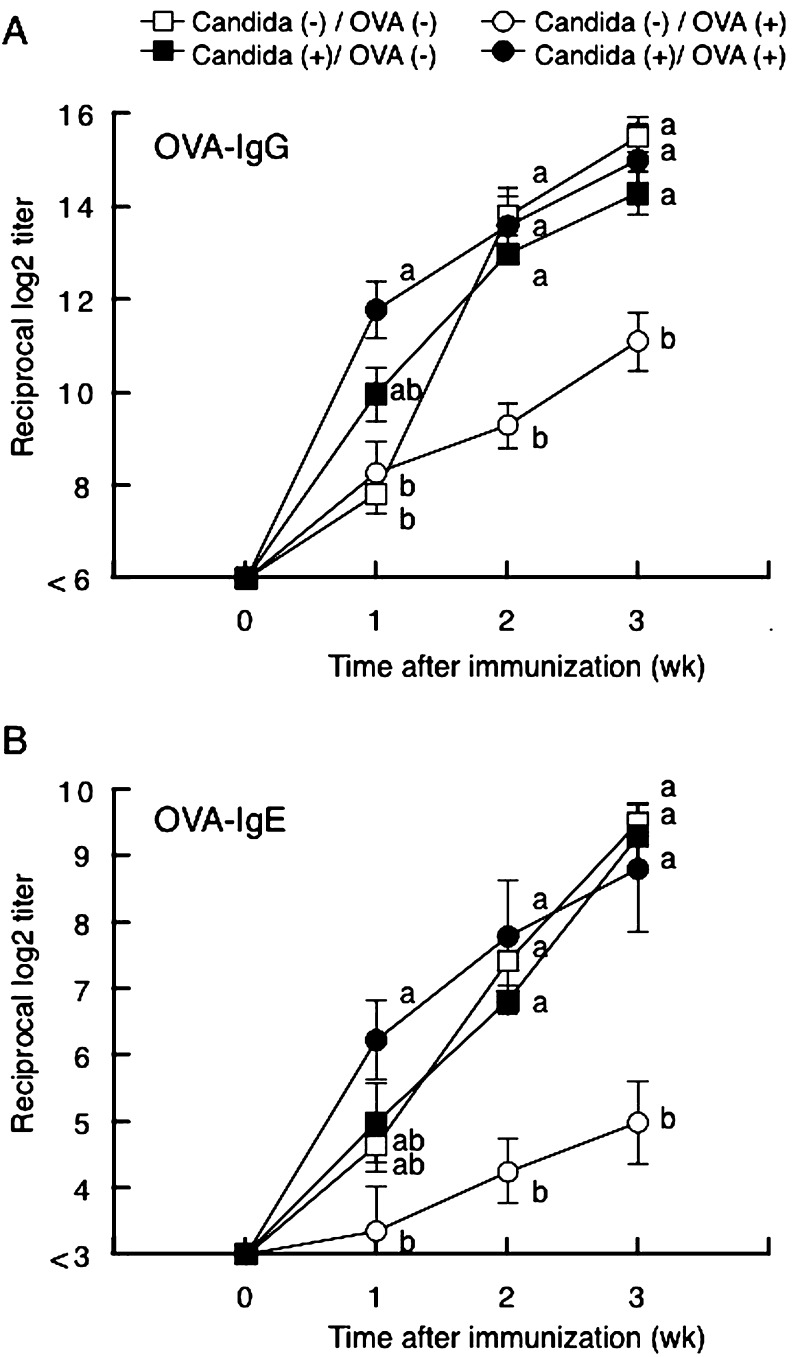
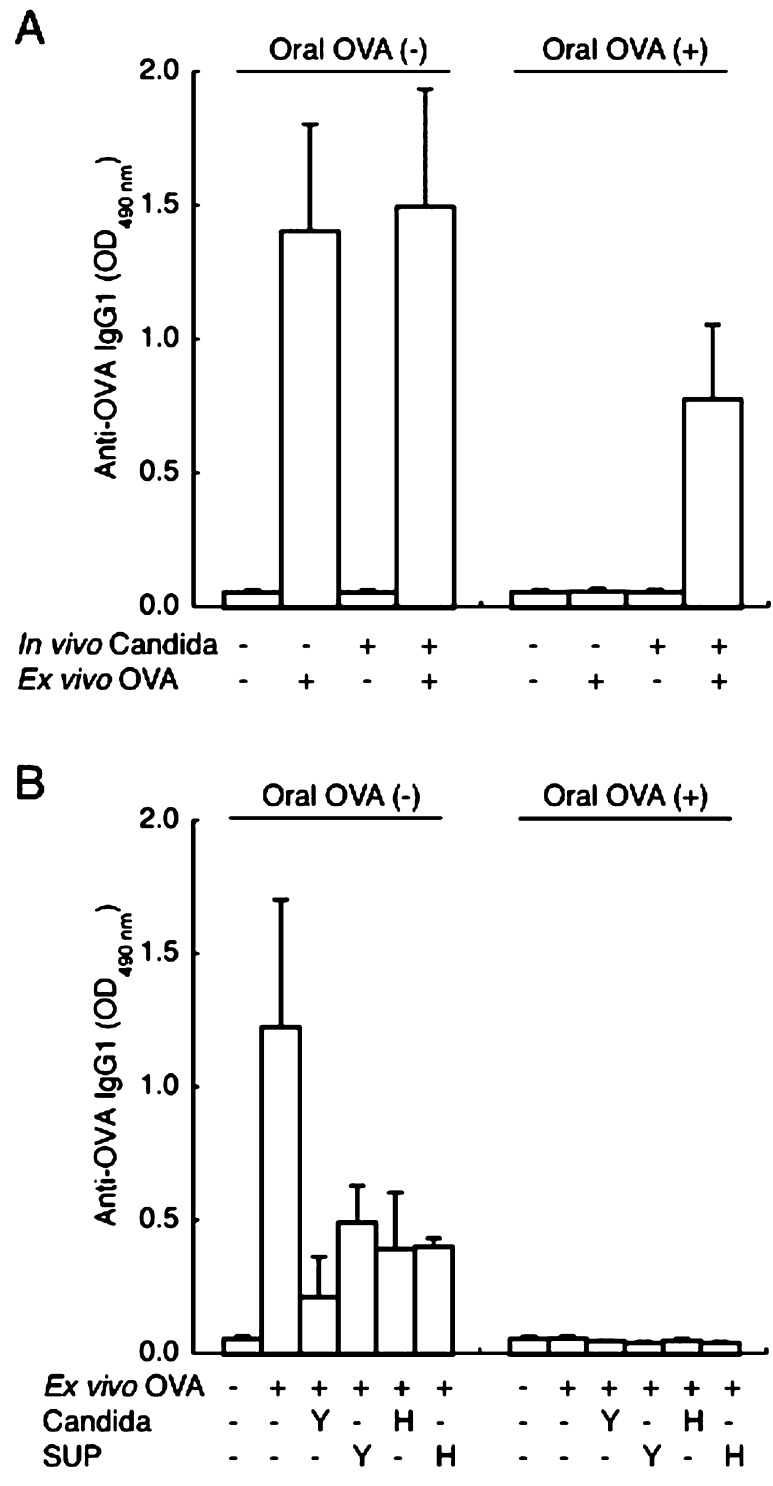
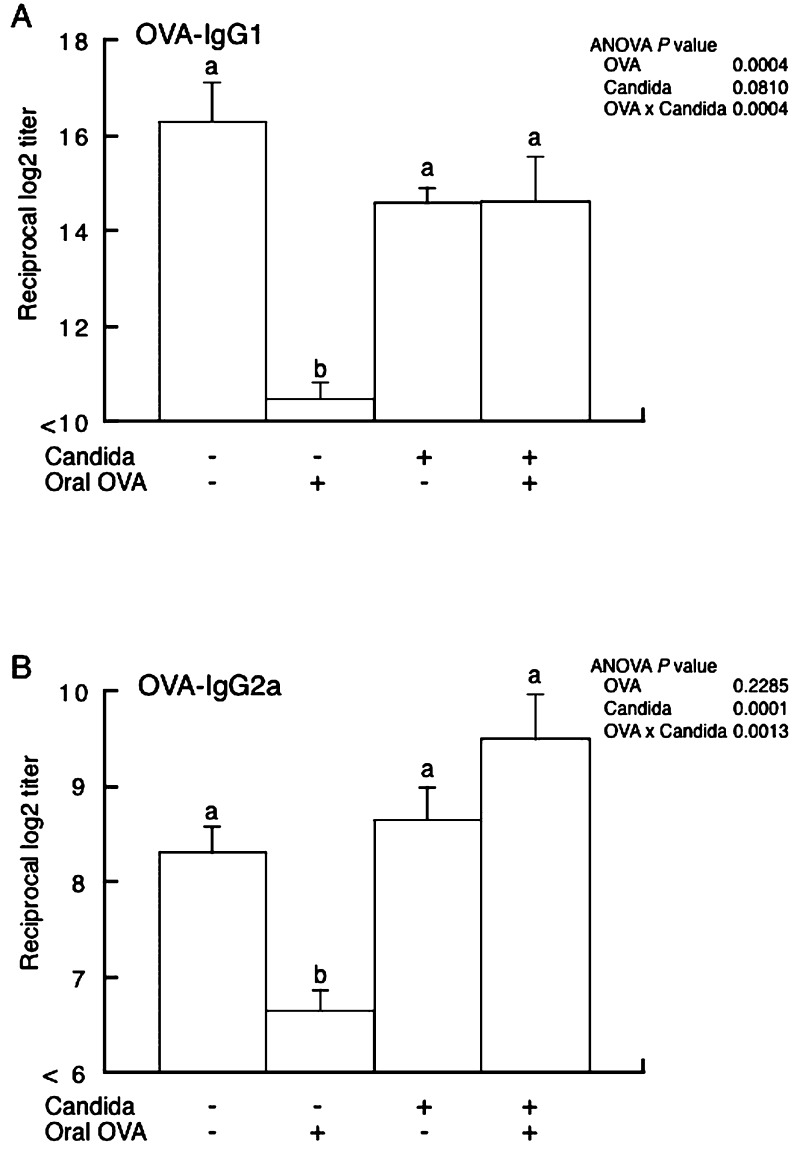
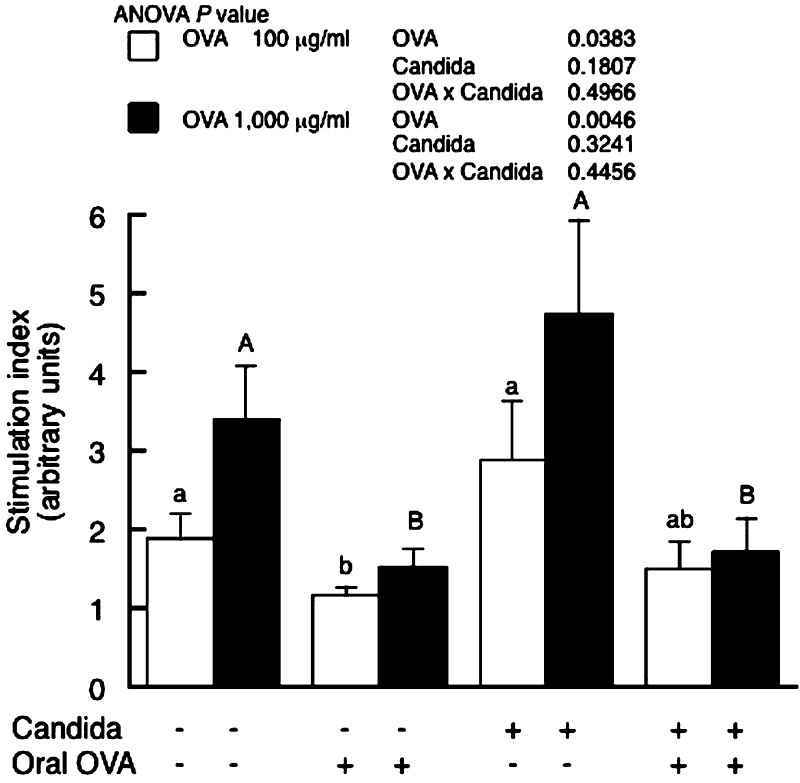
We previously observed that gut colonization by Candida albicans promoted serum antibody response to orally administered ovalbumin in mice. We therefore postulated that C. albicans affects oral tolerance induction. The present study tested this idea. BALB/c mice were intragastrically administered with either C. albicans (1 × 10(7)) or vehicle, and the colonization was confirmed by weekly fecal cultures. Mice were further divided into two subgroups and intragastrically administered with either ovalbumin (20 mg) or vehicle for five consecutive days. Thereafter, all mice were intraperitoneally immunized with ovalbumin in alum. In mice without C. albicans inoculation, ovalbumin feeding prior to immunization significantly suppressed the increase in ovalbumin-specific IgE, IgG1 and IgG2a in sera, suggesting oral tolerance induction. In C. albicans-inoculated mice, however, the antibody levels were the same between ovalbumin- and vehicle-fed mice. In contrast, ovalbumin feeding significantly suppressed cellular immune responses, as evidenced by reduced proliferation of splenocytes restimulated by ovalbumin ex vivo, in both C. albicans-inoculated and uninoculated mice. Ex vivo supplementation with neither heat-killed C. albicans nor the culture supernatant of C. albicans enhanced the production of ovalbumin-specific IgG1 in splenocytes restimulated by the antigen. These results suggest that gut colonization by C. albicans inhibits the induction of humoral immune tolerance to dietary antigen in mice, whereas C. albicans may not directly promote antibody production. We therefore propose that C. albicans gut colonization could be a risk factor for triggering food allergy in susceptible individuals.
我们之前观察到,白色念珠菌在肠道内的定植促进了小鼠对口服给予卵清蛋白的血清抗体反应。因此,我们推测白色念珠菌会影响口服耐受的诱导。本研究检验了这一观点。BALB/c 小鼠经胃内给予白色念珠菌(1×10(7))或载体,每周通过粪便培养来确认定植情况。小鼠进一步分为两组,连续 5 天经胃内给予卵清蛋白(20mg)或载体。此后,所有小鼠均用卵清蛋白加 alum 进行腹腔免疫。在未接种白色念珠菌的小鼠中,免疫前给予卵清蛋白喂养显著抑制了血清中卵清蛋白特异性 IgE、IgG1 和 IgG2a 的增加,表明诱导了口服耐受。然而,在接种白色念珠菌的小鼠中,卵清蛋白喂养的小鼠与载体喂养的小鼠之间的抗体水平相同。相反,卵清蛋白喂养显著抑制了细胞免疫反应,这表现为体外经卵清蛋白再刺激的脾细胞增殖减少,无论是在接种还是未接种白色念珠菌的小鼠中都是如此。体外补充热灭活的白色念珠菌或白色念珠菌的培养上清液均不能增强抗原再刺激的脾细胞中卵清蛋白特异性 IgG1 的产生。这些结果表明,白色念珠菌在肠道内的定植抑制了小鼠对膳食抗原的体液免疫耐受的诱导,而白色念珠菌本身可能不会直接促进抗体的产生。因此,我们提出白色念珠菌在肠道内的定植可能是易感性个体引发食物过敏的一个危险因素。