Kralovicova Jana, Lages Ana, Patel Alpa, Dhir Ashish, Buratti Emanuele, Searle Mark, Vorechovsky Igor
University of Southampton, Faculty of Medicine, Southampton SO16 6YD, UK.
University of Nottingham, School of Chemistry, Centre for Biomolecular Sciences, Nottingham NG7 2RD, UK.
Nucleic Acids Res. 2014 Jul;42(12):8161-73. doi: 10.1093/nar/gku507. Epub 2014 Jun 17.
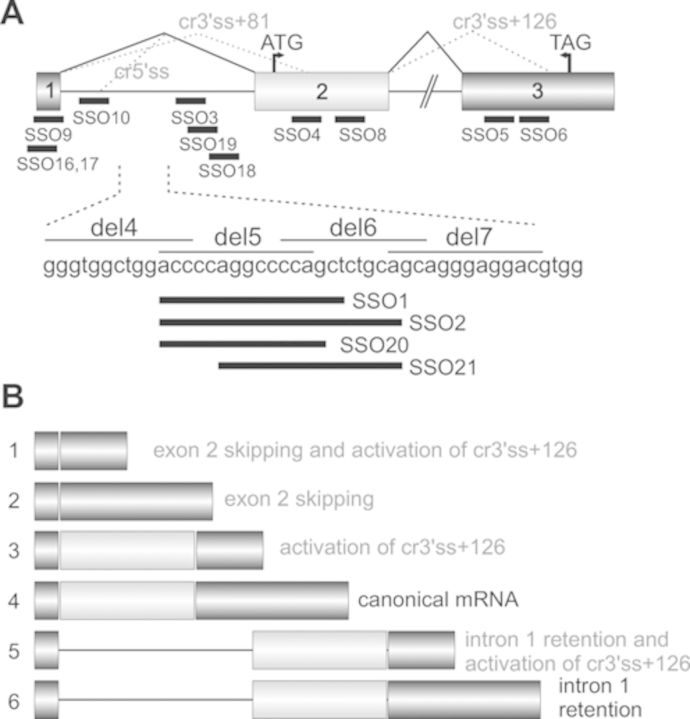
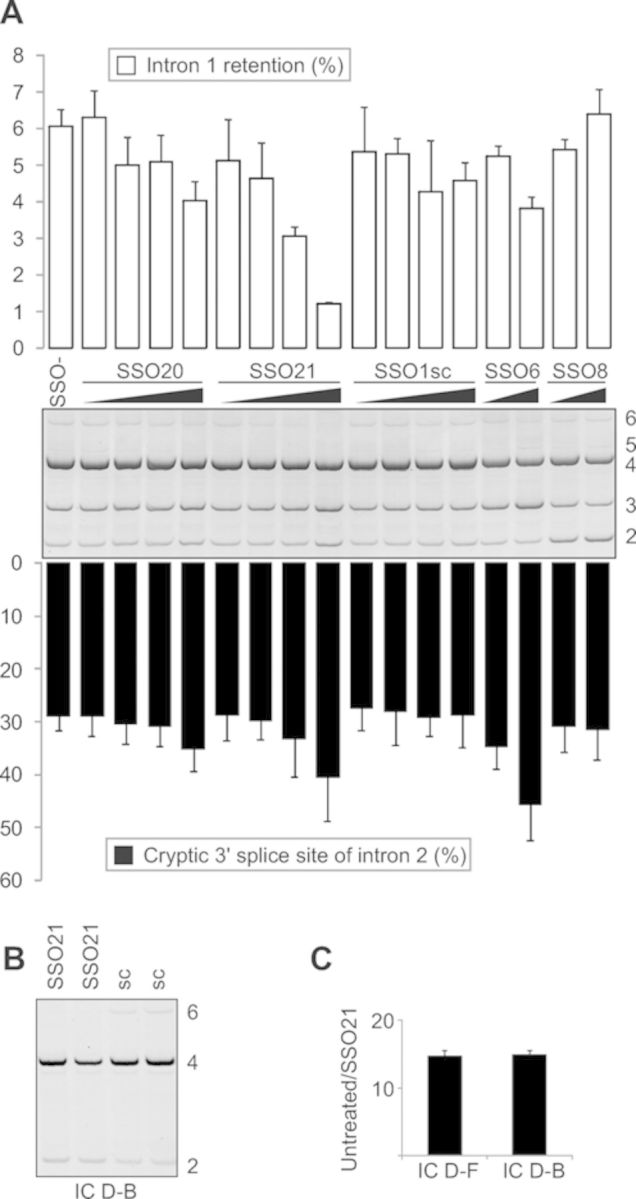
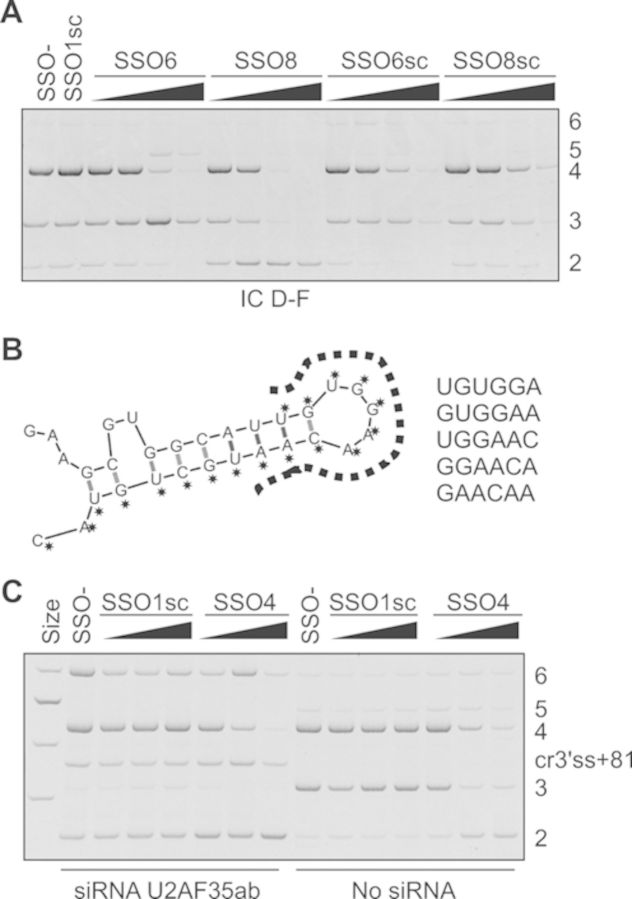
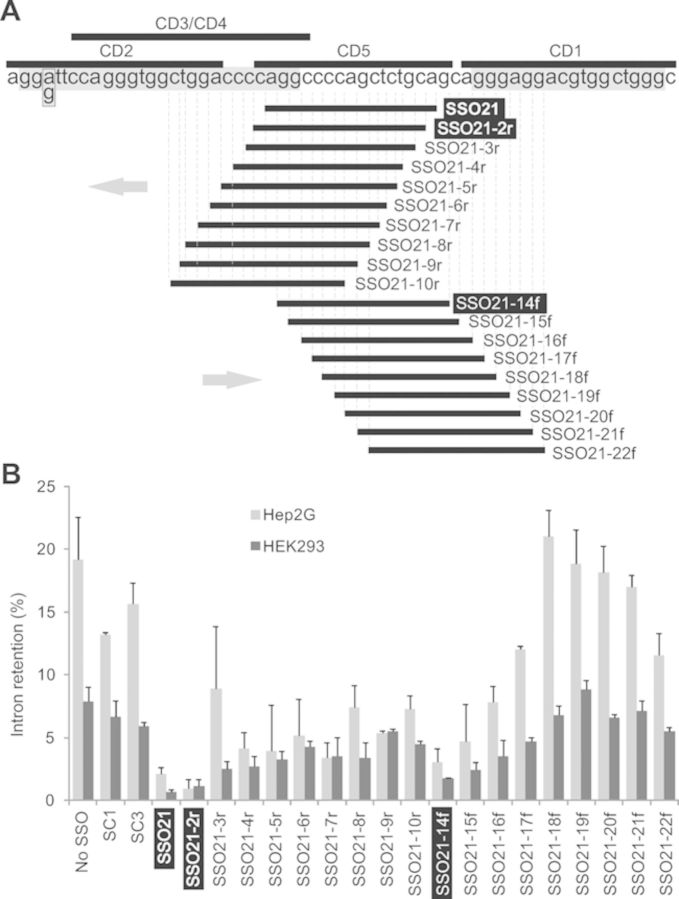
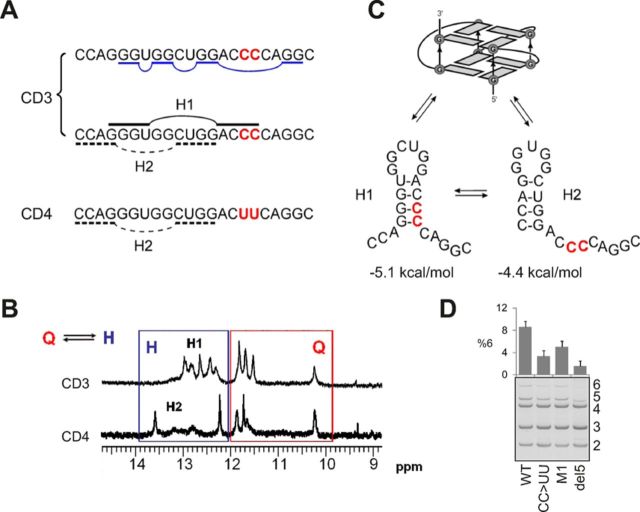
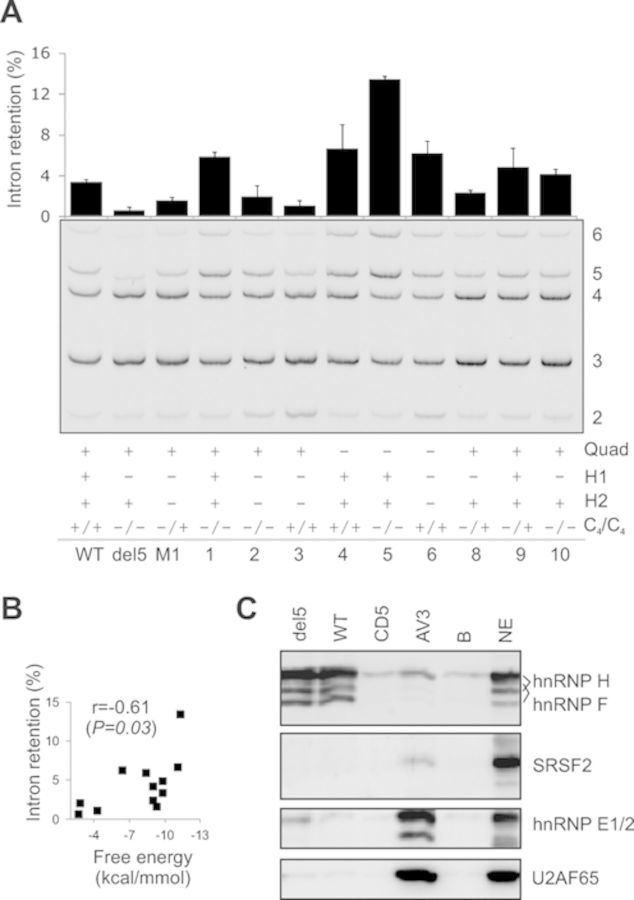
Splice-switching oligonucleotides (SSOs) have been widely used to inhibit exon usage but antisense strategies that promote removal of entire introns to increase splicing-mediated gene expression have not been developed. Here we show reduction of INS intron 1 retention by SSOs that bind transcripts derived from a human haplotype expressing low levels of proinsulin. This haplotype is tagged by a polypyrimidine tract variant rs689 that decreases the efficiency of intron 1 splicing and increases the relative abundance of mRNAs with extended 5' untranslated region (5' UTR), which curtails translation. Co-expression of haplotype-specific reporter constructs with SSOs bound to splicing regulatory motifs and decoy splice sites in primary transcripts revealed a motif that significantly reduced intron 1-containing mRNAs. Using an antisense microwalk at a single nucleotide resolution, the optimal target was mapped to a splicing silencer containing two pseudoacceptor sites sandwiched between predicted RNA guanine (G) quadruplex structures. Circular dichroism spectroscopy and nuclear magnetic resonance of synthetic G-rich oligoribonucleotide tracts derived from this region showed formation of a stable parallel 2-quartet G-quadruplex on the 3' side of the antisense retention target and an equilibrium between quadruplexes and stable hairpin-loop structures bound by optimal SSOs. This region interacts with heterogeneous nuclear ribonucleoproteins F and H that may interfere with conformational transitions involving the antisense target. The SSO-assisted promotion of weak intron removal from the 5' UTR through competing noncanonical and canonical RNA structures may facilitate development of novel strategies to enhance gene expression.
剪接转换寡核苷酸(SSOs)已被广泛用于抑制外显子的使用,但促进去除整个内含子以增加剪接介导的基因表达的反义策略尚未开发出来。在这里,我们展示了通过与源自表达低水平胰岛素原的人类单倍型的转录本结合的SSOs来降低胰岛素基因(INS)内含子1保留率。这个单倍型由一个多嘧啶序列变体rs689标记,该变体降低了内含子1的剪接效率,并增加了具有延长的5'非翻译区(5'UTR)的mRNA的相对丰度,从而减少了翻译。在原代转录本中,将单倍型特异性报告构建体与结合到剪接调控基序和诱饵剪接位点的SSOs共表达,揭示了一个显著减少含内含子1的mRNA的基序。使用单核苷酸分辨率的反义微步移,最佳靶点被定位到一个剪接沉默子,该沉默子包含夹在预测的RNA鸟嘌呤(G)四链体结构之间的两个假受体位点。源自该区域的富含G的合成寡核糖核苷酸片段的圆二色光谱和核磁共振显示,在反义保留靶点的3'侧形成了一个稳定的平行双四重G四链体,并且在四链体与由最佳SSOs结合的稳定发夹环结构之间存在平衡。该区域与核不均一核糖核蛋白F和H相互作用,这可能会干扰涉及反义靶点的构象转变。通过竞争非经典和经典RNA结构,SSO辅助促进从5'UTR去除弱内含子,这可能有助于开发增强基因表达的新策略。