Chen Yu-Jen, Chi Chih-Wen, Su Wen-Chi, Huang Huey-Lan
Department of Medical Research Mackay Memorial Hospital, Taipei, Taiwan; Radiation Oncology, Mackay Memorial Hospital, Taipei, Taiwan.
Department of Bioscience Technology, College of Health Science, Chang Jung Christian University, Tainan, Taiwan.
Oncotarget. 2014 Jul 15;5(13):4845-54. doi: 10.18632/oncotarget.2045.
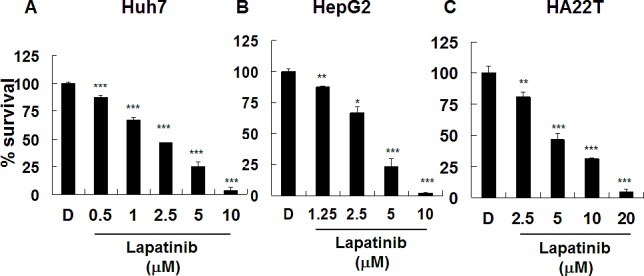
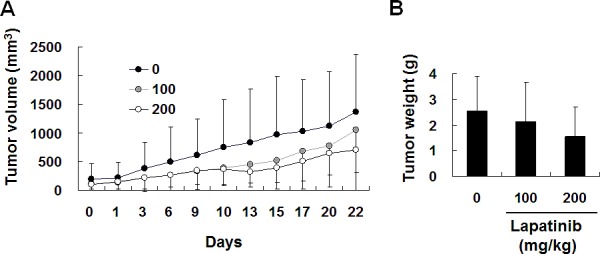
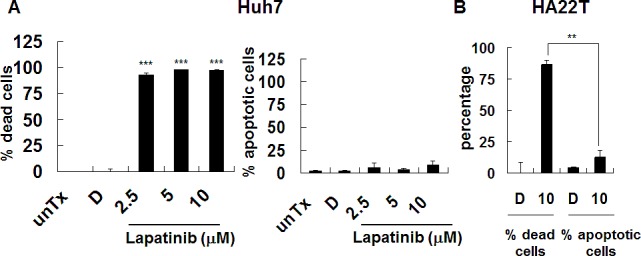
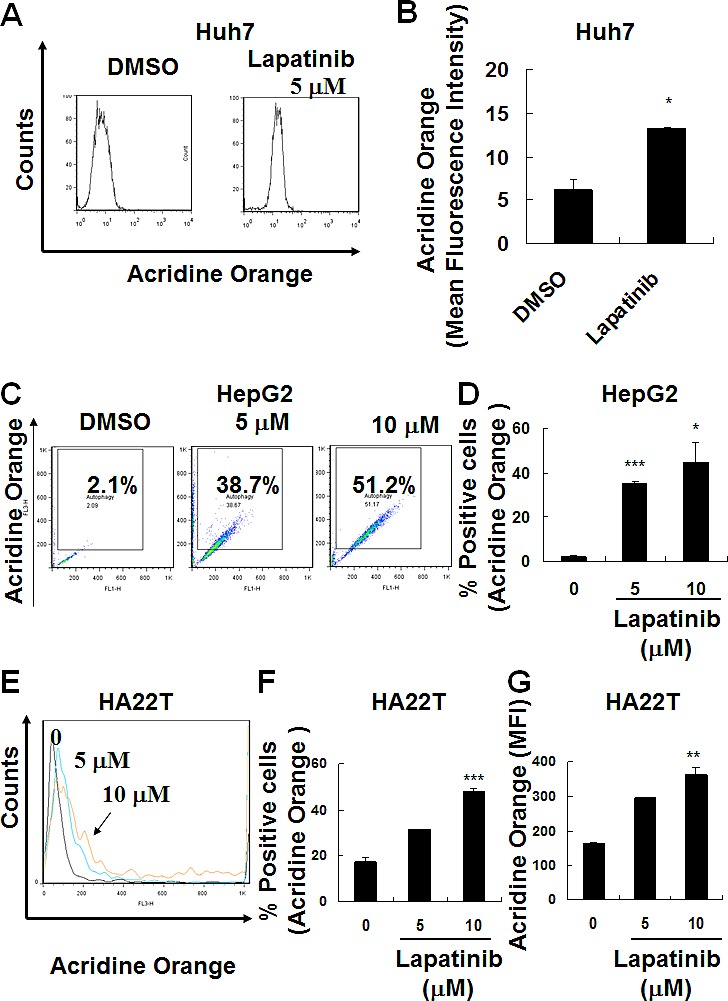
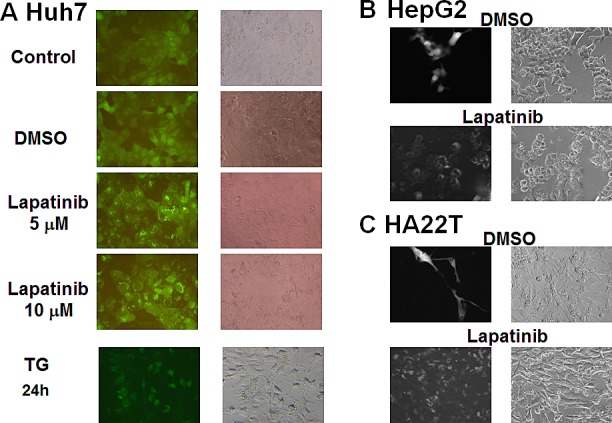
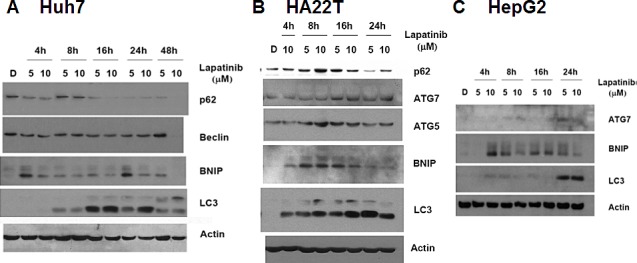
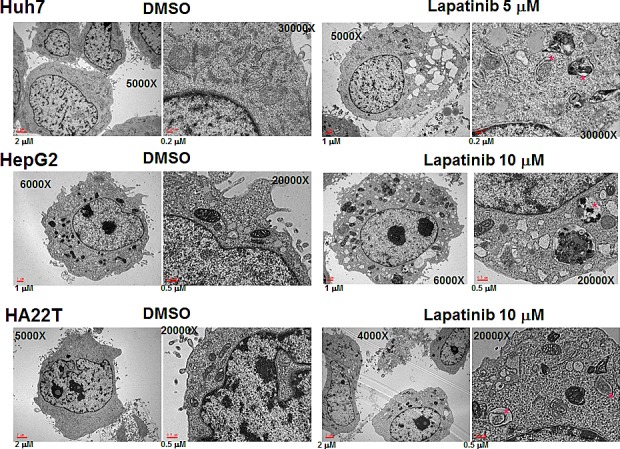
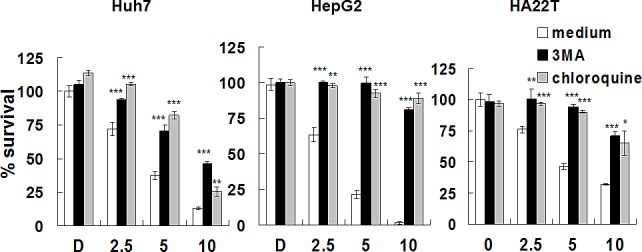
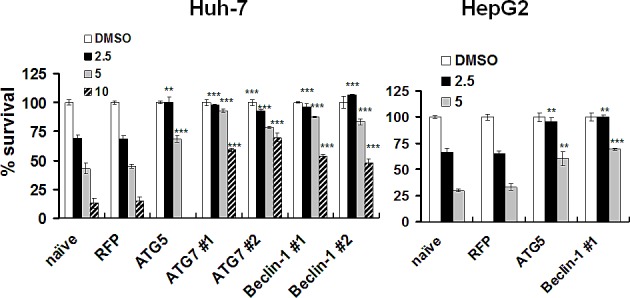
Lapatinib, an orally administered small-molecule tyrosine kinase inhibitor targeting epidermal growth factor receptors (EGFR) and Her2/Neu, has been widely accepted in the treatment of breast cancer. In this study, we found that lapatinib induced cytotoxicity in human hepatoma Huh7, HepG2 and HA22T cells. For the mode of cell death, we found lapatinib induced a higher percent of dead cells and a lower percent of hypodiploid cells, suggesting non-apoptotic cell death in lapatinib-treated hepatoma cells. Moreover, lapatinib-induced autophagy in hepatoma cells was confirmed by the detection of autophagic LC3-II conversion, the up-regulation of autophagy-related proteins, and the down-regulation of p62 by immunoblotting. Autophagic cell death was demonstrated by images of punctuated LC3 patterns, a higher percent of acridine orange positive cells, as well as a partial rescue of cell death by autophagy inhibitor 3-methyladenine or chloroquine. We also found massive vacuoles in lapatinib-treated hepatoma cells by electronic microscopy. In addition, the shRNA of knocked-down autophagy-related proteins rescued the hepatoma cells from lapatinib-induced growth inhibition. We also demonstrated a reduction of tumorigenesis by lapatinib in vivo. In conclusion, lapatinib induced autophagic cell death and the growth of human hepatoma cells. Our study provides potential cancer therapies by using lapatinib as a treatment for hepatoma.
拉帕替尼是一种口服的小分子酪氨酸激酶抑制剂,靶向表皮生长因子受体(EGFR)和Her2/Neu,已被广泛应用于乳腺癌治疗。在本研究中,我们发现拉帕替尼可诱导人肝癌Huh7、HepG2和HA22T细胞产生细胞毒性。对于细胞死亡方式,我们发现拉帕替尼诱导的死亡细胞百分比更高,亚二倍体细胞百分比更低,这表明拉帕替尼处理的肝癌细胞发生非凋亡性细胞死亡。此外,通过免疫印迹检测自噬性LC3-II转化、自噬相关蛋白上调以及p62下调,证实拉帕替尼可诱导肝癌细胞发生自噬。点状LC3模式图像、更高百分比的吖啶橙阳性细胞以及自噬抑制剂3-甲基腺嘌呤或氯喹对细胞死亡的部分挽救均证明了自噬性细胞死亡。通过电子显微镜我们还发现拉帕替尼处理的肝癌细胞中有大量空泡。此外,敲低自噬相关蛋白的shRNA可使肝癌细胞免受拉帕替尼诱导的生长抑制。我们还证明了拉帕替尼在体内可减少肿瘤发生。总之,拉帕替尼可诱导人肝癌细胞发生自噬性细胞死亡并抑制其生长。我们的研究为使用拉帕替尼治疗肝癌提供了潜在的癌症治疗方法。